When you click on links to various merchants on this site and make a purchase, this can result in this site earning a commission. Affiliate programs and affiliations include, but are not limited to, the eBay Partner Network.
What a pain in the A** it is to get a plug for my new lance camper. Its a special plug for lance campers only so if you dont have a local dealer of lance you have to somehow find it online. At this point the only one i can find is on ebay and im having problems getting ebay and paypal to work together..ughh. sorry just needed to rant..camper is nice though...
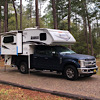
Our Lance camper came with a separate umbilical harness fitted with a Lance bulkhead-style connector at one end and pigtail leads at the other. I attached the pigtails to a standard 7-pin connector and plugged it into the truck bumper. The Lance camper-side harness plugs into the bulkhead connector.
It’s a temporary fix until I decide on a permanent solution.
The question about the Lance plug comes up fairly often on different truck camper forums. I understand Lance's statement regarding the intent is to provide more current from the truck seven pin to the camper. However, I think many folks would be surprised as to how little current is available at the seven pin given the truck has a smart charging system and greatly reduces output once the system senses the truck batteries are topped off. I checked mine seven pin with my Fluke meter one time and as I recall the output was less than 2 amps, just a trickle charge. There are other posts in the towable forums in the past discussing this issue.
My only point here is while it is true larger ga wire reduces resistance and allows for more current, there still has to be a source to supply it and I would be surprised if using a standard seven pin, as do all the other truck campers, would cause a problem. Of course, if you really want/need a large current supply there are many posts on the Internet showing how truck camper owners have run much larger wire from the alternator all the way back to the truck camper batteries.
Our new Lance came with the pig tail and plug in a box along with the rear facing (backup) camera and a few other dealer installed items. I had made arrangements to have the dealership wire it up in our pickup as a part of the camper deal.
Both of our pickups were super easy to wire the heavy wire in. We have an equally heavy gauge wire for the trailer battery charge wire to our trailer towing package in a wiring loom / bundle running along the frame on the drivers side. With the new Lance, the tech ran a heavy wire all the way up to under the hood with an inline fuse. He said it was overkill but felt it was a safer way to do it.
When I wired it in on the 96, I used the heavy gauge trailer battery charge wire (which I also use to run the 6000# electric winch on the boat trailer). Has worked great for years, although the 96 gets very little camper haul time now.
There are other avenues as well. Lance Owners of America has a direct connect to the Lance Factory. https://www.lancecamper.com/loa/ . I used the Lance Factory connection once and had excellent results. You can also go Lance Direct... https://www.lancecamper.com/
Parts Department
- Find Parts for your Lance
- Support Equipment Parts
(661) 941-9251 direct Hours of Operation
Monday thru Friday - 8 AM to 5 PM PST
Saturday Sunday Major Holidays - Closed
Cut off lance plug, rewire to 7 plug.... Thats what I did. Works fine for me.
That was what I was suggesting. There is nothing special about Lance's electrical systems and there are countless TC's by other manufacturers that use the standard seven pin with not problems. I do think there are times when some users need more current, but in those cases, I don't think the Lance plug is of any real benefit. For the average user, I don't think they will have a problem and if they do, just running a bigger ga. will not resolve their issue unless they have an ample source.
I ran a 7 pin for some time on our old Lance. Seemed to work fine. I upgraded it to the Lance plug to see if it would help in running the fridge in 12 volt mode while driving down the road and recharging the batteries. While it did seem to make a little bit of difference it didn't fully resolve the problem, On a 235 mile 5 hour trip, refer on 12 volt, the house batteries were down to 1/4 on the 7 Pin. On the Lance plug they were around 1/2. Without the fridge, the house batteries do seem to charge a little quicker.
I don't run the fridge on 12 volt anymore. I either precool for 24+ hours and turn it off for the trip or I run it on gas for longer trips.
But, the option is there and available if one wants to go that route like the OP seems to want to go.
Certainly in terms of cooling the propane system does a much better job as the DC element is really limited in output to conserve on 12-volt power. We run our fridge on gas and it does very well. DC operation is only intended to maintain the box temperature as long as the fridge door is not opened. and the draw will exceed the output from the seven pin on the truck.
One additional suggestion I have is for those folks who really want to get into electricity with their RV, and I know some do, an investment in a good quality clamp meter capable of reading DC voltage is a Godsend although admittedly pricey. I think after using one you will be left wondering how you ever got along without it.
The Lance factory video provides sound theory, but in reality I haven't found it to work. So, we just run on propane. Even Lance admits that there isn't enough juice.....I don't think it is too hard to read between the lines to see even Lance suggests running on propane while driving down the road, unless at the gas station or in a state that does not allow it.
This is a conversation I had with the Lance Factory in October of 2019:
"Thank you Jim for contacting Lance. This is normal, the 12 volt mode does draw a lot of current to operate. We recommend switching to L.P. when stopping for any length of time EXCEPT when fueling. We also recommend operating first 4 hours of travel and switch fridge to L.P. We do not recommend driving on LP it may cause a blow out? However there is some states that allow it.That is why we provide the 12 V. mode. If LP is allowed the batteries will have the rest of the trip to charge. Please feel free to contact me if you have more questions."
I ran a separate, heavy gauge wire, from the battery to the Lance socket and got the full charge/amp capability from the alternator.
The factory wire harness going to the 7 way plug is insufficient for getting a good charge.
What gauge wire did you used from the front to the back and how did you connect into the plug, or did you separate the wire at the camper end and go to a separate plug that would connect to the truck? I have seen where the heavy wire was run from the truck back and then hooked to the plug, but others said the lug was too small for the current.
One additional suggestion I have is for those folks who really want to get into electricity with their RV, and I know some do, an investment in a good quality clamp meter capable of reading DC voltage is a Godsend although admittedly pricey. I think after using one you will be left wondering how you ever got along without it.
What gauge wire did you used from the front to the back and how did you connect into the plug, or did you separate the wire at the camper end and go to a separate plug that would connect to the truck? I have seen where the heavy wire was run from the truck back and then hooked to the plug, but others said the lug was too small for the current.
It has been a while and the first thing to go is...
Anyhow, I don't remember the gauge, but I used a 2 pole inlet socket for the power and ground and split open the camper end of the harness to plug into that.
For the lights I used one of those rear hitch plug extensions things and cut the inlet socket off and connected it to the lance inlet socket.
Both inlet sockets were located up at the front of the bed.
What a pain in the A** it is to get a plug for my new lance camper. Its a special plug for lance campers only so if you dont have a local dealer of lance you have to somehow find it online. At this point the only one i can find is on ebay and im having problems getting ebay and paypal to work together..ughh. sorry just needed to rant..camper is nice though...
All I did was cut the end of the Lance special cord (1999 Lance 1030) and wired in this, Works perfectly, All lights and directionals work perfectly. Very well constructed! Reaches my 7 way by the license plate of my truck. Display on truck says camper connected. https://www.etrailer.com/Accessories...77-000141.html
Rezvani's Latest Post-Apocalyptic Monster Is a Ford F-150 Raptor Underneath
Slideshow: Called the Fortress, the 850-horsepower pickup combines Raptor underpinnings with military-inspired features, survival equipment, and a starting price of $285,000.