



NEED HELP. HESITATING/ SPUTTERING

Thread Starter
|
Elder User

Joined: Dec 2006
Posts: 881
Likes: 1
From: Sudbury, ONT.
NEED HELP. HESITATING/ SPUTTERING
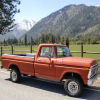
My dad's truck is a 78 F100 with 300 6cyl, 1bbl carb.
He's just recently started driving it after a 5 year rebuild. His problem is that after driving a while (30-45min) it will start to cough and sputter. He can pull off to the side of the road and it will idle fine, but as soon as he tries to load the engine it will act up. The carb was just rebuilt. He's tried swapping in another old control box for the distributor. So far the problem is still there. This truck has to make a road trip in August, so we need ideas.
He's just recently started driving it after a 5 year rebuild. His problem is that after driving a while (30-45min) it will start to cough and sputter. He can pull off to the side of the road and it will idle fine, but as soon as he tries to load the engine it will act up. The carb was just rebuilt. He's tried swapping in another old control box for the distributor. So far the problem is still there. This truck has to make a road trip in August, so we need ideas.
Thread Starter
|
Elder User
Joined: Dec 2006
Posts: 881
Likes: 1
From: Sudbury, ONT.
The choke doesn't work and stays open all the time. He took out the fuel filter and blew through it...nice and clear. While he had the fuel line off the carb, he got someone to crank it over to check the fuel pump, and it he got lots of gas. Keep the ideas coming.

Thread Starter
|
Elder User
Joined: Dec 2006
Posts: 881
Likes: 1
From: Sudbury, ONT.
Dad opened up the carb again and played with the float. The problem went away for awhile, but came back again.
I keep trying to tell him it must be an electrical problem because I know the guy who rebuilt the carb did it perfect (me)
I keep trying to tell him it must be an electrical problem because I know the guy who rebuilt the carb did it perfect (me)
Trending Topics
Thread Starter
|
Elder User
Joined: Dec 2006
Posts: 881
Likes: 1
From: Sudbury, ONT.
The first few times it did it, he'd pull over, check a few things (about 10 - 15mins) then fire it back up and drive away. It would be good for awhile, then start doing it again. The last time, he just kept driving it home, and it coughed and sputtered all the way.
He did mention that it occurs more often (but not always) on hills when he squeezes the gas to maintain speed. It'll hiccup until he lets go of the gas, then it'll be fine again. But like I said not always. Sometimes he can go up and down hills for an hour and never miss a beat.

FTE Stories
Ford Trucks for Ford Truck Enthusiasts

10 Things Every Truck Owner NEEDS (2026 Edition)
Michael S. Palmer
Rezvani's Latest Post-Apocalyptic Monster Is a Ford F-150 Raptor Underneath
Verdad Gallardo
Top 10 Most Expensive Ford Trucks Ever Sold on Bring a Trailer
Joe Kucinski
2027 Ford Super Duty Buyer's Guide (Every Model, Engine, & Package)
Brett Foote
Top 10 Ford Truck Tragedies
Joe Kucinski
AEV FXL Super Duty - the Super Duty Raptor Ford Doesn't Make
Brett Foote
Lobo Vs Lobo: Proof the F-150 Lobo Should Be Even Lower!
Michael S. Palmer
Ford's 2001 Explorer Sportsman Concept Looks For a New Home
Verdad Gallardo
10 Best Ford Truck Engines We Miss the Most!
Joe Kucinski
Posting Guru
Joined: Mar 2010
Posts: 1,196
Likes: 2
A couple things...you said he tinkered with the floats and the problem went away...that tells me something is up with the floats.
Secondly, the ignition module could be on it's way out if he lets it cool and then it'll fire up and then once it gets hot again it starts running crappy.
If it was the float, I'd think it would happen all the time (but it doesn't make sense the problem went away if the problem wasn't the float). Since it seems to happen after a while and then gets better after it cools, I'd start focusing on the ignition module.
Secondly, the ignition module could be on it's way out if he lets it cool and then it'll fire up and then once it gets hot again it starts running crappy.
If it was the float, I'd think it would happen all the time (but it doesn't make sense the problem went away if the problem wasn't the float). Since it seems to happen after a while and then gets better after it cools, I'd start focusing on the ignition module.
Thread Starter
|
Elder User
Joined: Dec 2006
Posts: 881
Likes: 1
From: Sudbury, ONT.
A couple things...you said he tinkered with the floats and the problem went away...that tells me something is up with the floats.
Secondly, the ignition module could be on it's way out if he lets it cool and then it'll fire up and then once it gets hot again it starts running crappy.
If it was the float, I'd think it would happen all the time (but it doesn't make sense the problem went away if the problem wasn't the float). Since it seems to happen after a while and then gets better after it cools, I'd start focusing on the ignition module.
Secondly, the ignition module could be on it's way out if he lets it cool and then it'll fire up and then once it gets hot again it starts running crappy.
If it was the float, I'd think it would happen all the time (but it doesn't make sense the problem went away if the problem wasn't the float). Since it seems to happen after a while and then gets better after it cools, I'd start focusing on the ignition module.
Thread Starter
|
Elder User
Joined: Dec 2006
Posts: 881
Likes: 1
From: Sudbury, ONT.
Could be a vacuum leak. I can't believe how many vacuum fittings there is on this thing. Some are now plugged...some are hooked up. I've got a few things for us to check now. We're leaving for camp for a work weekend. I should be back Monday. Please keep the ideas coming, and I'll check back in on Monday.
Freshman User
Joined: May 2010
Posts: 35
Likes: 1
From: North Central WA Cascades
Okay, I have the original Carter YF 1bbl-fueled 300 six in my 77 F150. Dura Spark II, with zero emissions control, other than the standard PCV valve setup. Completely stock, with the exception of an aftermarket air cleaner in lieu of the original snorkel heat-door setup.
I bought the rig in 77, and have been bringing it up to specs as a daily driver. It now runs better than it was when new, if you can believe that. A lot of it was replacing or adjusting things that suffered neglect over the years.
Among things to check:
1. Fuel Filters. You said you checked one filter, but don't forget you have two if you have the dual-tank setup. CHECK BOTH. Mine has an inline brass filter at the carb inlet, and a canister-style underneath at the tank switch valve near the rear tank. The canister filter plugs up first if you have a lot of rust or debris in your tank(s).
2. Coil. Have yours tested for function. A weak coil will heat up and perform poorly (mine demonstrated issues when going up hill under load).
3. Ignition Control Module. This past year, I'd be going down the road, and bam!, the engine would basically shut down. Sometimes it would stall, then kick back in, other times it would make me have to coast to the side of the road. I would have to wait until it cooled down, then all was good. It didn't happen all the time, but when it did I was often on a mountain road where there was no place to conveniently pull over. Swapping to a NEW module took care of that problem.
4. Exhaust Control Valve. This is the flapper/spring combo in the manifold under the carb. Mine had rusted at the pivot shaft to the point that it wouldn't open or close reliably, and would freeze in random positions depending on its mood. The wrong position affected engine performance, and it needed to pivot freely over its full range to be problem free. I worked WD-40 nightly into the shaft, and let it sit overnight for about a week (do it with engine cold). Now has full range, no problems.
5. PCV Valve. Mine was sluggish, so replaced it rather than mess around with the old one.
6. Distributor Cap, Rotor, and Plug Wires. Okay, maybe not totally related to the initial performance complaints, but might be worth mentioning since it won't hurt. I had the original, 30+ year-old Dura Spark II cap, rotor, and wires still in use. Finally got a set of factory-spec new wires, new cap and rotor, and with new plugs (gapped, and torqued to specs with lightly oiled threads to seat properly), wow, what a difference! Used dialectric grease as specified.
I'm assuming that your carb rebuild is good. I had a persistent undetected vacuum leak that was at the base of my carb. I assumed the two carb attaching nuts were tightened adequately. Ford specifies 12-15 ft. lbs. torque, and when I used a torque wrench for the first time, discovered that they hadn't been tight enough for a very long time. I was always afraid of over-tightening them. I applied 12 ft. lbs., and the leak is gone.
Sort of a shotgun approach, but here are some possible ideas. Good luck!
I bought the rig in 77, and have been bringing it up to specs as a daily driver. It now runs better than it was when new, if you can believe that. A lot of it was replacing or adjusting things that suffered neglect over the years.
Among things to check:
1. Fuel Filters. You said you checked one filter, but don't forget you have two if you have the dual-tank setup. CHECK BOTH. Mine has an inline brass filter at the carb inlet, and a canister-style underneath at the tank switch valve near the rear tank. The canister filter plugs up first if you have a lot of rust or debris in your tank(s).
2. Coil. Have yours tested for function. A weak coil will heat up and perform poorly (mine demonstrated issues when going up hill under load).
3. Ignition Control Module. This past year, I'd be going down the road, and bam!, the engine would basically shut down. Sometimes it would stall, then kick back in, other times it would make me have to coast to the side of the road. I would have to wait until it cooled down, then all was good. It didn't happen all the time, but when it did I was often on a mountain road where there was no place to conveniently pull over. Swapping to a NEW module took care of that problem.
4. Exhaust Control Valve. This is the flapper/spring combo in the manifold under the carb. Mine had rusted at the pivot shaft to the point that it wouldn't open or close reliably, and would freeze in random positions depending on its mood. The wrong position affected engine performance, and it needed to pivot freely over its full range to be problem free. I worked WD-40 nightly into the shaft, and let it sit overnight for about a week (do it with engine cold). Now has full range, no problems.
5. PCV Valve. Mine was sluggish, so replaced it rather than mess around with the old one.
6. Distributor Cap, Rotor, and Plug Wires. Okay, maybe not totally related to the initial performance complaints, but might be worth mentioning since it won't hurt. I had the original, 30+ year-old Dura Spark II cap, rotor, and wires still in use. Finally got a set of factory-spec new wires, new cap and rotor, and with new plugs (gapped, and torqued to specs with lightly oiled threads to seat properly), wow, what a difference! Used dialectric grease as specified.
I'm assuming that your carb rebuild is good. I had a persistent undetected vacuum leak that was at the base of my carb. I assumed the two carb attaching nuts were tightened adequately. Ford specifies 12-15 ft. lbs. torque, and when I used a torque wrench for the first time, discovered that they hadn't been tight enough for a very long time. I was always afraid of over-tightening them. I applied 12 ft. lbs., and the leak is gone.
Sort of a shotgun approach, but here are some possible ideas. Good luck!

New User
Joined: Jul 2010
Posts: 20
Likes: 0
sputtering and stuff.....FUEL pUMP
they don't just totally fail, often their performance just degrades and you start to have probs on hot days, mine did the exact same thing as your dads , it'd idle on the side of the road etc, then it'd start pumping again and i could take off again, i got real good at nursing it around for awhile.
New User
Joined: Jul 2010
Posts: 20
Likes: 0
read this thread
https://www.ford-trucks.com/forums/9...hlight=arizona
this thread had about 25 little things that it could be
this thread had about 25 little things that it could be