



Another suspension question
Thread Starter
|
Senior User
Joined: Nov 2009
Posts: 192
Likes: 0
 Another suspension question
Hi ya'll, I'm new here, but have been reading on this forum for months and must say the support and comraderie is second to none, a truly awesome site. So here is my question about my suspension.
1st off I have a 05' Ex XLT 4x4 with a V10, 3.73 gears and basically unmodified as of yet (except Audio).
My suspension is questionable in the front as I can see the leaf springs starting to bow upwards a little. So getting a complete new spring upgrade is in the future. I originally wanted to do a 6" lift on my truck and put on 35s. But we just traded our featherlite trailer (GVW 6,600#) for a heavier trailer (GVW 11,100#). The Ex performs nicely powerwise, but as others have noted the 'white-knuckle' syndrome while towing. Although I'm not quite at 'white-knuckle' it is a little more than I would like and definitely a different experience compared to our lighter trailer. The hookup to the trailer is thru WD with dual sway controllers. When hooked up my Ex sits a little light in the front taking some of the weight off the tires which is probably causing some of my excessive wander. So I am planning the below listed mods, but would like your guys input on what everyone thinks is a good lifted height for pulling a trailer that is so heavy, and any mods that might be suggested would be appreciated.
Suspension mods in the future
Plannin' on dropping a few bucks here in the future
Your guy's help is greatly appreciated.
Thanks,
Ramon
1st off I have a 05' Ex XLT 4x4 with a V10, 3.73 gears and basically unmodified as of yet (except Audio).
My suspension is questionable in the front as I can see the leaf springs starting to bow upwards a little. So getting a complete new spring upgrade is in the future. I originally wanted to do a 6" lift on my truck and put on 35s. But we just traded our featherlite trailer (GVW 6,600#) for a heavier trailer (GVW 11,100#). The Ex performs nicely powerwise, but as others have noted the 'white-knuckle' syndrome while towing. Although I'm not quite at 'white-knuckle' it is a little more than I would like and definitely a different experience compared to our lighter trailer. The hookup to the trailer is thru WD with dual sway controllers. When hooked up my Ex sits a little light in the front taking some of the weight off the tires which is probably causing some of my excessive wander. So I am planning the below listed mods, but would like your guys input on what everyone thinks is a good lifted height for pulling a trailer that is so heavy, and any mods that might be suggested would be appreciated.
Suspension mods in the future
- New springs ( Std V, B code versus lift kit)
- Ras
- Rear Sway bar (Helwig)
- Steering box adjustment as there is a little play under normal drive (+/- 1" slop)
- New Tires (BFG A/T if I can find them in Load Range E)
- Firestone Air bag system with compressor
- New set of gears f/r (either 4.10 or 4.30 depending on lift or not)
- Eventually a gear vendor
Plannin' on dropping a few bucks here in the future
Your guy's help is greatly appreciated.
Thanks,
Ramon

Hotshot
Joined: Oct 2005
Posts: 12,237
Likes: 22
From: Florida
Hi ya'll, I'm new here, but have been reading on this forum for months and must say the support and comraderie is second to none, a truly awesome site. So here is my question about my suspension.
1st off I have a 05' Ex XLT 4x4 with a V10, 3.73 gears and basically unmodified as of yet (except Audio).
My suspension is questionable in the front as I can see the leaf springs starting to bow upwards a little. So getting a complete new spring upgrade is in the future. I originally wanted to do a 6" lift on my truck and put on 35s. But we just traded our featherlite trailer (GVW 6,600#) for a heavier trailer (GVW 11,100#). The Ex performs nicely powerwise, but as others have noted the 'white-knuckle' syndrome while towing. Although I'm not quite at 'white-knuckle' it is a little more than I would like and definitely a different experience compared to our lighter trailer. The hookup to the trailer is thru WD with dual sway controllers. When hooked up my Ex sits a little light in the front taking some of the weight off the tires which is probably causing some of my excessive wander. So I am planning the below listed mods, but would like your guys input on what everyone thinks is a good lifted height for pulling a trailer that is so heavy, and any mods that might be suggested would be appreciated.
Suspension mods in the future
Plannin' on dropping a few bucks here in the future
Your guy's help is greatly appreciated.
Thanks,
Ramon
1st off I have a 05' Ex XLT 4x4 with a V10, 3.73 gears and basically unmodified as of yet (except Audio).
My suspension is questionable in the front as I can see the leaf springs starting to bow upwards a little. So getting a complete new spring upgrade is in the future. I originally wanted to do a 6" lift on my truck and put on 35s. But we just traded our featherlite trailer (GVW 6,600#) for a heavier trailer (GVW 11,100#). The Ex performs nicely powerwise, but as others have noted the 'white-knuckle' syndrome while towing. Although I'm not quite at 'white-knuckle' it is a little more than I would like and definitely a different experience compared to our lighter trailer. The hookup to the trailer is thru WD with dual sway controllers. When hooked up my Ex sits a little light in the front taking some of the weight off the tires which is probably causing some of my excessive wander. So I am planning the below listed mods, but would like your guys input on what everyone thinks is a good lifted height for pulling a trailer that is so heavy, and any mods that might be suggested would be appreciated.
Suspension mods in the future
- New springs ( Std V, B code versus lift kit)
- Ras
- Rear Sway bar (Helwig)
- Steering box adjustment as there is a little play under normal drive (+/- 1" slop)
- New Tires (BFG A/T if I can find them in Load Range E)
- Firestone Air bag system with compressor
- New set of gears f/r (either 4.10 or 4.30 depending on lift or not)
- Eventually a gear vendor
Plannin' on dropping a few bucks here in the future
Your guy's help is greatly appreciated.
Thanks,
Ramon
The Ex 'can' be difficult to find the towing handle on...but certainly NOT IMPOSSIBLE...there are many of us doing it successfully!!!!!
What I find to be the most likely culprit for ill handling setups is the lack of actually visiting a scale with the truck and trailer FULLY LOADED as it is when you go camping. Doing this one simple step to get the weights and balance set up properly would alleviate much of the heartache and white knuckle syndrome that many experience.
The critical step is to make sure the FRONT axle when hitched is returned to the UNHITCHED weight. This insures that the front end is not 'floaty' due to being lightened.
The rear should sag some as the rear spring pack while soft is intended to take load.
It is also important to insure that your trailer is loaded with minimum of 10% tongue weight...12-13% is better but each trailer will have its own 'perfect' tongue weight number...some trial and error will be needed.
Remember that if you haul with fresh water...this could contribute to variance in towing performance to and from a trip...typically the fresh tank will be full on the way there...if the fresh tank is in the REAR...the trip TO your camping location could be dicey due to unloading of the tongue. Conversely if the fresh tank is in the FRONT you could have excessive tongue weight or just right tongue weight TO your camping spot and the trip home in either case could be drastically different. Remember water weighs ~8# / gallon...so a typical 40 gallon or so tank will add upwards of 320#'s and can drastically affect the tongue weight.
Also once you know your tongue weight you can make sure you have proper weight distribution bars on your hitch...having too light of bars will not allow for proper weight transfer fore and aft...
Finally the attitude of the trailer...meaning you should get the trailer LEVEL when hitched or if that cannot be achieved...slightly nose down is next best...NEVER have nose high.
So...IMO...there are a lot of items to check FIRST before heading down the modification path.
You mention 'dual sway' controller...is that the Dual Cam sway controller or do you mean TWO friction controllers? If you meant TWO friction controllers...IMO they are JUNK for a trailer that large...I hope you meant the DUAL CAM sway control (i.e. the gold cams mounted to the trailer frame).
As far as modifications...you certainly won't need all those mods (i.e. springs, RAS and air bags...)...so are you asking which would be 'better'?
As far as gears and the V10...4.30's is the ONLY way to go for STOCK tire size...if you are planning larger diameter tires some point in the future...you want to keep the final drive as close to 4.30 as possible...there is a calculater on this site to help you decipher what rear end gear choice will give you the 4.30 final drive ratio...unless you go crazy on the tires...4.56 would be a good choice for larger tires. Stock tires...4.30 and the V10 is a KILLER COMBO...I should know...I have towed my 9000# loaded TT all over the country with that combo...NOT ONE PROBLEM with power and I've been up and over Loveland Pass in the Rockies which is ~11,200' tall...
Hope this doesn't confuse you too much...but my advice is BEFORE you start modifiying...let's get you to the scales and we can make sure to have your WD dialed in properly and your tongue weight where it needs to be.
We're here to help my friend but we need inputs from you first.
Good luck,
Joe.
Thread Starter
|
Senior User
Joined: Nov 2009
Posts: 192
Likes: 0
Thanks Joe for your reply,
Currently by specs, the trailer is 8,340# unloaded with a tongue weight of 940# which is roughly 11.2%. I usually don't pull with more than 5 gallons of fresh water, basically enough for a couple emergency pottie breaks for my girls. The fresh water tank is pretty much in the center of the trailer, approx 6 feet in front of the axles.
Now the sway controller....hmmmm yes, i have two friction sway controllers. Each one goes on each side of the hitch and then to each side of the trailer 'A' frame. It has some sort of brake pad type material that causes friction. So these are junk then??? As far as the dual cam gold cam sway controllers I have never seen these can you send me some info or a link. It would be appreciated.
As for the original question; do you or anyone else pull a trailer with a truck that is lifted, and have you noticed any adverse effects or did it require mods to correct any issues that arose. Right now I am in between a 6", 4" or 3" lift and due to stability concerns I am leaning towards the lower end.
It also sounds like you run the 4.30s in your Ex, how is your gas mileage? Right now I'm getting 12's and 13's with mine, and am willing to sacrifice for more towing power, but this is my daily driver (26 miles one way), and need to weigh that too.
I will try to get to some scales soon and get some weights. What all am I looking for.
Truck weight alone
Total truck and trailer weight
Trailer weight
and then Trailer tongue weight
I am assuming all of the above.
Thanks,
Ramon
Currently by specs, the trailer is 8,340# unloaded with a tongue weight of 940# which is roughly 11.2%. I usually don't pull with more than 5 gallons of fresh water, basically enough for a couple emergency pottie breaks for my girls. The fresh water tank is pretty much in the center of the trailer, approx 6 feet in front of the axles.
Now the sway controller....hmmmm yes, i have two friction sway controllers. Each one goes on each side of the hitch and then to each side of the trailer 'A' frame. It has some sort of brake pad type material that causes friction. So these are junk then??? As far as the dual cam gold cam sway controllers I have never seen these can you send me some info or a link. It would be appreciated.
As for the original question; do you or anyone else pull a trailer with a truck that is lifted, and have you noticed any adverse effects or did it require mods to correct any issues that arose. Right now I am in between a 6", 4" or 3" lift and due to stability concerns I am leaning towards the lower end.
It also sounds like you run the 4.30s in your Ex, how is your gas mileage? Right now I'm getting 12's and 13's with mine, and am willing to sacrifice for more towing power, but this is my daily driver (26 miles one way), and need to weigh that too.
I will try to get to some scales soon and get some weights. What all am I looking for.
Truck weight alone
Total truck and trailer weight
Trailer weight
and then Trailer tongue weight
I am assuming all of the above.
Thanks,
Ramon
Hotshot
Joined: Oct 2005
Posts: 12,237
Likes: 22
From: Florida
Thanks Joe for your reply,
Currently by specs, the trailer is 8,340# unloaded with a tongue weight of 940# which is roughly 11.2%. I usually don't pull with more than 5 gallons of fresh water, basically enough for a couple emergency pottie breaks for my girls. The fresh water tank is pretty much in the center of the trailer, approx 6 feet in front of the axles.
Currently by specs, the trailer is 8,340# unloaded with a tongue weight of 940# which is roughly 11.2%. I usually don't pull with more than 5 gallons of fresh water, basically enough for a couple emergency pottie breaks for my girls. The fresh water tank is pretty much in the center of the trailer, approx 6 feet in front of the axles.
Ramon,
I'll answer your questions as you asked them.
You travel similar to me...by carrying only a few gallons of fresh water for those road side potty breaks. And your fresh tank is in a good location...you will likely get about 1/3 of the fresh water weight showing up as tongue weight...but it is in a good location...so that is good.
As far as going by 'brochure' tongue weights...they can be inaccurate but it is the good place to start...but those weights are for an EMPTY trailer...most people tow their trailers EMPTY ONCE...home from the RV dealership or person you bought it from...a scale is the best place to go though to understand how YOUR trailer is loaded for YOUR stuff...we'll cover this later...
Now the sway controller....hmmmm yes, i have two friction sway controllers. Each one goes on each side of the hitch and then to each side of the trailer 'A' frame. It has some sort of brake pad type material that causes friction. So these are junk then??? As far as the dual cam gold cam sway controllers I have never seen these can you send me some info or a link. It would be appreciated.
Yes...IMO the friction based bars that look like brake pad material are basically junk for anything over about 25' trailers...but that is my opinion...
You have a few choices.
Choices one and two are sort of equal options in my opinion (clickable links below). Do not take these links as the best price out there but I'm just trying to show you what I'm talking about.
1) Reese Round Bar Strait-Line Hitch with Shank 1,200 lbs. TW / 12,000 lbs. GTW Reese Weight Distribution 66088
2) Equal-i-zer Hitch 1200/12000lbs Trailer Weight - RVWholesalers.com RV Parts
FWIW...both of these hitches are miles above the sway resistance of your friction bars...either one of these will give you much better performance.
Now depending on what type of WD bars you currently have...you may be able to add on the Dual Cam alone
Dual Cam High Performance Sway Control - New Design Draw-Tite Weight Distribution 26002
You need the 'crooked' bars for this to work...
The other choices are much more expensive...the Hensley Arrow, ProPride or Pull-Rite...all of these run in the $2500 range...BTW...I tow with a Hensley Arrow...you DO get what you pay for in this situation...again MY OPINION...not every setup requires this type of hitch...if needed we can talk about these options later...
As for the original question; do you or anyone else pull a trailer with a truck that is lifted, and have you noticed any adverse effects or did it require mods to correct any issues that arose. Right now I am in between a 6", 4" or 3" lift and due to stability concerns I am leaning towards the lower end.
I will freely admit I have NO KNOWLEDGE of lifted truck setups...someone else will have to comment...although I know others on this site tow with lifted trucks.
Fuel mileage is a very personal thing...my commute will NOT match your commute so it is very hard for me to give you mpg numbers. I work 4 miles one way from work with about 7-8 traffic lights that I seem to ALWAYS hit...constantly slowing and re-accelerating a truck as large and heavy as ours eats up fuel on my commute. I have never driven my Ex unloaded on the highway for more than about 1/4 to 1/3 tank worth so my numbers are not what you want to base your numbers on.
I CAN tell you that the 4.30's and V10 is a monster TOWING combination which is what i use my Ex primarily for...I'm fortunate to have 3 vehicles with 2 drivers so my Ex is my snow and tow vehicle

1) Ex loaded with people and gear but UNHITCHED from your trailer. This is your BASELINE axle weights that you will strive to recreate on the front axle.
2) Ex loaded with people and gear but HITCHED but WD NOT engaged. This will give you your TONGUE weight. With this weight you will have to SUBTRACT the weight that is unloaded from the front axle and showing up on the rear axle.
As an example (purely made up numbers). Front axle from #1 above is 3800#. Rear axle from #1 above is 4600#. Front axle from #2 is 3300#
Rear axle from #2 is 6300#. Therefore your tongue weight is actually 6300# - 500# (the weight from the front axle) - 4600# = 1200# (does that make sense?)
You will need to sit in this step to tweak your LOADED tongue weight until you get it in the 12-13% of the loaded trailer weight. You can calculate the total trailer weight by taking the Ex weight in #1 and subtracting it from the 'combined' weight you get in #2. Then you take the tongue weight you have and divide it by the trailer weight to get the percentage...does that make sense? As an example...if the trailer weight is 9000# and the tongue weight is 1200# you have roughly 13.5% tongue weight. Keep moving your cargo fore or aft to get to the ~13% tongue weight and don't leave step #2 until you have accomplished that. Keep in mind that the reciever on your '05 Ex is only rated for 1250# WD tongue weight...
3) last weight is the Ex loaded for camping hitched to the trailer with the WD engaged. You need to compare the FRONT axle weight to the front axle weight from #1. If it is lighter in this measurement than #1 you need to add more WD via taking up more links in the chains. If in the unlikely event this front axle weight is heavier than #1 you need to lessen the WD via less links in the chains. You keep needing to alter the links to get the front axle weight back to the #1 weight. On most hitches you can also employ hitch head TILT to lessen or add WD (check your hitch head for how to employ hitch head tilt)
Taking these three steps/weights will get you where you need to be.
A simple trick BEFORE you go to the scales is using a tape measure to get you somewhat 'close' prior to going to the scales is to measure your FRONT wheel well height PRIOR to hitching and then alter the WD after hitching and take a measurement of the FRONT wheel well until you get the height back to what it was BEFORE hitching by altering the WD...this at least gets you in the ball park and then you know when you go to the scales (as long as your load doesn't shift for TONGUE load) you will start pretty close...it can reduce the number or iterations you have to take...but if your load is messed up and you have to alter your gear in #2 to get your tongue weight into the 12-13% range...well this step is almost useless...but it doesn't take much.
I hope this all makes sense.
If not...please ask and I can clarify.
Good luck!
Joe.
Thread Starter
|
Senior User
Joined: Nov 2009
Posts: 192
Likes: 0
Thanks Joe for such a detailed explanation.
I'm going to try to get to the scales this week that way we can talk more accurate figures. Everything makes perfect sense to me. Luckily most of our added weight (equipment) in the trailer is in the same section as the fresh water as this is the kitchen and dinette storage.
I will have to check on this WD system, as I think mine is not adequate. The "dealership" said my old bars from my last trailer would work on this one. But after looking at the leveling bars I see it is designed for 501-800# of tongue weight, my new trailer exceeds this by a couple hundred #s. This is most likely a big issue also. So I would not be surprised after I get off the scales that my current WD system will be found to be shall we say "lacking".
Again your help is most appreciated, I will post once I get off the scales.
Thanks,
Ramon
I'm going to try to get to the scales this week that way we can talk more accurate figures. Everything makes perfect sense to me. Luckily most of our added weight (equipment) in the trailer is in the same section as the fresh water as this is the kitchen and dinette storage.
I will have to check on this WD system, as I think mine is not adequate. The "dealership" said my old bars from my last trailer would work on this one. But after looking at the leveling bars I see it is designed for 501-800# of tongue weight, my new trailer exceeds this by a couple hundred #s. This is most likely a big issue also. So I would not be surprised after I get off the scales that my current WD system will be found to be shall we say "lacking".
Again your help is most appreciated, I will post once I get off the scales.
Thanks,
Ramon

Senior User
Joined: Apr 2010
Posts: 347
Likes: 3
From: Texas
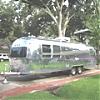
I use my Ex as a daily driver (well almost daily) as well as a tow. I do not have the V10 however but the 7.3L PSD. My Airstream loaded is about 8,000 and the tounge weight sets at 920. I use a Reese Dual Cam (and did so when I pulled this trailer with the 5,4L V8 Expedition - A different story there!) and they work very well.
IMHO -
Joe is right about the Hensley, Pro-pride, etc.. They are absolutely the Top of the Line and make any Tow Vechile docile and compliant. Many of the Airstreamers I run into have them but they are $$$.
If you have a CAT scales close by, they will usually have a triple pad scale that will give you three weights at once (you can weigh the front end, drive and trailer all hooked up at one time). Here in Texas it's only $9 for the intial weighi-in and then $1 for every addtional weigh within the next 24 hours. Cheap. It allows you time to play with the spring bars w/o spending much.
You can see the mods I made (so far). You have many in your "list" I think might be good but some that you will not want to do (even if money is no object). I reccomend the rear sway bar as a minimum. Everything else is gravey.
__________________________________________________ ____________________<?xml:namespace prefix = o ns = "urn:schemas-microsoft-com fficeffice" /><o
 ></o>
></o>
Moby D (Great White Whale) -2002 Excursion Limited 4WD 7.3L PSD; 3.73 LS; Edge Evo 2, BFG All-Terrain KO, 4" MBRP TurboBack W/5" Tip, AFE Stage 2 w/Pro 7 ,V-codes, towing Airstream 25FB w/ Reese Dual Cam & 1200# bars.
IMHO -
Joe is right about the Hensley, Pro-pride, etc.. They are absolutely the Top of the Line and make any Tow Vechile docile and compliant. Many of the Airstreamers I run into have them but they are $$$.
If you have a CAT scales close by, they will usually have a triple pad scale that will give you three weights at once (you can weigh the front end, drive and trailer all hooked up at one time). Here in Texas it's only $9 for the intial weighi-in and then $1 for every addtional weigh within the next 24 hours. Cheap. It allows you time to play with the spring bars w/o spending much.
You can see the mods I made (so far). You have many in your "list" I think might be good but some that you will not want to do (even if money is no object). I reccomend the rear sway bar as a minimum. Everything else is gravey.
__________________________________________________ ____________________<?xml:namespace prefix = o ns = "urn:schemas-microsoft-com
fficeffice" /><o></o>Moby D (Great White Whale) -2002 Excursion Limited 4WD 7.3L PSD; 3.73 LS; Edge Evo 2, BFG All-Terrain KO, 4" MBRP TurboBack W/5" Tip, AFE Stage 2 w/Pro 7 ,V-codes, towing Airstream 25FB w/ Reese Dual Cam & 1200# bars.
Hotshot
Joined: Oct 2005
Posts: 12,237
Likes: 22
From: Florida

Thanks Joe for such a detailed explanation.
I'm going to try to get to the scales this week that way we can talk more accurate figures. Everything makes perfect sense to me. Luckily most of our added weight (equipment) in the trailer is in the same section as the fresh water as this is the kitchen and dinette storage.
I will have to check on this WD system, as I think mine is not adequate. The "dealership" said my old bars from my last trailer would work on this one. But after looking at the leveling bars I see it is designed for 501-800# of tongue weight, my new trailer exceeds this by a couple hundred #s. This is most likely a big issue also. So I would not be surprised after I get off the scales that my current WD system will be found to be shall we say "lacking".
Again your help is most appreciated, I will post once I get off the scales.
Thanks,
Ramon
I'm going to try to get to the scales this week that way we can talk more accurate figures. Everything makes perfect sense to me. Luckily most of our added weight (equipment) in the trailer is in the same section as the fresh water as this is the kitchen and dinette storage.
I will have to check on this WD system, as I think mine is not adequate. The "dealership" said my old bars from my last trailer would work on this one. But after looking at the leveling bars I see it is designed for 501-800# of tongue weight, my new trailer exceeds this by a couple hundred #s. This is most likely a big issue also. So I would not be surprised after I get off the scales that my current WD system will be found to be shall we say "lacking".
Again your help is most appreciated, I will post once I get off the scales.
Thanks,
Ramon
No problem...WD hitch setups is one of my favorite topics to talk about!
As far as your current WD bars...they may well be the culprit as I would venture a guess your LOADED tongue weight will easily be in the 1200-1300# range if your LOADED trailer goes 9000-10,000#'s. My TT loaded is 9000#'s (scale verified). When I was first setting up my dual cam at the scales I found that my tongue weight was actually over 1400#'s!
 My camper is a front bedroom, center kitchen, rear bunk room with dual slides. I guess I had too much loaded under the front bed!
  After a few shifts of some of the heavier items to under the dinette benches (basically over the trailer axles), I was able to dial my tongue weight to within the specs on our receiver.
I played with the fresh water tank as well as there are times I 'may' haul fresh water. I found that 1/3 of the water weight shows up as tongue weight based on my fresh tank placement. So I settled on ~1100#'s of tongue weight with NO water and ~1200#'s with water. I left myself some leeway because on longer trips we would be packing more food in the kitchen but that is over the axles and more clothes which would likely be in the front room or bunk room. Point is that you need to MATCH your WD bars to the tongue weight or there is no way they can apply enough transfer to get your front axle back to where it needs to be...I suspect your issue will start with getting the right size WD bars. I would recommend minimum 1200# bars for your trailer.
I also suspect that once you get loaded up your tongue weight will surprise you...that 1400#'s did me!
 It did take some moving around of cargo to get me in line with our receiver ratings (remember that 1250# MAX tongue weight in WD mode).
TXSailor is 100% about the scales...most CAT scales are very inexpensive for re-weighs...so taking advantage of that and a full weigh session will likely cost you less than $15...cheap insurance (IMO) to get your set up balanced right.
Good luck to you and please post the numbers you discover.
I will note that I am not as observant these days on the forums...I've been traveling like a madman for work...I've logged nearly 145,000 flying miles thus far this year and have only left the country once so far
 ...so if you happen to post a response and I don't respond...please PM me to make sure I take notice
Good luck,
Joe.
Trending Topics
Thread Starter
|
Senior User
Joined: Nov 2009
Posts: 192
Likes: 0
Ok, I finally got my TT back from the dealership for some warranty work. It only took them 5 weeks to do it. Next time I will wait till the off season to do any work.
So I finally made it to the scales and here are the results.
1) Baseline axle weights on truck
Check my math and make sure I am using the right numbers accordingly.
So it looks like I have approx 10.8 % of the TT weight on my hitch which is close to the bare minimum.
What do you guys think? I would say my WD is set at maximum which is as much as I can crank with the TT jack extended to not only take the trailer weight off of the truck but to also lift the truck some 4 inches. I have 4 links dangling and I am on the 5th link. Correct me if I am wrong but I think I need a better WD. The front weight is not too bad as it is only 80 lbs from the unloaded weight. But I feel that I need approx 100 lbs more on the hitch which would put me at 11.9%, but since my WD is maxed out i should see a weight drop on my front axle.
Since I am running almost 4,800 lbs on the rear axle and my G code springs are rated for 5,200 lbs how does this play in affect on my seesawing ride that I get.
Now I will admit that the family did not want to go. So these weights are close but not entirely accurate. But the trailer is approx 80% ready to go camping with very little prepping required to make her ready. I would normally see an extra 350 lbs in the truck (we are not big people) for traveling and approx 5 gallons of water (~40 lbs) and say 100 lbs of food, both of these weights are just in front of the trailer axles. The trailer remains stocked with clothes that we no longer wear much of. This way it takes very little prep in case of a hurricane evac.
Your guys input is greatly appreciated
So I finally made it to the scales and here are the results.
1) Baseline axle weights on truck
- Front Axle 3,660 lbs
- Rear Axle 3,720 lbs
- Trailer Weight on separate unattached scale was 9,180 lbs
- Front Axle 3,160 lbs (a loss of 500 lbs off of Front Axle)
- Rear Axle 5,340 lbs (a gain of 1,620 lbs onto Rear Axle)

- Trailer Axles 8,060 lbs
- Front Axle 3,580 lbs (a loss of only 80 lbs from vehicle alone)
- Rear Axle 4,720 lbs (a gain of 1,000 lbs from vehicle alone)
- Trailer Axle 8,240 lbs (a gain of 180 lbs from no WD)
Check my math and make sure I am using the right numbers accordingly.
So it looks like I have approx 10.8 % of the TT weight on my hitch which is close to the bare minimum.
What do you guys think? I would say my WD is set at maximum which is as much as I can crank with the TT jack extended to not only take the trailer weight off of the truck but to also lift the truck some 4 inches. I have 4 links dangling and I am on the 5th link. Correct me if I am wrong but I think I need a better WD. The front weight is not too bad as it is only 80 lbs from the unloaded weight. But I feel that I need approx 100 lbs more on the hitch which would put me at 11.9%, but since my WD is maxed out i should see a weight drop on my front axle.
Since I am running almost 4,800 lbs on the rear axle and my G code springs are rated for 5,200 lbs how does this play in affect on my seesawing ride that I get.
Now I will admit that the family did not want to go. So these weights are close but not entirely accurate. But the trailer is approx 80% ready to go camping with very little prepping required to make her ready. I would normally see an extra 350 lbs in the truck (we are not big people) for traveling and approx 5 gallons of water (~40 lbs) and say 100 lbs of food, both of these weights are just in front of the trailer axles. The trailer remains stocked with clothes that we no longer wear much of. This way it takes very little prep in case of a hurricane evac.
Your guys input is greatly appreciated
FTE Stories
Ford Trucks for Ford Truck Enthusiasts

3 Best / 3 Worst Parts of Modern Ford Ownership
Brett Foote
10 Amazing Upgrades That Solve Common Ford Truck Owner Headaches
Pouria Savadkouei
Every 2026 Ford Engine Explained
Brett Foote
10 Ugly Ford Trucks That We Still Kinda Love
Joe Kucinski
10 Things Every Truck Owner NEEDS (2026 Edition)
Michael S. Palmer
Rezvani's Latest Post-Apocalyptic Monster Is a Ford F-150 Raptor Underneath
Verdad Gallardo
Top 10 Most Expensive Ford Trucks Ever Sold on Bring a Trailer
Joe Kucinski
2027 Ford Super Duty Buyer's Guide (Every Model, Engine, & Package)
Brett Foote
Top 10 Ford Truck Tragedies
Joe Kucinski
Thread Starter
|
Senior User
Joined: Nov 2009
Posts: 192
Likes: 0
Hmmm, just had a thought as far as what I just posted below.
If my un WD tongue weight is over 1,600#. Maybe I should shift stuff to the rear until I get my tongue weight down to say 1,200#. Then my WD will not have to work so hard. I should get my front axle weight even closer.
Now another question, do I want 12% of total weight on the tongue before or after I hook up the WD. Because if I drop my tongue weight down to 1,200# pre WD, then add the WD and drop it down further, is that a bad thing. Or is the total tongue weight calculated by adding the difference of the two front weights (pre WD and with WD) to the difference of the two rear axle weights (pre WD and with WD). Or am I just confused as H377!!
Time for a
If my un WD tongue weight is over 1,600#. Maybe I should shift stuff to the rear until I get my tongue weight down to say 1,200#. Then my WD will not have to work so hard. I should get my front axle weight even closer.
Now another question, do I want 12% of total weight on the tongue before or after I hook up the WD. Because if I drop my tongue weight down to 1,200# pre WD, then add the WD and drop it down further, is that a bad thing. Or is the total tongue weight calculated by adding the difference of the two front weights (pre WD and with WD) to the difference of the two rear axle weights (pre WD and with WD). Or am I just confused as H377!!
Time for a
Hotshot
Joined: Oct 2005
Posts: 12,237
Likes: 22
From: Florida
1) Baseline axle weights on truck
- Front Axle 3,660 lbs
- Rear Axle 3,720 lbs
- Trailer Weight on separate unattached scale was 9,180 lbs
- Front Axle 3,160 lbs (a loss of 500 lbs off of Front Axle)
- Rear Axle 5,340 lbs (a gain of 1,620 lbs onto Rear Axle)
- Trailer Axles 8,060 lbs
- Front Axle 3,580 lbs (a loss of only 80 lbs from vehicle alone)
- Rear Axle 4,720 lbs (a gain of 1,000 lbs from vehicle alone)
- Trailer Axle 8,240 lbs (a gain of 180 lbs from no WD)
So it looks like I have approx 10.8 % of the TT weight on my hitch which is close to the bare minimum.
First off...NICE job...doing this takes a little bit of time...but it really does help you to have a more relaxed and safe towing experience!
As far as your numbers to...here's my take.
You seem to be 'close' on the shifting the needed weight back to the front axle. You are only 80#'s off so that isn't all that bad...does your hitch head have any 'tilt' provisions where you can tilt the hitch head and that essentially adds more weight transfer to the bars?
Speaking of bars...do you happen to know what they are rated at? You should be using 1200# bars minimum based on the tongue weight...so you may want to check that.
Now on the tongue weight...you are slightly confused in your calculations. The way I calculate it you actually have ~1120#'s or ~12.2% tongue weight...a safe number. Here's how you calculate it.
Take a look at your baseline Front axle weight of 3660. Notice that when you hitched up but did NOT engage WD your front axle LIGHTENED by 500#'s to 3160...this weight actually shows up on your REAR axle. So in your hitched but NO WD REAR weight of 5340#'s...500 of that is FRONT axle weight that must be subtracted to find the REAL tongue weight. Here's what I mean.
5340 - 500 (front weight) - 3720 (baseline rear) = 1120#'s
1120 / 9180 (TT alone weight from above I assume you weighed this on the scale separately to get the weight?) = 12.2%
Overall I think you are 'close' and could tweak it slightly if you have the ability to tilt the hitch head rearward without taking out another link from being in tension (i.e. apply more WD thru head tilt).
Does this make sense as to the tongue calculation to you?
As far as being at almost 4800#'s on your rear axle...I'm actually surprised that is all you are at...my 1100# tongued TT loaded on my Ex with my family and our 'stuff' loads the axle to right at GAWR...so I carry about 400#'s MORE on my rear axle than you do!!!
Now I will admit that the family did not want to go. So these weights are close but not entirely accurate. But the trailer is approx 80% ready to go camping with very little prepping required to make her ready. I would normally see an extra 350 lbs in the truck (we are not big people) for traveling and approx 5 gallons of water (~40 lbs) and say 100 lbs of food, both of these weights are just in front of the trailer axles. The trailer remains stocked with clothes that we no longer wear much of. This way it takes very little prep in case of a hurricane evac.
Your guys input is greatly appreciated
Your guys input is greatly appreciated
Hopefully I have explained what I was trying to...
Again I think if you can check two things to possibly tweak your setup a little bit more...it would then be optimal.
1) Check your spring bar ratings and make sure they are at least 1200#'s
2) Check to see if you can add WD thru hitch head tilt.
Good luck and GREAT JOB!
Joe
Thread Starter
|
Senior User
Joined: Nov 2009
Posts: 192
Likes: 0
Thanks Joe for such a detailed explanation.
I'm going to try to get to the scales this week that way we can talk more accurate figures. Everything makes perfect sense to me. Luckily most of our added weight (equipment) in the trailer is in the same section as the fresh water as this is the kitchen and dinette storage.
I will have to check on this WD system, as I think mine is not adequate. The "dealership" said my old bars from my last trailer would work on this one. But after looking at the leveling bars I see it is designed for 501-800# of tongue weight, my new trailer exceeds this by a couple hundred #s. This is most likely a big issue also. So I would not be surprised after I get off the scales that my current WD system will be found to be shall we say "lacking".
Again your help is most appreciated, I will post once I get off the scales.
Thanks,
Ramon
I'm going to try to get to the scales this week that way we can talk more accurate figures. Everything makes perfect sense to me. Luckily most of our added weight (equipment) in the trailer is in the same section as the fresh water as this is the kitchen and dinette storage.
I will have to check on this WD system, as I think mine is not adequate. The "dealership" said my old bars from my last trailer would work on this one. But after looking at the leveling bars I see it is designed for 501-800# of tongue weight, my new trailer exceeds this by a couple hundred #s. This is most likely a big issue also. So I would not be surprised after I get off the scales that my current WD system will be found to be shall we say "lacking".
Again your help is most appreciated, I will post once I get off the scales.
Thanks,
Ramon
Sorry aout that Joe, I meant to repost the capacity of the bars on my WD. I posted it down below, but it has been so long that I had meant to repost.
Anyways, my WD bars are only rated 500-800#. Which I believe is not doing the job, especially since I'm 320# over the rating. So I guess the next step is too start checking out a new system. The Hensley is a nice setup but I'm not sure I want to part with that kind of cash right now. I'll have to take a look at the others that were listed below.
About the shocks, I have no idea the last time they were replaced. But I expect the fronts to not be as old as the rears, which I believe to be originals with about 85,000 miles on them. I have plans to upgrade them here in the immediate future and will probably go with Bilsteins.
Your calculations seem to make since. I never thought about the weight coming off the front and going to the rear of the truck, thereby making it appear that the tongue had more weight.
I will try to get some better numbers here in the next week. We're going to the GTG in New Braunsfel this weekend. Let's just say that we will be 4 hours from home so I will have a captive audience while I get new weights.

Thanks again Joe, and have a safe trip home.
Thread Starter
|
Senior User
Joined: Nov 2009
Posts: 192
Likes: 0
Well, the WD system decided to make up my mind for me. On our return trip we were pulling into a McDonald's (yuck) and I heard a loud bang. Upon stopping and inspecting my ride, I found that the driver's side WD saddle on the A-frame of the trailer gave way. It was still on there but at a precarious angle and instead of clamping around the frame it was stretched wide and just dangling by the clamping bolt. So I guess it's a good time to get a new WD hitch. Wife says go for it as we will not be going anywhere until I get it working, and after she saw me fighting the sway this weekend, she want's it done right. She got tired of holding onto the armrest! LOL
She got tired of holding onto the armrest! LOL
Senior User
Joined: Dec 2008
Posts: 121
Likes: 1
From: In the Airstream
Glad the failure didn't happen on one of the Texas I-10 "eliminators" - areas where trailer sway inducers are present on the downhill side of a wind protected area. Sometimes in these places you are suddenly exposed to severe crosswinds funneled by the surrounding geography.
Don't know what your budget is, but I've towed with both an Equalizer and a Reese Dual Cam - my vote is for the Reese as the preferred hitch in the medium price choices...then again, I have a good friend who does a LOT of towing and would not in any way tow with anything but the Equalizer...almost a Ford/Dodge/Chebby debate.
Since you have the luxury of taking some time to organize and research the purchase try these RV specific forums (and others) for arms length discussions:
rv.net/forum/
iRV2 - RV Forum Community
Escapees Discussion Forum (Powered by Invision Power Board)
Great job on getting your weights documented.
Reese and Equalizer both have some good discussions on the proper set up of their WD systems on their respective internet sites.
Senior User
Joined: Dec 2008
Posts: 121
Likes: 1
From: In the Airstream
So I finally made it to the scales and here are the results.
1) Baseline axle weights on truck
What do you guys think? Your guys input is greatly appreciated
1) Baseline axle weights on truck
- Front Axle 3,660 lbs
- Rear Axle 3,720 lbs
- Trailer Weight on separate unattached scale was 9,180 lbs
- Front Axle 3,160 lbs (a loss of 500 lbs off of Front Axle)
- Rear Axle 5,340 lbs (a gain of 1,620 lbs onto Rear Axle)
- Trailer Axles 8,060 lbs
- Front Axle 3,580 lbs (a loss of only 80 lbs from vehicle alone)
- Rear Axle 4,720 lbs (a gain of 1,000 lbs from vehicle alone)
- Trailer Axle 8,240 lbs (a gain of 180 lbs from no WD)
What do you guys think? Your guys input is greatly appreciated
I am surprised, however, that you only lost 500 lbs off of the front axle when you dropped the tongue on your hitch...my numbers are with the Hensley, so that would mean an extra foot or so of fulcrum length for me further back from the axle. I lost 780 lbs off of the front axle, but I started out a couple of hundred pounds heavier than you.
A good example as to why each hookup needs to be weighed independently since each individual hookup is unique.
Below is an XL file for a first cut of determining a Tow Vehicle's adequacy for any given trailer. This is a good starting point only - both TV AND Trailer "Stated Manufacturer's Weights" are known to be sometimes in error.
http://www.airforums.com/forums/atta...8&d=1279550875
I have used the link and there does not appear to be any hidden viruses linked to it.
Thread Starter
|
Senior User
Joined: Nov 2009
Posts: 192
Likes: 0
An update to the suspension problem. And I want to thank you all for your comments. While I am still in the market for a new WD since one of my saddles broke, and am currently in no hurry since it is past our season to camp.
However new things have just came up that gave me more insight on my problem. I found a nail in one of my tires and it happens to be in a spot that makes it unrepairable. So anyways I was wanting to lift my truck anyway and get some bigger tires. But yesterday I was underneath the Ex scoping out the new project and found that my passenger side leaf springs have an issue. There is a rubber pad on the overload springs that contact the main spring. Well the pass side one is half gone compared to the drivers side, and it looks like it has been thru hell. So when weight was added, the driver's side would hit the overload spring about 1 1/2" prior to the pass side making contact. I would theorize that this would cause a constant force pushing or steering me to the right side of the road. Also this would amplify any swaying forces.
I will try to get some pics tomorrow, if I remember
However new things have just came up that gave me more insight on my problem. I found a nail in one of my tires and it happens to be in a spot that makes it unrepairable. So anyways I was wanting to lift my truck anyway and get some bigger tires. But yesterday I was underneath the Ex scoping out the new project and found that my passenger side leaf springs have an issue. There is a rubber pad on the overload springs that contact the main spring. Well the pass side one is half gone compared to the drivers side, and it looks like it has been thru hell. So when weight was added, the driver's side would hit the overload spring about 1 1/2" prior to the pass side making contact. I would theorize that this would cause a constant force pushing or steering me to the right side of the road. Also this would amplify any swaying forces.
I will try to get some pics tomorrow, if I remember