



2005 - F250 - Rust!

Thread Starter
|
Senior User
Joined: Nov 2009
Posts: 110
Likes: 1
Nope, I should try that stuff?
Those products contain Zinc.. :
"For example, zinc is often used as a sacrificial anode for steel structures, such as pipelines or docked naval ships. Galvanic corrosion is of major interest to the marine industry and also anywhere water can contact pipes or metal structures."
Corrosion - Wikipedia, the free encyclopedia
Those products contain Zinc.. :
"For example, zinc is often used as a sacrificial anode for steel structures, such as pipelines or docked naval ships. Galvanic corrosion is of major interest to the marine industry and also anywhere water can contact pipes or metal structures."
Corrosion - Wikipedia, the free encyclopedia

Post Fiend
Joined: Jul 2005
Posts: 6,127
Likes: 6
Sandblast the rust away ---- then use a very zinc powder rich marine coating.
It is about the only fighting chance you got to slow down the rust once it has started.
Take my word for it.. I have the same problem and will be using the same solution.
It is about the only fighting chance you got to slow down the rust once it has started.
Take my word for it.. I have the same problem and will be using the same solution.
Posting Guru
Joined: Dec 2009
Posts: 1,674
Likes: 2
I would definitely not recommend sandblasting, the media can damage surrounding panels' finish. Just do it the old fashioned way, trust me on this... it is what I do for a living (ASE Master Certified in body and collision). Also, you might want to look into an electronic device that charges the vehicle. It will eliminate all rust issues, was created for salt trucks to prevent rust and corrosion. They typically run around $300-$400 and are a simple install.

New User
Joined: Dec 2007
Posts: 19
Likes: 0
I have heard good and bad about the electonic devices for rust, most have said they are just snake oil. I have the same problem starting on my truck and want to keep the wheel arches from rusting. Looking at the "rust encapsulator" from eastwood. Any thoughts?
Post Fiend
Joined: Jul 2005
Posts: 6,127
Likes: 6
Electronic devices --- if they are commercial grade, do do some good by using massive amounts of power and diverting the "rust" to a sacrificial anode.
But the consumer grade is worthless, or worse, a fraud.
You can do better getting snake oil and blessing the car.
---------------------------------
We will have to agree to disagree re sandblasting.
The salt damage here is so bad that nothing else will really do justice.
That said, I concur that you have to really take care to protect trim, etc.
A good sand blast will cut right through the metal --- so you need to know what you are doing --- like using a grinding wheel.
Sandblast according to instructions here:
http://www.mgduff.co.uk/pdfs/zingard...n%20Specr1.pdf
Surface preparation
Cleanliness and roughness
• Main rules
In order to obtain cathodic protection, an electric contact is required between Zingard and its substrate.
Therefore the substrate must be clean and rough. That is the main rule.
It is very important to keep the following working order in mind :
1. eliminating all dirt, grease, oil and salts
2. total removal of all old paint, rust and mill scale
3. roughening
4. dedusting or rinsing
• General guidelines to obtain cleanliness
First we describe the most common method to obtain a clean (and at the same time rough)
surface for the application of Zingard:
The metal substrate should first be degreased, preferably by steam-cleaning at 140 bar at 80°C. After
that it should be grit-blasted or slurry-blasted to cleanliness degree SA 2,5 according to the standard ISO
8501-1 or to the cleanliness degree described in the standards SSPC-SP10 and NACE nr 2. This means
that the surface must be free from rust, grease, oil, paint, salt, dirt, mill scale and other contaminants. Once
the grit-blasting is completed the surface should be de-dusted with non contaminated compressed air
according to the standard ISO 8502-3 (class 2) or in case of slurry-blasting the surface should be dried with
non-contaminated compressed air.
Another method to obtain a clean surface is UHP water-jetting to cleanliness degree WJ1 according to the
standards NACE nr 5 and SSPC-SP12. But keep in mind that this method does not create surface
roughness.
General guidelines to obtain cleanliness
First we describe the most common method to obtain a clean (and at the same time rough)
surface for the application of Zingard:
The metal substrate should first be degreased, preferably by steam-cleaning at 140 bar at 80°C. After
that it should be grit-blasted or slurry-blasted to cleanliness degree SA 2,5 according to the standard ISO
8501-1 or to the cleanliness degree described in the standards SSPC-SP10 and NACE nr 2. This means
that the surface must be free from rust, grease, oil, paint, salt, dirt, mill scale and other contaminants. Once
the grit-blasting is completed the surface should be de-dusted with non contaminated compressed air
according to the standard ISO 8502-3 (class 2) or in case of slurry-blasting the surface should be dried with
non-contaminated compressed air.
Another method to obtain a clean surface is UHP water-jetting to cleanliness degree WJ1 according to the
standards NACE nr 5 and SSPC-SP12. But keep in mind that this method does not create surface
roughness.
This high degree of cleanliness is not needed when Zingard is applied on a hot-dip galvanisation or a
metallisation layer, or when it is applied on top of an existing Zingard layer. Please refer to the additional
technical specifications for Zingarded for relevant detail.
For substrates that will not be immersed Zingard can be applied on mild flash rust occurring in the time
periods detailed herein. For applications that will be immersed Zingard can only be applied on an SA 2,5
prepared surface unless otherwise agreed with the MGDuff representative.
On small areas or on non-critical applications Zingard can be applied on a surface that is manually
prepared to degree St 3 according to ISO 8501-1. Please consult with the MGDuff representative.
• General guidelines to obtain roughness
Zingard should be applied on a metal substrate that has roughness degree Rz 50 to 70 μm (for total DFT <
280 μm) or Rz 60 to 80 μm (for total DFT > 280 μm) according to the standard ISO 8503-2. This can be
obtained by grit-blasting (with sharp particles) but not by shotblasting (with spherical particles). Make sure
that the surface is degreased before the gritblasting.
This high degree of roughness is not needed when Zingard is applied on a hot-dip galvanisation or a
metallisation layer, or when it is applied on top of an existing Zingard layer. Please refer to the additional
technical specifications for Zingard for relevant detail.
On small areas or on non-critical applications Zingard can be applied on a surface that is manually
prepared e.g. with a needle gun or a grinding disk, in order to obtain an adequate roughness for Zingard.
Please consult with the MGDuff representative.
The sandblasting is necessary to get a rough surface for the zinc anode in the coating to contact -- must be clean metal to metal contact.
Then, use this zinc rich coating --- it is about 80% zinc by weight.
Paint on top of it.
If you can get their stuff... it is proven:
Zingard - Marine Cathodic Protection - MGDUFF
But the consumer grade is worthless, or worse, a fraud.
You can do better getting snake oil and blessing the car.
---------------------------------
We will have to agree to disagree re sandblasting.
The salt damage here is so bad that nothing else will really do justice.
That said, I concur that you have to really take care to protect trim, etc.
A good sand blast will cut right through the metal --- so you need to know what you are doing --- like using a grinding wheel.
Sandblast according to instructions here:
http://www.mgduff.co.uk/pdfs/zingard...n%20Specr1.pdf
Surface preparation
Cleanliness and roughness
• Main rules
In order to obtain cathodic protection, an electric contact is required between Zingard and its substrate.
Therefore the substrate must be clean and rough. That is the main rule.
It is very important to keep the following working order in mind :
1. eliminating all dirt, grease, oil and salts
2. total removal of all old paint, rust and mill scale
3. roughening
4. dedusting or rinsing
• General guidelines to obtain cleanliness
First we describe the most common method to obtain a clean (and at the same time rough)
surface for the application of Zingard:
The metal substrate should first be degreased, preferably by steam-cleaning at 140 bar at 80°C. After
that it should be grit-blasted or slurry-blasted to cleanliness degree SA 2,5 according to the standard ISO
8501-1 or to the cleanliness degree described in the standards SSPC-SP10 and NACE nr 2. This means
that the surface must be free from rust, grease, oil, paint, salt, dirt, mill scale and other contaminants. Once
the grit-blasting is completed the surface should be de-dusted with non contaminated compressed air
according to the standard ISO 8502-3 (class 2) or in case of slurry-blasting the surface should be dried with
non-contaminated compressed air.
Another method to obtain a clean surface is UHP water-jetting to cleanliness degree WJ1 according to the
standards NACE nr 5 and SSPC-SP12. But keep in mind that this method does not create surface
roughness.
General guidelines to obtain cleanliness
First we describe the most common method to obtain a clean (and at the same time rough)
surface for the application of Zingard:
The metal substrate should first be degreased, preferably by steam-cleaning at 140 bar at 80°C. After
that it should be grit-blasted or slurry-blasted to cleanliness degree SA 2,5 according to the standard ISO
8501-1 or to the cleanliness degree described in the standards SSPC-SP10 and NACE nr 2. This means
that the surface must be free from rust, grease, oil, paint, salt, dirt, mill scale and other contaminants. Once
the grit-blasting is completed the surface should be de-dusted with non contaminated compressed air
according to the standard ISO 8502-3 (class 2) or in case of slurry-blasting the surface should be dried with
non-contaminated compressed air.
Another method to obtain a clean surface is UHP water-jetting to cleanliness degree WJ1 according to the
standards NACE nr 5 and SSPC-SP12. But keep in mind that this method does not create surface
roughness.
This high degree of cleanliness is not needed when Zingard is applied on a hot-dip galvanisation or a
metallisation layer, or when it is applied on top of an existing Zingard layer. Please refer to the additional
technical specifications for Zingarded for relevant detail.
For substrates that will not be immersed Zingard can be applied on mild flash rust occurring in the time
periods detailed herein. For applications that will be immersed Zingard can only be applied on an SA 2,5
prepared surface unless otherwise agreed with the MGDuff representative.
On small areas or on non-critical applications Zingard can be applied on a surface that is manually
prepared to degree St 3 according to ISO 8501-1. Please consult with the MGDuff representative.
• General guidelines to obtain roughness
Zingard should be applied on a metal substrate that has roughness degree Rz 50 to 70 μm (for total DFT <
280 μm) or Rz 60 to 80 μm (for total DFT > 280 μm) according to the standard ISO 8503-2. This can be
obtained by grit-blasting (with sharp particles) but not by shotblasting (with spherical particles). Make sure
that the surface is degreased before the gritblasting.
This high degree of roughness is not needed when Zingard is applied on a hot-dip galvanisation or a
metallisation layer, or when it is applied on top of an existing Zingard layer. Please refer to the additional
technical specifications for Zingard for relevant detail.
On small areas or on non-critical applications Zingard can be applied on a surface that is manually
prepared e.g. with a needle gun or a grinding disk, in order to obtain an adequate roughness for Zingard.
Please consult with the MGDuff representative.
The sandblasting is necessary to get a rough surface for the zinc anode in the coating to contact -- must be clean metal to metal contact.
Then, use this zinc rich coating --- it is about 80% zinc by weight.
Paint on top of it.
If you can get their stuff... it is proven:
Zingard - Marine Cathodic Protection - MGDUFF
Thread Starter
|
Senior User
Joined: Nov 2009
Posts: 110
Likes: 1
For my doors, I'll just use the old fashion way with the materials I've already have.
And fill the door periodically with Fluid Film/Oil/etc and not put those damm rubbers back on.
But I am definitely using a Zinc based primer next time!
Did a lot of reading on it, it's just what I've always dreamed about
Thanks!
The only problem is I can't buy it local..
Here's an example of what I'll get:
Cleaners/Degreasers, Lubricants & Rust Preventives | Cleaners/Degreasers, Lubricants & Rust Preventives | Zinc-Rich Cold Galvanizing Compound - 16 oz Aerosol | B49981 - GlobalIndustrial.com
And fill the door periodically with Fluid Film/Oil/etc and not put those damm rubbers back on.
But I am definitely using a Zinc based primer next time!
Did a lot of reading on it, it's just what I've always dreamed about
Thanks!
The only problem is I can't buy it local..
Here's an example of what I'll get:
Cleaners/Degreasers, Lubricants & Rust Preventives | Cleaners/Degreasers, Lubricants & Rust Preventives | Zinc-Rich Cold Galvanizing Compound - 16 oz Aerosol | B49981 - GlobalIndustrial.com
FTE Stories
Ford Trucks for Ford Truck Enthusiasts

10 Things Every Truck Owner NEEDS (2026 Edition)
Michael S. Palmer
Rezvani's Latest Post-Apocalyptic Monster Is a Ford F-150 Raptor Underneath
Verdad Gallardo
Top 10 Most Expensive Ford Trucks Ever Sold on Bring a Trailer
Joe Kucinski
2027 Ford Super Duty Buyer's Guide (Every Model, Engine, & Package)
Brett Foote
Top 10 Ford Truck Tragedies
Joe Kucinski
AEV FXL Super Duty - the Super Duty Raptor Ford Doesn't Make
Brett Foote
Lobo Vs Lobo: Proof the F-150 Lobo Should Be Even Lower!
Michael S. Palmer
Ford's 2001 Explorer Sportsman Concept Looks For a New Home
Verdad Gallardo
10 Best Ford Truck Engines We Miss the Most!
Joe Kucinski
Post Fiend
Joined: Jul 2005
Posts: 6,127
Likes: 6
The only problem is I can't buy it local..
Here's an example of what I'll get:
Cleaners/Degreasers, Lubricants & Rust Preventives | Cleaners/Degreasers, Lubricants & Rust Preventives | Zinc-Rich Cold Galvanizing Compound - 16 oz Aerosol | B49981 - GlobalIndustrial.com
Here's an example of what I'll get:
Cleaners/Degreasers, Lubricants & Rust Preventives | Cleaners/Degreasers, Lubricants & Rust Preventives | Zinc-Rich Cold Galvanizing Compound - 16 oz Aerosol | B49981 - GlobalIndustrial.com
That stuff is 47% zinc by weight.
If that is all you can get, go with it --- the difference is only 30ish percent.
Beats zilch.
If you don't use this kind of a coating with proper prep and an anode, it will come back as rust in less than 2 years.
So you will get your chance to do it right the next time.
http://www.paintdocs.com/webmsds/web...pe=MSDS&lang=E
Posting Guru
Joined: Dec 2009
Posts: 1,674
Likes: 2
Electronic devices --- if they are commercial grade, do do some good by using massive amounts of power and diverting the "rust" to a sacrificial anode.
But the consumer grade is worthless, or worse, a fraud.
You can do better getting snake oil and blessing the car.
---------------------------------
We will have to agree to disagree re sandblasting.
The salt damage here is so bad that nothing else will really do justice.
That said, I concur that you have to really take care to protect trim, etc.
A good sand blast will cut right through the metal --- so you need to know what you are doing --- like using a grinding wheel.
Sandblast according to instructions here:
http://www.mgduff.co.uk/pdfs/zingard...n%20Specr1.pdf
The sandblasting is necessary to get a rough surface for the zinc anode in the coating to contact -- must be clean metal to metal contact.
Then, use this zinc rich coating --- it is about 80% zinc by weight.
Paint on top of it.
If you can get their stuff... it is proven:
Zingard - Marine Cathodic Protection - MGDUFF
But the consumer grade is worthless, or worse, a fraud.
You can do better getting snake oil and blessing the car.
---------------------------------
We will have to agree to disagree re sandblasting.
The salt damage here is so bad that nothing else will really do justice.
That said, I concur that you have to really take care to protect trim, etc.
A good sand blast will cut right through the metal --- so you need to know what you are doing --- like using a grinding wheel.
Sandblast according to instructions here:
http://www.mgduff.co.uk/pdfs/zingard...n%20Specr1.pdf
The sandblasting is necessary to get a rough surface for the zinc anode in the coating to contact -- must be clean metal to metal contact.
Then, use this zinc rich coating --- it is about 80% zinc by weight.
Paint on top of it.
If you can get their stuff... it is proven:
Zingard - Marine Cathodic Protection - MGDUFF
Sandblasting is a useful technique, but very messy. If the part could be removed and prepped away from the vehicle, I would not have as much of an issue with it, but since it is inside the truck where the doors will have to be opened and absolutely everything masked off completely, it makes so much more sense to just use sanding as the approach. If you go the sandblasting approach, the media can easily find it's way to the outer skin and cause paint damage, or even inside the cab if not 100% masked off the right way. Even if you have considerable rust to address, a 36grit Roloc and an angle grinder will be even more aggressive than media blasting. Plus, sandblasting removes everything straight down to the metal (including the E-coat) just as a Roloc would, however sanding such a small area by hand would give so much more control so that the owner does not blast away too much material, and remove paint and E-coat where he does not want it to be removed. Don't get me wrong here, sandblasting is a great approach to a lot of stuff, but on patch jobs there is no reason to take such drastic means, IMO.
Post Fiend
Joined: Jul 2005
Posts: 6,127
Likes: 6
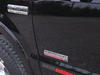
When it is that bad (rusted through the skin into the frame, as you can see, it must be removed for a real fix.
I would also consider lead filling the damage inside the skin / on the frame.
Senior User
Joined: Jul 2009
Posts: 132
Likes: 0
From: Canada
You might want to also open the tailgate and look at the bottom lip on the inside.I bet 100% there is rust build up or the paint is bubbling up.mine s an 07 from down south and already is getting the bubble up on the tailgate with only 31,000 miles.You might want to get it zeibarted this year living in ont.good luck..
Post Fiend
Joined: Jul 2005
Posts: 6,127
Likes: 6
IMHO, "rustproofing" coatings that are basically a petroleum / wax coating is a waste of time and money.
Especially once it is been on the road.
You risk entombing salt and blocking water drains and causing even more rust.
I have seen plenty of coatings that get put on rusted surfaces that end up, trapping water (from holes, water diffuse inside, etc.) and then rusting from the inside.
That is why I am moving to a sacrificial anode coating that is known to work as long as the anode is there.
My treatment is good for 3 to 5 years in heavy salt areas.
Then it has to be retreated to maintain the protection.
Especially once it is been on the road.
You risk entombing salt and blocking water drains and causing even more rust.
I have seen plenty of coatings that get put on rusted surfaces that end up, trapping water (from holes, water diffuse inside, etc.) and then rusting from the inside.
That is why I am moving to a sacrificial anode coating that is known to work as long as the anode is there.
My treatment is good for 3 to 5 years in heavy salt areas.
Then it has to be retreated to maintain the protection.
