





need 550 hp

Thread Starter
|
Freshman User
Joined: Apr 2010
Posts: 26
Likes: 0
computer
have a intake me and dad made the same as the ram air off my chevy should be good the computer is for lock up only it is a suncoast converter im just lost for words why the ford cost so much i have over five at the rear wheels of my chevy with a fast fuel pump a 5000 turbo and twin cp3 why is it so much where the block should make my horse by its self i want a bad *** mud truck/show truck i love my ford it just to damn slow dont take it wrong i just need speed its my drug how much do i need to spend the make this damn thing bad im kinda kicking my self in the *** for building it if i have to drop ten in the moter to make it move my girls gonna kill me i guess
Thread Starter
|
Freshman User
Joined: Apr 2010
Posts: 26
Likes: 0
sorry
the chevy also has edge chip and superchip stacked on it and it dyno at 514hprw.it cost me about 7500 to get that out of a 6.6 liter motor .. sorry i dont know where the dang keys are on these computer. i would be here all day trying to find the buttons. thats why you cant read it sorry and i chicken peck

Postmaster
Joined: Jan 2009
Posts: 2,544
Likes: 4
From: Suffolk, VA
So you're saying that you made over 500 hp at the rear wheels on your 6.6 with nothing other than a bigger turbo, a Fass fuel pump, and twin high pressure pumps and stacked off the shelf chips? Impressive, do you still have the Chevy?
You're stuck on this hp # thing, why not see where you can take it without building the engine? There's quite a few around here that have done just that, Izzy who posted in your thread is at 450 and likes it just fine and is doing well on PMRs. You might find you like it just fine with bigger sticks, a turbo, some good live tuning and other supporting mods. Then if you don't like it or you break it, look in to taking it to the next level. Also I didn't catch if you answered what year your truck is, some years had PMR rods, some had forged which are said to be stronger.
You want what you want, good luck with it all. It's just most people come on here looking to see what they can do to get some more power and reliability out of thier trucks and then seem to get PMS and progress from there. Not too many start out wanting to take the leap to ludicrous speed right off the bat.
You're stuck on this hp # thing, why not see where you can take it without building the engine? There's quite a few around here that have done just that, Izzy who posted in your thread is at 450 and likes it just fine and is doing well on PMRs. You might find you like it just fine with bigger sticks, a turbo, some good live tuning and other supporting mods. Then if you don't like it or you break it, look in to taking it to the next level. Also I didn't catch if you answered what year your truck is, some years had PMR rods, some had forged which are said to be stronger.
You want what you want, good luck with it all. It's just most people come on here looking to see what they can do to get some more power and reliability out of thier trucks and then seem to get PMS and progress from there. Not too many start out wanting to take the leap to ludicrous speed right off the bat.

Post Fiend


Joined: Jun 2006
Posts: 9,714
Likes: 2
From: White Mnt's,New Hampshire
head work with a set of fire rings and a good set of valve springs and stud's, billit rod's. griddle with main stud's, full fuel mod, a set of SS 250/80 (300/100 would be better) with a 42R will get you 600HP..
i was shooting for the 600 but after talking to swamps im now shooting for 550HP with my 38R and a set of 250cc to save about $5,000..parts are gathering for a winter build as we speak..
i was shooting for the 600 but after talking to swamps im now shooting for 550HP with my 38R and a set of 250cc to save about $5,000..parts are gathering for a winter build as we speak..
Thread Starter
|
Freshman User
Joined: Apr 2010
Posts: 26
Likes: 0
sorry
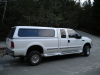
my ford is a 2002 but i dont know how to tell what rods it has...an the chevy is my every day truck the ford is my the weekend truck. i was told anything over 400hp and you will throw a rod and if i could get 450 without going into the motor that would be kool..if it will last for some time dont have the money to drop ten gs in it right now...also what about have the injectors set off and opened up is that true you can do that.I drag race boats the guy that does are boat injector said he also does ford and dodge injectors but cant do chevys what do yall think about that.i know i sound like a dummy but if i can cut corners and still have good shiz im gonna
Posting Guru
Joined: Apr 2009
Posts: 2,447
Likes: 1
From: Northern Idaho
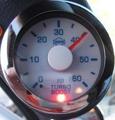
If you don't want to or can't afford to poor the money into the engine to get it into healthy enough shape to handle 450+ then the best thing to do is modify and tune what you have. Do the HPX, FRx, in tank mods, 4" exhaust, high flow high filtration intake, 6.0 IC and put a chip on it. That alone will put you about 300 to 400HP and 600 to 800 ft lbs of TQ. If that isn't enough for you then expect to put down a bunch of money but that much hp and TQ is enough to pull anything you should ever need to pull with ease.
Postmaster
Joined: Jul 2006
Posts: 4,993
Likes: 2
From: Bend, OR
550hp...
250/100 hybrids... $2200
Modded H2e or 38R/1.15... $2000-$2500
Studs... $450
Fuel system... $300-$600
GOOD tuning to control it... $400-$600
250/100 hybrids... $2200
Modded H2e or 38R/1.15... $2000-$2500
Studs... $450
Fuel system... $300-$600
GOOD tuning to control it... $400-$600
FTE Stories
Ford Trucks for Ford Truck Enthusiasts

Top 10 Fords at 2026 Carlisle Ford Nationals
Joe Kucinski
3 Best / 3 Worst Parts of Modern Ford Ownership
Brett Foote
10 Amazing Upgrades That Solve Common Ford Truck Owner Headaches
Pouria Savadkouei
Every 2026 Ford Engine Explained
Brett Foote
10 Ugly Ford Trucks That We Still Kinda Love
Joe Kucinski
10 Things Every Truck Owner NEEDS (2026 Edition)
Michael S. Palmer
Rezvani's Latest Post-Apocalyptic Monster Is a Ford F-150 Raptor Underneath
Verdad Gallardo
Top 10 Most Expensive Ford Trucks Ever Sold on Bring a Trailer
Joe Kucinski
2027 Ford Super Duty Buyer's Guide (Every Model, Engine, & Package)
Brett Foote
Postmaster
Joined: Jun 2006
Posts: 2,647
Likes: 0
From: Fulltime RVer

Each 1-hp of rejected heat energy is 42.4 Btu/min of waste heat and each 1-gal of coolant absorbs 8.3 Btu of heat energy for each 1*F of temperature increase ...so assuming a 20*F temperature difference between the top (supply) and the bottom (return) radiator hoses the gpm coolant flow through the radiator that's required to transfer 487 hp worth of "heat energy" into the ambient atmosphere is... {(487 hp)(42.4 Btu/min-hp)}/{(8.3 Btu/gal-*F)(20*F)}=125 gpm ...and this compares to a 52 gpm requirement for a stock 250 fwhp engine!
To maintain a 20*F temperature difference between the top and bottom radiator hoses for a 125 gpm coolant flow which is what's required to achieve a transfer of {(487 hp)(42.4 Btu/min-hp)}=20,649 Btu/min of waste heat into the ambient atmosphere requires a "very large" cfm airflow through the radiator's "heat exchanger" because each 1-lbm (pound mass) of air only absorbs 0.24 Btu of heat energy for each 1*F of temperature increase ...so assuming a 20*F temperature difference between the airflow entering and leaving the radiator's heat exchanger the mass airflow through the radiator's heat exchanger that's required to transfer 20,649 Btu/min of heat energy into the ambient atmosphere is... (20,649 Btu/min)/{(0.24 Btu/lbm-*F)(20*F)}=4,302 lbm/min ...and this compares to a 1,792 lbm/min requirement for a stock 250 fwhp engine!
At sea level the density of 80*F ambient air is 0.0735 lbm/ft^3 and this gives a required... (4,302 lbm/min)/(0.0735 lbm/ft^3)=58,530 ft^3/min ...or 58,530 cfm airflow through the radiator's heat exchanger and a 100*F day in Denver requires a 67,310 cfm airflow through the radiator's heat exchanger ...and this compares to a 24,380 cfm sea level requirement and a 28,045 cfm Denver requirement for a stock 250 fwhp engine!
Since 60 mph=5,280 ft/min each 1-ft^2 of radiator heat exchanger that's exposed to the airstream receives a 5,280 cfm RAM airflow so if there's 4 ft^2 exposed there's a 21,120 cfm RAM airflow at 60 mph and this RAM airflow alone is almost enough airflow to satisfy the 24,380 cfm sea level requirement of a stock 250 fwhp engine operating at full power ...but if you're towing up a 30 mph grade only a 2,640 cfm RAM airflow is received by each 1-ft^2 of exposed heat exchanger and this means there's only a 10,560 cfm RAM airflow to meet the 24,380 cfm sea level requirement of a stock 250 fwhp engine operating at full power ...and this means the radiator cooling fan needs to supply an additional 24,380-10,560=13,830 cfm FAN airflow to avoid overheating during a long slow climb near sea level and an additional 28,045-10,560=17,285 cfm FAN airflow to avoid overheating during a long slow climb near Denver!
For a 600 fwhp engine the radiator cooling fan needs to supply an additional 58,530-10,560=47,970 cfm FAN airflow to avoid overheating during a long slow climb near sea level and an additional 67,310-10,560=56,760 cfm FAN airflow to avoid overheating during a long slow climb near Denver!
So what kind of fans will provide about a 50,000 cfm FAN airflow? ...Hovercraft,Air Cushion Vehicle,Air Boat Propellers,Fans,Parts,Supplies, components and advice.
The above link shows a 32" fan with 9 blades that produces a 36,900 cfm airflow at a static pressure of 1" H20 and requires 33 hp at a 40 degree blade pitch and there's a 45" fan with 8 blades that produces a 77,500 cfm airflow at a static pressure of 1" H20 and requires 92 hp at a 40 degree blade pitch ...but considering that the airflow needs to be forced through the A/C condenser and the intercooler before even reaching the radiator I think a fan with a static pressure rating of more that 1" H20 is probably required ...and the above link also shows a 22" fan with 8 blades that produces a 16,200 cfm airflow at a static pressure of 4" H2O and at 3600 rpm requires 24 hp at a 50 degree blade pitch. I think this last 22" fan is comparable to the OEM fan but you'd need 3 of these fans to cool a 600 fwhp engine!
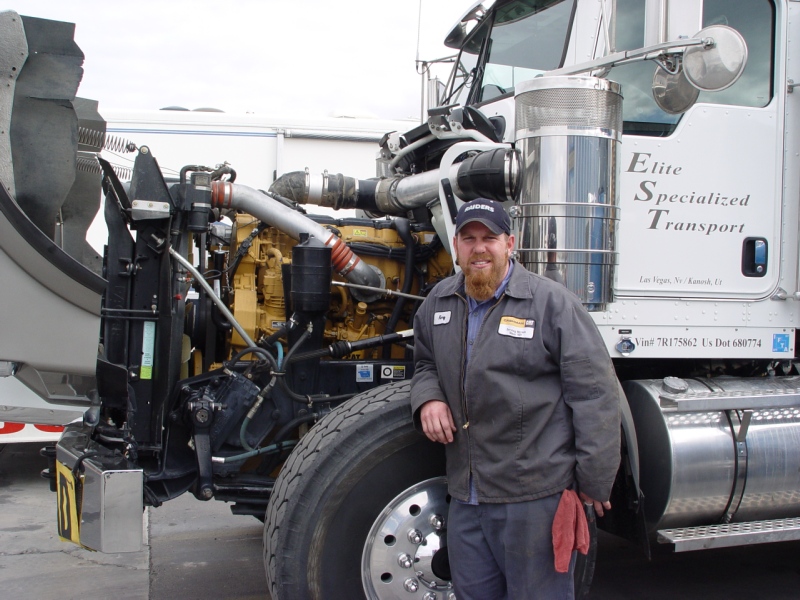
The bottom-line is that to actually use 600 fwhp you'd need a cooling system like the one below for a 600 fwhp C-15!
Senior User
Joined: Oct 2009
Posts: 147
Likes: 1
From: Albany, Oregon
i have a built trans ts chip gauges, st pipe all the way out and thats it i just lifted it and got the rims and tires now ready to make it bad a** my young lady said if i spend more then 5000 she is gonna kill me. i do play in the mud but still take long trips in it sometimes i know i have a long way to go
You can't safely get to 550 with 5k.

It takes alot more than that to get there..
I bet if you knew what 400 - 500 felt like you would be happy. The step from 500 plus starts taking alot more money.
