


Diagnose my steering problem please...

Thread Starter
|
Elder User


Joined: Apr 2010
Posts: 901
Likes: 0
From: South Jersey
gulp. i don't mind doing work on it. in fact i like it and it's a job well done feeling. my problem is diagnosing whats wrong instead of just replacing probable causes and hoping for a solution.
needless to say i'm not thrilled at the prospect of hundreds of dollars of repairs for an alignment and new ball joints (if needed). sighhhhh
needless to say i'm not thrilled at the prospect of hundreds of dollars of repairs for an alignment and new ball joints (if needed). sighhhhh

Moderator


Joined: Nov 2007
Posts: 22,415
Likes: 92
From: Denver Metro Area, CO

 It bugs me when I see people here listing all sorts
of parts they've replaced while attempting to fix a problem, it seems they never
try and diagnose the problem to any large extent and merely throw parts &
money at the problem. After reading your description and seeing your pics, this is
part of the reason why we're pushing you to take it to a pro for further
evaluation.

Methanoholic
Joined: Mar 2009
Posts: 6,442
Likes: 8
From: Maine (NorCal Native)
Diagnostics before $$$$
Because of camber built into roads and the fact that the right side of roads are usually rougher it's not uncommon for the right side to wear out before the left, however IMNSHO it's foolish to do just one side, loose parts in a chain beat new parts to death!
Was that truck backed up there or driven forward to where it's at??
-Enjoy
fh : )_~
Because of camber built into roads and the fact that the right side of roads are usually rougher it's not uncommon for the right side to wear out before the left, however IMNSHO it's foolish to do just one side, loose parts in a chain beat new parts to death!
Was that truck backed up there or driven forward to where it's at??
-Enjoy
fh : )_~
Thread Starter
|
Elder User
Joined: Apr 2010
Posts: 901
Likes: 0
From: South Jersey
Update: Last weekend I replaced all 6 shocks and sway bar bushings. The bushings in the rear were shot... They looked like someone squished the heck out of them. The fronts weren't bad. I only replaced the endlink bushings, not the big guys that attach to the truck cause they looked ok.
The shocks that were on the truck in the rear were AC Delco air shocks. I had never seen air shocks before and thought it was odd I had a valve stem under the rear bumper but whatever. I released the air and took them off and I'm good to go. Interestingly I found after I took the shocks off that the front driver side shock aft of axle completely collapsed after it was off. I guess this was a good indicator the shock was shot. Overall I'd say the truck is less bumpy now but by no means a passenger car (not that it's designed to be one).
Anyway, I did notice that a lot of the memory steer I was experiencing has disappeared but that's not to say it's gone. It's still there a little bit but does not rear it's ugly head anywhere close to as often as before. Also, it seems to show up now more when I make a hard left vs. a hard right but that could have just been chance. One odd thing I did discover and felt this before I changed the shocks is.... when making a hard right the wheel sometimes feels like it rolls a tiny bit into the turn. As if something is loose or slipped a little bit and then locks into the right hand turn. It's a little scary because the steering feels loose for that split second and then catches.
I know I need to take it to a front end shop and I still plan on doing that soon. I'd been super busy working on other more pressing issues that I'm now pretty much caught up on. Question is, with this new info does it help diagnose my issue at all?
I would think the "slipping/sliding" little bit I'm feeling is probably a bad ball joint somewhere. And I think I'd like to try tightening up my steering a little bit at the pump cause it's a little too loose for what it should be.
The shocks that were on the truck in the rear were AC Delco air shocks. I had never seen air shocks before and thought it was odd I had a valve stem under the rear bumper but whatever. I released the air and took them off and I'm good to go. Interestingly I found after I took the shocks off that the front driver side shock aft of axle completely collapsed after it was off. I guess this was a good indicator the shock was shot. Overall I'd say the truck is less bumpy now but by no means a passenger car (not that it's designed to be one).
Anyway, I did notice that a lot of the memory steer I was experiencing has disappeared but that's not to say it's gone. It's still there a little bit but does not rear it's ugly head anywhere close to as often as before. Also, it seems to show up now more when I make a hard left vs. a hard right but that could have just been chance. One odd thing I did discover and felt this before I changed the shocks is.... when making a hard right the wheel sometimes feels like it rolls a tiny bit into the turn. As if something is loose or slipped a little bit and then locks into the right hand turn. It's a little scary because the steering feels loose for that split second and then catches.
I know I need to take it to a front end shop and I still plan on doing that soon. I'd been super busy working on other more pressing issues that I'm now pretty much caught up on. Question is, with this new info does it help diagnose my issue at all?
I would think the "slipping/sliding" little bit I'm feeling is probably a bad ball joint somewhere. And I think I'd like to try tightening up my steering a little bit at the pump cause it's a little too loose for what it should be.
Elder User
Joined: Feb 2010
Posts: 546
Likes: 0
From: Reading, PA
It's hard to diagnose over the internet especially an obscure thing like "it feels like it slips and then catches" it COULD be as simple as a ball joint (ant the memory steer would be indicitive of that) or it could be something as bad as your steering box going bad. Get it checked ASAP so at least you KNOW what's wrong.
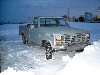
Also.....my camber looks close to yours now that i had new tires put on. so it might not be off as far as i initially let on.
Also.....my camber looks close to yours now that i had new tires put on. so it might not be off as far as i initially let on.
Thread Starter
|
Elder User
Joined: Apr 2010
Posts: 901
Likes: 0
From: South Jersey
I looked it over some more last night and my positive camber is out of whack. It's a little worse on the drivers side than the passengers. (incidentally the passenger side had the ball joints replaced by a PO and the drivers side has not -- i'm assuming this since only the passenger side has grease fittings). Anyway, the outer edge of the tires are wearing more than the inside so an alignment is in order. I just did a search on alignment in this forum and have a couple of questions.
From what I've read the positive camber issue is solved by changing the bushings in the upper ball joint. Because of this there's quite a bit of tear down of the front end involved to change them. In fact it's the work equivalent of changing the ball joints less actually pressing the ball joints out. (Caliper removal, rotor removal, spindle, knuckle, etc.)
Can an alignment shop tell me how much the camber is off and what type of offset bushing I'd need to correct it without having to tear so much of the front end down that it's going to cost me an arm and a leg? Looking on the advance website they have Moog bushings ranging from +-2.75 degrees to +-0.5 degrees. Same with the ball joint. Should they be able to tell me they are in need of replacement before the bill starts tallying up? (Could only one side be bad?)
If they do have to tear it all down should the cost of replacing ball joints be much more? I've read up on how to do it and since it's not my daily driver I can afford to take my time in case I run into snags. BUT, it seems like a lot of expensive redundant work if the shop has to tear a lot down to determine the ball joints need to be replaced before they can align it, they put it back together, then I take it home and tear it down again to replace the ball joints, then bring it back to tear it down a 3rd time to do the alignment. Sounds like a big headache.
Sorry if some of this stuff has already been covered but I'm learning as I go. The more I know the more I can do on my own and when I go to the shop I can protect myself from getting ripped off.
From what I've read the positive camber issue is solved by changing the bushings in the upper ball joint. Because of this there's quite a bit of tear down of the front end involved to change them. In fact it's the work equivalent of changing the ball joints less actually pressing the ball joints out. (Caliper removal, rotor removal, spindle, knuckle, etc.)
Can an alignment shop tell me how much the camber is off and what type of offset bushing I'd need to correct it without having to tear so much of the front end down that it's going to cost me an arm and a leg? Looking on the advance website they have Moog bushings ranging from +-2.75 degrees to +-0.5 degrees. Same with the ball joint. Should they be able to tell me they are in need of replacement before the bill starts tallying up? (Could only one side be bad?)
If they do have to tear it all down should the cost of replacing ball joints be much more? I've read up on how to do it and since it's not my daily driver I can afford to take my time in case I run into snags. BUT, it seems like a lot of expensive redundant work if the shop has to tear a lot down to determine the ball joints need to be replaced before they can align it, they put it back together, then I take it home and tear it down again to replace the ball joints, then bring it back to tear it down a 3rd time to do the alignment. Sounds like a big headache.
Sorry if some of this stuff has already been covered but I'm learning as I go. The more I know the more I can do on my own and when I go to the shop I can protect myself from getting ripped off.
Elder User
Joined: Feb 2010
Posts: 546
Likes: 0
From: Reading, PA
Personally what i would do is if in question replace the ball joints. They're cheap and save headaches later. Replace your outer tie rod ends upper and lower ball joints yourself (just make sure when doing the tie rod ends you get them as close to where they originally were as possible) if you think you can tackle it. Then take it to be aligned and have them do the shims and whatnot if needed. It will be less headache than you trying to guesstimate shims and taking it having it be wrong going back doing it again and every time paying them to put it on the rack. Pay for them to shim it once and be done. Toe in/out is easier to do yourself but you're paying for an alignment so i would just replace the tie rod ends and let them align it. Just make sure you are as close as possible to what they were at so you don't have issues driving it TO the alignment shop.
Thread Starter
|
Elder User
Joined: Apr 2010
Posts: 901
Likes: 0
From: South Jersey
So I described the problem to a well respected mechanic friend of the family today. He is very certain my problem lies in the steering box. He said there's a piston in there that gets stuck and the fact that I need to jerk it back straight is indicative of it sticking. Ended up ordering one off the Advance website and will put it in on Sunday. Hopefully this solves the problem and then it's off to the alignment shop.
I took it to an alignment shop initially to get a diagnosis and they couldn't find anything wrong in the front end (loose ball joint or tie rods etc. so the steering box is pretty much all that's left). I'm kind of relieved this is the problem since replacing it is a heck of a lot easier than doing ball joints.
Will update this thread once it's in and will report back if it fixed my problem.
I took it to an alignment shop initially to get a diagnosis and they couldn't find anything wrong in the front end (loose ball joint or tie rods etc. so the steering box is pretty much all that's left). I'm kind of relieved this is the problem since replacing it is a heck of a lot easier than doing ball joints.
Will update this thread once it's in and will report back if it fixed my problem.
FTE Stories
Ford Trucks for Ford Truck Enthusiasts

Top 10 Most Expensive Ford Trucks Ever Sold on Bring a Trailer
Joe Kucinski
2027 Ford Super Duty Buyer's Guide (Every Model, Engine, & Package)
Brett Foote
Top 10 Ford Truck Tragedies
Joe Kucinski
AEV FXL Super Duty - the Super Duty Raptor Ford Doesn't Make
Brett Foote
Lobo Vs Lobo: Proof the F-150 Lobo Should Be Even Lower!
Michael S. Palmer
Ford's 2001 Explorer Sportsman Concept Looks For a New Home
Verdad Gallardo
10 Best Ford Truck Engines We Miss the Most!
Joe Kucinski
2026 Shelby F-150 Off-Road: Better Than a Raptor R?
Brett Foote
2027 Super Duty Carhartt Package First Look: 12 Things You NEED to Know!
Michael S. Palmer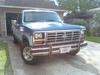
Senior User
Joined: Aug 2010
Posts: 133
Likes: 1
From: TX
I had a similar issue when I rebuilt my entire front end. But before I replaced the steering box I replaced the firewall to gearbox shaft. I had a bad rag-joint, but no one sells that part anymore here. So simple, but so easy to overlook especially with slop in the wheel.
Course the steering box went out about 2 weeks later and it froze in position. Luckily I was just moving cars at the house when it failed!
Course the steering box went out about 2 weeks later and it froze in position. Luckily I was just moving cars at the house when it failed!
Thread Starter
|
Elder User
Joined: Apr 2010
Posts: 901
Likes: 0
From: South Jersey
Update: Went to work on the steering box today. Had some interesting developments. First, I inspected the steering box today and noticed the metal part of the hose that does the looping down near the steering box was very rusted. Rusted to the point that it didn't have much life left so I thought it'd be a smart move to go ahead and replace that to. So I went to the parts store and picked up the hose and box and installed them. Surprisingly it went easier that I expected to get the old box out. The nut and wash on the sector shaft was too easy to get off. It didn't feel like it was on tight enough but maybe it loosed up a bit over time. I did still need to use the puller to get it off.
Anyway, I got it all out and put it back in but there's a couple of issues. 1) There's a small leak coming out of the spacing between the hose and the coupling (with the loop-de-loop) at the steering box. I screwed it down as far as it would go using a flarenut wrench and open end wrench but there's still a little leak coming from inbetween the metal hose and the coupling. I guess I'll take the hose back tomorrow. Maybe the inside isn't "double flared" enough to ensure a tight seal.
2) Per the shop manual it says to pull the coil line and turn the motor over while turning the wheels back and forth (while still on jackstands) to get the power steering fluid to cycle through the new steering box and hose. I did this and then when I went back out of the truck to check on it I noticed 2 belts had broken! One was the belt that connects the crank to the alternator and the other from the alternator to (what I think is an AC component). Back to the parts store to get new hoses.
Finally got it all back together and took it for a spin. I noticed the wheel feels tighter all over. Not only is it tighter on a 11 o'clock to 1 o'clock basis but when the wheel turns now and is engaging the wheel there is a feeling of more tension than before. Before it felt very loose and easy to turn. Now there's just the right amount of resistance that it feels like a more secure steering wheel.
BUT, I did take it for a brief spin and unfortunately the feeling of (when I made a hard turn) of floating for a split second and than the whole body of the truck "catching" still showed it's ugly head a couple of times. Because of the road I couldn't tell if "memory steer" was also present but nevertheless there's still some problems. I'm going to take it to an open parking lot tomorrow and get a better indication of the symptoms. Ughhh, so it's a little better but there's still something wrong...
Anyway, I got it all out and put it back in but there's a couple of issues. 1) There's a small leak coming out of the spacing between the hose and the coupling (with the loop-de-loop) at the steering box. I screwed it down as far as it would go using a flarenut wrench and open end wrench but there's still a little leak coming from inbetween the metal hose and the coupling. I guess I'll take the hose back tomorrow. Maybe the inside isn't "double flared" enough to ensure a tight seal.
2) Per the shop manual it says to pull the coil line and turn the motor over while turning the wheels back and forth (while still on jackstands) to get the power steering fluid to cycle through the new steering box and hose. I did this and then when I went back out of the truck to check on it I noticed 2 belts had broken! One was the belt that connects the crank to the alternator and the other from the alternator to (what I think is an AC component). Back to the parts store to get new hoses.
Finally got it all back together and took it for a spin. I noticed the wheel feels tighter all over. Not only is it tighter on a 11 o'clock to 1 o'clock basis but when the wheel turns now and is engaging the wheel there is a feeling of more tension than before. Before it felt very loose and easy to turn. Now there's just the right amount of resistance that it feels like a more secure steering wheel.
BUT, I did take it for a brief spin and unfortunately the feeling of (when I made a hard turn) of floating for a split second and than the whole body of the truck "catching" still showed it's ugly head a couple of times. Because of the road I couldn't tell if "memory steer" was also present but nevertheless there's still some problems. I'm going to take it to an open parking lot tomorrow and get a better indication of the symptoms. Ughhh, so it's a little better but there's still something wrong...
Moderator
Joined: Nov 2007
Posts: 22,415
Likes: 92
From: Denver Metro Area, CO
The loop-de-loop is the cooler.
For the hose leak, ensure those mating parts are PERFECTLY clean, there
are no burrs or debris. I don't like to use it on flare fittings like this but teflon
tape might help (it's hard for me to envision exactly where you're referring).
If it's not your steering or suspension, my next guess is your driveline - rear
axle perhaps.
For the hose leak, ensure those mating parts are PERFECTLY clean, there
are no burrs or debris. I don't like to use it on flare fittings like this but teflon
tape might help (it's hard for me to envision exactly where you're referring).
axle perhaps.
Thread Starter
|
Elder User
Joined: Apr 2010
Posts: 901
Likes: 0
From: South Jersey
The loop-de-loop is the cooler.
For the hose leak, ensure those mating parts are PERFECTLY clean, there
are no burrs or debris. I don't like to use it on flare fittings like this but teflon
tape might help (it's hard for me to envision exactly where you're referring).
If it's not your steering or suspension, my next guess is your driveline - rear
axle perhaps.
For the hose leak, ensure those mating parts are PERFECTLY clean, there
are no burrs or debris. I don't like to use it on flare fittings like this but teflon
tape might help (it's hard for me to envision exactly where you're referring).
If it's not your steering or suspension, my next guess is your driveline - rear
axle perhaps.
IF it turns out my steering and suspension is all ok and it's the driveline (rear axle) like you say how do you test for that? And what exactly would be going on to cause that?

Moderator


Joined: Jan 2001
Posts: 56,983
Likes: 2,736
From: Virginia
The flare is not there just to keep the threaded nut from falling off. The flare is actually the sealing part. The nut and it's threads do not do any sealing. The nut's job is to press the flare onto the mating flare that's down inside the box fitting. If you take all this back off, you will see a "dome" down in the box. The flare you made on the line matches the dome and that's where the seal is made.
In case you didn't know this, you might want to look at your flare and make sure it's uniform and in good shape to seal against the "dome" in the box fitting.
In case you didn't know this, you might want to look at your flare and make sure it's uniform and in good shape to seal against the "dome" in the box fitting.
Thread Starter
|
Elder User
Joined: Apr 2010
Posts: 901
Likes: 0
From: South Jersey
Here's a pic of where it's leaking frm the new hose. (Look for yellow arrow). It's coming out the space between the fitting and the hose. The fitting is screwed in as much as it'll go so it's got to be a defective hose. Gonna return it this morn and try another.

Thread Starter
|
Elder User
Joined: Apr 2010
Posts: 901
Likes: 0
From: South Jersey
OK, just looked at it. I took the hose off where it was leaking and took a look at the flare. It looked fine to me. Took a look inside the steering box and although it was hard to get a good look because it kept filling with steering fluid it looked ok there. I wiped both areas clean as best I could with a rag. I put a little teflon tape around the hose part of the fitting and screwed it back together.... still leaking. UGHHHHH.
Also, new problem I found. It seems my return to center after making a turn works when making a left but doesn't when making a right. When I make a right it comes back a little but not even close to enough. Ughh, WTF?
Also, new problem I found. It seems my return to center after making a turn works when making a left but doesn't when making a right. When I make a right it comes back a little but not even close to enough. Ughh, WTF?