


Flathead cleanup

Thread Starter
|
New User
Joined: Aug 2007
Posts: 16
Likes: 0
From: Winnipeg
Flathead cleanup
I jsut finished taking off heads ,intake manifold etc from my new to me flathead and it turns easily but has quite a bit of crud inside. I am just wondering how far I need to tear it down to take it in and have it hot dipped to clean inside and out. Can I do this without removing the crank etc. or should I tear it right down and just send the block,valves in or out? Any thoughts are welcome.
Thanks
Bob R
Thanks
Bob R

Moderator

Joined: Dec 2003
Posts: 97,646
Likes: 2,012
From: Saskatoon, Saskatchewan

You need to completely strip everything out of the block including the cam bearings. Be sure to have it checked over for any cracks in the block before getting too far in to it, flatties are notorious for developing cracks between the valve seats. Check the condition of the cylinders for cracks, deep rust, for being too far out of round and too much taper as well.
I`m sure our resident flathead experts will chime in soon.....
I`m sure our resident flathead experts will chime in soon.....
Thread Starter
|
New User
Joined: Aug 2007
Posts: 16
Likes: 0
From: Winnipeg
Okay that sounds good. Is there a book or a reference here that I should follow in terms of organizing and storing parts,how to check for cracks, deep rust etc.?
I wll start to remove the rest of the parts,oil pan etc. once I flip it over.
Thanks for the tips.
I wll start to remove the rest of the parts,oil pan etc. once I flip it over.
Thanks for the tips.

Lead Driver
Joined: Jan 2006
Posts: 8,423
Likes: 0
From: Colonsay Sk. Canada
hold on lets not get stupid, you'll put yourself in the poor house before you begin:
Valves are easy,
-find a shoehorn crow bar
-pry in the gapping hole where the intake manifold used to be
-you want to pry the valve spring up so you can remove the half moon clips holding the valve spring tight
-with the spring realesed you'll see another retaining clip at the top of the valve stem that you can pull out with a pair of pliers. Once you remove this the whole valve assembly pulls out through the top.
With the valves removed:
Wire brush/Emery cloth the area between valve seats and cylinder to check for cracks that spread between the seat and cylinder wall in the thinner areas
Bearings
-Loosen off the cranshaft retainers
-Use plasti-guage to determine the wear in the bearings idealy you want .010 of give per inch of thickness. So I'm guessing the cranshaft is about 2.5 inches so ideally .025 should be your gap but flatheads are not demanding motors so do not require the same accuracy as a modern day "Rice burner" motor (yes I class a 302 motor a rice burner)
Cylinder walls
-first check your pistons see if they are stamped .010,.020,.030,.040,.050,.060 and so on.......on top to see if your motor was previously bored over
-then depending on your walls a good honing might be just what you need, boring out is obviously extra cost
My theory after restoring my old Flatheads has developed into a saying......
Don't fv(k with $h1+, when you fv(k with $h1+, $h1+ gets fv(ked up
Valves are easy,
-find a shoehorn crow bar
-pry in the gapping hole where the intake manifold used to be
-you want to pry the valve spring up so you can remove the half moon clips holding the valve spring tight
-with the spring realesed you'll see another retaining clip at the top of the valve stem that you can pull out with a pair of pliers. Once you remove this the whole valve assembly pulls out through the top.
With the valves removed:
Wire brush/Emery cloth the area between valve seats and cylinder to check for cracks that spread between the seat and cylinder wall in the thinner areas
Bearings
-Loosen off the cranshaft retainers
-Use plasti-guage to determine the wear in the bearings idealy you want .010 of give per inch of thickness. So I'm guessing the cranshaft is about 2.5 inches so ideally .025 should be your gap but flatheads are not demanding motors so do not require the same accuracy as a modern day "Rice burner" motor (yes I class a 302 motor a rice burner)
Cylinder walls
-first check your pistons see if they are stamped .010,.020,.030,.040,.050,.060 and so on.......on top to see if your motor was previously bored over
-then depending on your walls a good honing might be just what you need, boring out is obviously extra cost
My theory after restoring my old Flatheads has developed into a saying......
Don't fv(k with $h1+, when you fv(k with $h1+, $h1+ gets fv(ked up
Lead Driver
Joined: Jan 2006
Posts: 8,423
Likes: 0
From: Colonsay Sk. Canada

In the square marking is the half moon retaining clip holding the valve spring tension
In the circle marking is the retaining clip you remove with pliers after realing tension on the spring so you can then pull the assembly out the top from the valve head

Here are the prone places of "crackage" in most cases more likely to leak and develope on exhaust valves due to heat
Thread Starter
|
New User
Joined: Aug 2007
Posts: 16
Likes: 0
From: Winnipeg
Thanks for the info. Snowking...Yeah, I don't want to spend a small fortune on this engine and it has a plate on it that says it was rebuilt at one time by Ford so things should not be too bad. I will take some pics and try to post them of the way things look right now and then work on the valves the way you described.I'm just not sure about the method for the plastigage. I'm assuming from what you said that it should work pretty much like a feeler guage, le me know if I'm on the right path with that or is there reference to that for me to follow. Sorry, I don't mean to appear stupid, it's just that I am occasionally untill I have the understanding I need!! I'l rather get the info from those who are more knowledgeable BEFORE I mess things up.
Thanks
Bob R
Thanks
Bob R
Trending Topics
Lead Driver
Joined: Jan 2006
Posts: 8,423
Likes: 0
From: Colonsay Sk. Canada
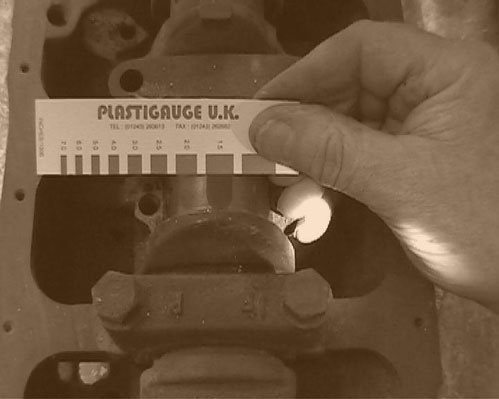
Plasti-guage, prolly any engine rebuilding shop or Acklands should carry it for you to purchase (its just a small plastic wire you squeeze in the bearings then measure
FTE Stories
Ford Trucks for Ford Truck Enthusiasts

3 Best / 3 Worst Parts of Modern Ford Ownership
Brett Foote
10 Amazing Upgrades That Solve Common Ford Truck Owner Headaches
Pouria Savadkouei
Every 2026 Ford Engine Explained
Brett Foote
10 Ugly Ford Trucks That We Still Kinda Love
Joe Kucinski
10 Things Every Truck Owner NEEDS (2026 Edition)
Michael S. Palmer
Rezvani's Latest Post-Apocalyptic Monster Is a Ford F-150 Raptor Underneath
Verdad Gallardo
Top 10 Most Expensive Ford Trucks Ever Sold on Bring a Trailer
Joe Kucinski
2027 Ford Super Duty Buyer's Guide (Every Model, Engine, & Package)
Brett Foote
Top 10 Ford Truck Tragedies
Joe Kucinski
Thread Starter
|
New User
Joined: Aug 2007
Posts: 16
Likes: 0
From: Winnipeg
I did some cleaning and discovered the pistons have 030 stamped in and also on the top of the block at the back right(passenger side) is Q E4 4577 and at the front is o3o 11045 .
There is alao a plate on the front right saying rebuilt by Western Engine Works and Authorized Ford Rebuilt Assembly .
Most of it looks pretty good except for a bad spot on the back wall of cylinder 4 and the fact that there is a lot of debris etc. in the water jacket so I have to at least figure out a way to flush that out. Does it make sense to strip it to the bare block and get it cleaned out then re use the parts I have. I mean , this is for a work truck for my backyard not a Hot Rod.
There is alao a plate on the front right saying rebuilt by Western Engine Works and Authorized Ford Rebuilt Assembly .
Most of it looks pretty good except for a bad spot on the back wall of cylinder 4 and the fact that there is a lot of debris etc. in the water jacket so I have to at least figure out a way to flush that out. Does it make sense to strip it to the bare block and get it cleaned out then re use the parts I have. I mean , this is for a work truck for my backyard not a Hot Rod.
Lead Driver
Joined: Jan 2006
Posts: 8,423
Likes: 0
From: Colonsay Sk. Canada
Heres what I would do (possibly not the right thing to do but its what I would do)
-grind the valves (stem and seat) check lifters for excessive play. If not too much play reinstall. (too much play for your liking valve guides are fairly affordable)
-remove pistons and just buy new rings, simple honing of cylinder walls. When removing cylinder of course be sure to put everyhting back together EXACTLY as you took apart
-I would test a main cap bearing on crankshaft but I usually stick with the old bearing unless extremely worn out.
-of course oil pan will be removed at this point throughly clean out (diesel works well) also be sure to clean the oil filter cartridge
-new gasket set
-send heads away to get plained (some would suggest the block gets plained instead of heads due to warpage, but on a flathead I suggest head)
-new carb kit and a new fuel pump......points and condenser to
-cooling system I just use compressed air followed by pouring whatever you can find at Partsource that sounds like it will help remove crud from the cooling system or just water....of course repeat as needed.
-2 new/rebuilt water pumps and thermostats (gets thermostats about 160-180)
-grind the valves (stem and seat) check lifters for excessive play. If not too much play reinstall. (too much play for your liking valve guides are fairly affordable)
-remove pistons and just buy new rings, simple honing of cylinder walls. When removing cylinder of course be sure to put everyhting back together EXACTLY as you took apart
-I would test a main cap bearing on crankshaft but I usually stick with the old bearing unless extremely worn out.
-of course oil pan will be removed at this point throughly clean out (diesel works well) also be sure to clean the oil filter cartridge
-new gasket set
-send heads away to get plained (some would suggest the block gets plained instead of heads due to warpage, but on a flathead I suggest head)
-new carb kit and a new fuel pump......points and condenser to
-cooling system I just use compressed air followed by pouring whatever you can find at Partsource that sounds like it will help remove crud from the cooling system or just water....of course repeat as needed.
-2 new/rebuilt water pumps and thermostats (gets thermostats about 160-180)

Postmaster
Joined: Oct 2006
Posts: 3,255
Likes: 0
From: saskatoon, SK
a good way to flush that crap out is to canabalize one of those flexible metal air blower guns and modify it to fit on the end of a garden hose, using a selection of bent hanger wire, picks and hook tools scrape as much stuff that you can reach in the jacket and just jet the water through for a long time, flipping motor over and over and getting that sucker in every possible nook and cranny you can. The idea is to clean the crap that built up over the years and also to remove as much old casting sand as you can because the flathead runs hot normally so if you can clear the jacket out so it flows better thats a good thing.
once the motor is apart visually check for cracks and when you take it in to get dipped get them to magnaflux it. Itll tell show you any cracks in the block that you cant see. Basically what they tell you will determine if you need to find a new block or not. this step is VERY IMPORTANT.
now having said that, a flathead will run with a crack and to be honest most of them do and run fine. If you are like me and making a hot rod motor out of it fluxing it is number one priority
once the motor is apart visually check for cracks and when you take it in to get dipped get them to magnaflux it. Itll tell show you any cracks in the block that you cant see. Basically what they tell you will determine if you need to find a new block or not. this step is VERY IMPORTANT.
now having said that, a flathead will run with a crack and to be honest most of them do and run fine. If you are like me and making a hot rod motor out of it fluxing it is number one priority
Postmaster
Joined: Oct 2006
Posts: 3,255
Likes: 0
From: saskatoon, SK
for the stats its also a nice idea to drill a 1/16 to 1/8 hole in them just in case they stick closed and you wont cook ur motor (i do this on all motors i build) just lets coolant flow even if it fails
and as for books: i really like this one by Frank Oddo
Ford Flathead -New Edition, Frank Oddo, Good Book on eBay.ca (item 280451016664 end time 12-Feb-10 14:41:22 EST)
and as for books: i really like this one by Frank Oddo
Ford Flathead -New Edition, Frank Oddo, Good Book on eBay.ca (item 280451016664 end time 12-Feb-10 14:41:22 EST)
Thread Starter
|
New User
Joined: Aug 2007
Posts: 16
Likes: 0
From: Winnipeg
Thanks for all the input guys.... it is very helpful. The engine is down to the block with crank,pistons and valve train still in it. I am deciding on the best appoach now. Since it's not for a Hot Rod or racing just for my truck I think I may opt to just clean it up becuase it seems it could get expensive fast if I start buying parts.I definitely need water pumps or at least rebuild kits,full gasket set and maybe try to do the valves. Also,points, condenser,plugs and wires.That's probably about $500.00 or more right there so it may have to do.
I won't be able to pull the other one and instal this one until spring anyway beaause my truck is in the back and there is lots of snow there so I have a bit of time now to clean and examine etc.
I'll post some pics soon.
Thanks again
Bob R
I won't be able to pull the other one and instal this one until spring anyway beaause my truck is in the back and there is lots of snow there so I have a bit of time now to clean and examine etc.
I'll post some pics soon.
Thanks again
Bob R

Senior User
Joined: Mar 2008
Posts: 150
Likes: 0
From: West central manitoba
Hey Ryan if you were going to the trouble of rebuilding a flat head would you use those ajustable lifters ? I know that I have them in mine ,once I drove it , I could adjust my value just with out tearing the heads off. Just by removing the intake. Roy