


Dashpot??

Moderator


Joined: Jan 2001
Posts: 56,984
Likes: 2,738
From: Virginia

The dashpots I am familiar with are mechanical and use a diaphragm. Some of the early 80's models I believe had a throttle positioner that acted like a dashpot, but it was a motor with lots of wires coming out of it.
Thread Starter
|
Junior User
Joined: Aug 2009
Posts: 58
Likes: 0
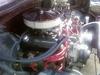
This is the kind that im talking about.... I was going to just get a holley and now worry about it but i decided to go with a holley fuel injection in the future so i figured i would just find a dashpot to get this thing to decel right when coming to a stop

Post Fiend
Joined: Jul 2004
Posts: 8,786
Likes: 28
From: Northern California
Mechanical Dashpot would be the best for your application. To keep the engine from stalling when coming to a stop or fast deceleration.
An Electrical Dashpot or idle control solenoid, (One wire), is good for applications such as air conditioning, so when the A/C is on, and there is added load on the engine, the solenoid can be activated so engine idle remains constant between on and off.
Throttle position solenoids, multi wire, is good for EFI equipped engines, or computer controlled engines. Takes place and does the jobs of the previous two versions, and also controls fast idle during startup, fast idle during computer tests, and also some cruise control applications. Used in conjunction with the Throttle Position sensor.
All are hooked up to the throttle of the carb, or throttle linkage in some manner.
Hope this helps...
An Electrical Dashpot or idle control solenoid, (One wire), is good for applications such as air conditioning, so when the A/C is on, and there is added load on the engine, the solenoid can be activated so engine idle remains constant between on and off.
Throttle position solenoids, multi wire, is good for EFI equipped engines, or computer controlled engines. Takes place and does the jobs of the previous two versions, and also controls fast idle during startup, fast idle during computer tests, and also some cruise control applications. Used in conjunction with the Throttle Position sensor.
All are hooked up to the throttle of the carb, or throttle linkage in some manner.
Hope this helps...
Thread Starter
|
Junior User
Joined: Aug 2009
Posts: 58
Likes: 0
thanks 81, now second question, were manual trans carbs and auto trans carbs different. When i pulled this carb of a junked mach1 with a 351c, it had a manual trans and no dashpot, i couldnt find a spot to hook up the vacuum line that wouldnt give it full vacuum
Post Fiend
Joined: Jul 2004
Posts: 8,786
Likes: 28
From: Northern California
Yes, Automatic transmission carbs and Manual transmission carbs were calibrated differently and have different part numbers.
There can be 15 or more different calibration codes for the same engine. It depends on year of model, manual, or automatic, what state the truck comes from, what GVWR the truck has among other things...
Why it's imperitve to have the part number match the original, unless you want to swap out other parts like, egr valves, distributors, trannies, etc... to match the calibration of the new carb.
There can be 15 or more different calibration codes for the same engine. It depends on year of model, manual, or automatic, what state the truck comes from, what GVWR the truck has among other things...
Why it's imperitve to have the part number match the original, unless you want to swap out other parts like, egr valves, distributors, trannies, etc... to match the calibration of the new carb.
Thread Starter
|
Junior User
Joined: Aug 2009
Posts: 58
Likes: 0
Trending Topics
Moderator
Joined: Jan 2001
Posts: 56,984
Likes: 2,738
From: Virginia
What I have seen so far is most of the automatics had dashpots, and the manuals didn't. There is some sort of reaction between the engine and the torque convertor, and if you goose the throttle while in drive and at low speeds, the engine will have a tendency to want to stall. That's why they installed the dashpots. My 65 mustang had one originally, but when I changed it all around to a 4bbl, the bracket would not fit, so I left it off. There were certain situations while driving that the engine idle would drop really low, but you had to try very hard to get it to stall, so I never worried about it.
I don't know what you are trying to hook full vacuum to, the distributor? If so, I can't recommend you do that with a automatic.
I don't know what you are trying to hook full vacuum to, the distributor? If so, I can't recommend you do that with a automatic.
FTE Stories
Ford Trucks for Ford Truck Enthusiasts

10 Things Every Truck Owner NEEDS (2026 Edition)
Michael S. Palmer
Rezvani's Latest Post-Apocalyptic Monster Is a Ford F-150 Raptor Underneath
Verdad Gallardo
Top 10 Most Expensive Ford Trucks Ever Sold on Bring a Trailer
Joe Kucinski
2027 Ford Super Duty Buyer's Guide (Every Model, Engine, & Package)
Brett Foote
Top 10 Ford Truck Tragedies
Joe Kucinski
AEV FXL Super Duty - the Super Duty Raptor Ford Doesn't Make
Brett Foote
Lobo Vs Lobo: Proof the F-150 Lobo Should Be Even Lower!
Michael S. Palmer
Ford's 2001 Explorer Sportsman Concept Looks For a New Home
Verdad Gallardo
10 Best Ford Truck Engines We Miss the Most!
Joe Kucinski
Post Fiend
Joined: Jul 2004
Posts: 8,786
Likes: 28
From: Northern California
You need ported vacuum for the Vacuum advance on the distributor on all but very select California computer controlled models.
And even on models that require partial vacuum at idle for the vacuum advance, it's still not full vacuum unless wide open throttle.
How Partial vacuum at idle vacuum advance works...
The models that require partial vacuum have a spark retard solenoid hooked between the carb and the vacuum advance on the distributor. It bleeds off vacuum using the on board computer if the timing needs to be retarded. These engines are also timed differently as well with the vacuum port on the distributor disconnected and plugged. My 1981 300-6 for instance is timed at 6 degrees before TDC. With the partial vacuum connected it will rise to the normal 10 degrees at idle. The vacuum advance works as normal from there, and the retard solenoid will drop the timing below 10 degrees BTDC when needed.
And even on models that require partial vacuum at idle for the vacuum advance, it's still not full vacuum unless wide open throttle.
How Partial vacuum at idle vacuum advance works...
The models that require partial vacuum have a spark retard solenoid hooked between the carb and the vacuum advance on the distributor. It bleeds off vacuum using the on board computer if the timing needs to be retarded. These engines are also timed differently as well with the vacuum port on the distributor disconnected and plugged. My 1981 300-6 for instance is timed at 6 degrees before TDC. With the partial vacuum connected it will rise to the normal 10 degrees at idle. The vacuum advance works as normal from there, and the retard solenoid will drop the timing below 10 degrees BTDC when needed.
Moderator
Joined: Jan 2001
Posts: 56,984
Likes: 2,738
From: Virginia
I have done a lot of experimenting with non-stock parts, and I have found running the dist on full manifold vacuum will raise the idle speed way up. If you leave it that way with a automatic, it will bang and give a big lurch when you go from park to drive. So you think you can fix that, and you lower the idle, and then fiddle with the carb settings and get it running pretty good, and then when you put it in gear, it wants to stall.
If you run the engine on ported vacuum(no vacuum at idle) you can set the carb adjustments and the idle speed, and when you pull the auto shifter into gear, the engine stays rock solid with no crazy lurching or driveline banging.
If you run the engine on ported vacuum(no vacuum at idle) you can set the carb adjustments and the idle speed, and when you pull the auto shifter into gear, the engine stays rock solid with no crazy lurching or driveline banging.
Thread Starter
|
Junior User
Joined: Aug 2009
Posts: 58
Likes: 0
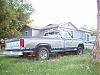
I was looking for a vacuum that would run the dashpot, but everyport off my carb was full vacuum, making the dashpot push out all the way. I have no problems with this stalling when punching the gas. I dont run a vacuum advanced dist. This is a 383 stroked 351w that I put in my 89 f250. I plan on putting a holley fuel injection on it in the fall of '10 so i may just live with it for the summer. Its not to bad, just when comming to a quick stop the idle will fall all the way to 300 Rpms and almost want to die. Its not to bad i just two foot it for a little while. After driving it around it seems to get better. At first i thought the brake booster was pulling to much vacuum from the engine but that wasnt the case. Thanks for the help guys
Moderator
Joined: Jan 2001
Posts: 56,984
Likes: 2,738
From: Virginia
I am no sure what you are messing with. Perhaps you have mistakenly installed a choke pull-off unit on the throttle?
The mechanical dashpots have diaphragms, but they do not hook to vacuum. They just have a port open to the outside that bleeds air from the diaphragm when the throttle pushes against it. It works like a "timer". It brings the throttle down slowly to the throttle stop because the air slowly bleeds through the hole.
The mechanical dashpots have diaphragms, but they do not hook to vacuum. They just have a port open to the outside that bleeds air from the diaphragm when the throttle pushes against it. It works like a "timer". It brings the throttle down slowly to the throttle stop because the air slowly bleeds through the hole.
Posting Guru
Joined: Mar 2007
Posts: 1,649
Likes: 2
Should be something like this: AutoZone.com | Vehicle Selection | Year
Which side of the carb is this on? Just to be sure.
Which side of the carb is this on? Just to be sure.
Thread Starter
|
Junior User
Joined: Aug 2009
Posts: 58
Likes: 0
I am no sure what you are messing with. Perhaps you have mistakenly installed a choke pull-off unit on the throttle?
The mechanical dashpots have diaphragms, but they do not hook to vacuum. They just have a port open to the outside that bleeds air from the diaphragm when the throttle pushes against it. It works like a "timer". It brings the throttle down slowly to the throttle stop because the air slowly bleeds through the hole.
The mechanical dashpots have diaphragms, but they do not hook to vacuum. They just have a port open to the outside that bleeds air from the diaphragm when the throttle pushes against it. It works like a "timer". It brings the throttle down slowly to the throttle stop because the air slowly bleeds through the hole.
Should be something like this: AutoZone.com | Vehicle Selection | Year
Which side of the carb is this on? Just to be sure.
Which side of the carb is this on? Just to be sure.