


Fire! Help!
Thread Starter
|
Posting Guru
Joined: Nov 2009
Posts: 1,219
Likes: 4
From: Norton, MA
Fire! Help!
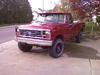
Not just an attention grabbing title unfortunately, I've just finished watching my 79 F150 with the 400 I just rebuilt cool down after puting it out with a fire extinguisher.
I need anyones advice on this, I do not want to repeat that again, and neither does the truck.
I put a lifted cam, straight up timing set, heavier valve springs, aluminum intake, and 4 barrell 600 cfm carb, into a truck that hasn't seen a touch of change or update in 30 years.
I was breaking in the cam, running the engine at what I guessed to be about 2,000 rpm for I had hoped about half an hour. I noticed a big difference immediately compared to my old 2 barrel and everything else. The truck was alot louder, the sound was alot sharper (cracking instead of just rumbles), the power breaks didn't work at all, and there was alot of smoke, but at first it was just everything waking up after a few weeks of being wide open and not started.
Then I started smelling burning paint, and finally, about 7 or 8 minutes in I saw alot of what I thought was smoke coming from the hood, not the exhaust pipes which were jsut heating up, so I stopped the truck. As I looked around I saw flames coming from under the passenger side floor. The flames were burning greese and gunk on the transmission crossmember that the exhaust had heated up. The exhaust was glowing bright orange hot. After running for an extinguisher and puting the fire out, I opened the hood to see what was udner there. The smoke was actually steam, and the front of the engine was wet and there was a soaked spot on the radiator, so I believe that blew.
My question is, WHAT THE @#$% WAS ALL THAT?
Why was the exhaust so hot that it started fires after just 5 minutes at HALF throttle? And what the heck made the radiator blow? And what can I do about the obvious vacuum problem?
Please help, Thanks, AleX
I need anyones advice on this, I do not want to repeat that again, and neither does the truck.
I put a lifted cam, straight up timing set, heavier valve springs, aluminum intake, and 4 barrell 600 cfm carb, into a truck that hasn't seen a touch of change or update in 30 years.
I was breaking in the cam, running the engine at what I guessed to be about 2,000 rpm for I had hoped about half an hour. I noticed a big difference immediately compared to my old 2 barrel and everything else. The truck was alot louder, the sound was alot sharper (cracking instead of just rumbles), the power breaks didn't work at all, and there was alot of smoke, but at first it was just everything waking up after a few weeks of being wide open and not started.
Then I started smelling burning paint, and finally, about 7 or 8 minutes in I saw alot of what I thought was smoke coming from the hood, not the exhaust pipes which were jsut heating up, so I stopped the truck. As I looked around I saw flames coming from under the passenger side floor. The flames were burning greese and gunk on the transmission crossmember that the exhaust had heated up. The exhaust was glowing bright orange hot. After running for an extinguisher and puting the fire out, I opened the hood to see what was udner there. The smoke was actually steam, and the front of the engine was wet and there was a soaked spot on the radiator, so I believe that blew.
My question is, WHAT THE @#$% WAS ALL THAT?
Why was the exhaust so hot that it started fires after just 5 minutes at HALF throttle? And what the heck made the radiator blow? And what can I do about the obvious vacuum problem?
Please help, Thanks, AleX

Moderator


Joined: Nov 2007
Posts: 22,415
Likes: 92
From: Denver Metro Area, CO

It seems you have combustion taking place in the exhaust headers instead of in the
cylinder where it belongs. Is your ignition timing way off? Hopefully that's the problem, the
only other thing I can think of is the valve timing being off, perhaps from an incorrectly-
installed timing set.
cylinder where it belongs. Is your ignition timing way off? Hopefully that's the problem, the
only other thing I can think of is the valve timing being off, perhaps from an incorrectly-
installed timing set.
Thread Starter
|
Posting Guru
Joined: Nov 2009
Posts: 1,219
Likes: 4
From: Norton, MA
This could be a timing problem? I took alot of care to get the timing set put in perfect, cam lined all up right where it was supposed to be and everything. I had trouble with the distributor though, and so I popped it out and slid it back in in other notches in the cam gear. This was the only notch that worked, so I figured this was right?
Moderator
Joined: Nov 2007
Posts: 22,415
Likes: 92
From: Denver Metro Area, CO
I really doubt it but one can always hope.  I quite honestly was focusing on the
combustion-in-headers aspect when that idea occurred to me. After looking at this again
and realizing the lack of vacuum at the same time, it occurs to me that maybe the valves
aren't sealing against the heads? I would do a compression check, and there's something
called a leak down test that would be telling, too.
No idea about the coolant leak, I would think the cap would release any over-pressure
situation - unless the cooling system is SO over-pressurized as might happen with a
cracked block or really bad/wrong head gaskets.
In any event, it sounds like something is pretty majorly wrong there....
EDIT: Incorrect valve timing - when valves open and close in relation to piston orientation
in the cylinders - could certainly cause the hot exhaust and no vacuum, but that doesn't
really explain the cooling system blowing out. Again, a leak-down test would be good.
I quite honestly was focusing on thecombustion-in-headers aspect when that idea occurred to me. After looking at this again
and realizing the lack of vacuum at the same time, it occurs to me that maybe the valves
aren't sealing against the heads? I would do a compression check, and there's something
called a leak down test that would be telling, too.
No idea about the coolant leak, I would think the cap would release any over-pressure
situation - unless the cooling system is SO over-pressurized as might happen with a
cracked block or really bad/wrong head gaskets.
In any event, it sounds like something is pretty majorly wrong there....
EDIT: Incorrect valve timing - when valves open and close in relation to piston orientation
in the cylinders - could certainly cause the hot exhaust and no vacuum, but that doesn't
really explain the cooling system blowing out. Again, a leak-down test would be good.
Thread Starter
|
Posting Guru
Joined: Nov 2009
Posts: 1,219
Likes: 4
From: Norton, MA
Some coolant and water may have dripped in. What would that do?
And I actually got the truck running pretty nice today, I found a vacuum leak and the breaks work since I fixed it, the radiator wasn't actually blown just overflowed onto itself and was steaming. And after messing with the carb some I got it going fairly good. The problem now though is if I ever punch the gas, even a little bit, the engine all of a sudden makes this like clicking grinding noise and revs way down. I haven't also gotten it up to much speed yet, just messing around.
If you can offer me some insight into that noise when I hit the gas and what water (a really small amount if any) in my oil might do, that would help.
Thanks, AleX
And I actually got the truck running pretty nice today, I found a vacuum leak and the breaks work since I fixed it, the radiator wasn't actually blown just overflowed onto itself and was steaming. And after messing with the carb some I got it going fairly good. The problem now though is if I ever punch the gas, even a little bit, the engine all of a sudden makes this like clicking grinding noise and revs way down. I haven't also gotten it up to much speed yet, just messing around.
If you can offer me some insight into that noise when I hit the gas and what water (a really small amount if any) in my oil might do, that would help.
Thanks, AleX
Trending Topics
Posting Guru
Joined: Jul 2007
Posts: 1,355
Likes: 1
I had the exactly same issue, to add my engine was also overheating, it was an extremely lean situation.... and be careful you could be burning your exhaust seats. Im almost 100% sure this is your problem, you have all the simptoms so check your spark plugs....
just for the extra info, in a lean situation like these, gas particles are so apart that they don't burn completely and immediately as they should but go accumulating in the pipes until they heat up enough to make that uburnt fuel burn ....
just for the extra info, in a lean situation like these, gas particles are so apart that they don't burn completely and immediately as they should but go accumulating in the pipes until they heat up enough to make that uburnt fuel burn ....
FTE Stories
Ford Trucks for Ford Truck Enthusiasts

Top 6 Best Deals Available on New Fords & Lincolns Right Now
Brett Foote
This Hennessey Takes the Expedition Tremor's Off-Roading Capability to the Next Level
Verdad Gallardo
Top 10 Fords at 2026 Carlisle Ford Nationals
Joe Kucinski
3 Best / 3 Worst Parts of Modern Ford Ownership
Brett Foote
10 Amazing Upgrades That Solve Common Ford Truck Owner Headaches
Pouria Savadkouei
Every 2026 Ford Engine Explained
Brett Foote
10 Ugly Ford Trucks That We Still Kinda Love
Joe Kucinski
10 Things Every Truck Owner NEEDS (2026 Edition)
Michael S. Palmer
Rezvani's Latest Post-Apocalyptic Monster Is a Ford F-150 Raptor Underneath
Verdad Gallardo
Moderator
Joined: Nov 2007
Posts: 22,415
Likes: 92
From: Denver Metro Area, CO
as a result of, say, a major malfunction of a head gasket. But it sounds like the
problem is not nearly as bad as the original description was implying.
I wouldsuggest dealing with the known issues first; as was said above, make sure your
carb is jetted & adjusted correctly and everything is working properly, the
ignition timing is set correctly, stuff like that. Hesitation of the engine when you
hit the gas could be caused by the carb's accelerator pump; again, make sure
everything is up to snuff with the carb & vacuum system, proceed from there.
Thread Starter
|
Posting Guru
Joined: Nov 2009
Posts: 1,219
Likes: 4
From: Norton, MA
OK! Well I'm very happy to report that after one more day of tweaking stuff, testing, and going back and readjusting things, I finally found out at least most of what was wrong. My distributor was hugely retarded. I had checked and checked and checked again everything as far as the springs and where the cylinders actually were in relation to the rotor and everything like that, but I had negelected to even give any thought to how the distributor housing (which holds the points and the wires connect to obviously) was positioned. The idea that by physically rotating the outside of the distributor I could completley change the engines timing dawned on me earlier today, and so with that in mind, I waited until it was dark out, so I could track where exactly the exhaust was glowing brightest, loosened the distributor retainer bolt, and when the engine was warmed up and running, rotated the distributor housing itself around, until it was exactly where it wanted to be. The difference was amazing. The engine revved way up (I had set the idle really high to keep it going with what I now know was horrible timing), and I watched as the glow in the exhaust moved all the way up from the bottom of the headers, to the middle, to the main top bends, and finally went away completely. It was probably about a 30* timing advance in the end.
If this sounds like a crazy explanation to anybody then let me know, but it seems to be working very well now.
Thanks for all the help though, AleX
If this sounds like a crazy explanation to anybody then let me know, but it seems to be working very well now.
Thanks for all the help though, AleX
Moderator
Joined: Nov 2007
Posts: 22,415
Likes: 92
From: Denver Metro Area, CO
Cool!
Ha!!! This is funny!!!!!  My very first response two days ago was, "Is your ignition
timing way off?" I'm not making fun of ya or anything, it's just funny to see that THAT
was a major cause of your problems.
What you did today to adjust the timing will work as a stop-gap measure but I would
strongly suggest using a timing light to set it more precisely.
Good job!
-ct
My very first response two days ago was, "Is your ignitiontiming way off?"
I'm not making fun of ya or anything, it's just funny to see that THATwas a major cause of your problems.
What you did today to adjust the timing will work as a stop-gap measure but I would
strongly suggest using a timing light to set it more precisely.
Good job!
-ct
Thread Starter
|
Posting Guru
Joined: Nov 2009
Posts: 1,219
Likes: 4
From: Norton, MA
Yup yup, exactly what you said in the very first post. Ooooo well, if only I would've completely looked into that then, and ya, I'm going to look into a timing light and a few other tools like that now that I know that everything's at least in fairly decent shape. The past few days I've been too nervous about this whole job to even throw out my old junk parts, I've had to put old junk back in before.
What a relief that is, and this is my daily driver, it's gonna be nice to have a vehicle again. Thanks
What a relief that is, and this is my daily driver, it's gonna be nice to have a vehicle again. Thanks

Thread
Thread Starter
Forum
Replies
Last Post
Dargo
Excursion - King of SUVs
24
Mar 15, 2012 09:37 PM
Carters86
1980 - 1986 Bullnose F100, F150 & Larger F-Series Trucks
30
Dec 26, 2010 05:32 PM
ecsmith0624
Small Block V8 (221, 260, 289, 5.0/302, 5.8/351W)
4
Apr 30, 2004 10:09 PM
