


Permanent Fixes For Common Rust-Outs

Welder User


Joined: Feb 2009
Posts: 5,269
Likes: 50
From: northwest MT

Rust is an EVIL thing....I battle it almost every day. IMO there are two types of rust........active and inactive. Active rust is the type usually trapped between 2 pieces of metal as described above. It is still actively eating the metal and usually still wet. Trapped moisture is your enemy, guys. I believe keeping those areas open is the best defense......sometimes I will make extra drain holes in the inner panels so the joints can dry out..sealing them up may work also, but what happens if your seam sealer fails? Trapped moisture. Cab corners, door bottoms, etc will last forever if you keep them clean. Actually keeping Everything clean is a good defense.
Inactive rust is just that, inactive until it gets wet. Surface rust. It doesn't really hurt anything but looks bad (to most people).
All just my 2 cents....t/m
Inactive rust is just that, inactive until it gets wet. Surface rust. It doesn't really hurt anything but looks bad (to most people).
All just my 2 cents....t/m

Elder User
Joined: May 2006
Posts: 907
Likes: 1
From: Kansas City, Mo
If you use zinc-chromate be careful it is a carcinogen (causes cancer) In the 1990's OSHA decided we needed to protect ourselves, so zinc-chromate is not sold over the counter. Only commerically. The car industry, chebby used it to spray the bird cage in the mid sixty corvettes. I think they used a spray can. It was hit and miss and didn't deter rust very well. Maybe the new replacment material is better. chuck

Hotshot


Joined: Oct 2009
Posts: 16,202
Likes: 4,817
From: Burbank, WA

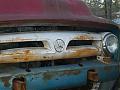
1951 OLD ANTIQUE FORD PICKUP Truck FOR PARTS #1:eBay Motors (item 160352865167 end time Dec-29-09 08:10:17 PST)

Logistics Pro


Joined: Dec 2005
Posts: 4,644
Likes: 55
From: Moro Bay, AR

Oh, Bob, you don't mean people like this...do you?
1951 OLD ANTIQUE FORD PICKUP Truck FOR PARTS #1:eBay Motors (item 160352865167 end time Dec-29-09 08:10:17 PST)
1951 OLD ANTIQUE FORD PICKUP Truck FOR PARTS #1:eBay Motors (item 160352865167 end time Dec-29-09 08:10:17 PST)


Senior User
Joined: Nov 2009
Posts: 223
Likes: 0
From: wichita falls, texas
now guys, don't start over-using panel adhesives. 3-m 08115 is a great one, prolly my fav. i use it almost daily. i just put a door skin on an '08 camry rt. rear, and it only has 1 spot weld from the factory. the rest is all panel bond. for those scenarios it is a great option. however, on a section panel(lower cab corner, etc..), i NEVER use it on the area to be sectioned. it ABSOLUTELY WILL SHOW back up later. it will expand and contract and end up showing a line thru the filler. i don't care what ANY rep says. i have tried them all in my body shop. use zinc enrichened weld thru primers. under coating only helps a little. i really like kent automotives inner rust proofing liquid. use the wand for hard to reach areas. it spray out real watery, then turns to a wax type substance. kinda like a cosmolene. it's all that is really necessary.
http://www.kent-automotive.com/kent/main.nsf/resources/pdf/$File/N-71204_Kent%20Guard%20.pdf
http://www.kent-automotive.com/kent/main.nsf/resources/pdf/$File/N-71204_Kent%20Guard%20.pdf

Fleet Owner
Joined: Jul 2004
Posts: 27,303
Likes: 1,062
From: NM
Oh, Bob, you don't mean people like this...do you?
1951 OLD ANTIQUE FORD PICKUP Truck FOR PARTS #1:eBay Motors (item 160352865167 end time Dec-29-09 08:10:17 PST)
1951 OLD ANTIQUE FORD PICKUP Truck FOR PARTS #1:eBay Motors (item 160352865167 end time Dec-29-09 08:10:17 PST)
FTE Stories
Ford Trucks for Ford Truck Enthusiasts

Top 6 Best Deals Available on New Fords & Lincolns Right Now
Brett Foote
This Hennessey Takes the Expedition Tremor's Off-Roading Capability to the Next Level
Verdad Gallardo
Top 10 Fords at 2026 Carlisle Ford Nationals
Joe Kucinski
3 Best / 3 Worst Parts of Modern Ford Ownership
Brett Foote
10 Amazing Upgrades That Solve Common Ford Truck Owner Headaches
Pouria Savadkouei
Every 2026 Ford Engine Explained
Brett Foote
10 Ugly Ford Trucks That We Still Kinda Love
Joe Kucinski
10 Things Every Truck Owner NEEDS (2026 Edition)
Michael S. Palmer
Rezvani's Latest Post-Apocalyptic Monster Is a Ford F-150 Raptor Underneath
Verdad Gallardo
Postmaster

Joined: Mar 2000
Posts: 3,730
Likes: 13
From: Waynesville, OH
Oh, Bob, you don't mean people like this...do you?
1951 OLD ANTIQUE FORD PICKUP Truck FOR PARTS #1:eBay Motors (item 160352865167 end time Dec-29-09 08:10:17 PST)
1951 OLD ANTIQUE FORD PICKUP Truck FOR PARTS #1:eBay Motors (item 160352865167 end time Dec-29-09 08:10:17 PST)
Last edited by Earl; Dec 24, 2009 at 09:36 PM. Reason: fixed spelling
Postmaster
Joined: Mar 2000
Posts: 3,730
Likes: 13
From: Waynesville, OH
now guys, don't start over-using panel adhesives. 3-m 08115 is a great one, prolly my fav. i use it almost daily. i just put a door skin on an '08 camry rt. rear, and it only has 1 spot weld from the factory. the rest is all panel bond. for those scenarios it is a great option. however, on a section panel(lower cab corner, etc..), i NEVER use it on the area to be sectioned. it ABSOLUTELY WILL SHOW back up later. it will expand and contract and end up showing a line thru the filler. i don't care what ANY rep says. i have tried them all in my body shop. use zinc enrichened weld thru primers. under coating only helps a little. i really like kent automotives inner rust proofing liquid. use the wand for hard to reach areas. it spray out real watery, then turns to a wax type substance. kinda like a cosmolene. it's all that is really necessary.
http://www.kent-automotive.com/kent/main.nsf/resources/pdf/$File/N-71204_Kent%20Guard%20.pdf
http://www.kent-automotive.com/kent/main.nsf/resources/pdf/$File/N-71204_Kent%20Guard%20.pdf
Now if I could just bypass the CRS disease and come up with the name and manufacturer!?!


Thread Starter
|
Cargo Master
Joined: Jun 2001
Posts: 2,571
Likes: 22
From: Oxford, Indiana
I've seen that listing several times. Apparently he's still trolling for his sucker. The first time I saw it, I thought that he must have added one too many zeroes, but after the 4th or 5th relisting, he must really mean it. Good luck to him!
Senior User
Joined: Nov 2009
Posts: 223
Likes: 0
From: wichita falls, texas
earl/george, the waxy inner rustproofer cleans up easy with most solvents like paint thinner. now the panel bond/adhesive, you are right. it takes a grinder to knock it off. it is tuff stuff. to change a door skin, after you gring the flange off, it takes heat to release the adhesive. if you try to pry or chisel it apart, it makes for a lot of flange repair.  the inner pannel spray is what I-CAR us requires to use on repairs that require corrosion protection. especially structural parts such as rails, aprons, etc....we have never had any kind of issue with it. it doesn't dry out like undercoat. like i say, i think it is a cosmolene derivative. a couple of other notes on panel bond. some are epoxy based, some are urethane based. urethane actually draws or takes on moisture. they require different prep than the epoxy or you create a rust magnet. i like the 3m 08115 the best. it also has glass beads in it to keep you from squeezing out too much glue. and once the panels make contact you CAN'T lift it back off or you have to clean the glue off and reapply. if dont, it will trap air in it leaving the bond compromised. just my .02.
the inner pannel spray is what I-CAR us requires to use on repairs that require corrosion protection. especially structural parts such as rails, aprons, etc....we have never had any kind of issue with it. it doesn't dry out like undercoat. like i say, i think it is a cosmolene derivative. a couple of other notes on panel bond. some are epoxy based, some are urethane based. urethane actually draws or takes on moisture. they require different prep than the epoxy or you create a rust magnet. i like the 3m 08115 the best. it also has glass beads in it to keep you from squeezing out too much glue. and once the panels make contact you CAN'T lift it back off or you have to clean the glue off and reapply. if dont, it will trap air in it leaving the bond compromised. just my .02.

Fleet Owner

Joined: Dec 2000
Posts: 25,424
Likes: 5,430
From: Central PA
If I am not mistaken that fender must have been homemade. Ford did not produce the spare tire fender until 1954. And those of you looking for a '53-'56 spare tire hanger, that is one right there that they used to mount the spare unto.... Quite the bargain!!
Also, isn't that a 48-54 Chevy truck hood in the back, I think it says Thriftmaster...
It says Best Offer, someone ought to offer him a small amount!
Also, isn't that a 48-54 Chevy truck hood in the back, I think it says Thriftmaster...
It says Best Offer, someone ought to offer him a small amount!

Cargo Master
Joined: Apr 2005
Posts: 3,338
Likes: 167
From: Harpswell Maine
My personal favorite that I have done for years on vehicles is oil sprayed (with a syphon gun) in all areas. Two cycle oil atomizes the best. After painting spray oil into such areas such as cab corners, door bottoms and double panel reinforced areas such as at fender and running board mounting locations. Oily metal does not rust. Ever clean up a rusty vehicle that suffered a long time engine of trans rear oil seal leak? You can find original chassis black paint near the leak if the leak started early in vehicle life. I do it on my driver vehicles every fall. I live in Maine where we use plenty of salt on winter roads. It wil not totally stop rust in winter driven vehicles here but it will significantly slow it down. If I could readily get oil in every crevice I would be even more successful. On Willard after final paint but before assembly I will do things like position the fenders such that gravity will force the oil into each crevice. I will flood the areas and then let it drip/drain and wipe down any excess.