




Temp Gauge Question

Thread Starter
|
Cross-Country
Joined: Oct 2009
Posts: 71
Likes: 0
From: Westminster, CA
Temp Gauge Question
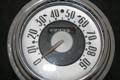
I installed a new temp gauge and sending unit on my 55 f100 with 292 y-block today. I got the guage from mid fifties and it has a mid point of 160 degrees.
I ran the truck for about 20-30 minutes and when I got home the temp gauge never hit the mid point. The red line in the pic shows the temp when I got home.

So I took my laser temp gauge and pointed it at the brass sending unit which read 147 degrees. Is pointing the laser temp gauge at the sending unit a proper way to get a reading?
Based upon the laser reading and the position of the needle on the temp gauge does this seem like an accurate reading?
I've been getting a lot of overflow on my radiator so I want to make sure I'm not overheating.
Thanks for any replys.
I ran the truck for about 20-30 minutes and when I got home the temp gauge never hit the mid point. The red line in the pic shows the temp when I got home.
So I took my laser temp gauge and pointed it at the brass sending unit which read 147 degrees. Is pointing the laser temp gauge at the sending unit a proper way to get a reading?
Based upon the laser reading and the position of the needle on the temp gauge does this seem like an accurate reading?
I've been getting a lot of overflow on my radiator so I want to make sure I'm not overheating.
Thanks for any replys.
Hotshot


Joined: Oct 2009
Posts: 16,188
Likes: 4,796
From: Burbank, WA
Is there some documentation you were given to guarantee the "mid-point temperature reading"? As in, each individual unit has been tested for accuracy? I would check more than just the temp sender with the laser checker. Maybe also the upper rad hose and the top rad tank. Check for consistancy. If you're not hitting 180F, I would say your thermostat isn't operating correctly. (assuming you have one in place, and it is rated at 180F) OTOH, if you're puking fluid, you're either running hot or have a defective rad cap. It sounds like you've got a little more work to do, to truly know what your problem really is.
Thread Starter
|
Cross-Country
Joined: Oct 2009
Posts: 71
Likes: 0
From: Westminster, CA
ALBUQ F-1, How do I get the air out of the system? Also, not sure what the thermostat is I was planning on replacing that next.
52 Merc, no documentation on how accurate the gauge is. I'm only going off the paperwork sent with the guage. In addition, I just replaced the radiator cap with a new 4lb cap.
It seems like I started having issues with overflowing when I drained the rad and replaced the fluid.
Could this simply be an air issue as ALBUQ stated?
52 Merc, no documentation on how accurate the gauge is. I'm only going off the paperwork sent with the guage. In addition, I just replaced the radiator cap with a new 4lb cap.
It seems like I started having issues with overflowing when I drained the rad and replaced the fluid.
Could this simply be an air issue as ALBUQ stated?
Hotshot
Joined: Oct 2009
Posts: 16,188
Likes: 4,796
From: Burbank, WA
It could be a trapped air issue. Which makes sense if the problem started when you added air into the system, by draining the fluid. I would change the 'stat with a 180F unit, and see if you can work out the air pocket, at the same time.
Thread Starter
|
Cross-Country
Joined: Oct 2009
Posts: 71
Likes: 0
From: Westminster, CA
I hope it's not the head gaskets.
It's not smoking and the oil isn't milky but the rad is overflowing with a frothy look.
Is their a definite way of determing if the head gaskets are leaking?
It's not smoking and the oil isn't milky but the rad is overflowing with a frothy look.
Is their a definite way of determing if the head gaskets are leaking?
Trending Topics
Hotshot
Joined: Oct 2009
Posts: 16,188
Likes: 4,796
From: Burbank, WA
I could be wrong, but I would think if you had a blown head gasket, your temp would be higher than 147F.
Many times, you'll see bubbling in the water when you look inside the rad with the engine running, if a head gasket was bad. That would indicate cumbustion pressure getting into the water jackets. That is also what causes rapid overheating. It can also increase the cooling system pressure and puke water past the cap and out the overflow.
If the exhaust feels cold when you put your hand over the tailpipe, with the engine running and up to normal operating temperature, that is another tell-tale sign. That trick works better with dual exhaust, where one side will feel hotter/colder than the other.
But before we get you all worked up with worst case scenerios, try replacing the thermostat and check for the possible air bubble.
Many times, you'll see bubbling in the water when you look inside the rad with the engine running, if a head gasket was bad. That would indicate cumbustion pressure getting into the water jackets. That is also what causes rapid overheating. It can also increase the cooling system pressure and puke water past the cap and out the overflow.
If the exhaust feels cold when you put your hand over the tailpipe, with the engine running and up to normal operating temperature, that is another tell-tale sign. That trick works better with dual exhaust, where one side will feel hotter/colder than the other.
But before we get you all worked up with worst case scenerios, try replacing the thermostat and check for the possible air bubble.
FTE Stories
Ford Trucks for Ford Truck Enthusiasts

3 Best / 3 Worst Parts of Modern Ford Ownership
Brett Foote
10 Amazing Upgrades That Solve Common Ford Truck Owner Headaches
Pouria Savadkouei
Every 2026 Ford Engine Explained
Brett Foote
10 Ugly Ford Trucks That We Still Kinda Love
Joe Kucinski
10 Things Every Truck Owner NEEDS (2026 Edition)
Michael S. Palmer
Rezvani's Latest Post-Apocalyptic Monster Is a Ford F-150 Raptor Underneath
Verdad Gallardo
Top 10 Most Expensive Ford Trucks Ever Sold on Bring a Trailer
Joe Kucinski
2027 Ford Super Duty Buyer's Guide (Every Model, Engine, & Package)
Brett Foote
Top 10 Ford Truck Tragedies
Joe Kucinski
Fleet Owner


Joined: Jul 2004
Posts: 27,298
Likes: 1,059
From: NM
First thing I'd consider is, how high did you fill the radiator? These aren't like modern cars where you fill them to the top (unless you've added a recovery system). The Full level (cold) is ~2 inches below the top of the filler neck. Some radiators have a little metal tang horizontally at the correct level inside the upper tank. If you bring it up to temperature with the cap off, then fill to just under the neck, you'll be at max level. Do it with the heater controls set to full Hot to burp any air out of the heater, which is where the air is likely to hide.
Use a cap rated for 4 psi, not 7 or 14.
Use a cap rated for 4 psi, not 7 or 14.

Hotshot
Joined: Oct 2004
Posts: 15,882
Likes: 88
From: Durham NC
You didn't use teflon sealing tape on the sender threads when you installed it did you? That's a commonly done mistake that causes the gauge to give an erronious reading. Is the sender the one speced by the gauge manufacturer? There are different range senders depending on what the gauge expects to see.
Laser temp gauges are just rough approximations of the temp, their reading can vary quite a bit depending on distance and angle the reading is taken at. The correct way to ake a temp reading is to stick a thermometer into the radiator fill neck into the coolant. A dial style cooking termometer works good, just don't use one that is used for food as well.
Proper operating temp should be ~ 200*F if the coolant isn't getting above 190 you need a higher range thermostat and/or less cooling. A leaking head gasket blowing back into the coolant will show up as bubbles in the coolant after the thermostat opens.
Laser temp gauges are just rough approximations of the temp, their reading can vary quite a bit depending on distance and angle the reading is taken at. The correct way to ake a temp reading is to stick a thermometer into the radiator fill neck into the coolant. A dial style cooking termometer works good, just don't use one that is used for food as well.
Proper operating temp should be ~ 200*F if the coolant isn't getting above 190 you need a higher range thermostat and/or less cooling. A leaking head gasket blowing back into the coolant will show up as bubbles in the coolant after the thermostat opens.
Thread Starter
|
Cross-Country
Joined: Oct 2009
Posts: 71
Likes: 0
From: Westminster, CA
I think the radiator was overfilled. It was drained then refilled to the top while the motor was off.
My heater is not connected right now and I do have a 4 lb cap.
Should I drain the block and radiator when I replace the thermostat?
My heater is not connected right now and I do have a 4 lb cap.
Should I drain the block and radiator when I replace the thermostat?
Fleet Owner
Joined: Jul 2004
Posts: 27,298
Likes: 1,059
From: NM

If you mean should you flush the whole system, I would if you haven't done it in a couple years. Prestone and others make a two-step system with acid powder and neutralizer that works pretty good if you follow the directions. NAPA also sells a good single-step product from Mac's that just needs a lot of flushing after circulating the acid.
Hotshot
Joined: Oct 2004
Posts: 15,882
Likes: 88
From: Durham NC
If the coolant is discolored I'd flush it. Be sure to refill with a 50-50 antifreeze water mix.
Did you bypass the heater with a hose rather than just plugging the connections?
When you refill it cold and run it, the coolant level will usually drop significantly when the thermostat opens, refill immediately. It will be obvious when the thermostat opens if you are looking into the radiator neck, the water will suddenly start moving and will usually jump up in temp.
If you suspect a blown head gasket, do a leakdown test or just buy or make a sparkplug replacement air adapter. Replace the sparkplug with the adapter, be sure both valves are closed and hook an air hose to the adapter. Pressurize to ~ 100# and look for bubbles in the radiator, and or hissing sound in the carb or exhaust pipe. Repeat for each cylinder. If you suddenly see bubbles in the coolant you have found your leaking gasket location. I have never seen a blown head gasket run cool tho.
Did you bypass the heater with a hose rather than just plugging the connections?
When you refill it cold and run it, the coolant level will usually drop significantly when the thermostat opens, refill immediately. It will be obvious when the thermostat opens if you are looking into the radiator neck, the water will suddenly start moving and will usually jump up in temp.
If you suspect a blown head gasket, do a leakdown test or just buy or make a sparkplug replacement air adapter. Replace the sparkplug with the adapter, be sure both valves are closed and hook an air hose to the adapter. Pressurize to ~ 100# and look for bubbles in the radiator, and or hissing sound in the carb or exhaust pipe. Repeat for each cylinder. If you suddenly see bubbles in the coolant you have found your leaking gasket location. I have never seen a blown head gasket run cool tho.
Thread Starter
|
Cross-Country
Joined: Oct 2009
Posts: 71
Likes: 0
From: Westminster, CA
No teflon tape or pipe dope used for the sending unit and the heater is bypassed using a hose (not capped).
Not sure when the last flush was since I've only had the truck for about 2 months now.
So it sounds like a system flush and new 180 degree thermostat will be a good start.
I'll do a search on how to flush the system without making a huge mess in my garage since I've never flushed a system before.
Not sure when the last flush was since I've only had the truck for about 2 months now.
So it sounds like a system flush and new 180 degree thermostat will be a good start.
I'll do a search on how to flush the system without making a huge mess in my garage since I've never flushed a system before.