


Super duty brake question??
Thread Starter
|
Elder User
Joined: Oct 2006
Posts: 624
Likes: 0
From: north texas
 Super duty brake question??
after changing my brake pads on my 2006 f250 i have noticed that when i push the brake pedal to the floor it feels very week when i push it in all the way, do these have to be bled or the pressure relieved some how after changing the pads? ?............i just forced the caliper open with a large pair of channel locks and installed the new pads , did i do something wrong here? thanks for any info on this....
Hotshot


Joined: Jul 2005
Posts: 13,834
Likes: 26
From: Middle Tn.
after changing my brake pads on my 2006 f250 i have noticed that when i push the brake pedal to the floor it feels very week when i push it in all the way, do these have to be bled or the pressure relieved some how after changing the pads? ?............i just forced the caliper open with a large pair of channel locks and installed the new pads , did i do something wrong here? thanks for any info on this....
1. When compressing calipers on a vehicle with ABS, it is best to open the bleed valve so as not to push crap back into the ABS system. I have done it your way without problems but it is not recommended.
2. The pads do need to be broke in per say. Do a series of stops from 25 mph, letting them cool off in between. Then kick it up to 40 to 50 mph and repeat. This is to get them seated without overheating.
3. It is time to flush your brake system. Preferrably every 2 years. I use the Prestone Dot 3 synthetic with good results. It is supposed to wick less moisture from the air. Stated on bottle, can't verify.
Fleet Mechanic


Joined: Feb 2007
Posts: 1,320
Likes: 13
From: Mid Atlantic
A few items here;
1. When compressing calipers on a vehicle with ABS, it is best to open the bleed valve so as not to push crap back into the ABS system. I have done it your way without problems but it is not recommended.
2. The pads do need to be broke in per say. Do a series of stops from 25 mph, letting them cool off in between. Then kick it up to 40 to 50 mph and repeat. This is to get them seated without overheating.
3. It is time to flush your brake system. Preferrably every 2 years. I use the Prestone Dot 3 synthetic with good results. It is supposed to wick less moisture from the air. Stated on bottle, can't verify.
1. When compressing calipers on a vehicle with ABS, it is best to open the bleed valve so as not to push crap back into the ABS system. I have done it your way without problems but it is not recommended.
2. The pads do need to be broke in per say. Do a series of stops from 25 mph, letting them cool off in between. Then kick it up to 40 to 50 mph and repeat. This is to get them seated without overheating.
3. It is time to flush your brake system. Preferrably every 2 years. I use the Prestone Dot 3 synthetic with good results. It is supposed to wick less moisture from the air. Stated on bottle, can't verify.
What pads did you install?

Post Fiend
Joined: Jul 2005
Posts: 6,127
Likes: 6
Your brake pad change method works for many people.
However, I concur with the above posts that if you are going to do a brake job, do it right.
A) Rebuild the caliper at the same time.
If you don't take it off the vehicle, it is impossible to disassemble and CLEAN it.
Disassemble it AFTER you washed it CLEAN.
Dry it with compressed air.
Disassemble it, look at how worn it is inside --- is the pistons coated?
Is the coating worn through to the aluminum / steel?
If so, REPLACE.
Is the slide clean? Corroded? Bent?
Can you slide it reasonably freely with your hand --- it should be snug, not bind?
What about the pins holding the pads? Are they clean? Corroded?
Too much play?
If the caliper checks out --- rebuild it with NEW gaskets, seals, etc after cleaning it inside out thoroughly.
If you have doubt? Replace it with brand new.
Alternative, replace with top quality rebuild from a reputable builder.
B) Cleaning vehicle
While you are at it, clean off the attachment points, bolts, and everything the caliper touches on the truck.
C) Rotors
Then, either REPLACE with NEW or resurface the Rotors.
Replace is the ideal option even if they are within spec. to be reused.
Buy a premium grade rotor that has a fairly high nickle content, not the cheapest ones.
Slots in them are controversial --- you can follow that discussion elsewhere to see if that is worth your money.
D) Replacing brake fluid
Every 2 years or more in high humidity / salt climates.
Note purging of ABS system takes special work --- holes to open in ABS unit to purge etc.
E) Replace brake hoses
If they look questionable --- or for safety sake, do it anyways --- stainless steel braided covered lines look so cool.
F) Reassemble the caliper onto rotor, use a top quality anti-seize grease.
Properly done, your brakes is good for years or lots of miles.
From the latest advice I heard, top quality rotors (lots of nickle) with mid to low end brake pads give you the best price performance.
The rotors outlast the pads, which are cheap to replace especially if you got a lifetime warranty deal.
Have fun.
However, I concur with the above posts that if you are going to do a brake job, do it right.
A) Rebuild the caliper at the same time.
If you don't take it off the vehicle, it is impossible to disassemble and CLEAN it.
Disassemble it AFTER you washed it CLEAN.
Dry it with compressed air.
Disassemble it, look at how worn it is inside --- is the pistons coated?
Is the coating worn through to the aluminum / steel?
If so, REPLACE.
Is the slide clean? Corroded? Bent?
Can you slide it reasonably freely with your hand --- it should be snug, not bind?
What about the pins holding the pads? Are they clean? Corroded?
Too much play?
If the caliper checks out --- rebuild it with NEW gaskets, seals, etc after cleaning it inside out thoroughly.
If you have doubt? Replace it with brand new.
Alternative, replace with top quality rebuild from a reputable builder.
B) Cleaning vehicle
While you are at it, clean off the attachment points, bolts, and everything the caliper touches on the truck.
C) Rotors
Then, either REPLACE with NEW or resurface the Rotors.
Replace is the ideal option even if they are within spec. to be reused.
Buy a premium grade rotor that has a fairly high nickle content, not the cheapest ones.
Slots in them are controversial --- you can follow that discussion elsewhere to see if that is worth your money.
D) Replacing brake fluid
Every 2 years or more in high humidity / salt climates.
Note purging of ABS system takes special work --- holes to open in ABS unit to purge etc.
E) Replace brake hoses
If they look questionable --- or for safety sake, do it anyways --- stainless steel braided covered lines look so cool.
F) Reassemble the caliper onto rotor, use a top quality anti-seize grease.
Properly done, your brakes is good for years or lots of miles.
From the latest advice I heard, top quality rotors (lots of nickle) with mid to low end brake pads give you the best price performance.
The rotors outlast the pads, which are cheap to replace especially if you got a lifetime warranty deal.
Have fun.
Fleet Owner


Joined: Nov 2003
Posts: 27,901
Likes: 3,617

69cj should have you fixed up. Please let us know if it gets better after the series of stops. If you do not flush the fluid, I would at least bleed the brakes (but it is a really good idea to do the flush - I am at the same point and will be doing it soon).
Also - IMO it is too early to buy new rotors unless you have evidence of warpage or grooving or glazing. Even turning the rotors is not necessary if there is no warpage at 3 years old. All this would be a 5 yr / 100k interval job (at the earliest) unless you have abused them. It is WAY conservative to rebuild the cylinders also - won't hurt, but not necessary. Typically turning Ford rotors is a recipe to cause warpage - since they were typically under-designed. The new rotors (05 and up) are beefier, so they may take to turning a lot better.
Also - IMO it is too early to buy new rotors unless you have evidence of warpage or grooving or glazing. Even turning the rotors is not necessary if there is no warpage at 3 years old. All this would be a 5 yr / 100k interval job (at the earliest) unless you have abused them. It is WAY conservative to rebuild the cylinders also - won't hurt, but not necessary. Typically turning Ford rotors is a recipe to cause warpage - since they were typically under-designed. The new rotors (05 and up) are beefier, so they may take to turning a lot better.
Fleet Mechanic
Joined: Feb 2007
Posts: 1,320
Likes: 13
From: Mid Atlantic
While I agree that replacing rotors is the best I think that unless they've been damaged (warped or cracked) it is a waste of your hard earned money unless they're worn down below specs.
The wear can be measured with a caliper. I don't know specifically what the wear limits are in our trucks but in many vehicles it is 2 mm. You can typically feel a lip developing at the outer edges of the rotor.
My '06 350 with 73K on it has exhibited very good wear characteristics. I would guess that I still have over 50% wear left.
As far as drilled vs. slotted vs. solid there are alot of opinions and most of them have no basis in physics. Brake rotors are heat sinks, transferring kenetic enegy into heat as they stop your truck. The larger (and heavier) your rotors are the better they can absorb the heat before they warp. So all things being equal the solid rotors will do a better job of absorbing heat than the lighter drilled and slotted ones.
Of course all things are not equal. When it rains there "can" be a thin layer that initially builds up on the rotor (until it gets hot enough to convert it to steam). Drilled rotors allow the water film to escape. They however also create significant weak spots that will, under heavy use, cause cracking that will significantly reduce their life.
Slotted rotors, if slotted correctly will allow the water film and also the gassing that is given off by the pads to disssipate.
If you look at any seriously built road racing cars there are no drilled rotors. They simply don't last. Most are running either slotted or solid rotors. I run solid rotors in my race car and have them cryogenitically treated for additional strength and wear improvements. Check out Frozen Rotors - High Performance Brake Pads, Brake Rotors if you want the best, longest lasting rotors....
The wear can be measured with a caliper. I don't know specifically what the wear limits are in our trucks but in many vehicles it is 2 mm. You can typically feel a lip developing at the outer edges of the rotor.
My '06 350 with 73K on it has exhibited very good wear characteristics. I would guess that I still have over 50% wear left.
As far as drilled vs. slotted vs. solid there are alot of opinions and most of them have no basis in physics. Brake rotors are heat sinks, transferring kenetic enegy into heat as they stop your truck. The larger (and heavier) your rotors are the better they can absorb the heat before they warp. So all things being equal the solid rotors will do a better job of absorbing heat than the lighter drilled and slotted ones.
Of course all things are not equal. When it rains there "can" be a thin layer that initially builds up on the rotor (until it gets hot enough to convert it to steam). Drilled rotors allow the water film to escape. They however also create significant weak spots that will, under heavy use, cause cracking that will significantly reduce their life.
Slotted rotors, if slotted correctly will allow the water film and also the gassing that is given off by the pads to disssipate.
If you look at any seriously built road racing cars there are no drilled rotors. They simply don't last. Most are running either slotted or solid rotors. I run solid rotors in my race car and have them cryogenitically treated for additional strength and wear improvements. Check out Frozen Rotors - High Performance Brake Pads, Brake Rotors if you want the best, longest lasting rotors....
Trending Topics
Super Moderator
Joined: Jul 2004
Posts: 21,113
Likes: 3,939
From: Ohio
Nice information guys. One question, what is the best way to flush your old brake fluid that you have found the easiest to do? I have tried every trick in the book but never liked one way in particular over the other. As a one man show, with no one around to help, I am always looking for new ideas.
FTE Stories
Ford Trucks for Ford Truck Enthusiasts

10 Things Every Truck Owner NEEDS (2026 Edition)
Michael S. Palmer
Rezvani's Latest Post-Apocalyptic Monster Is a Ford F-150 Raptor Underneath
Verdad Gallardo
Top 10 Most Expensive Ford Trucks Ever Sold on Bring a Trailer
Joe Kucinski
2027 Ford Super Duty Buyer's Guide (Every Model, Engine, & Package)
Brett Foote
Top 10 Ford Truck Tragedies
Joe Kucinski
AEV FXL Super Duty - the Super Duty Raptor Ford Doesn't Make
Brett Foote
Lobo Vs Lobo: Proof the F-150 Lobo Should Be Even Lower!
Michael S. Palmer
Ford's 2001 Explorer Sportsman Concept Looks For a New Home
Verdad Gallardo
10 Best Ford Truck Engines We Miss the Most!
Joe Kucinski
Thread Starter
|
Elder User
Joined: Oct 2006
Posts: 624
Likes: 0
From: north texas
Nice information guys. One question, what is the best way to flush your old brake fluid that you have found the easiest to do? I have tried every trick in the book but never liked one way in particular over the other. As a one man show, with no one around to help, I am always looking for new ideas.
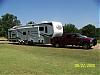
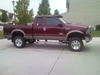
this is off the subject, but i put my rig to the test this weekend, i pulled a 20,000lb fifth wheel this weekend to my deer lease, i no that way over loaded but she towed it with no problems, these truckd r awesome!!!!!!!!

Hotshot
Joined: Jul 2005
Posts: 13,834
Likes: 26
From: Middle Tn.
The superduties will self bleed if you are in no hurry. Just go to the farthest wheel, right rear put a piece of clear tubing on the bleed valve and open it letting it drain into a suitable container. Put about a 1/4 " of fluid in the bottom of the drain cont. with the end of the clear hose in it. This will stop air from backing up into the wheel cylinder or caliper. Take the cap off of the master cylinder and go about your business if you have any menial tasks to do on the truck. Keep an eye on the fluid level of the mastercylinder. I don't let it get below the seam of the plastic mold. About 1/2 full. Top off as needed. The 1st wheel will take the longest. It will drain approx. 1 oz. per minute. When the fluid comes out clear, close the valve empty the container and go to left rear, repeat procedure and then r.f. and then l.f. I have a bleeder pump but I have ended up doing it this way. I'm usually in the workshop alone and this procedure is slow enough that nothing will get away from you.
Fleet Mechanic
Joined: Feb 2007
Posts: 1,320
Likes: 13
From: Mid Atlantic

Thread Starter
|
Elder User
Joined: Oct 2006
Posts: 624
Likes: 0
From: north texas
not the taj mahal, but its big, it measures 44' from nose to back of trailer, its just a big 3 axle toy hauler travel trailer......i wish it had a hot tub!!!!!!
Posting Guru
Joined: Feb 2009
Posts: 1,170
Likes: 1
From: Moyock, NC
I have replaced all four bleeder valves with speed bleeder valves (one way ball check valve)...works great. https://www.speedbleeder.com/. I picked mine up at Advance...they're also at Autozone, Pepboys, Carquest, etc...about $10 for two. I agree with most above comments...remove the caliper and re-lube or even replace glide pins and pad clip grooves...that way nothing getting hung up. Also, good ideal to pull your banjo bolts and ensure they're nice and clean.

Post Fiend
Joined: Jul 2005
Posts: 6,127
Likes: 6
Where I am corrosion is a severe issue, so cleaning of the parts and replacement is often driven by corrosion (e.g. inside the rotors).
In southern USA, that may not be an issue and brake components can last longer.
However, without a teardown of the calipers, it is often impossible to judge the extent of corrosion --- e.g. has it gone from the piston and corroded all the way inside PAST the contact point of the seals?
In southern USA, that may not be an issue and brake components can last longer.
However, without a teardown of the calipers, it is often impossible to judge the extent of corrosion --- e.g. has it gone from the piston and corroded all the way inside PAST the contact point of the seals?