


Engine death
Thread Starter
|
Lead Driver


Joined: Mar 2008
Posts: 7,188
Likes: 384
From: Near Los Angeles
Engine death
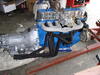
Some of you probably followed my 390 to 300 swap, and then the failing oil pressure on the new rebuild. The engine was first started August 8th, and since day 1 it began to loose oil psi. Now, coming off the freeway, I have 5 psi at idle. I can't help but wonder if the mis alligned cam bearing during the build is the cause of all this. One of the journals was a bit out of alignment, and the bearing needed to be 'sanded' with 600.
Anyway, I have a new block at a pro rebuilder and just cut a check for a large amount. I will post our findings when we tear down the problem engine, so maybe it will help someone avoid the problems I had.
Anyway, I have a new block at a pro rebuilder and just cut a check for a large amount. I will post our findings when we tear down the problem engine, so maybe it will help someone avoid the problems I had.
Thread Starter
|
Lead Driver
Joined: Mar 2008
Posts: 7,188
Likes: 384
From: Near Los Angeles
Well, I had to tear down four 300's before I found one with standard pistons in it.
It is now in the machine shop being bored .030 over, align honed if needed, balanced, block hot tanked and magna fluxed, crank turned .010 under, rods reconditioned and turned .010 under.
RECOMENDATIONS: The rebuilder asked if I would prefer a name brand cam, Isky, Comp Cams, Crane, or should he have one cut to the specs of one of the big names. Any feedback about that?
It is now in the machine shop being bored .030 over, align honed if needed, balanced, block hot tanked and magna fluxed, crank turned .010 under, rods reconditioned and turned .010 under.
RECOMENDATIONS: The rebuilder asked if I would prefer a name brand cam, Isky, Comp Cams, Crane, or should he have one cut to the specs of one of the big names. Any feedback about that?
Thread Starter
|
Lead Driver
Joined: Mar 2008
Posts: 7,188
Likes: 384
From: Near Los Angeles
I guess the most irritating thing is not even being certain what caused the 'meltdown' in the first place. I watched the engine go together with careful hospital cleanliness. The only thing that I didn't like was the cam journal alignment and one bearing having to be sanded.
At this point I am beyond anger. I have spent so much $ that now I have to spend more to have a running, dependable truck, and to make my investment pay. That is what I am doing. Although the pressure is slowly dropping, I am hoping it will hold until the new engine is ready.
I had less than 5psi coming off the freeway on the way to the builder's. That instantly convinced me to dump some STP oil treatment--clean sludge--into the engine.
At this point I am beyond anger. I have spent so much $ that now I have to spend more to have a running, dependable truck, and to make my investment pay. That is what I am doing. Although the pressure is slowly dropping, I am hoping it will hold until the new engine is ready.
I had less than 5psi coming off the freeway on the way to the builder's. That instantly convinced me to dump some STP oil treatment--clean sludge--into the engine.

FTE Legend
Joined: May 2008
Posts: 56,542
Likes: 0
From: In my own world
I took the handle off an electric drill, and adapted it to work on the cam, to use it to instal it. everytime I pass through a cam bareing, I sqiurt stp onto the cam lobes through the lifter holes. quite messy, but it makes sure you are'nt dragging the cam through a dry place. I also squirt it down through every lifter hole when the cam is in place. rub stp all over the lifter before you drop it in the hole. I keep cardboard under my engine stand to catch all the oil run-off, and it gets really soaked by the end of the build. make sure to clean all the oil passages really well before you set the crank.use stp on the crank, and bearings, turn the motor over constantly as you build it, listen for scrapeing, scratching noises. motor should turn over easy the whole time, until you put in the plugs. if not, something is wrong, tear it down and start over again. when you fire it the first time it's going to smoke real bad for about 5 mins, then it will clear after it starts to warm up. I usually start with 3 bottles of stp, and thier all gone when I'm done. I know this is old school, but it works well for me.I have the machine shop do there thing, then I take all of it home, and build the motor myself. that way I know it is as right as it can be, and if not, I know who to blame. in 42 years I have only had 1 motor fail, and the machine shop assembled that one. I wish you lived next door, I would be right there with you, stp running off my elbows. for sure.
Thread Starter
|
Lead Driver
Joined: Mar 2008
Posts: 7,188
Likes: 384
From: Near Los Angeles
Dusty--
Thanks for the concern. You've given me nothing but good advice. Thanks for all of it. This engine is going to be perfect.
Thanks for the concern. You've given me nothing but good advice. Thanks for all of it. This engine is going to be perfect.
Trending Topics

Postmaster
Joined: Dec 2006
Posts: 3,603
Likes: 10
From: Spokane, WA
Some old school things have yet to be improved on. Using STP during engine assembly is one of them.
Cam is your choice but I'd lean toward the Isky 256 Super Cam or maybe a Comp 260. What does your machinist think?
Cam is your choice but I'd lean toward the Isky 256 Super Cam or maybe a Comp 260. What does your machinist think?
FTE Stories
Ford Trucks for Ford Truck Enthusiasts

3 Best / 3 Worst Parts of Modern Ford Ownership
Brett Foote
10 Amazing Upgrades That Solve Common Ford Truck Owner Headaches
Pouria Savadkouei
Every 2026 Ford Engine Explained
Brett Foote
10 Ugly Ford Trucks That We Still Kinda Love
Joe Kucinski
10 Things Every Truck Owner NEEDS (2026 Edition)
Michael S. Palmer
Rezvani's Latest Post-Apocalyptic Monster Is a Ford F-150 Raptor Underneath
Verdad Gallardo
Top 10 Most Expensive Ford Trucks Ever Sold on Bring a Trailer
Joe Kucinski
2027 Ford Super Duty Buyer's Guide (Every Model, Engine, & Package)
Brett Foote
