


1990 E250 fuel issue

Thread Starter
|
New User
Joined: Sep 2009
Posts: 14
Likes: 0
From: North Caroina
1990 E250 fuel issue
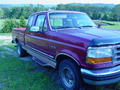
Extended body cargo van; 302 c.i. engine; dual tanks.
Recently the engine would die sitting @ idle for a while (traffic light, etc.) & wouldn't start switched to the rear tank, but it'd run fine going down the road & the fuel gauge (usually) works for the rear tank - low-pressure pump inside bad?
Switch to front tank (gauge rarely works then) & no problems - until yesterday. Drove ~10 miles on the rear tank, forgot to switch before I parked & the engine wouldn't start on either tank. Had the van towed home, pulled the fuel pump off the frame rail & tested - it's good. Replaced fuel filter & fuel pump relay - still will not start.
With a shot of starting fluid (hate to use it) the engine will fire & run for a moment, but I can tell it's not picking up the fuel from either tank & both have ~7 gallons in 'em. Fuel in all the lines, but not under pressure.
I don't have the factory service manual (shame on me), the Haynes is no help & I haven't found the answer looking around this site - but I'll bet somebody knows what I should be looking for !!
Thanx in advance for any comments.
Recently the engine would die sitting @ idle for a while (traffic light, etc.) & wouldn't start switched to the rear tank, but it'd run fine going down the road & the fuel gauge (usually) works for the rear tank - low-pressure pump inside bad?
Switch to front tank (gauge rarely works then) & no problems - until yesterday. Drove ~10 miles on the rear tank, forgot to switch before I parked & the engine wouldn't start on either tank. Had the van towed home, pulled the fuel pump off the frame rail & tested - it's good. Replaced fuel filter & fuel pump relay - still will not start.
With a shot of starting fluid (hate to use it) the engine will fire & run for a moment, but I can tell it's not picking up the fuel from either tank & both have ~7 gallons in 'em. Fuel in all the lines, but not under pressure.
I don't have the factory service manual (shame on me), the Haynes is no help & I haven't found the answer looking around this site - but I'll bet somebody knows what I should be looking for !!
Thanx in advance for any comments.
Thread Starter
|
New User
Joined: Sep 2009
Posts: 14
Likes: 0
From: North Caroina
I can't tell. Don't have anyone to turn the key while I'm under the van & I never have heard the pump run. Except when I took it off the van & tested it direct from a battery.
Fleet Owner


Joined: Aug 2005
Posts: 23,667
Likes: 301
From: Easton,Ks
Then ground pin #6 of the EEC Self-Test connector an turn on the key and see if the frame mounted fuel pump and the selected in tank fuel pump run.
Do not let the frame pump run too long without fuel or it will burn up.
The EEC Self-Test connector is by your battery.
The EEC Self-Test connector:

/
Do not let the frame pump run too long without fuel or it will burn up.
The EEC Self-Test connector is by your battery.
The EEC Self-Test connector:
/
Fleet Owner
Joined: Aug 2005
Posts: 23,667
Likes: 301
From: Easton,Ks
You may have:
A open Inertia Fuel Shutoff switch.
A bad Relay
Bad wiring under the relay
Bad fuse link by the starter solenoid battery side.
Bad wiring from the relay to the Inertia switch and from there to the frame pump.
This diagram should be like yours:

/
A open Inertia Fuel Shutoff switch.
A bad Relay
Bad wiring under the relay
Bad fuse link by the starter solenoid battery side.
Bad wiring from the relay to the Inertia switch and from there to the frame pump.
This diagram should be like yours:
/
Fleet Owner
Joined: Aug 2005
Posts: 23,667
Likes: 301
From: Easton,Ks
Also check that the black wire with a green stripe coming off the NEG post of the battery has a good ground.
Trending Topics
Thread Starter
|
New User
Joined: Sep 2009
Posts: 14
Likes: 0
From: North Caroina
Thanks a lot - I'll go thru all that. The relay I just bought & I can hear it switching, but the Inertia Fuel Shutoff switch, etc. I have not gotten into.
It has to be something that just quit, as I've had the van for 10 years, it was running when I parked @ the post office but wouldn't start 10 minutes later.
It has to be something that just quit, as I've had the van for 10 years, it was running when I parked @ the post office but wouldn't start 10 minutes later.
FTE Stories
Ford Trucks for Ford Truck Enthusiasts

Top 10 Fords at 2026 Carlisle Ford Nationals
Joe Kucinski
3 Best / 3 Worst Parts of Modern Ford Ownership
Brett Foote
10 Amazing Upgrades That Solve Common Ford Truck Owner Headaches
Pouria Savadkouei
Every 2026 Ford Engine Explained
Brett Foote
10 Ugly Ford Trucks That We Still Kinda Love
Joe Kucinski
10 Things Every Truck Owner NEEDS (2026 Edition)
Michael S. Palmer
Rezvani's Latest Post-Apocalyptic Monster Is a Ford F-150 Raptor Underneath
Verdad Gallardo
Top 10 Most Expensive Ford Trucks Ever Sold on Bring a Trailer
Joe Kucinski
2027 Ford Super Duty Buyer's Guide (Every Model, Engine, & Package)
Brett Foote
Thread Starter
|
New User
Joined: Sep 2009
Posts: 14
Likes: 0
From: North Caroina
For others who may experience the same problem, that switch is Ford part # E7AE-9341-AA & in my 1990 van, it's on the kick panel on the passenger's side, in front of the door, beside the heater core. Evidently the same switch is used in numerous Ford vehicles, but it's in different locations, depending on the vehicle.
The auto parts store up the road wants $79.95 for the thing, that I wasn't willing to pay until I knew for a fact it was the problem, so I cut the wires just before the plug, tested with my meter, then used a butt connector to run 'em together without the switch. Bingo - did the EEC pin #6 to ground test & the fuel pump worked again. Engine started right up too.
Only problem I have now that I'll post separately is with the alternator, or more likely regulator - voltmeter hooked to the battery shows anywhere from 11.8 to 14.5 Volts after startup. I've dragged the battery down trying to start the rascal & sometimes it looks like the alternator is working just fine (14.2-14.5 Volts), but other times like it's not working @ all.
Again, thanks for your help, subford - I didn't even know the "Inertia" switch was there.
Thread Starter
|
New User
Joined: Sep 2009
Posts: 14
Likes: 0
From: North Caroina
Back to square 1
1990 E250 extended body cargo van, 302 c.i. engine, dual fuel tanks. "subford" provided a great deal of valuable info & the van ran fine for a while, pulling fuel from either tank, just by replacing the fuel pump relay & removing the "inertia" fuel shutoff switch, which was bad. I used a butt connector to join the 2 wires going to the switch & the fuel pump worked again.
But the alternator was not charging & today I replaced the voltage regulator 1st, then the alternator. Both were working fine when I set out on an errand, about 20 miles round trip. On the way back the engine died like it ran out of fuel & I switched from rear tank to front tank. Engine acts like it wants to start switched to the front tank, but it won't. And the van acts like there's no fuel in the rear tank, although it's over 1/2 full - front tank is ~3/4 full.
So I'm @ a loss - wiring is good, fuel pump relay, voltage regulator & alternator are new & all test good, inertia fuel cutoff switch is gone, I used electrical contact cleaner on all connections, etc., but I'm back to where I started - the engine is not getting fuel. What am I missing? Only thing I can think of is the pumps inside the fuel tanks.
But the alternator was not charging & today I replaced the voltage regulator 1st, then the alternator. Both were working fine when I set out on an errand, about 20 miles round trip. On the way back the engine died like it ran out of fuel & I switched from rear tank to front tank. Engine acts like it wants to start switched to the front tank, but it won't. And the van acts like there's no fuel in the rear tank, although it's over 1/2 full - front tank is ~3/4 full.
So I'm @ a loss - wiring is good, fuel pump relay, voltage regulator & alternator are new & all test good, inertia fuel cutoff switch is gone, I used electrical contact cleaner on all connections, etc., but I'm back to where I started - the engine is not getting fuel. What am I missing? Only thing I can think of is the pumps inside the fuel tanks.
Fleet Owner
Joined: Aug 2005
Posts: 23,667
Likes: 301
From: Easton,Ks
Could be the pumps.
Also check the wiring under the relays socket.
Does the black wire with a green stripe have a good ground at the NEG post of the battery?
Could also be the fuel selector valve on the frame.
Select a tank on the dash switch. Unplug the high pressure pump on the frame. This is to keep it from burning up with no cooling fuel going through it.
Remove the pressure line from the selected tank at the valve and point it into a bucket.
Ground pin 6 at the EEC test plug and turn on the key and see if you get a good stream out of the hose. The pressure from the tank pump should be about 5 to 7 PSI. This pressure is required to snap the fuel selector valve to line its tank to the high pressure pump.
Your fuel system:

/
Also check the wiring under the relays socket.
Does the black wire with a green stripe have a good ground at the NEG post of the battery?
Could also be the fuel selector valve on the frame.
Select a tank on the dash switch. Unplug the high pressure pump on the frame. This is to keep it from burning up with no cooling fuel going through it.
Remove the pressure line from the selected tank at the valve and point it into a bucket.
Ground pin 6 at the EEC test plug and turn on the key and see if you get a good stream out of the hose. The pressure from the tank pump should be about 5 to 7 PSI. This pressure is required to snap the fuel selector valve to line its tank to the high pressure pump.
Your fuel system:
/
Thread Starter
|
New User
Joined: Sep 2009
Posts: 14
Likes: 0
From: North Caroina
Wiring's good, I'd already replaced the battery cable ends, so the black/green stripe lead has a solid ground & every other connection is tight, so the fuel selector valve I'll tackle next. The diagram is helpful - another one that's not in the Haynes manual.
I would think that either the in-tank pumps work or they don't, not sometimes working & sometimes not, but that's what the symptoms seem to say. I reckon I'll find out today & thanks again for the help.
I would think that either the in-tank pumps work or they don't, not sometimes working & sometimes not, but that's what the symptoms seem to say. I reckon I'll find out today & thanks again for the help.
Thread Starter
|
New User
Joined: Sep 2009
Posts: 14
Likes: 0
From: North Caroina
No voltage to fuel pumps.
Replaced fuel pump relay (again) & it clicks jumping EEC self-test pin #6 to ground (key on) but the fuel pumps don't turn on. I removed the intertia fuel cutoff switch (defective) & using a butt connector, joined the 2 wires going to the switch together. When the van was running, there was voltage on either side of the connector, but now there's not - although there is continuity w/ virtually -0- resistance.
So either the (new) relay is bad or there's something else between it & where the inertia switch was - next to the heater core on the passenger's side. But I don't see any other switch in a schematic & I'd have to take the van apart to trace the wiring. Any other ideas ???
Replaced fuel pump relay (again) & it clicks jumping EEC self-test pin #6 to ground (key on) but the fuel pumps don't turn on. I removed the intertia fuel cutoff switch (defective) & using a butt connector, joined the 2 wires going to the switch together. When the van was running, there was voltage on either side of the connector, but now there's not - although there is continuity w/ virtually -0- resistance.
So either the (new) relay is bad or there's something else between it & where the inertia switch was - next to the heater core on the passenger's side. But I don't see any other switch in a schematic & I'd have to take the van apart to trace the wiring. Any other ideas ???
Thread Starter
|
New User
Joined: Sep 2009
Posts: 14
Likes: 0
From: North Caroina
Had to wait all day for the part to come in, but I thought I'd try replacing the EEC relay - now there's voltage to the fuel pump. Still more to do, but @ least that part of it is done.
Thread Starter
|
New User
Joined: Sep 2009
Posts: 14
Likes: 0
From: North Caroina
It runs !!
The old work van is running again!! 1st, a special thanks to Bill K (subford) for his help, providing diagrams & details my Haynes manual doesn't have, which gave me the info I needed to track the problems down.
I've had the van for 10 years with no major problems, until it started running out of fuel switched to the rear tank (plenty of fuel in it) & then wouldn't start from either tank. The problems were all electrical & while I can't say which part failed 1st, it created a "Domino effect" & I'll share what I've learned from the ordeal, hoping that someone else doesn't have to go thru it
I removed the "inertia fuel cutoff switch" (defective) & replaced:
* fuel pump relay (twice)
* EEC relay
* voltage regulator
* alternator
* fuel filter
The filter was flowing fine, but since I took the main fuel pump off to test & the filter was old, I replaced it so I wouldn't have to mess with it again (supposed to last the life of the van). Fuel pump worked fine running it straight from the battery, but re-installed, periodically there was no voltage going to it. And when the engine did run, sometimes my (professional) test meter showed as much as 14.5 volts (regulator is rated @ 14.3 volts max) & other times just 11.8 volts.
Replacing the regulator changed nothing, so I got a new alternator & now after startup, my meter shows 14.2 volts, gradually easing down as the battery is recharged, just like it should. 12.8 - 13.2 volts @ idle with a fully charged battery (no lights/accessories running) is fine & now the battery holds 12.2-12.5 volts, engine off.
Major deal with the fuel pump & EEC relays (not that hard to replace) - different part numbers for the same thing & while the Ford dealer says the relays are not the same, they are. And those relays are used for many different things on many different vehicles. Examples are Ford part # E3AF-12A646BA and # F8PZ-14NI35-BA. Same relay, although the 1st # was stamped on the fuel pump relay that came on the van & the 2nd # is what the book shows for the EEC relay (no part # stamped on the original) - they're interchangeable - Ford says they're not, but they are.
Advance Auto shows part numbers R647, R648 & R648Z for those relays & while the prices are different, the relays are all the same. Theirs have a gray or black outer (plastic) shell, the original Ford fuel pump relay is brown & the original EEC relay is green. You can pay $10.99, $11.99, $13.99 @ Advance Auto, or $29.99 @ a Ford dealer - but you'll get the same relay.
I understand "one size fits all" manufacturing & that's what Ford has done with the relays (which aren't made by Ford) & the new ones have the pins in the same location as the originals, but the outer shell is different, although it fits the plugs just fine. And there are 5 pins instead of 4 - the extra pin goes into a blank space on the plugs on my van, but no doubt it's needed on other Ford, Lincoln/Mercury vehicles with more accessories.
IMO, any engineer who wants to design vehicles should be required to work as a line mechanic in a dealership for 3 years, with stints in the parts dept. too, before they design so much as a door handle!
I've had the van for 10 years with no major problems, until it started running out of fuel switched to the rear tank (plenty of fuel in it) & then wouldn't start from either tank. The problems were all electrical & while I can't say which part failed 1st, it created a "Domino effect" & I'll share what I've learned from the ordeal, hoping that someone else doesn't have to go thru it
I removed the "inertia fuel cutoff switch" (defective) & replaced:
* fuel pump relay (twice)
* EEC relay
* voltage regulator
* alternator
* fuel filter
The filter was flowing fine, but since I took the main fuel pump off to test & the filter was old, I replaced it so I wouldn't have to mess with it again (supposed to last the life of the van). Fuel pump worked fine running it straight from the battery, but re-installed, periodically there was no voltage going to it. And when the engine did run, sometimes my (professional) test meter showed as much as 14.5 volts (regulator is rated @ 14.3 volts max) & other times just 11.8 volts.
Replacing the regulator changed nothing, so I got a new alternator & now after startup, my meter shows 14.2 volts, gradually easing down as the battery is recharged, just like it should. 12.8 - 13.2 volts @ idle with a fully charged battery (no lights/accessories running) is fine & now the battery holds 12.2-12.5 volts, engine off.
Major deal with the fuel pump & EEC relays (not that hard to replace) - different part numbers for the same thing & while the Ford dealer says the relays are not the same, they are. And those relays are used for many different things on many different vehicles. Examples are Ford part # E3AF-12A646BA and # F8PZ-14NI35-BA. Same relay, although the 1st # was stamped on the fuel pump relay that came on the van & the 2nd # is what the book shows for the EEC relay (no part # stamped on the original) - they're interchangeable - Ford says they're not, but they are.
Advance Auto shows part numbers R647, R648 & R648Z for those relays & while the prices are different, the relays are all the same. Theirs have a gray or black outer (plastic) shell, the original Ford fuel pump relay is brown & the original EEC relay is green. You can pay $10.99, $11.99, $13.99 @ Advance Auto, or $29.99 @ a Ford dealer - but you'll get the same relay.
I understand "one size fits all" manufacturing & that's what Ford has done with the relays (which aren't made by Ford) & the new ones have the pins in the same location as the originals, but the outer shell is different, although it fits the plugs just fine. And there are 5 pins instead of 4 - the extra pin goes into a blank space on the plugs on my van, but no doubt it's needed on other Ford, Lincoln/Mercury vehicles with more accessories.
IMO, any engineer who wants to design vehicles should be required to work as a line mechanic in a dealership for 3 years, with stints in the parts dept. too, before they design so much as a door handle!