






Rust...

Thread Starter
|
Freshman User
Joined: May 2009
Posts: 39
Likes: 0
Rust...
Hey! New member here and also the happy new owner of a 1978 F-250 Ranger Lariat. It's in very good condition, 351m, 4sp 4x4, locking fronts, 180k miles, I'm the third owner. I plan on keeping this truck and slowly improving/upgrading/replacing things. I have a question about rust, but not the usual type of question. There is body rust in the usual places (bottom inside of doors, bed, etc), but I'm wondering about the rust you can't see without looking, the kind that accumulates over 30 years.
For instance, I removed the driver rear light assembly to replace bulbs, and happened to look inside--way inside--and noticed what looked like a thin coating of rust on the inside of the rear panel, an area you'd never see otherwise. Nothing major, just surface rust. But I got to thinking, it's 30 years old, there must be rust in lots and lots of places that you'd have to work at to see.
So the question...is there anyway to deal with hidden rust/corrosion that maybe isn't a big deal right now, but is still there? Do you basically have to remove the body from the chassis and go from there, or are there any tips to dealing with this?
Also, what are a few important areas to check for rust that might not be visible or easy to see unless you know where to look? Would much appreciate any thoughts.
For instance, I removed the driver rear light assembly to replace bulbs, and happened to look inside--way inside--and noticed what looked like a thin coating of rust on the inside of the rear panel, an area you'd never see otherwise. Nothing major, just surface rust. But I got to thinking, it's 30 years old, there must be rust in lots and lots of places that you'd have to work at to see.
So the question...is there anyway to deal with hidden rust/corrosion that maybe isn't a big deal right now, but is still there? Do you basically have to remove the body from the chassis and go from there, or are there any tips to dealing with this?
Also, what are a few important areas to check for rust that might not be visible or easy to see unless you know where to look? Would much appreciate any thoughts.

Fleet Mechanic


Joined: Feb 2007
Posts: 1,326
Likes: 48
From: Middle TN
Welcome aboard new member!!!
Each truck is different depending on how it has been used and what it has been exposed to. For example a truck driven in deep water, salted winter streets or lots of off-road mud is going to have many more rust issues than the same truck driven in the southwest. Normal places for rust are the bottom of the doors, rear cab corners, front cab mounts, floorboards, rear wheels wells, and anywhere mud can build up.
Each truck is different depending on how it has been used and what it has been exposed to. For example a truck driven in deep water, salted winter streets or lots of off-road mud is going to have many more rust issues than the same truck driven in the southwest. Normal places for rust are the bottom of the doors, rear cab corners, front cab mounts, floorboards, rear wheels wells, and anywhere mud can build up.

Cargo Master

Joined: Sep 2003
Posts: 2,110
Likes: 32
From: southwest pa
the best way to deal with rust that you cannot see is a chemical dip. the process removes everything but the metal. it's supposed to be the most gentle form of removal and its supposed to be the most thorough since it removes EVERYTHING not metal. paint, bondo, filler, sealer, absolutely everything, leaving you with a fresh piece.
Junior User
Joined: Apr 2009
Posts: 52
Likes: 0
From: corn field
certain areas will be hard to dip, what I am going to do is use a small spot blaster and blast all my rust areas (I have a lot of rust areas) with plastic media, shoot aerosal rust converter up, in, front and back of basically everything, followed by etch prime, surface prime, and paint, I think that will hold it at bay for awhile.
Thread Starter
|
Freshman User
Joined: May 2009
Posts: 39
Likes: 0
Jurban and others, a dip or blasting is fine, but dipping involves what? dipping the entire body? I don't understand that process. And the second (blasting) assumes you can get to those deep, invisible places. How would you blast the inside metal between the rear quarter panels and the bed sides? Can't even see them, let alone blast them. Just asking, 'cause I'd like to know. This isn't a top priority for me right now, just some preventive maintenance that might be good for future consideration.
Junior User
Joined: Apr 2009
Posts: 52
Likes: 0
From: corn field
well accessing those areas isnt so bad for me, fortunately everywhere I want to blast is marked with tennis ball sized rust holes, Ill literally stick the gun in the hole and spray like mad, areas I feel I want to blast but with no rusted out access holes, Ill simply make one, when I feel its good and blasted, Ill flood/fog the entire area with thr rust converter followed by priming and top coating, It may not be the perfect way to do it, but I think its the most realistic and feasible way, that will give acceptable results. i mean its better than doing nothing at all.

Trending Topics
Thread Starter
|
Freshman User
Joined: May 2009
Posts: 39
Likes: 0
when I feel its good and blasted, Ill flood/fog the entire area with thr rust converter followed by priming and top coating
FTE Stories
Ford Trucks for Ford Truck Enthusiasts

10 Ugly Ford Trucks That We Still Kinda Love
Joe Kucinski
10 Things Every Truck Owner NEEDS (2026 Edition)
Michael S. Palmer
Rezvani's Latest Post-Apocalyptic Monster Is a Ford F-150 Raptor Underneath
Verdad Gallardo
Top 10 Most Expensive Ford Trucks Ever Sold on Bring a Trailer
Joe Kucinski
2027 Ford Super Duty Buyer's Guide (Every Model, Engine, & Package)
Brett Foote
Top 10 Ford Truck Tragedies
Joe Kucinski
AEV FXL Super Duty - the Super Duty Raptor Ford Doesn't Make
Brett Foote
Lobo Vs Lobo: Proof the F-150 Lobo Should Be Even Lower!
Michael S. Palmer
Ford's 2001 Explorer Sportsman Concept Looks For a New Home
Verdad Gallardo
Junior User
Joined: Apr 2009
Posts: 52
Likes: 0
From: corn field
permatex rust converter, available at auto parts stores, I figure anything microscopic that the blasting leaves behind, the converter will take care of, followed by etch prime, prime, sealer, and top coat (of course after blasting through my rusty access holes Ill weld in new metal, forgot to mention that, i.e. cab corners) (to fog/flood spray it in until it drips out)
Last edited by jurban; Jun 16, 2009 at 07:05 AM. Reason: forgot something

Fleet Owner


Joined: May 2009
Posts: 21,437
Likes: 76
From: Gilbert, PA
the best way to deal with rust that you cannot see is a chemical dip. the process removes everything but the metal. it's supposed to be the most gentle form of removal and its supposed to be the most thorough since it removes EVERYTHING not metal. paint, bondo, filler, sealer, absolutely everything, leaving you with a fresh piece.
it was kind of sad to see how little car was left when we got the shell back! This is going to extreams but my boss at the shop just did this to a 69 440 R/T charger we are restoring. Afterall, it will be a 100k car when complete
but fo the average home restorer/nut. Spraying rust converter everywhere you can possibly get to. then topcoating w some sort of paint
Fleet Owner
Joined: May 2009
Posts: 21,437
Likes: 76
From: Gilbert, PA
PNW guy. Did what you were talking about today. I mixed up some POR 15 and after i got done priming the cab, while it was still gutted, I sprayed evey orfice w POR 15 till it was running out.
<a href="http://s108.photobucket.com/albums/n29/diesel_brad/?action=view¤t=000_0586.jpg" target="_blank"><img src="http://i108.photobucket.com/albums/n29/diesel_brad/000_0586.jpg" border="0" alt="Photobucket"></a>
<a href="http://s108.photobucket.com/albums/n29/diesel_brad/?action=view¤t=000_0585.jpg" target="_blank"><img src="http://i108.photobucket.com/albums/n29/diesel_brad/000_0585.jpg" border="0" alt="Photobucket"></a>
<a href="http://s108.photobucket.com/albums/n29/diesel_brad/?action=view¤t=000_0584.jpg" target="_blank"><img src="http://i108.photobucket.com/albums/n29/diesel_brad/000_0584.jpg" border="0" alt="Photobucket"></a>
<a href="http://s108.photobucket.com/albums/n29/diesel_brad/?action=view¤t=000_0583.jpg" target="_blank"><img src="http://i108.photobucket.com/albums/n29/diesel_brad/000_0583.jpg" border="0" alt="Photobucket"></a>
<a href="http://s108.photobucket.com/albums/n29/diesel_brad/?action=view¤t=000_0582.jpg" target="_blank"><img src="http://i108.photobucket.com/albums/n29/diesel_brad/000_0582.jpg" border="0" alt="Photobucket"></a>
And some cab in primer pics
<a href="http://s108.photobucket.com/albums/n29/diesel_brad/?action=view¤t=000_0582.jpg" target="_blank"><img src="http://i108.photobucket.com/albums/n29/diesel_brad/000_0582.jpg" border="0" alt="Photobucket"></a>
<a href="http://s108.photobucket.com/albums/n29/diesel_brad/?action=view¤t=000_0579.jpg" target="_blank"><img src="http://i108.photobucket.com/albums/n29/diesel_brad/000_0579.jpg" border="0" alt="Photobucket"></a>
<a href="http://s108.photobucket.com/albums/n29/diesel_brad/?action=view¤t=000_0586.jpg" target="_blank"><img src="http://i108.photobucket.com/albums/n29/diesel_brad/000_0586.jpg" border="0" alt="Photobucket"></a>
<a href="http://s108.photobucket.com/albums/n29/diesel_brad/?action=view¤t=000_0585.jpg" target="_blank"><img src="http://i108.photobucket.com/albums/n29/diesel_brad/000_0585.jpg" border="0" alt="Photobucket"></a>
<a href="http://s108.photobucket.com/albums/n29/diesel_brad/?action=view¤t=000_0584.jpg" target="_blank"><img src="http://i108.photobucket.com/albums/n29/diesel_brad/000_0584.jpg" border="0" alt="Photobucket"></a>
<a href="http://s108.photobucket.com/albums/n29/diesel_brad/?action=view¤t=000_0583.jpg" target="_blank"><img src="http://i108.photobucket.com/albums/n29/diesel_brad/000_0583.jpg" border="0" alt="Photobucket"></a>
<a href="http://s108.photobucket.com/albums/n29/diesel_brad/?action=view¤t=000_0582.jpg" target="_blank"><img src="http://i108.photobucket.com/albums/n29/diesel_brad/000_0582.jpg" border="0" alt="Photobucket"></a>
And some cab in primer pics
<a href="http://s108.photobucket.com/albums/n29/diesel_brad/?action=view¤t=000_0582.jpg" target="_blank"><img src="http://i108.photobucket.com/albums/n29/diesel_brad/000_0582.jpg" border="0" alt="Photobucket"></a>
<a href="http://s108.photobucket.com/albums/n29/diesel_brad/?action=view¤t=000_0579.jpg" target="_blank"><img src="http://i108.photobucket.com/albums/n29/diesel_brad/000_0579.jpg" border="0" alt="Photobucket"></a>
Moderator & parts slinger


Joined: Feb 2007
Posts: 50,235
Likes: 5,811
From: S/W Missouri, Polk county

Welcome to FTE, Ck where every else said and....check you upper rear shock mounts brackets, where they rivet to the frame. They should have a small drain hole, with will probably be clogged with road gunk, clean up and ck the frame area real well there.
Also I would drop the aft fuel tank, when the strap anti chaff material wears out, the tank straps area (corner's) will start to rust out your tank.
While you are at it good time to clean out that old dirty tank and might as well change out you sending unit.IMO
Any place dentside/race track/ bottom XLT wide chrome attaches to the body. Hood cowl drain holes behind front fenders, leaves, sticks, acorns pieces (damn squirrels), it all gets in there.
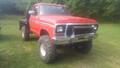
Below rear tail lights can be a hard one to clean, but it can cause this, and the fenderwell area's can look like this, so.....
Also I would drop the aft fuel tank, when the strap anti chaff material wears out, the tank straps area (corner's) will start to rust out your tank.
While you are at it good time to clean out that old dirty tank and might as well change out you sending unit.IMO
Any place dentside/race track/ bottom XLT wide chrome attaches to the body. Hood cowl drain holes behind front fenders, leaves, sticks, acorns pieces (damn squirrels), it all gets in there.
Below rear tail lights can be a hard one to clean, but it can cause this, and the fenderwell area's can look like this, so.....
Thread Starter
|
Freshman User
Joined: May 2009
Posts: 39
Likes: 0
Good stuff, 77. As I think about it, the "rust issue" is probably the biggest one for older trucks. Parts can be swapped or upgraded fairly easy, but the invisible enemy is always there munching away. This is something I'll have to address before it gets worse if I'm going to keep the truck. Beginning to think the only way to adequately deal with it is from the inside out.