



Overdrive pulling atrailer?
Thread Starter
|
Senior User
Joined: Dec 2007
Posts: 116
Likes: 0
Overdrive pulling atrailer?
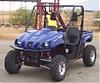
I am going on a trip about 2 hours away.I am taking my Rhino and was wanting to know if I should push the button to turn the overdrive off.I do that around town when I pull it but we are going on the interstate all the way and did not know if it would hert the tranmission. The Rhino wieghs about 1300 lbs and that is not counting the trailer.The motor will be cranking prutty good on the interstate with the overdrive button pushed. Just thought I would see what you guy thought. Tim

Cargo Master


Joined: Dec 2006
Posts: 3,489
Likes: 45
From: Central NY
i guess it depends on the tranny. i have the 4R70W and was told to leave the button alone because the tranny is smart enough to do what it should. i towed 3 yards of dirt the other day (anyone think i was over capacity on a one ton trailer LOL) and left it alone.

Postmaster
Joined: Nov 2002
Posts: 3,529
Likes: 1
From: The Star-Club, Hamburg
Ditto the above. If you're driving up and down a lot of hills, then it's not a bad idea to switch the O/D off. Flat stretches of highway, though, are a different story. Leave the trans in O/D to begin with, but if you find it kicking itself out of overdrive at every grade you drive up, turn it off. The truck will tell you what it's comfortable with... just a matter of paying attention to the signals it sends ya.

Lead Driver
Joined: Sep 2006
Posts: 7,907
Likes: 143
I fail to understand this "HUNTING" thing that is constantly being said..
The trans does not 'hunt'.
Throttle position and road speed determine the trANsmission shifting.
There is no hunting done unless there is a defect. The PCM program will not allow it.
OD use is a matter of logic.
If a long enough , reasonably flat road is the situation and the motor will pull the load in OD then that's the gear you use unless you want to wind the motor all that diatance, otherwise it will down shift when enough throttle is applied in any event.
Around town, usually never gets a road speed fast enough to upshift to OD as it usually takes a road speed in excess of 45 mph to allow OD.
At every slowdown and stop, the trans downshifts anyways so there is no saving by locking out the OD..
The trans does not 'hunt'.
Throttle position and road speed determine the trANsmission shifting.
There is no hunting done unless there is a defect. The PCM program will not allow it.
OD use is a matter of logic.
If a long enough , reasonably flat road is the situation and the motor will pull the load in OD then that's the gear you use unless you want to wind the motor all that diatance, otherwise it will down shift when enough throttle is applied in any event.
Around town, usually never gets a road speed fast enough to upshift to OD as it usually takes a road speed in excess of 45 mph to allow OD.
At every slowdown and stop, the trans downshifts anyways so there is no saving by locking out the OD..
Trending Topics

Hotshot
Joined: Feb 2003
Posts: 11,537
Likes: 27
From: Long Beach, Ms.
I fail to understand this "HUNTING" thing that is constantly being said..
The trans does not 'hunt'.
Throttle position and road speed determine the trANsmission shifting.
There is no hunting done unless there is a defect. The PCM program will not allow it.
OD use is a matter of logic.
If a long enough , reasonably flat road is the situation and the motor will pull the load in OD then that's the gear you use unless you want to wind the motor all that diatance, otherwise it will down shift when enough throttle is applied in any event.
Around town, usually never gets a road speed fast enough to upshift to OD as it usually takes a road speed in excess of 45 mph to allow OD.
At every slowdown and stop, the trans downshifts anyways so there is no saving by locking out the OD..
The trans does not 'hunt'.
Throttle position and road speed determine the trANsmission shifting.
There is no hunting done unless there is a defect. The PCM program will not allow it.
OD use is a matter of logic.
If a long enough , reasonably flat road is the situation and the motor will pull the load in OD then that's the gear you use unless you want to wind the motor all that diatance, otherwise it will down shift when enough throttle is applied in any event.
Around town, usually never gets a road speed fast enough to upshift to OD as it usually takes a road speed in excess of 45 mph to allow OD.
At every slowdown and stop, the trans downshifts anyways so there is no saving by locking out the OD..
FTE Stories
Ford Trucks for Ford Truck Enthusiasts

Top 6 Best Deals Available on New Fords & Lincolns Right Now
Brett Foote
This Hennessey Takes the Expedition Tremor's Off-Roading Capability to the Next Level
Verdad Gallardo
Top 10 Fords at 2026 Carlisle Ford Nationals
Joe Kucinski
3 Best / 3 Worst Parts of Modern Ford Ownership
Brett Foote
10 Amazing Upgrades That Solve Common Ford Truck Owner Headaches
Pouria Savadkouei
Every 2026 Ford Engine Explained
Brett Foote
10 Ugly Ford Trucks That We Still Kinda Love
Joe Kucinski
10 Things Every Truck Owner NEEDS (2026 Edition)
Michael S. Palmer
Rezvani's Latest Post-Apocalyptic Monster Is a Ford F-150 Raptor Underneath
Verdad Gallardo
Lead Driver
Joined: Sep 2006
Posts: 7,907
Likes: 143
It may be reffered to as hunting but as 'you' stated in explanation it is a controlled shifting, as I have said.
It is not hunting. It is the same action as it normally does in any driving condition.
If not then you can apply the same discription to any lower gear change under load.
The PCM has two different lines in program that specifically prevent "hunting". One is upshift and one is down shift.
It's called crossover protection and it's value is adjustable by programming the PCM.
Some programmers get the cross over 'values' too close to the same, then you really see what hunting is because the programs can't deterime close enough what gear to go to.
Hunting is the wrong term to use and gets propagated as fact on these boards.
It is not hunting. It is the same action as it normally does in any driving condition.
If not then you can apply the same discription to any lower gear change under load.
The PCM has two different lines in program that specifically prevent "hunting". One is upshift and one is down shift.
It's called crossover protection and it's value is adjustable by programming the PCM.
Some programmers get the cross over 'values' too close to the same, then you really see what hunting is because the programs can't deterime close enough what gear to go to.
Hunting is the wrong term to use and gets propagated as fact on these boards.

Postmaster
Joined: Sep 2002
Posts: 3,077
Likes: 1
From: None of your business
It may be reffered to as hunting but as 'you' stated in explanation it is a controlled shifting, as I have said.
It is not hunting. It is the same action as it normally does in any driving condition.
If not then you can apply the same discription to any lower gear change under load.
The PCM has two different lines in program that specifically prevent "hunting". One is upshift and one is down shift.
It's called crossover protection and it's value is adjustable by programming the PCM.
Some programmers get the cross over 'values' too close to the same, then you really see what hunting is because the programs can't deterime close enough what gear to go to.
Hunting is the wrong term to use and gets propagated as fact on these boards.
It is not hunting. It is the same action as it normally does in any driving condition.
If not then you can apply the same discription to any lower gear change under load.
The PCM has two different lines in program that specifically prevent "hunting". One is upshift and one is down shift.
It's called crossover protection and it's value is adjustable by programming the PCM.
Some programmers get the cross over 'values' too close to the same, then you really see what hunting is because the programs can't deterime close enough what gear to go to.
Hunting is the wrong term to use and gets propagated as fact on these boards.
Well it's well it downshifts and speeds up only to upshift and slow down, repeat over and over.
We call it hunting and 99.99% of the people that come here get it just fine.
Mike

Hotshot

Joined: Jul 2005
Posts: 11,932
Likes: 181
the term hunting refers to a systme that isssssss constantly moving, trying to find the "sweet spot". AS BLK said, most people refer to transmission shifting up and down as hunting. Dont matter what is causing it, hills or bad trasnmission, its still the same result. This is kind of like the thread last month about "dyno oil" where some believe if you use that term, you must think all oil is made from dinosaurs. Its just a term guys. Everyone knows what you mean, let it go.

Elder User
Joined: Jan 2008
Posts: 605
Likes: 1
In order to tow a heavy load(trailer) you need TORQUE which is one thing Overdrive does NOT have. Stay out of overdrive when towing. The transmission will automatically make this decision for you if you don't turn OD "OFF". "Hunting" just means the TCM is looking for a gear ratio that isn't there. The transmission can't make up its' mind whether it wants to select the higher or lower ratio so it just keeps switching back and forth trying to find the right cog for a given speed and load.
Lead Driver
Joined: Sep 2006
Posts: 7,907
Likes: 143
Here we go again!!!!!!!!!!!!!!!!
The transmission does not make any decisions for shifting in these trucks or cars.
It is a slave to the PCM that determins what will happen and when.
There are 5 electric valves that alter the fluid flow and there is no decision making logic in the transmission.
THIS is why the PCM is called Power Train Control module. That includes everything.
Disabling the OD is done by signal to a pair of input terminals to the PCM, not to the transmission.
The transmission does not make any decisions for shifting in these trucks or cars.
It is a slave to the PCM that determins what will happen and when.
There are 5 electric valves that alter the fluid flow and there is no decision making logic in the transmission.
THIS is why the PCM is called Power Train Control module. That includes everything.
Disabling the OD is done by signal to a pair of input terminals to the PCM, not to the transmission.

Freshman User
Joined: May 2009
Posts: 33
Likes: 0
my truck is 97 f150 4x4 w 5.4 lariet. i want to tow a 16 ft enclosed. what do i do to beef up my tranny or do i swap with a stronger, better one?
Postmaster
Joined: Sep 2002
Posts: 3,077
Likes: 1
From: None of your business
Look at your door code sticker on the driver's side. If it says U, then it's the 4R70W. If it's anything else and you have an auto, then it's the 4R100. They are both decent transmissions. Keep the fluid changed and you'll be fine. If you do any upgrades, put a huge cooler on it.
You'll know if you need the OD on or not. Any engine with the old 4 speeds either is way under the powerband in OD or screaming when it shifts out. If it's doing this, turn OD off. If you're turning too many RPM with it off, slow down.
Also on the hunting nomenclature. As they say, a rose by any other name will still smell just as sweet. We know that the trans is electronicly controlled. When the PCM/vehicle/whatever can't hold speed with the OD on, it downshifts to make up speed then shifts back to OD, then loses speed, etc. We call that hunting on this forum and pretty much every other forum I've ever been on. Obviously the tranny is not confused or something, but the vehicle is hunting for a gear configuration that will let it maintain speed and get the best fuel economy but it's not possible given the ratios provided. So it justs shifts up and down until something changes.
Mike
You'll know if you need the OD on or not. Any engine with the old 4 speeds either is way under the powerband in OD or screaming when it shifts out. If it's doing this, turn OD off. If you're turning too many RPM with it off, slow down.
Also on the hunting nomenclature. As they say, a rose by any other name will still smell just as sweet. We know that the trans is electronicly controlled. When the PCM/vehicle/whatever can't hold speed with the OD on, it downshifts to make up speed then shifts back to OD, then loses speed, etc. We call that hunting on this forum and pretty much every other forum I've ever been on. Obviously the tranny is not confused or something, but the vehicle is hunting for a gear configuration that will let it maintain speed and get the best fuel economy but it's not possible given the ratios provided. So it justs shifts up and down until something changes.
Mike