


1992 Ford B700?

Thread Starter
|
Senior User
Joined: Feb 2006
Posts: 385
Likes: 0
From: Salem Oregon
1992 Ford B700?
In the next month or so (end of the school year), I plan on buying a '92 B700 School Bus to make into a motor home as well as a trip bus for my team. I've driven it and its a decent bus, does not seem to have any problems. The only thing concerns me a bit is that when its cold, it blows a little white smoke and after its warmed up, a darker exhaust. It will have about 152,000 miles on it by the time its up for sale.
I have a few questions.
Is the white and darker exhaust a sign of problems?
The starter seems a little slow but the bus fires right, the starter is slower than other buses, is there something wrong with the starter possibly?
I am expecting about 10MPG HWY, is that a good expectation?
Are there any common mechanical issues that I should know about?
Thanks,
Steven C.
I have a few questions.
Is the white and darker exhaust a sign of problems?
The starter seems a little slow but the bus fires right, the starter is slower than other buses, is there something wrong with the starter possibly?
I am expecting about 10MPG HWY, is that a good expectation?
Are there any common mechanical issues that I should know about?
Thanks,
Steven C.

Posting Guru
Joined: Jun 2006
Posts: 2,096
Likes: 0
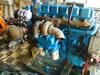
On a 92 B700 its probably either a 6.6 or 7.8 liter Brazilian Ford diesel as I don't think the Cummins came till later. The 6.6 and 7.8s don't have intake grid heaters or glowplugs so they will smoke when cold till the combustion chambers warm up.
Lots of factors effect fuel mileage but in general 10 mpg may be a bit optimistic, I would anticipate more like 8-9 mpg.
Our 6.6 was solid, our 7.8 had issues.
Lots of factors effect fuel mileage but in general 10 mpg may be a bit optimistic, I would anticipate more like 8-9 mpg.
Our 6.6 was solid, our 7.8 had issues.
Cargo Master

Joined: Feb 2003
Posts: 2,341
Likes: 5
From: Sacramento
We have a 7.8 at work, and it's had a hard life but kept on chugging. It's going to surplus due to age & mileage. Only real issue its had was the belts like to break(carry a spare set). It has 167k, and the water pump went out a few days ago. I seem to remember it got pretty good mpg, considering it's a 20k pound bucket truck. I dont think 10mpg is too far fetched. With a charged battery, try adding a jump start from another truck to see if it spins any faster. You could also have corrosion on one of the batteries, and not getting any juice out of it.
Posting Guru
Joined: Jun 2006
Posts: 2,096
Likes: 0
If all else fails check rocker cover for emissions/ratings sticker or bus VIN.
OEM setup was two frost plug heaters.
Air cleaner opening is already sealed to the grill area, how can you get any "colder" air intake than that?
Thread Starter
|
Senior User
Joined: Feb 2006
Posts: 385
Likes: 0
From: Salem Oregon
Before it went back to the other city (we were borrowing it for 2 days), what I saw of the engine was that it was much bigger than the 7.3 in my 88 diesel.
Trending Topics
Posting Guru
Joined: Jun 2006
Posts: 2,096
Likes: 0
No chance at all that a 92 B700 would have came with a 6.9/7.3 V8 diesel.
FTE Stories
Ford Trucks for Ford Truck Enthusiasts

Top 6 Best Deals Available on New Fords & Lincolns Right Now
Brett Foote
This Hennessey Takes the Expedition Tremor's Off-Roading Capability to the Next Level
Verdad Gallardo
Top 10 Fords at 2026 Carlisle Ford Nationals
Joe Kucinski
3 Best / 3 Worst Parts of Modern Ford Ownership
Brett Foote
10 Amazing Upgrades That Solve Common Ford Truck Owner Headaches
Pouria Savadkouei
Every 2026 Ford Engine Explained
Brett Foote
10 Ugly Ford Trucks That We Still Kinda Love
Joe Kucinski
10 Things Every Truck Owner NEEDS (2026 Edition)
Michael S. Palmer
Rezvani's Latest Post-Apocalyptic Monster Is a Ford F-150 Raptor Underneath
Verdad Gallardo
Postmaster
Joined: Jun 2007
Posts: 2,621
Likes: 1
From: Sweetwater Texas
Thats what I was more or less asking, not this partuclar bus having it, but if any of the larger Ford's came them.

Temporarily Deactivated
Joined: Sep 2008
Posts: 526
Likes: 0
From: North Carolina
School buses are geared for low speed weight hauling. If you push one to try and drive 55 or faster on the open road you will USE GAS PLENTY OF EXTRA GAS AND STRAIN THE ENGINE. For short trips they work fine if you keep the speed down. I would get a used activity bus because they are made to run faster.Also all school ttransportation department are required to keep service records. Look at them and you will see when any major work (like brakes etc)was done.
Thread Starter
|
Senior User
Joined: Feb 2006
Posts: 385
Likes: 0
From: Salem Oregon
Most of them seem to top out at 55MPH if your lucky and are on flat ground with a light load.
This bus I call one of the good buses in that a hill that we have between Lincoln City and Newport, most larger vehicles end up going 25-35 at the top with a starting run of 55 at the base. The buses I call good buses are able to be traveling at 45MPG at the top of the hill.
The bus has a couple minor things that need fixing on the inside but it runs rather solid and is one of the better buses. Its just being sold due to age. The brakes on it are great, even though buses can't stop on a dime, this bus comes close.
This bus I call one of the good buses in that a hill that we have between Lincoln City and Newport, most larger vehicles end up going 25-35 at the top with a starting run of 55 at the base. The buses I call good buses are able to be traveling at 45MPG at the top of the hill.
The bus has a couple minor things that need fixing on the inside but it runs rather solid and is one of the better buses. Its just being sold due to age. The brakes on it are great, even though buses can't stop on a dime, this bus comes close.
Posting Guru
Joined: Jun 2006
Posts: 2,096
Likes: 0
Most of them seem to top out at 55MPH if your lucky and are on flat ground with a light load.
This bus I call one of the good buses in that a hill that we have between Lincoln City and Newport, most larger vehicles end up going 25-35 at the top with a starting run of 55 at the base. The buses I call good buses are able to be traveling at 45MPG at the top of the hill.
The bus has a couple minor things that need fixing on the inside but it runs rather solid and is one of the better buses. Its just being sold due to age. The brakes on it are great, even though buses can't stop on a dime, this bus comes close.
This bus I call one of the good buses in that a hill that we have between Lincoln City and Newport, most larger vehicles end up going 25-35 at the top with a starting run of 55 at the base. The buses I call good buses are able to be traveling at 45MPG at the top of the hill.
The bus has a couple minor things that need fixing on the inside but it runs rather solid and is one of the better buses. Its just being sold due to age. The brakes on it are great, even though buses can't stop on a dime, this bus comes close.
Thread Starter
|
Senior User
Joined: Feb 2006
Posts: 385
Likes: 0
From: Salem Oregon
It has air brakes, all our big buses have air brakes. Only the mini buses and 2 of the medium sized special needs buses have hydraulic brakes.