



 which are very rare.
'73 High Boy
Ford Parts Specialist
Joined: Nov 2006
Posts: 88,826
Likes: 784
From: Simi Valley, CA

Dana 60 front driving axles were available on 1976/79 F250 4WD's and standard equipment on 1979 F350 4WD's.
Post Fiend
Joined: Jul 2006
Posts: 6,948
Likes: 44
Welcome to the site:
There is quite a bit of confusion with regards to D60 identification, especially by looking at just cast numbers. D44's also have a 60 as part of theor numbers and are often mistaken when this form of identification is used.
Also keep in mind that early low pinion front axles are the least desireable front axles out there. Limited parts availability, and weak components combined with the limited turning corcle and leaks associayed with these closed knuckle axles makes them a component that recieves top priority for upgrade.
As for the youtube deal, that truck has been discussed quite a few times on this site. Many early trucks have large displacement FE engines, some are even 4wd, but the one thing they all have in common is that they did not come from the factory that way.
The 428 SCJ claim in that particular truck is just that, only a claim. The alleged paperwork cant be read, and is nothing more than a falacy.
I will add that in this video, the first engine had FE valve covers, (1:17) but this in no way indicates or supports any claim of a factory 428 CJ.
Someone is having a little fun telling some tall tales.
http://www.youtube.com/watch?v=zjwHeWZLqS8
Freshman User
Joined: Jun 2009
Posts: 47
Likes: 0
From: thunder bay
well i have a 76 with a 44 hd disc brake and a 44 hd closed knuckle drum brake and they both have external hubs and a 72 highboy with a 44 closed knuckle and internal hubs i have 6 highboys 2 camper specials one has a huge transfer case with two shift rods i have yet to find a factory 60 in a highboy what are the numbers on the corner of the diff?
Freshman User
Joined: Jun 2009
Posts: 47
Likes: 0
From: thunder bay
well i have a 76 with a 44 hd disc brake and a 44 hd closed knuckle drum brake and they both have external hubs and a 72 highboy with a 44 closed knuckle and internal hubs i have 6 highboys 2 camper specials one has a huge transfer case with two shift rods i have yet to find a factory 60 in a highboy what are the numbers on the corner of the diff?
Post Fiend
Joined: Jul 2006
Posts: 6,948
Likes: 44
Regular Dana 60 solid front axle from a 1974 / 5 Ford F250 Crew Cab 4x4. These axles are the same for the years 1974 to 1975 only found on the F250 4 doors. It is a low pinion, closed king pin knuckle with 5-86x u-joints and drum brakes. This design was running a front leaf spring setup and has the smaller 30 spline inner shaft
Regular Dana 60 solid front axle from a 1976 / 7 Ford F250 Crew Cab 4x4. This axle is the same for the years 1976 to 1977 only found on the F250 4 doors. Notice these are a low pinion design, open king pin knuckle with 5-282x u-joints and disk brakes. This design was running a front leaf spring setup and also has the smaller 30 Spline inner shaft.
The point I was trying to make is that not only the 79 F350 had D60 front axles. Many F250's had then but not all were desirable.
As far as using the model number that is cast in to the web,,,,,this is a decent method, however, on the direct opposite side, D44's with the casting number 44-6CF-HD are often mistaken for the 60. See the 6C looks like 60, and guys that are chomping at the bit clean off a small area from years of road grime, and see,,,,,6C, and think that thay have struck gold.
Knowing the proper waay to identify an axle is a little more complicated than meets the eye. The model does not indicate which year the axle is, and knowing this can be the difference between money well spent and money wasted.

Once in a while you may find a D60 that does not have the small area where the model number is cast.
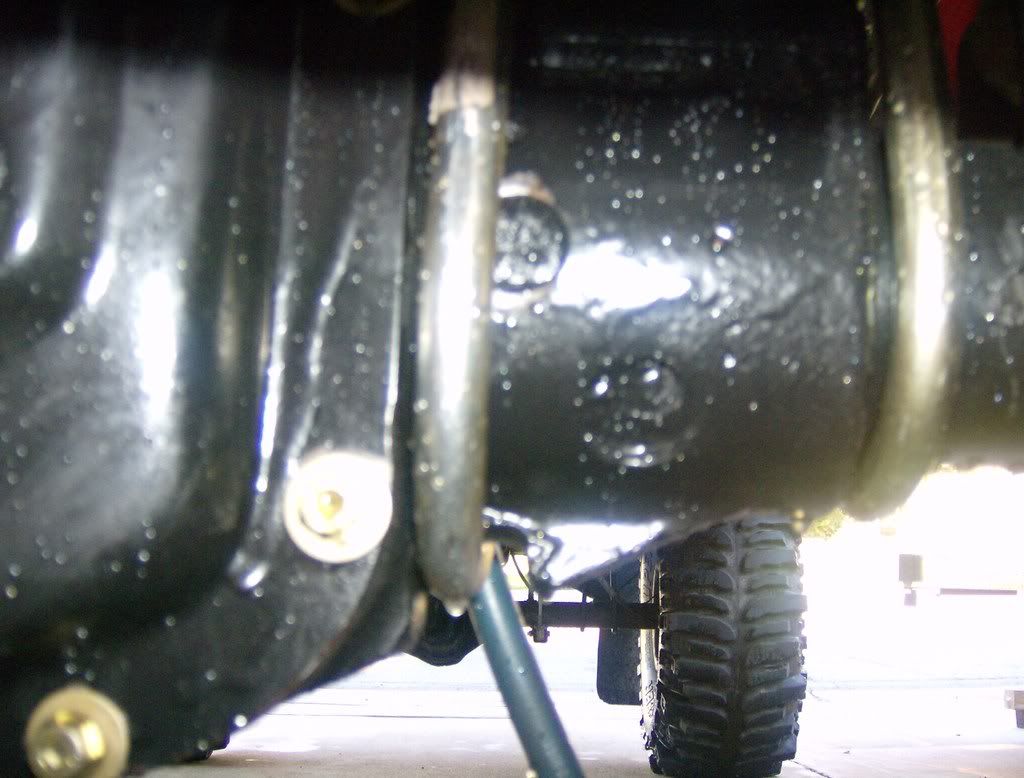
Regular Dana 60 solid front axle from a 1976 / 7 Ford F250 Crew Cab 4x4. This axle is the same for the years 1976 to 1977 only found on the F250 4 doors. Notice these are a low pinion design, open king pin knuckle with 5-282x u-joints and disk brakes. This design was running a front leaf spring setup and also has the smaller 30 Spline inner shaft.
The point I was trying to make is that not only the 79 F350 had D60 front axles. Many F250's had then but not all were desirable.
As far as using the model number that is cast in to the web,,,,,this is a decent method, however, on the direct opposite side, D44's with the casting number 44-6CF-HD are often mistaken for the 60. See the 6C looks like 60, and guys that are chomping at the bit clean off a small area from years of road grime, and see,,,,,6C, and think that thay have struck gold.
Knowing the proper waay to identify an axle is a little more complicated than meets the eye. The model does not indicate which year the axle is, and knowing this can be the difference between money well spent and money wasted.
Once in a while you may find a D60 that does not have the small area where the model number is cast.
Post Fiend
Joined: Jul 2006
Posts: 6,948
Likes: 44
Yes sir. There are two ways to get a transfer case with two shuft rods.
The factory used two transfer cases and the factory case with teo rods and one lever is a NP 203 case. It is a large case. This is a chain driven full time transfer case. It consists of a range box (front unit) and a chain drive for front output (rear section). The very rear has a large aluminum output housing that holds the differential unit.
Ok thats one, way, the other is to take the other t-case, and this is a NP 205 transfer case and ocnvert it to twin sticks. The all gear driven case (NP 205) is the most desirable of the cases, as it is considered the strongest of the light duty truck transfer cases. This case is upgraded to a twin stick design, and this upgrade allows the operator to select each output indepedantly. The front can be engaged without the rear, and the same is true for the rear. This can be used as front wheel drive only, or rear wheel drive only as well as low and high range respectively.
This means that a front wheel drive low range only is possible, as the same is true for rear whhel drive low range, or both front and rear in low, or high ranges.
Kind of a neat upgrade, but reserved for the extreme off roader really. No real advantages for the normal weekend wheeler.
Now, chances are that your transfer case that was described as larger than the rest is just a plain old NP 203, full time transfer case. Chances are that this truck does not have locking front hubs, as this truck is in 4wd all of the time.
This is not to say that a previous owner did not convert this case to a part time unit, as this is possible. If this is the case, then you might have locking hubs.
Quick shot of the 203, notice the giant rear output:
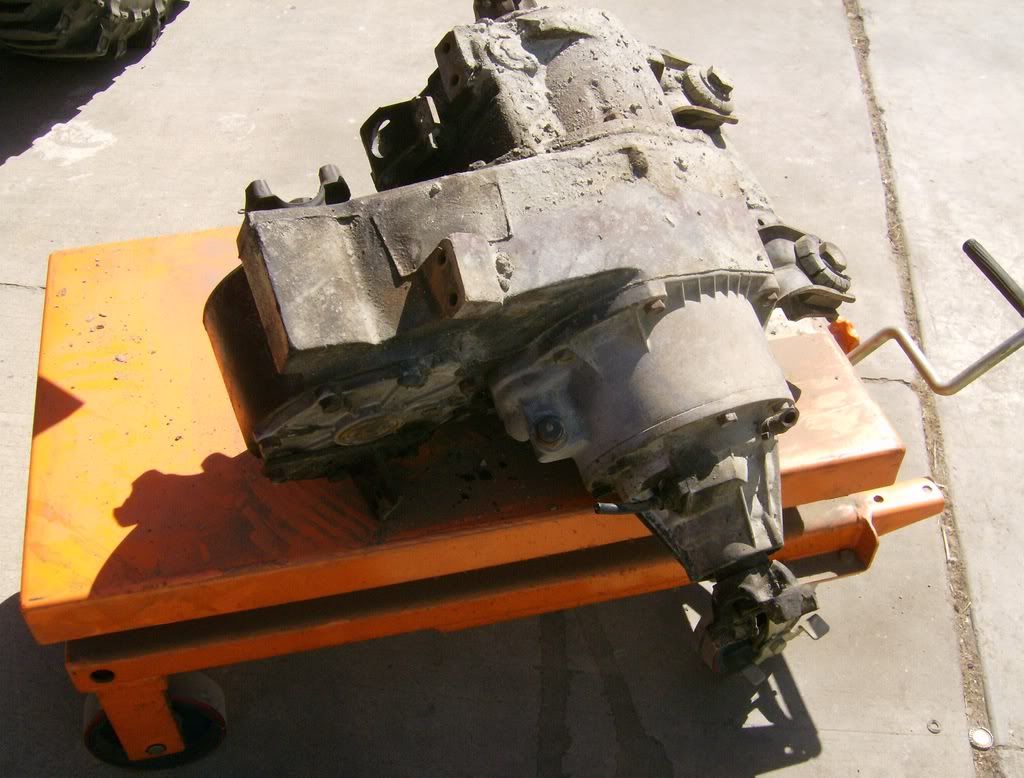
And a 205, notice the normal smaller output:

FTE Stories
Ford Trucks for Ford Truck Enthusiasts

AEV FXL Super Duty - the Super Duty Raptor Ford Doesn't Make
Brett Foote
Lobo Vs Lobo: Proof the F-150 Lobo Should Be Even Lower!
Michael S. Palmer
Ford's 2001 Explorer Sportsman Concept Looks For a New Home
Verdad Gallardo
10 Best Ford Truck Engines We Miss the Most!
Joe Kucinski
2026 Shelby F-150 Off-Road: Better Than a Raptor R?
Brett Foote
2027 Super Duty Carhartt Package First Look: 12 Things You NEED to Know!
Michael S. Palmer
10 Most Surprising 2026 Ford Truck Features!
Joe Kucinski
Top 10 Ford Trucks Coming to Mecum Indy 2026
Brett Foote
5 Best / 5 Worst Ford Truck Wheels of All Time
Joe Kucinski
New User
Joined: Dec 2009
Posts: 2
Likes: 0
You really do seem to know your stuff... i also just got a 73 f250 highboy with a 390 big block in it, the transfer case was full of water when we took a look at it and now is rusted to the point of not moving at all. what should i do????

Thread
Thread Starter
Forum
Replies
Last Post
fordtruck76_390
1973 - 1979 F-100 & Larger F-Series Trucks
2
Jun 19, 2008 11:57 AM
