


considering constructing roll pan

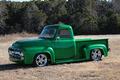
Hotshot


Joined: Nov 2000
Posts: 11,591
Likes: 14
From: Pflugerville, tx

I've been thinking of outside the frame into the rear fender well, then down and straight out under the fender edge.. with my trailing arm suspension I can't go out the side. and with the airbags, I don't want to go under the axle.
sam

FTE Legend

Joined: Oct 2005
Posts: 283,844
Likes: 8,332
From: northwestern Ontario
Hey sdetweil,your truck looks real nice and clean and you have done a great job on that rear roll pan. Now not meaning to get things off track with this thread, sorry Low54 but who makes those wheels you have on your truck.
Low54 I made my own roll pan as well but would be of no use to you as it is for a panel and bows from side to side as well as rolls under,sorry.
Low54 I made my own roll pan as well but would be of no use to you as it is for a panel and bows from side to side as well as rolls under,sorry.

Hotshot

Joined: Oct 2004
Posts: 15,882
Likes: 88
From: Durham NC
running the exhaust out the sides in front of the tire or in front of the fender at the rear of the running board (my preference) solves a lot of clearance issues with a rear tank.
to make the pan: 1. decide the shape of the roll you want, from a 1/2 pipe (even 1/4 curve), J shape (tighter curve nearer the bottom) Peaked (like Sam's) or ??? 2. decide how far down you want the pan to extend. I like it to end even with bottom of fenders unless there is a reason to make it shorter or longer. 3. Carefully cut out a thin cardboard pattern of the end profile. I like using posterboard from the school supply section of Wally-World or office supply store for my patterns. It's cheap, light weight, easily cut with scissors or utility knife, handles much like sheet metal, can be taped together with masking tape to mock up assemblies, fairly durable. 4. Buy a sheet of 5/8 or 3/4 MDF at your local big box DIY store. Make sure you get MDF (medium density fiberboard) rather than the similar looking, cheaper but softer particle or underlayment board. The MDF will have fine grain construction, smooth hard face and sharp edges/corners. The particle board with look like it was made from course sawdust, have a slightly textured surface and the corners will chip and crumble if you run a key or back of a pocket knife blade along it. Also pick up at least 6 3" to 4" heavy duty C clamps and a large hard plastic or wood mallet. If you don't have one, get a 1/2" radius carbide tipped "rounding over" router bit with ball bearing guide.
Now we will make a "shaping die" or "hammer form". 5. trace your end pattern twice onto the MDF. Using two corners of the sheet for the straight edges of the pattern will mean you only need to cut the curved side. Use a band saw, sabersaw or even a coping saw to CAREFULLY cut out the MDF pieces. Clamp the two pieces together and refine the curve with course sandpaper on a belt sander or hard block making sure the both pieces match and the edges are perfectly square to the faces. Take your time making these as the quality of your finished pan will only be as good as these two pieces. Mark the two faces that were together after removing the clamps. Put the rounding over bit into the router and adjust the depth until it cuts an even radius on the corner of a test piece of MDF. 6. rout one side of the curved edge of each piece keeping the marked side up on both pieces. When you stack the two pieces back together the routed edges should face each other. 6. Now make a reduced size pattern that follows the line where the curved edge meets the face (1/4" back from the curved edge. You can use an inexpensive school compass set at 1/4" with the point run along the curved edge to trace the new line. Do not narrow the straight edges. Cut out one piece of the MDF to this new pattern shape. True up the curve but do not rout it, leave it square.
This finishes making the form. tomorrow I'll continue with how to shape the metal ends.
to make the pan: 1. decide the shape of the roll you want, from a 1/2 pipe (even 1/4 curve), J shape (tighter curve nearer the bottom) Peaked (like Sam's) or ??? 2. decide how far down you want the pan to extend. I like it to end even with bottom of fenders unless there is a reason to make it shorter or longer. 3. Carefully cut out a thin cardboard pattern of the end profile. I like using posterboard from the school supply section of Wally-World or office supply store for my patterns. It's cheap, light weight, easily cut with scissors or utility knife, handles much like sheet metal, can be taped together with masking tape to mock up assemblies, fairly durable. 4. Buy a sheet of 5/8 or 3/4 MDF at your local big box DIY store. Make sure you get MDF (medium density fiberboard) rather than the similar looking, cheaper but softer particle or underlayment board. The MDF will have fine grain construction, smooth hard face and sharp edges/corners. The particle board with look like it was made from course sawdust, have a slightly textured surface and the corners will chip and crumble if you run a key or back of a pocket knife blade along it. Also pick up at least 6 3" to 4" heavy duty C clamps and a large hard plastic or wood mallet. If you don't have one, get a 1/2" radius carbide tipped "rounding over" router bit with ball bearing guide.
Now we will make a "shaping die" or "hammer form". 5. trace your end pattern twice onto the MDF. Using two corners of the sheet for the straight edges of the pattern will mean you only need to cut the curved side. Use a band saw, sabersaw or even a coping saw to CAREFULLY cut out the MDF pieces. Clamp the two pieces together and refine the curve with course sandpaper on a belt sander or hard block making sure the both pieces match and the edges are perfectly square to the faces. Take your time making these as the quality of your finished pan will only be as good as these two pieces. Mark the two faces that were together after removing the clamps. Put the rounding over bit into the router and adjust the depth until it cuts an even radius on the corner of a test piece of MDF. 6. rout one side of the curved edge of each piece keeping the marked side up on both pieces. When you stack the two pieces back together the routed edges should face each other. 6. Now make a reduced size pattern that follows the line where the curved edge meets the face (1/4" back from the curved edge. You can use an inexpensive school compass set at 1/4" with the point run along the curved edge to trace the new line. Do not narrow the straight edges. Cut out one piece of the MDF to this new pattern shape. True up the curve but do not rout it, leave it square.
This finishes making the form. tomorrow I'll continue with how to shape the metal ends.

Thread
Thread Starter
Forum
Replies
Last Post
mjsizzle
1967 - 1972 F-100 & Larger F-Series Trucks
10
May 15, 2008 09:59 AM
Mush's 88
Aftermarket Products
2
Feb 5, 2008 10:39 PM


