






advice

Thread Starter
|
Freshman User
Joined: Feb 2009
Posts: 25
Likes: 0
From: crandon Wi
advice
i have a 78 ford with a 400 and i do a lot of mudding i was woundering if a offenhouser 360 intake manifold a holley 650 with vacume secondarys headers whith 2 and half duels would be a good.for low end, i have a aftermarket ignition i have a c-6, 9 inch rear dana 44 front , np tranfer case, any advice would be awsome

Cargo Master
Joined: Mar 2008
Posts: 2,409
Likes: 1
From: Goliad, Texas
welcome to FTE!
duals and headers are the best ways to "wake up" an engine. most people go with 2 1/4" pipe unless they are going to mod their engine later. what kind of mufflers are you gonna use?
what size tires are you gonna run?
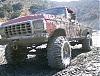
post some pics of your truck.
duals and headers are the best ways to "wake up" an engine. most people go with 2 1/4" pipe unless they are going to mod their engine later. what kind of mufflers are you gonna use?
what size tires are you gonna run?
post some pics of your truck.
Post Fiend
Joined: Jul 2006
Posts: 6,948
Likes: 44
Welcome to the site;
Sure, anything will wake up an engine. Getting air in and getting air out is a plus, but if you ar looking for overall grunt, step the gear ratio up a size or two.
If you are running large tires, you should probably be looking this direction anyway.
Having a nechanical advantage will get you further, and make the engine work easier.
What is the tire and gear combo now?
Sure, anything will wake up an engine. Getting air in and getting air out is a plus, but if you ar looking for overall grunt, step the gear ratio up a size or two.
If you are running large tires, you should probably be looking this direction anyway.
Having a nechanical advantage will get you further, and make the engine work easier.
What is the tire and gear combo now?
Posting Guru
Joined: Sep 2008
Posts: 1,840
Likes: 1
From: On the prairie
Problem being that you need to tow your play truck to the play site with your work truck, unless dual stacks through the hood is legal where you play?
Trending Topics

Senior User
Joined: Nov 2007
Posts: 119
Likes: 0
Alot of people have had good results with the Weiand or Edelbrock dual plane manifolds with the Edelbrock 1406 600cfm carb. With the headers and pipes you want to watch out for going too big or you loose low end torque. Also a cam upgrade and new timing chain can really wake up the 400. Look through the engine forum and you'll find some great info.
FTE Stories
Ford Trucks for Ford Truck Enthusiasts

3 Best / 3 Worst Parts of Modern Ford Ownership
Brett Foote
10 Amazing Upgrades That Solve Common Ford Truck Owner Headaches
Pouria Savadkouei
Every 2026 Ford Engine Explained
Brett Foote
10 Ugly Ford Trucks That We Still Kinda Love
Joe Kucinski
10 Things Every Truck Owner NEEDS (2026 Edition)
Michael S. Palmer
Rezvani's Latest Post-Apocalyptic Monster Is a Ford F-150 Raptor Underneath
Verdad Gallardo
Top 10 Most Expensive Ford Trucks Ever Sold on Bring a Trailer
Joe Kucinski
2027 Ford Super Duty Buyer's Guide (Every Model, Engine, & Package)
Brett Foote
Top 10 Ford Truck Tragedies
Joe Kucinski
Senior User
Joined: Nov 2007
Posts: 119
Likes: 0
If you are going to run 35s you should do as 75F350 said and change your gear ratios. Something around 4:1 would do alot better than the 3.11:1 you are currently running. I have 3.73:1 in my Dana 60 with 32 inch tires for towing my trailer. I'm sure 4.10:1 would help with low speed for me, but it would hurt at highway speeds which is most of the driving I do.
Thread Starter
|
Freshman User
Joined: Feb 2009
Posts: 25
Likes: 0
From: crandon Wi
that make sense but i do drive my truck quite a bit to work and to the trails i mud on, could i get more power out of the motor to off set the tire size so i dont loose my road gearing or should i go to a smaller tire
Post Fiend
Joined: Jul 2006
Posts: 6,948
Likes: 44
If you run a smaller tire, you will sacrifice off road performance. This is taking a giant step backwards. However, if you step up your tire size, be prepared to change the gears. You will struggle with larger tires and no gears, I dont care f you double your engine output, the vehicle will react in a positive way to the gear change.
Example: Engine making 400 hp and has a 3:1 ratio with 35" tires will burn up a clutch, or burn up the auto trans off road trying to turn the tires, even with a 2:1 low range.
The only saving grace might be if the truck has a super low first gear and low range. Still this limits the vehicle to just having a decent low gear. Some situations will require some wheel speed, and the lack of gearing options minimizes this greatly.
Example 2: 200 hp engine with a mid 4:1 ratio, like a 4.56 (this is a very good overall ratio, the military uses this a bunch with trucks that have small tires) and the same 35" tires. This vehicle will have many gear options and can pull any hill or obstacle in any terrain. Wheel speed in the mud can be achieved and the vehicle will be less likely to bog down due to its lack of power. This vehicle has a mechanical advantage and is easier on the drivetrain, making this combo a stronger and more reliable set-up.
Believe it or not, there is no limitation on speed and the top speed of a vehicle is only limited to the engines ability to turn a higher rpm, or the resistance it encounters.
Yes, highway cruise speeds will ultimately net a higher engine rpm, but use some gear ratio calculators to see that you really are not turning the engine too hard woth 4.56's and 35" tires. Matter of fact, the engine will be most efficient in this rpm range.
The truck will accelerate much better and will require less throttle input to maintian speed and accelerate.
Often too much emphasis is based upon the engine rpm at cruise or highway speeds, and far too often acceleration up to the cruise speed is forgotten. The vehicle has to be able to get up to speed and with a poor gear ratio this might just kill all of the efficiency. This is why we do not run 1:1 differntial gears. Engines just cant make enough torque to pull this type of ratio.
If you plan on driving slightly downhill everywhere you go, and you can keep the truck rolling then use car type ratios. If you think that you will have to get the truck rolling from a dead stop ever, and you might think that the added resistance of off road duty will occur once on a while, then you have to consider a gear ratio change.
Believe me, guys that save gears for the last upgrade usually kick themselves for not installing gears first.
Usually, guys will ask themselves "what was I thinking" and "why , or how did I ever drive this pig this way?"
Really, it is night and day difference. The traction and off road capabilities are increased so much after a gear change you will be amazed.
Spend money on engine upgrades all you want, but you cant avoid the requirement for the proper gear ratio and combo.
Example: Engine making 400 hp and has a 3:1 ratio with 35" tires will burn up a clutch, or burn up the auto trans off road trying to turn the tires, even with a 2:1 low range.
The only saving grace might be if the truck has a super low first gear and low range. Still this limits the vehicle to just having a decent low gear. Some situations will require some wheel speed, and the lack of gearing options minimizes this greatly.
Example 2: 200 hp engine with a mid 4:1 ratio, like a 4.56 (this is a very good overall ratio, the military uses this a bunch with trucks that have small tires) and the same 35" tires. This vehicle will have many gear options and can pull any hill or obstacle in any terrain. Wheel speed in the mud can be achieved and the vehicle will be less likely to bog down due to its lack of power. This vehicle has a mechanical advantage and is easier on the drivetrain, making this combo a stronger and more reliable set-up.
Believe it or not, there is no limitation on speed and the top speed of a vehicle is only limited to the engines ability to turn a higher rpm, or the resistance it encounters.
Yes, highway cruise speeds will ultimately net a higher engine rpm, but use some gear ratio calculators to see that you really are not turning the engine too hard woth 4.56's and 35" tires. Matter of fact, the engine will be most efficient in this rpm range.
The truck will accelerate much better and will require less throttle input to maintian speed and accelerate.
Often too much emphasis is based upon the engine rpm at cruise or highway speeds, and far too often acceleration up to the cruise speed is forgotten. The vehicle has to be able to get up to speed and with a poor gear ratio this might just kill all of the efficiency. This is why we do not run 1:1 differntial gears. Engines just cant make enough torque to pull this type of ratio.
If you plan on driving slightly downhill everywhere you go, and you can keep the truck rolling then use car type ratios. If you think that you will have to get the truck rolling from a dead stop ever, and you might think that the added resistance of off road duty will occur once on a while, then you have to consider a gear ratio change.
Believe me, guys that save gears for the last upgrade usually kick themselves for not installing gears first.
Usually, guys will ask themselves "what was I thinking" and "why , or how did I ever drive this pig this way?"
Really, it is night and day difference. The traction and off road capabilities are increased so much after a gear change you will be amazed.
Spend money on engine upgrades all you want, but you cant avoid the requirement for the proper gear ratio and combo.