


Starting an old 390

Thread Starter
|
Senior User
Joined: Jun 1999
Posts: 121
Likes: 0
From: 3 mi N of Crookston, NE
Starting an old 390
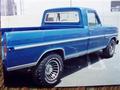
I have a 1974 F-100 4x2 that "ran when parked" about 10 years ago. It has a 390 (all stock) and a C6 transmission, and has about 80,000 original miles. The motor is free. I would like to try to start it with as little investment as possible. What should I do before trying to get it to run? I realize it probably should have a carb kit and new spark plugs. Oil and filters changed. I'll probably disconnect the fuel line from the truck tank and use a container with new gas. Should I expect the fuel pump to work OK? The truck had power brakes, but they didn't work. Will I need to have the brake booster fixed to eliminate that drain on the vacuum? Any suggestions will be appreciated, as I am not much of a mechanic. I would just like to see it run to see the shape it is in, as I may be rebuilding it in the future. Thanks
FE "Freakin Expensive"
Joined: Dec 2003
Posts: 6,461
Likes: 4
From: Smith Mountain Lake, VA

Well you pretty much have it figured out there... after 10 years, of sitting. I'd be pulling the fuel system out and replacing any lines I could and flushing the tank real good too! And be ready for any gaskets and seals both in the engine and the trans, wheels cylinders etc..to start leaking as soon as you put it to use!
~Russ
~Russ

Logistics Pro

Joined: Oct 2005
Posts: 3,785
Likes: 4
From: Mddl A MexCans
I you just want to see it run for the heck of it, I'd check the points, add a gas can and hit it! Chances are she'll fire right off. But I wouldn't run it long on the old oil 4 sure. Probably battery acid by now LOL

Cargo Master
Joined: Apr 2004
Posts: 2,574
Likes: 4
From: Golden, CO
Interesting comments.
Since you are new to all this I'll take the simple-easy approach.
My personal, I would not change the oil unless it was contaminated with water. I would change it immediately after first run. I would plug the vacuum line to the brake booster, the brakes can work without the booster hooked up.
Without even knowing if it will turn over, I'd remove all the spark plugs and put a couple squirts of oil with ATF (50/50) in each cylinder. I'd dump the rest of that quart of ATF in the crankcase.
Pull the dipstick and note the oil level for future reference.
With the plugs still out, put a socket on the crank bolt and turn the enginge over by hand. If you can do that, things are looking pretty good. Next, remove the wire from the center of the distributor cap and ground it to the block. Remove the fuel line form the carburator and divert any fuel to a container.
At this point you should have the plugs out, the coil wire grounded so there is no chance of spark, the fuel line disconnected so that you can see if the pump still works. Hook a fresh battery up and crank the engine over for at least 30 seconds. If you have a working gauge you should see pressure by then.
Check the fuel in the container. Pull the dipstick and smell the oil; does it smell like gas? If the fuel pump leaks, stop and fix that problem. If there is gas in the oil, change the oil now.
Next, reinstall the plugs. Crank the engine to build pressure in the fuel, oil, and cylinders. Check the carb for fuel leaks.
Re-install the coil wire to the cap, pump the gas pedal twice and fire it up. LOOK FOR FUEL LEAKS!
Since you are new to all this I'll take the simple-easy approach.
My personal, I would not change the oil unless it was contaminated with water. I would change it immediately after first run. I would plug the vacuum line to the brake booster, the brakes can work without the booster hooked up.
Without even knowing if it will turn over, I'd remove all the spark plugs and put a couple squirts of oil with ATF (50/50) in each cylinder. I'd dump the rest of that quart of ATF in the crankcase.
Pull the dipstick and note the oil level for future reference.
With the plugs still out, put a socket on the crank bolt and turn the enginge over by hand. If you can do that, things are looking pretty good. Next, remove the wire from the center of the distributor cap and ground it to the block. Remove the fuel line form the carburator and divert any fuel to a container.
At this point you should have the plugs out, the coil wire grounded so there is no chance of spark, the fuel line disconnected so that you can see if the pump still works. Hook a fresh battery up and crank the engine over for at least 30 seconds. If you have a working gauge you should see pressure by then.
Check the fuel in the container. Pull the dipstick and smell the oil; does it smell like gas? If the fuel pump leaks, stop and fix that problem. If there is gas in the oil, change the oil now.
Next, reinstall the plugs. Crank the engine to build pressure in the fuel, oil, and cylinders. Check the carb for fuel leaks.
Re-install the coil wire to the cap, pump the gas pedal twice and fire it up. LOOK FOR FUEL LEAKS!

Elder User
Joined: Mar 2004
Posts: 747
Likes: 0
From: Klamath Falls OR
I would add Sea Foam or Marvel Mystery Oil to your cheap oil change. Also use a new cheap filter too. JMHO
Otherwise I agree with everything else that you have stated!
Cargo Master
Joined: Apr 2004
Posts: 2,574
Likes: 4
From: Golden, CO
LOL OK Wes, I'll take your advice! Cheap is good!
Edit: I thought about the crank not turning over by hand, but that is a whole other thread.
Edit: I thought about the crank not turning over by hand, but that is a whole other thread.
Trending Topics

Fleet Owner

Joined: Jun 1999
Posts: 24,552
Likes: 74
From: Creedmoor, North Carolina
With all the sparkplugs out is a great way to turn it over with the starter and one doesn't have to fight the resetting and timing issue afterwards. IMHO
John
John
FTE Stories
Ford Trucks for Ford Truck Enthusiasts

Top 10 Most Expensive Ford Trucks Ever Sold on Bring a Trailer
Joe Kucinski
2027 Ford Super Duty Buyer's Guide (Every Model, Engine, & Package)
Brett Foote
Top 10 Ford Truck Tragedies
Joe Kucinski
AEV FXL Super Duty - the Super Duty Raptor Ford Doesn't Make
Brett Foote
Lobo Vs Lobo: Proof the F-150 Lobo Should Be Even Lower!
Michael S. Palmer
Ford's 2001 Explorer Sportsman Concept Looks For a New Home
Verdad Gallardo
10 Best Ford Truck Engines We Miss the Most!
Joe Kucinski
2026 Shelby F-150 Off-Road: Better Than a Raptor R?
Brett Foote
2027 Super Duty Carhartt Package First Look: 12 Things You NEED to Know!
Michael S. Palmer
Cargo Master
Joined: Apr 2004
Posts: 2,574
Likes: 4
From: Golden, CO
Especially for someone who says he's not much of a mechanic. 
I keep think about changing the oil and then trying to turn the crank by hand. I guess I'd pull the plugs and see if the crank turned by hand before proceeding to the pre-lube.
I'll start my wounded 390 a few times a year. I typically ground the coil wire and crank it until I get oil pressure on the gauge. After that it fires right up.
I keep think about changing the oil and then trying to turn the crank by hand. I guess I'd pull the plugs and see if the crank turned by hand before proceeding to the pre-lube.
I'll start my wounded 390 a few times a year. I typically ground the coil wire and crank it until I get oil pressure on the gauge. After that it fires right up.
Elder User
Joined: Mar 2004
Posts: 747
Likes: 0
From: Klamath Falls OR
For CT: After oil change with cheap stuff, prime the system. Its easy to do and it lubes up everything! So you wont have to turn over a so called "dry engine". After you get it running and put a few miles on it (500miles or so), you can dump the oil and add fresh stuff of your choice to it. JMHO
Thread Starter
|
Senior User
Joined: Jun 1999
Posts: 121
Likes: 0
From: 3 mi N of Crookston, NE
Thanks for all the great tips, everyone! Rotation with the plugs out is something I hadn't thought of, but sounds like the thing to do to lubricate those dry cylinder walls, even if it produces a mess on the outside. I'm sitting here looking at snow and 0 F. and thinking about this shade-tree project, hurry up spring!

FTE Leadership Emeritus
Joined: Jul 2002
Posts: 42,561
Likes: 423
From: Long Island USA

New oil, even cheepo stuff would be best, and like Wes said, prime the oiling system first.
With it so dry after all that time, even a few revolutions without oil pressure and no compression (plugs removed) could cause you more problems down the road.
Good luck with the project!

Thread Starter
|
Senior User
Joined: Jun 1999
Posts: 121
Likes: 0
From: 3 mi N of Crookston, NE
Ford428CJ: I'm not sure I understand what you mean by priming.
Quote: "After oil change with cheap stuff, prime the system. Its easy to do and it lubes up everything! So you wont have to turn over a so called "dry engine".
Do you mean by cranking the engine without spark, or is there another way to circulate the oil without cranking the engine? You mentioned "use a drill" Could you explain?
Thanks
Quote: "After oil change with cheap stuff, prime the system. Its easy to do and it lubes up everything! So you wont have to turn over a so called "dry engine".
Do you mean by cranking the engine without spark, or is there another way to circulate the oil without cranking the engine? You mentioned "use a drill" Could you explain?
Thanks
FTE Leadership Emeritus
Joined: Jul 2002
Posts: 42,561
Likes: 423
From: Long Island USA
Remove the distributor, and find a socket that fits the oil pump driveshaft - I think it's 5/16" (or is it 1/4"? Can't remember - measure the inside hex of the gear at the bottom of the distributor).
You might have to grind off some of the outside diameter of the socket to get it to fit into the hole around the oil pump driveshaft.
Using a long extension, and a reversable drill, spin the shaft COUNTERclockwise to get oil pressure up. Once you have oil pressure, if you let off the drill, the oil pump will actually push backwards against the drill and you'll feel it. Keep oil pressure up for a minute or so, and then crank the engine.
I wouldn't turn over the engine until the oil system has been primed.
You might have to grind off some of the outside diameter of the socket to get it to fit into the hole around the oil pump driveshaft.
Using a long extension, and a reversable drill, spin the shaft COUNTERclockwise to get oil pressure up. Once you have oil pressure, if you let off the drill, the oil pump will actually push backwards against the drill and you'll feel it. Keep oil pressure up for a minute or so, and then crank the engine.
I wouldn't turn over the engine until the oil system has been primed.
