


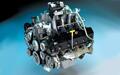


after spark plug change

Thread Starter
|
New User
Joined: Dec 2008
Posts: 4
Likes: 0
after spark plug change
Newbie to the site and not a mechanic.
I just changed the spark plugs in my 2004 F-150 Lariat. Yes I broke one and had to wait a few days for the tool to ship and pull the lower end of the plug. That part seemed too go without a hitch. Problem is now the more the truck warms to normal driving temperature it begins to get a miss and hesitation. More prominent at a very low speed 5/15 miles Per Hour and at start off/ pull aways. I did have an issue with a very small O ring around the electrode plug that wouldn't let me seat the plug correctly. I think I got it, but not sure. Besides this, what other problem might it be. Changed the in-line fuel filter at the same time, so I (don't think?) it's a fuel issue.
While I'm in here, just want to thank everyone and the site for being here. It gave me some insight before changing the plugs.
I just changed the spark plugs in my 2004 F-150 Lariat. Yes I broke one and had to wait a few days for the tool to ship and pull the lower end of the plug. That part seemed too go without a hitch. Problem is now the more the truck warms to normal driving temperature it begins to get a miss and hesitation. More prominent at a very low speed 5/15 miles Per Hour and at start off/ pull aways. I did have an issue with a very small O ring around the electrode plug that wouldn't let me seat the plug correctly. I think I got it, but not sure. Besides this, what other problem might it be. Changed the in-line fuel filter at the same time, so I (don't think?) it's a fuel issue.
While I'm in here, just want to thank everyone and the site for being here. It gave me some insight before changing the plugs.

Senior User
Joined: Mar 2007
Posts: 121
Likes: 0
I bet you replaced with Bosch plugs. DO NOT USE Bosch plugs in a Ford. If you did, pull them back out and put in Autolite or Motocraft. You will continue to get the miss if you don't. The "idiot" light will not come on....
It's easier to replace the plugs after you've done it once. Just make sure, if you have boots, that you seat them well. Your problem could also be water intrusion, typically in the two plugs closest to the wheel well (7&8). My recommendation if that's the case is to pull the plugs, dry out the wells using compressed air or bike pump, and replace with new plugs.
This time around, press the boot into the plug hole while you tighten the bolt. That should ensure you get the boot on snugly.
Let us know how it works out.
It's easier to replace the plugs after you've done it once. Just make sure, if you have boots, that you seat them well. Your problem could also be water intrusion, typically in the two plugs closest to the wheel well (7&8). My recommendation if that's the case is to pull the plugs, dry out the wells using compressed air or bike pump, and replace with new plugs.
This time around, press the boot into the plug hole while you tighten the bolt. That should ensure you get the boot on snugly.
Let us know how it works out.

Freshman User
Joined: Aug 2008
Posts: 35
Likes: 0
I can promise you he didn't you Bosch plugs. The only companies making 3v plugs are Autolite/Motorcraft, Brisk, and Champion right now.
Trending Topics

Post Fiend

Joined: Jan 1997
Posts: 23,165
Likes: 18
From: Enjoying the real world.
Unusual for a coil to simply go bad with a plug swap. One common thing that can cauese this too much anti-sieze compound on the plug threads. It'll cause fouling and misfires (it's conductive).
FTE Stories
Ford Trucks for Ford Truck Enthusiasts

Top 10 Fords at 2026 Carlisle Ford Nationals
Joe Kucinski
3 Best / 3 Worst Parts of Modern Ford Ownership
Brett Foote
10 Amazing Upgrades That Solve Common Ford Truck Owner Headaches
Pouria Savadkouei
Every 2026 Ford Engine Explained
Brett Foote
10 Ugly Ford Trucks That We Still Kinda Love
Joe Kucinski
10 Things Every Truck Owner NEEDS (2026 Edition)
Michael S. Palmer
Rezvani's Latest Post-Apocalyptic Monster Is a Ford F-150 Raptor Underneath
Verdad Gallardo
Top 10 Most Expensive Ford Trucks Ever Sold on Bring a Trailer
Joe Kucinski
2027 Ford Super Duty Buyer's Guide (Every Model, Engine, & Package)
Brett Foote
Thread Starter
|
New User
Joined: Dec 2008
Posts: 4
Likes: 0
1. Autolite was used to replace
2. Champion was a bit deep for my pocket but they are made as one piece so that might be an advantage when changing plugs again concerning breakage.
3. Friend of mine did the codes for me and he says nothing comes up at all.
4. Concerning the 2 plugs closest to the fire wall, the driver side cracked at the top during removal but wasn't a problem to remove. Fire wall passenger side is the one that broke off at the bottom. As for water or moister in these 2 plugs, there is a possibility for what ever reason they might be more subjective or prone. They did seem to have more rust or tarnish on them than the other plugs.
OK the possible grand slam in here:
"too much anti-seize compound on the plug threads".
The plug that broke received a very ample amount of anti-seize.
Also want to let you all know that upon adding fuel injector cleaner I may have detected a very slight improvement. After 20 miles of that I also added Dry gas and may have witnessed even a little more improvement. I want to get some more mileage under it before making a final analysis.
What I think might be very important is this. When in park idles at 500 rpm can feel very slight miss (barley a rumble) at about 10 second intervals. Touch gas as it approaches and sets at and between 1,000 and 1,100 it is more prominent with a fluctuation on its own of about 100 rpm. Beyond that point although I can feel the ever so slight rough running it seems to be much more steady.
Did I write a book? Thanks to all of you for the great thoughts and input, I look forward to finding out more of your thoughts.
Post Fiend
Joined: Jan 1997
Posts: 23,165
Likes: 18
From: Enjoying the real world.
I've been down the anti-seize road myself, that's why I know about it. Its an expensive lesson in time and money (considering how expensive the plugs are for these trucks). I had to replace four plugs within 1000 miles of installing them. I ended up pulling out all 8, cleaning up the 4 that didn't foul. I used one of the fouled plugs to hand turn it into each socket, unscrew, clean off and repeat until no anti-seize was on them (basically, used the plug to clean out the threads). Then, install 4 new plugs and 4 of the old good plugs, each with a very thin amount of anti-seize. Took a good 2 hours to correct but its been running now for 15K without problems.
I'm probably going to remove the plugs in another 5K, clean them off and re-install them, so no build-up can make them break off in the future. I don't think plugs need to be changed often (they are, afterall, 100K plugs) but I feel given the problems they have with breaking off in the head its prudent to remove carbon build-up from the bottom sleave every 15K - 20K.
I'm probably going to remove the plugs in another 5K, clean them off and re-install them, so no build-up can make them break off in the future. I don't think plugs need to be changed often (they are, afterall, 100K plugs) but I feel given the problems they have with breaking off in the head its prudent to remove carbon build-up from the bottom sleave every 15K - 20K.
Thread Starter
|
New User
Joined: Dec 2008
Posts: 4
Likes: 0
OK here we go! I ran the truck for perhaps 30 or more miles today. Near the end of driving I could tell the miss was not getting better with the injector cleaner and the dry gas in it. Tonight when I started for home the check engine light cam on steady.. I checked the manual for what might be going on and I found that if the light blinks it's an indication that there is a misfire. As I had said in my last post we checked the codes and it came up with nothing. Tonight it reads a misfire in #5 piston. keep in mind the check engine light indicator should be flashing for this situation. In the Ford Owners guide found in the clove box, on page 279 under maintenance and specifications it reads the firing order as (1-3-7-2-6-5-4-8). But it doesn't say where to start counting. From which piston and in what direction should I be counting to locate this specific piston. I'm thinking Fire wall passenger side forward to the front, cross over the driver side counting from front to back?. What ever happened to pulling plugs, gaping them and chucking "them back in and just giddieup go?!
Have I mentioned that this truck has 133,000 miles on it and this was the 1st plug change? 30,000 of those miles was pulling a 2 horse goose neck trailer. I might add although there may have been a slight loss in power, this thing has never missed a beat. I want to also mention that from the very 1st oil change (which has been much much more frequent than the plug change) It has had the pleasure of Full Synthetic oil. Knock on wood, when you pull the dip stick the oil is still looking like golden honey.
"Need to know how to count that piston order"
Thanks to all of you again for the help, and don't give up on me.
Have I mentioned that this truck has 133,000 miles on it and this was the 1st plug change? 30,000 of those miles was pulling a 2 horse goose neck trailer. I might add although there may have been a slight loss in power, this thing has never missed a beat. I want to also mention that from the very 1st oil change (which has been much much more frequent than the plug change) It has had the pleasure of Full Synthetic oil. Knock on wood, when you pull the dip stick the oil is still looking like golden honey.
"Need to know how to count that piston order"
Thanks to all of you again for the help, and don't give up on me.
Thread Starter
|
New User
Joined: Dec 2008
Posts: 4
Likes: 0

Wanted to give an update to all of you that helped me out. Piston five the misfire, new plug was cracked. Replaced it today and she's purring like a kitten again. Gezzz.. although its just stock, I luv to hear its low groan and rumble. Loaded her up with 18 sixty pound bales of hay and took off like nothing was on there!
Thanks again for all the insight!
Thanks again for all the insight!
 Its a good thing you didn't have to go through the whole cleaning mess with the plugs...