



Odd Starter Problem When Hot

New User
Joined: Nov 2008
Posts: 4
Likes: 0
Hey guys,
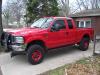
Its my truck he was posting about. Thanks for all the replies. The starter was a motorcraft starter and appeared to be brand new. It was the version labled as "new" and the ford dealer told me that was the only one availalbe. It would be the same starter that would be put on a warranted vehicle from ford. The first one was installed by a shop this febuary for a prior starter having trouble with the bendix hanging after starting. I just replaced with a new starter again same part number and all from ford last week. There is some wear on the flywheel, but not major. The issue only happens when the truck is hot and has sit for a minute then I go to restart. I do have some corrosion I can see inside the ends of my battery leads on the wiring, and possibly a enlarged spot ?? on the wire that leads to the starter solenoid right where is comes out of the heat protective jacketing to go to the starter. Keep in mind that the 2002's dont have a starter solenoid mounted on the fender, it is on the starter itself. I am leaning towards corrosion limiting my aperage either to my solenoid or starter when the wiring is hot not allowing the starter to fully engage. The flywheel damage appears to be mostly the result of the grinding, not the cause. Opinions appreciated!

Its my truck he was posting about. Thanks for all the replies. The starter was a motorcraft starter and appeared to be brand new. It was the version labled as "new" and the ford dealer told me that was the only one availalbe. It would be the same starter that would be put on a warranted vehicle from ford. The first one was installed by a shop this febuary for a prior starter having trouble with the bendix hanging after starting. I just replaced with a new starter again same part number and all from ford last week. There is some wear on the flywheel, but not major. The issue only happens when the truck is hot and has sit for a minute then I go to restart. I do have some corrosion I can see inside the ends of my battery leads on the wiring, and possibly a enlarged spot ?? on the wire that leads to the starter solenoid right where is comes out of the heat protective jacketing to go to the starter. Keep in mind that the 2002's dont have a starter solenoid mounted on the fender, it is on the starter itself. I am leaning towards corrosion limiting my aperage either to my solenoid or starter when the wiring is hot not allowing the starter to fully engage. The flywheel damage appears to be mostly the result of the grinding, not the cause. Opinions appreciated!
Posting Guru
Joined: Nov 2006
Posts: 1,296
Likes: 1
From: muskegon mi.
local shop (my friend owens and my son works there)stater 125$ flywheel 40$ the other 335$ was labor 1 day
Posting Guru
Joined: Nov 2006
Posts: 1,296
Likes: 1
From: muskegon mi.
sometimes it would go a long time and it didnt matter hot or cold when it stoped on the bad spot it would grind it got to when it would do it more often and finely I changed starter next day it did it I told my freind(who got me the starter and let me use his hoist) and he said drop it off and he would fix it
Posting Guru
Joined: Nov 2006
Posts: 1,296
Likes: 1
From: muskegon mi.
Hey guys,
Its my truck he was posting about. Thanks for all the replies. The starter was a motorcraft starter and appeared to be brand new. It was the version labled as "new" and the ford dealer told me that was the only one availalbe. It would be the same starter that would be put on a warranted vehicle from ford. The first one was installed by a shop this febuary for a prior starter having trouble with the bendix hanging after starting. I just replaced with a new starter again same part number and all from ford last week. There is some wear on the flywheel, but not major. The issue only happens when the truck is hot and has sit for a minute then I go to restart. I do have some corrosion I can see inside the ends of my battery leads on the wiring, and possibly a enlarged spot ?? on the wire that leads to the starter solenoid right where is comes out of the heat protective jacketing to go to the starter. Keep in mind that the 2002's dont have a starter solenoid mounted on the fender, it is on the starter itself. I am leaning towards corrosion limiting my aperage either to my solenoid or starter when the wiring is hot not allowing the starter to fully engage. The flywheel damage appears to be mostly the result of the grinding, not the cause. Opinions appreciated!
Its my truck he was posting about. Thanks for all the replies. The starter was a motorcraft starter and appeared to be brand new. It was the version labled as "new" and the ford dealer told me that was the only one availalbe. It would be the same starter that would be put on a warranted vehicle from ford. The first one was installed by a shop this febuary for a prior starter having trouble with the bendix hanging after starting. I just replaced with a new starter again same part number and all from ford last week. There is some wear on the flywheel, but not major. The issue only happens when the truck is hot and has sit for a minute then I go to restart. I do have some corrosion I can see inside the ends of my battery leads on the wiring, and possibly a enlarged spot ?? on the wire that leads to the starter solenoid right where is comes out of the heat protective jacketing to go to the starter. Keep in mind that the 2002's dont have a starter solenoid mounted on the fender, it is on the starter itself. I am leaning towards corrosion limiting my aperage either to my solenoid or starter when the wiring is hot not allowing the starter to fully engage. The flywheel damage appears to be mostly the result of the grinding, not the cause. Opinions appreciated!

Post Fiend
Joined: Mar 2007
Posts: 26,966
Likes: 50
From: Texas
Hey guys,
Its my truck he was posting about. Thanks for all the replies. The starter was a motorcraft starter and appeared to be brand new. It was the version labled as "new" and the ford dealer told me that was the only one availalbe. It would be the same starter that would be put on a warranted vehicle from ford. The first one was installed by a shop this febuary for a prior starter having trouble with the bendix hanging after starting. I just replaced with a new starter again same part number and all from ford last week. There is some wear on the flywheel, but not major. The issue only happens when the truck is hot and has sit for a minute then I go to restart. I do have some corrosion I can see inside the ends of my battery leads on the wiring, and possibly a enlarged spot ?? on the wire that leads to the starter solenoid right where is comes out of the heat protective jacketing to go to the starter. Keep in mind that the 2002's dont have a starter solenoid mounted on the fender, it is on the starter itself. I am leaning towards corrosion limiting my aperage either to my solenoid or starter when the wiring is hot not allowing the starter to fully engage. The flywheel damage appears to be mostly the result of the grinding, not the cause. Opinions appreciated!
Its my truck he was posting about. Thanks for all the replies. The starter was a motorcraft starter and appeared to be brand new. It was the version labled as "new" and the ford dealer told me that was the only one availalbe. It would be the same starter that would be put on a warranted vehicle from ford. The first one was installed by a shop this febuary for a prior starter having trouble with the bendix hanging after starting. I just replaced with a new starter again same part number and all from ford last week. There is some wear on the flywheel, but not major. The issue only happens when the truck is hot and has sit for a minute then I go to restart. I do have some corrosion I can see inside the ends of my battery leads on the wiring, and possibly a enlarged spot ?? on the wire that leads to the starter solenoid right where is comes out of the heat protective jacketing to go to the starter. Keep in mind that the 2002's dont have a starter solenoid mounted on the fender, it is on the starter itself. I am leaning towards corrosion limiting my aperage either to my solenoid or starter when the wiring is hot not allowing the starter to fully engage. The flywheel damage appears to be mostly the result of the grinding, not the cause. Opinions appreciated!

I'd tend to agree about the wiring / short / corrosion issue since the bendix was hanging up. Could even be corrosion inside the battery cable causing the issue, but I don't know enough about resistance and ohm readings to tell you how to check that. Hopefully someone else does before you start throwing money at this thing.

Cargo Master


Joined: Dec 2007
Posts: 2,196
Likes: 120
From: Carstairs Alberta
yes there is a way to check the cables for resistance and internal corrosion. yes corrosion will cause low voltage which can cause grinding and poor starts EXSPECIALLY when warm. its called a VD test or voltage drop test. what you need is a voltmeter with a 5v or smaller scale. what you do is place 1 probe on the actual pos batt post, the other probe is placed on the pos stud on the starter you then take reading while the engine is cranking, anything more than .3 maybe .5 is bad. you will need to test both positives and both negatives. what you are reading is a differential voltage which is why you do NOT go from pos to neg. hope this helps
FTE Stories
Ford Trucks for Ford Truck Enthusiasts

3 Best / 3 Worst Parts of Modern Ford Ownership
Brett Foote
10 Amazing Upgrades That Solve Common Ford Truck Owner Headaches
Pouria Savadkouei
Every 2026 Ford Engine Explained
Brett Foote
10 Ugly Ford Trucks That We Still Kinda Love
Joe Kucinski
10 Things Every Truck Owner NEEDS (2026 Edition)
Michael S. Palmer
Rezvani's Latest Post-Apocalyptic Monster Is a Ford F-150 Raptor Underneath
Verdad Gallardo
Top 10 Most Expensive Ford Trucks Ever Sold on Bring a Trailer
Joe Kucinski
2027 Ford Super Duty Buyer's Guide (Every Model, Engine, & Package)
Brett Foote
Top 10 Ford Truck Tragedies
Joe Kucinski
Post Fiend
Joined: Mar 2007
Posts: 26,966
Likes: 50
From: Texas
yes there is a way to check the cables for resistance and internal corrosion. yes corrosion will cause low voltage which can cause grinding and poor starts EXSPECIALLY when warm. its called a VD test or voltage drop test. what you need is a voltmeter with a 5v or smaller scale. what you do is place 1 probe on the actual pos batt post, the other probe is placed on the pos stud on the starter you then take reading while the engine is cranking, anything more than .3 maybe .5 is bad. you will need to test both positives and both negatives. what you are reading is a differential voltage which is why you do NOT go from pos to neg. hope this helps
Cargo Master
Joined: Dec 2007
Posts: 2,196
Likes: 120
From: Carstairs Alberta
DO NOT attach an ohmmeter to live circuit, this lets the smoke out of the meter,the meter does not work without smoke, the smoke is very hard to put back in. your meter won't register anything until you crank the engine.this test is for high amperage situation, i.e starter cables. what you are measuring is the difference in voltage at battery post v.s voltage at starter. ohmmeters work well for apps where you have low amperage and high resistance ie thousands of ohms . high resistance in a battery cable,cable end, or the connection would be measured in a small fraction of 1 ohm.
there is a formula that explains this V=IR, where V is voltage I is the amperage and R is the resistance. as an example if you have a starter draw of 600 amps and a resistance of .0006 you would show a voltage loss in the cables of .4 volt now if the resistance goes up to .005 your voltage drop becomes 3 volts, good luck getting that puppy to even click never mind start. how many ohmmeters read down to .0006, prob none, how many read til 10k ohms, just about all
there is a formula that explains this V=IR, where V is voltage I is the amperage and R is the resistance. as an example if you have a starter draw of 600 amps and a resistance of .0006 you would show a voltage loss in the cables of .4 volt now if the resistance goes up to .005 your voltage drop becomes 3 volts, good luck getting that puppy to even click never mind start. how many ohmmeters read down to .0006, prob none, how many read til 10k ohms, just about all
Posting Guru
Joined: Nov 2006
Posts: 1,296
Likes: 1
From: muskegon mi.
DO NOT attach an ohmmeter to live circuit, this lets the smoke out of the meter,the meter does not work without smoke, the smoke is very hard to put back in. your meter won't register anything until you crank the engine.this test is for high amperage situation, i.e starter cables. what you are measuring is the difference in voltage at battery post v.s voltage at starter. ohmmeters work well for apps where you have low amperage and high resistance ie thousands of ohms . high resistance in a battery cable,cable end, or the connection would be measured in a small fraction of 1 ohm.
there is a formula that explains this V=IR, where V is voltage I is the amperage and R is the resistance. as an example if you have a starter draw of 600 amps and a resistance of .0006 you would show a voltage loss in the cables of .4 volt now if the resistance goes up to .005 your voltage drop becomes 3 volts, good luck getting that puppy to even click never mind start. how many ohmmeters read down to .0006, prob none, how many read til 10k ohms, just about all
there is a formula that explains this V=IR, where V is voltage I is the amperage and R is the resistance. as an example if you have a starter draw of 600 amps and a resistance of .0006 you would show a voltage loss in the cables of .4 volt now if the resistance goes up to .005 your voltage drop becomes 3 volts, good luck getting that puppy to even click never mind start. how many ohmmeters read down to .0006, prob none, how many read til 10k ohms, just about all
Post Fiend
Joined: Mar 2007
Posts: 26,966
Likes: 50
From: Texas
I've already discovered you can't get the smoke back into the meter. That's why I ask questions first now. See tag line in my sig.
Cargo Master
Joined: Dec 2007
Posts: 2,196
Likes: 120
From: Carstairs Alberta
sure if you have an unlimited budget, i.e. you're the mech, or if all you want to be is a parts changer and just throw stuff at the problem. in my case i want to know that the time and the money i spend under my truck will solve the problem NO ifs ands or buts. my point was just how critical cable resistance is, and how to check if its the problem. test time with even a 10 year old girl to turn key, probably less than 10 minutes. meanwhile you drove down to parts store(gas$ parts$ time) for parts you maybe need,plus an hour or 2 changing cables. if it isn't the problem all the above is total waste and now you have a used cable you don't need, in my world i make very decent coin but i also work too damn hard to just throw it around and see if it helps
Cargo Master
Joined: Dec 2007
Posts: 2,196
Likes: 120
From: Carstairs Alberta
f350-6 the number you will see is the amount of voltage being lost to resistance, thats why it only reads while current is flowing. if you had a incredibly accurrate voltmeter you could do this by simply measuring the voltage at the starter while cranking v.s. the volts at the batt while cranking, but we know that few general purpose multimeters are going to be accurrate to .02 on a 20 volt scale. voltage is simply the pressure forcing electrons to move from 1 place to another.when we do the VD test what we have done is form an alternate path for the electrons to flow from the battery to the starter, what we are measuring is the amount of current that finds the meter to be the path of least resistance. the reason all this is important is that we all know heat increases resistance, and the O.P. mentioned this problem happens when things warm up. the odds of a starter grinding only hot compared to all the time are pretty poor,why would the gears mesh so much better cold than hot. but if voltage drops due to resistance perhaps the solenoid struggles to push the drive in quickly enough to engage before it starts to spin? He has already tried a new starter so whats left?, cables, connections and maybe batteries
Post Fiend
Joined: Mar 2007
Posts: 26,966
Likes: 50
From: Texas
f350-6 the number you will see is the amount of voltage being lost to resistance, thats why it only reads while current is flowing. if you had a incredibly accurrate voltmeter you could do this by simply measuring the voltage at the starter while cranking v.s. the volts at the batt while cranking, but we know that few general purpose multimeters are going to be accurrate to .02 on a 20 volt scale. voltage is simply the pressure forcing electrons to move from 1 place to another.when we do the VD test what we have done is form an alternate path for the electrons to flow from the battery to the starter, what we are measuring is the amount of current that finds the meter to be the path of leasr resistance