


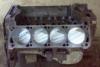

427/400

Thread Starter
|
Senior User

Joined: Sep 2007
Posts: 265
Likes: 1
427/400
I remember reading a few articles a while ago about stroking a 400 to 427 just by offset grinding the crank, sorta a poor mans stroker kit. You ofset grind the crank and use 240 rods I believe. But im not sure what pistons and what the offset grind was. Has anyone heard of this or know anything about it??
Thread Starter
|
Senior User
Joined: Sep 2007
Posts: 265
Likes: 1
okay i will. i did the math on it and it would require an .085 offset grind of the crank to make 427inches with a .060 overbore. that seems like an awful lot of metal to remove, is it even possible to remove that much metal and have a crank that is still structurally sound?

Elder User
Joined: May 2002
Posts: 526
Likes: 0
From: Sin City, USA
okay i will. i did the math on it and it would require an .085 offset grind of the crank to make 427inches with a .060 overbore. that seems like an awful lot of metal to remove, is it even possible to remove that much metal and have a crank that is still structurally sound?

Cargo Master


Joined: Dec 2004
Posts: 2,232
Likes: 3
From: NE Texas
As long as the 240 rod bearing size is no larger than the 400 rod journal size + .180, then offset grinding is no big deal as long as you are building a reasonable RPM street engine. Strokers have been built this way forever.
I think I did the math on this one a long time ago and it worked. I even had a top notch crank grinder ready to do it, but something came up and I didn't do the build at that time.
As long as the math works out, it is an economy way to build in LOTS of torque to an engine already capable of being a torque monster if built with a short cam, small runner dual plane and better yet add some small tube headers. If you did all that you would be ready to bolt it in your Bulldozer to add torque to it.
I think I did the math on this one a long time ago and it worked. I even had a top notch crank grinder ready to do it, but something came up and I didn't do the build at that time.
As long as the math works out, it is an economy way to build in LOTS of torque to an engine already capable of being a torque monster if built with a short cam, small runner dual plane and better yet add some small tube headers. If you did all that you would be ready to bolt it in your Bulldozer to add torque to it.
Trending Topics
Elder User
Joined: May 2002
Posts: 526
Likes: 0
From: Sin City, USA
As long as the 240 rod bearing size is no larger than the 400 rod journal size + .180, then offset grinding is no big deal as long as you are building a reasonable RPM street engine. Strokers have been built this way forever.
I think I did the math on this one a long time ago and it worked. I even had a top notch crank grinder ready to do it, but something came up and I didn't do the build at that time.
As long as the math works out, it is an economy way to build in LOTS of torque to an engine already capable of being a torque monster if built with a short cam, small runner dual plane and better yet add some small tube headers. If you did all that you would be ready to bolt it in your Bulldozer to add torque to it.
I think I did the math on this one a long time ago and it worked. I even had a top notch crank grinder ready to do it, but something came up and I didn't do the build at that time.
As long as the math works out, it is an economy way to build in LOTS of torque to an engine already capable of being a torque monster if built with a short cam, small runner dual plane and better yet add some small tube headers. If you did all that you would be ready to bolt it in your Bulldozer to add torque to it.
I build most of my own stuff but I use a machinist that is about 800 miles from me. Not by choice but because I can't find anyone I trust to do anything more than bore a Chevy .030 over.
When I built my 400, I talked with my machinist about a 427ci stroker and his labor rates plus all the running back and forth was not even close to being economical. I could build a 427/434ci Windsor for less than what I could my 400 econo stroker.
TMI has really made the 434ci a slam dunk for guys like me that have to pay for machine work but can mic components and assemble a long block.
FTE Stories
Ford Trucks for Ford Truck Enthusiasts

Top 6 Best Deals Available on New Fords & Lincolns Right Now
Brett Foote
This Hennessey Takes the Expedition Tremor's Off-Roading Capability to the Next Level
Verdad Gallardo
Top 10 Fords at 2026 Carlisle Ford Nationals
Joe Kucinski
3 Best / 3 Worst Parts of Modern Ford Ownership
Brett Foote
10 Amazing Upgrades That Solve Common Ford Truck Owner Headaches
Pouria Savadkouei
Every 2026 Ford Engine Explained
Brett Foote
10 Ugly Ford Trucks That We Still Kinda Love
Joe Kucinski
10 Things Every Truck Owner NEEDS (2026 Edition)
Michael S. Palmer
Rezvani's Latest Post-Apocalyptic Monster Is a Ford F-150 Raptor Underneath
Verdad Gallardo
Thread Starter
|
Senior User
Joined: Sep 2007
Posts: 265
Likes: 1
Well im blessed with having a great machinest 15 miles from my house, he has been at the same place for 40 years and now his son helps him so he is definatly a real smart and trustworthy guy. He has done all my machine work in the past and never had any problems with him and i dont think i have ever heard anything bad about anything he has done. About what would it cost to have a crank ground like this?
Thread Starter
|
Senior User
Joined: Sep 2007
Posts: 265
Likes: 1
I have an update. The 427 uses a 4.17 inch stroke which requires the crank to be offset ground .085 to make the crank throw 2.085 inches. Using the 6.7947 inch 240 rod, the compression hight comes in at 1.3873 based on a virgin block with a deck hight of 10.267. The chevy 327 using a 6 inch rod has a compression hight of 1.385, perfect for as it also has a .927 inch pin diameter, same as the 240 rod. Hope this helps.
Elder User
Joined: May 2002
Posts: 526
Likes: 0
From: Sin City, USA
I have an update. The 427 uses a 4.17 inch stroke which requires the crank to be offset ground .085 to make the crank throw 2.085 inches. Using the 6.7947 inch 240 rod, the compression hight comes in at 1.3873 based on a virgin block with a deck hight of 10.267. The chevy 327 using a 6 inch rod has a compression hight of 1.385, perfect for as it also has a .927 inch pin diameter, same as the 240 rod. Hope this helps.