


boxing frame

Thread Starter
|
Senior User
Joined: Oct 2008
Posts: 214
Likes: 0
From: Kansas City, MO
 boxing frame
I plan to box my frame in. So I went through and read about it in previous posts so I would have a better idea before I do it. But I have a question about it. I kind of like the idea of setting it a little inside of the frame instead of flush. I think that will hide the fact that my dad can't went very clean, and he can show me how to weld and I can practice. I like the idea of using cardboard to get the size of the pieces to take to a metal shop. But my question is, when you get back to a crossmember, do you just stop at that at it and pick up on the other side of it? Will this make all the pressure go to that one spot and make it more likely to bend there? Should I "fish mouth" it like others were talking about in that spot? I really would prefer to not cut out those cross members if at all possible because I think it's going beyond my skill level to weld them back in. Thanks.
Moderator

Joined: Dec 2003
Posts: 97,598
Likes: 2,008
From: Saskatoon, Saskatchewan

Roast em' if you got 'em


Joined: Mar 2005
Posts: 22,002
Likes: 9,897
From: Rio Rancho, NM
It would appear that you have read quite a bit about doing this. I really stressed about it on my 49 but in the long run it turned out to be a real simple job. In my case I only boxed the front of the frame back to the tranny x-member so I can't help you with that part of it.
I made my own boxing plates from 1/8" x 6" flatbar. I made some cardboard templates to fit inside the frame and then transferred that to the steel. I cut the steel with a metal blade in a jigsaw. I inset my plates about 1/4 to 3/8". It sure makes it alot easier to weld. When you get to welding do it in short bursts. Lay down about 1/2 to 1" of weld and then skip to another area, let the first area cool on its own. This will keep you from building up too much heat and warping the frame.
Good luck with it. Hopefully someone can answer the question about the crossmembers for you
Bobby
I made my own boxing plates from 1/8" x 6" flatbar. I made some cardboard templates to fit inside the frame and then transferred that to the steel. I cut the steel with a metal blade in a jigsaw. I inset my plates about 1/4 to 3/8". It sure makes it alot easier to weld. When you get to welding do it in short bursts. Lay down about 1/2 to 1" of weld and then skip to another area, let the first area cool on its own. This will keep you from building up too much heat and warping the frame.
Good luck with it. Hopefully someone can answer the question about the crossmembers for you
Bobby

Cargo Master


Joined: Apr 2005
Posts: 3,337
Likes: 165
From: Harpswell Maine
I second Bobby's post and would add that if possible put the frame on 4 jackstands and weight down on top of the frame above each jackstand. I used bags of black beauty that I had in the barn. This will minimize the chances of warping the frame. It worked for me.
Thread Starter
|
Senior User
Joined: Oct 2008
Posts: 214
Likes: 0
From: Kansas City, MO
Fomoko, those were the articles that I read about it. They just didn't answer my specific question though. weighing the frame down does make sense. i had already planned to put it on jack stands, but hadn't even thought of putting on weight to hold it steady. Thanks for the tip.

Hotshot
Joined: Oct 2004
Posts: 15,882
Likes: 88
From: Durham NC
Yes, the most important part is to avoid as much heat buildup as possible. Cut all your plates first then use short welds no more than 1" long and skip around as far apart as possible. Do not weld another place within 3' of a previous weld until that weld is completely cool to the touch. Don't try to rush the process by cooling the welds with water or air. Fishmouthing the boxing plates is unnecessary at the crossmembers, just butt the plate up against it. Also it is not necessary to weld the plates in solid, especially if inset. A 1" bead every 4-6" is sufficient. I would cut some 3" holes in the plates every 12-16" to allow access to the interior for painting/rustproofing and to be able to string wires or hoses inside. You will never be able to seal them up water tight so you don't want to trap water and dirt inside.
Avoid the temptation to make the plates out of heavier material than necessary. They should not be any heavier than the frame itself which is approximately 9-10ga. If you go to a metal shop to have them cut, be sure to specify that you want COLD rolled steel. It should be silver in color not black which is HOT rolled steel. Hot rolled steel is a little cheaper, but the black oxide coating must be ground off the front and rear surface for about 1/2" before welding, which is a LOT of work that stuff is tough, and it will cost the difference in sanding disks. If you are going to make cardboard patterns don't use corregated cardboard like old packing boxes, go to the school supply section of your local discount store and buy a handful of poster board sheets. It's an inexpensive, thin (about as thick as a business card) smooth card stock that comes in 2x3' sheets. Lay a piece of the stock against the open side of the frame and rub a dowel along the edges of the frame to transfer a perfect impression of the piece needed. Cut it out with large scissors ~ 1/16" narrower than the impression and mark which is the outside surface. Tape the pattern in place on the frame before marking the next piece. Overlap the two ends slightly and mark along the overlap. Cut the next piece and tape it to the frame and to the previous piece. Number each piece, indicate the outside and which side of the frame it goes on in case the pieces get mixed.
Save the larger scraps and any extra poster board to make patterns for the miriad of brackets etc you be making during your build.
PS: you should practice your welding on a handful of scraps of the boxing metal before welding on the frame. set up two pieces in a t-butt arrangement and weld along one side of the vertical piece like those you'll be making on the frame. after the weld cools try hammering the vertical piece down flat against the horizontal piece over the weld. When your welds stop cracking or burning thru the edge, you are ready to weld on the frame.
Make sure you have ground away any dirt or rust on the frame where you will be welding. It's near impossible for a novice welder to get a solid clean weld on dirty metal.
Boxing a frame that has had the sheetmetal and suspension removed is much better than trying to work under the truck, Set it up on jackstands with weights like has been suggested. You can flip the frame upside down to weld the top of the plates in place. Overhead welds are very difficult!
Avoid the temptation to make the plates out of heavier material than necessary. They should not be any heavier than the frame itself which is approximately 9-10ga. If you go to a metal shop to have them cut, be sure to specify that you want COLD rolled steel. It should be silver in color not black which is HOT rolled steel. Hot rolled steel is a little cheaper, but the black oxide coating must be ground off the front and rear surface for about 1/2" before welding, which is a LOT of work that stuff is tough, and it will cost the difference in sanding disks. If you are going to make cardboard patterns don't use corregated cardboard like old packing boxes, go to the school supply section of your local discount store and buy a handful of poster board sheets. It's an inexpensive, thin (about as thick as a business card) smooth card stock that comes in 2x3' sheets. Lay a piece of the stock against the open side of the frame and rub a dowel along the edges of the frame to transfer a perfect impression of the piece needed. Cut it out with large scissors ~ 1/16" narrower than the impression and mark which is the outside surface. Tape the pattern in place on the frame before marking the next piece. Overlap the two ends slightly and mark along the overlap. Cut the next piece and tape it to the frame and to the previous piece. Number each piece, indicate the outside and which side of the frame it goes on in case the pieces get mixed.
Save the larger scraps and any extra poster board to make patterns for the miriad of brackets etc you be making during your build.
PS: you should practice your welding on a handful of scraps of the boxing metal before welding on the frame. set up two pieces in a t-butt arrangement and weld along one side of the vertical piece like those you'll be making on the frame. after the weld cools try hammering the vertical piece down flat against the horizontal piece over the weld. When your welds stop cracking or burning thru the edge, you are ready to weld on the frame.
Make sure you have ground away any dirt or rust on the frame where you will be welding. It's near impossible for a novice welder to get a solid clean weld on dirty metal.
Boxing a frame that has had the sheetmetal and suspension removed is much better than trying to work under the truck, Set it up on jackstands with weights like has been suggested. You can flip the frame upside down to weld the top of the plates in place. Overhead welds are very difficult!
Roast em' if you got 'em
Joined: Mar 2005
Posts: 22,002
Likes: 9,897
From: Rio Rancho, NM
Trending Topics

Elder User
Joined: Sep 2006
Posts: 741
Likes: 0
From: Katy(Houston), Texas
FTE Stories
Ford Trucks for Ford Truck Enthusiasts

10 Things Every Truck Owner NEEDS (2026 Edition)
Michael S. Palmer
Rezvani's Latest Post-Apocalyptic Monster Is a Ford F-150 Raptor Underneath
Verdad Gallardo
Top 10 Most Expensive Ford Trucks Ever Sold on Bring a Trailer
Joe Kucinski
2027 Ford Super Duty Buyer's Guide (Every Model, Engine, & Package)
Brett Foote
Top 10 Ford Truck Tragedies
Joe Kucinski
AEV FXL Super Duty - the Super Duty Raptor Ford Doesn't Make
Brett Foote
Lobo Vs Lobo: Proof the F-150 Lobo Should Be Even Lower!
Michael S. Palmer
Ford's 2001 Explorer Sportsman Concept Looks For a New Home
Verdad Gallardo
10 Best Ford Truck Engines We Miss the Most!
Joe Kucinski
Thread Starter
|
Senior User
Joined: Oct 2008
Posts: 214
Likes: 0
From: Kansas City, MO
Thanks AX! That definitely helps out. I have already had the frame sandblasted, so it should definitely be clean enough. And I was planning on using corregated cardboard. The poster board makes a lot more sense. I'm sure it'll be a lot easier to work with too. I had planned to cut holes, but not at the distance as what I had read somewhere else. I like the idea of your spacing a lot better. Again, thanks for the info!
Roast em' if you got 'em
Joined: Mar 2005
Posts: 22,002
Likes: 9,897
From: Rio Rancho, NM
Bobby
Hotshot
Joined: Oct 2004
Posts: 15,882
Likes: 88
From: Durham NC
As Bobby says I prefer insetting the plates 1/8-1/4" It's MUCH easier to do a fillet weld well and the plates are self locating with a couple good welding magnets. Cut a couple spacer pieces from the boxing stock, and sandwich the spacers between the magnet and plate. Straddle the frame with the magnet and you have your spacing set.
The holes in the plate also allow you to put hook shape tool inside the boxing to pull the plate out should the heat make it pull in. If you are going to drill a lot of 3" holes in the plate be sure to buy a high quality hole saw such as the Milwaulkee brand "ice Hardened" bimetal saws. Always use a drill press, even if it's just an inexpensive one that holds a 1/2" hand drill if that's all you can afford, but you can buy the imported bench models for < 100.00 and they are invaluable in the shop. Use the slowest speed available and plenty of oil lubricant. Don't try to force the saw thru, let it cut at it's own pace, use just enough pressure that it keeps producing chips without slowing down. Switch the press over to a 1" mounted grinding wheel or "point" (grinding wheel permanently attached to a shaft for mounting in a drill or drill press chuck) to remove the sharp edge after drilling. A few quick angled swipes with a 1/2 round machinists file will finish removing will remove any remaining burr. Be sure to take the time to clean up the holes, you'll be glad you did the first time you need to stick your fingers thru one, and paint does not stick very well to a sharp edge.
The holes in the plate also allow you to put hook shape tool inside the boxing to pull the plate out should the heat make it pull in. If you are going to drill a lot of 3" holes in the plate be sure to buy a high quality hole saw such as the Milwaulkee brand "ice Hardened" bimetal saws. Always use a drill press, even if it's just an inexpensive one that holds a 1/2" hand drill if that's all you can afford, but you can buy the imported bench models for < 100.00 and they are invaluable in the shop. Use the slowest speed available and plenty of oil lubricant. Don't try to force the saw thru, let it cut at it's own pace, use just enough pressure that it keeps producing chips without slowing down. Switch the press over to a 1" mounted grinding wheel or "point" (grinding wheel permanently attached to a shaft for mounting in a drill or drill press chuck) to remove the sharp edge after drilling. A few quick angled swipes with a 1/2 round machinists file will finish removing will remove any remaining burr. Be sure to take the time to clean up the holes, you'll be glad you did the first time you need to stick your fingers thru one, and paint does not stick very well to a sharp edge.
Roast em' if you got 'em
Joined: Mar 2005
Posts: 22,002
Likes: 9,897
From: Rio Rancho, NM
There will still be some overhead welding but if you follow AX's recommendations about just running a skip weld....an inch or so weld every 6 inches or so, then its not too bad.
Bobby
Bobby
Fleet Mechanic

Joined: Apr 2008
Posts: 1,373
Likes: 6
From: Moore (or less), OK.
Does it matter if the access hole is in the boxing plate or the frame? There's a spot where the brackets for the 4 bar weld to the boxing plate that I needed access to so I cut a hole in the frame.
I used 3/16 plate for boxing in the frame. I put it flush against the frame instead of insetting it.
I didn't strip everything off the frame, only the bed and rear axle for where I was working. Makes it kinda hard to flip so, I am overhead welding the bottom of the boxing plate. With the weight of the cab and everything forward I figured I probably wouldn't need to weigh down the frame on the jack stands because I supported it at the very end of the frame. I used the screw type RV stands to level it front to back and side to side.
For my cross member where the shockwaves attach I used a 1/4 thick 2x4 rectangluar tube. Rather have it to stout than too weak. I didn't box the entire back half, I stopped short about a foot beyond where the crossmember attaches to leave room to alter the frame if I need to for a fuel tank.
Did I do everything wrong??? In my ignorance, I am rather proud of how it is turning out.
I used 3/16 plate for boxing in the frame. I put it flush against the frame instead of insetting it.
I didn't strip everything off the frame, only the bed and rear axle for where I was working. Makes it kinda hard to flip so, I am overhead welding the bottom of the boxing plate. With the weight of the cab and everything forward I figured I probably wouldn't need to weigh down the frame on the jack stands because I supported it at the very end of the frame. I used the screw type RV stands to level it front to back and side to side.
For my cross member where the shockwaves attach I used a 1/4 thick 2x4 rectangluar tube. Rather have it to stout than too weak. I didn't box the entire back half, I stopped short about a foot beyond where the crossmember attaches to leave room to alter the frame if I need to for a fuel tank.
Did I do everything wrong??? In my ignorance, I am rather proud of how it is turning out.
Laughing Gas
Joined: Dec 2007
Posts: 792
Likes: 3
From: Sandy Run SC
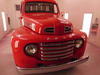
I was able to flip my frame to box it. I also replaced all the cross members except the front one. I sure made a difference driving this truck. We welded our boxing outside the frame but dropped it about a quarter inch and ground it off smooth but not perfect. Best picture I currently have. 