New Tires; Thin vs. Fat

Thread Starter
|
Senior User
Joined: Jun 2007
Posts: 367
Likes: 0
New Tires; Thin vs. Fat
Did a search and could not find this topic.
I'm getting ready for new skins; I either going with 235/85R16 or 285/75R16.
My driving is 95% highway, I'm here in the Phila. area so we get snow but not like the old days so I'm thinking of a good M/S.
Do you guys perfer the bigger fatter or the taller thinner tires, why?
Thanks for any input.
Steve
I'm getting ready for new skins; I either going with 235/85R16 or 285/75R16.
My driving is 95% highway, I'm here in the Phila. area so we get snow but not like the old days so I'm thinking of a good M/S.
Do you guys perfer the bigger fatter or the taller thinner tires, why?
Thanks for any input.
Steve

Lead Driver


Joined: Jul 2003
Posts: 7,404
Likes: 52
From: Wheatland, Mo

I like the looks of the 285-75-16...But prefer the OEM size...265-70-16 for snow traction. I have found that the wider the tire, the more it packs the snow instead of cutting it.
Ummmm Are you sure of the 235 measurement? That seems too narrow.
Ummmm Are you sure of the 235 measurement? That seems too narrow.

Hotshot
Joined: Mar 2007
Posts: 10,101
Likes: 40
From: Pa
My truck came with 235/85R16s from factory and I have 285/75R16s on now. Theres no comparing the two IMO. I have far better traction in all conditions with the 285s including snow. My 285s are more aggressive than the 235s were but..... Never going back to 235/85s or 265/75s.
Hotshot
Joined: Mar 2007
Posts: 10,101
Likes: 40
From: Pa
My dads 99' and his 03' both came with the 265 firestone steeltexs because he got the optional OWL A/T tires. My dad was a happy camper when he got rid of the steeltexs on both trucks and went to 285 BF A/Ts, those steeltexs were horrible tires traction wise. My 04' came with the standard BSW 235s.
Senior User
Joined: Sep 2006
Posts: 108
Likes: 0
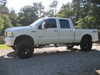
I have had 325's (13.5") with my 07 CC 250 and I am very impressed with the traction in the snow. I have heard some make the argument that thinner tires are better in the snow but from my personal expierience with highway driving, I feel very comfortable with the wider tires in white stuff. Braking sucks in the snow any way you look at it but I am sure that your tire type will also affect the performance in adverse weather conditions.
Trending Topics

Postmaster
Joined: Mar 2001
Posts: 4,968
Likes: 3
From: So Cal
A lot of factors go into a tire's snow performance. Width is just one factor.
Also important are big open blocks of tread to throw off snow and prevent packing.
Rubber compound designed to flex in snow and throw off snow.
Siping, small cuts in tread to give rubber many edges to grab on ice.
Maybe bubbles in the rubber to cat like mini suction cups. Blizzaks and maybe a couple others have these.
I probably missed a few of these, since 1) I have lived most of my life in southern Calif. 2) I am not a tire expert.
I did live for about 14 years in Oregon and my experience is that it is more important how you drive, but your tires do make a difference. I had an Impala SS with big fat tires, got along fine in snow, ice was tricky, even my blizzaks were marginal.
Studded tires work well in ice, so so in snow and are terrible on dry or wet clear pavement.
Chains are good when all else fails but good for only a few hundred miles before they drive you crazy or snap a link.
My F250 with skinny tires and 4x4 is OK in most snow, not good on ice. I even towed my 30 foot travel trailer in snowy mountains at low speed just fine, even when others in 4x4 and no trailer, stopped driving.
OH, back to reasons... 3) I am not too bright.
In general I would say narrow tires work better for me on snow and ice(Barely). I can get around fine on fat tires if I drive carefully. Hard dry COLD ice is easy to drive on. It is the sloppy just wet snow or ice that is dangerous.
Jim Henderson
Also important are big open blocks of tread to throw off snow and prevent packing.
Rubber compound designed to flex in snow and throw off snow.
Siping, small cuts in tread to give rubber many edges to grab on ice.
Maybe bubbles in the rubber to cat like mini suction cups. Blizzaks and maybe a couple others have these.
I probably missed a few of these, since 1) I have lived most of my life in southern Calif. 2) I am not a tire expert.
I did live for about 14 years in Oregon and my experience is that it is more important how you drive, but your tires do make a difference. I had an Impala SS with big fat tires, got along fine in snow, ice was tricky, even my blizzaks were marginal.
Studded tires work well in ice, so so in snow and are terrible on dry or wet clear pavement.
Chains are good when all else fails but good for only a few hundred miles before they drive you crazy or snap a link.
My F250 with skinny tires and 4x4 is OK in most snow, not good on ice. I even towed my 30 foot travel trailer in snowy mountains at low speed just fine, even when others in 4x4 and no trailer, stopped driving.
OH, back to reasons... 3) I am not too bright.
In general I would say narrow tires work better for me on snow and ice(Barely). I can get around fine on fat tires if I drive carefully. Hard dry COLD ice is easy to drive on. It is the sloppy just wet snow or ice that is dangerous.
Jim Henderson
FTE Stories
Ford Trucks for Ford Truck Enthusiasts

10 Things Every Truck Owner NEEDS (2026 Edition)
Michael S. Palmer
Rezvani's Latest Post-Apocalyptic Monster Is a Ford F-150 Raptor Underneath
Verdad Gallardo
Top 10 Most Expensive Ford Trucks Ever Sold on Bring a Trailer
Joe Kucinski
2027 Ford Super Duty Buyer's Guide (Every Model, Engine, & Package)
Brett Foote
Top 10 Ford Truck Tragedies
Joe Kucinski
AEV FXL Super Duty - the Super Duty Raptor Ford Doesn't Make
Brett Foote
Lobo Vs Lobo: Proof the F-150 Lobo Should Be Even Lower!
Michael S. Palmer
Ford's 2001 Explorer Sportsman Concept Looks For a New Home
Verdad Gallardo