




Fuel or electric problem ?

Thread Starter
|
Senior User
Joined: Jan 2008
Posts: 104
Likes: 0
Fuel or electric problem ?
Stumbleing,Backfires, dieseling, missing, hesitation and sometimes seems like not running on all cylinders.
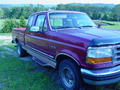
I have been persuing from fuel problem but still have not solved it. 1995 F150 5.0 with 80K.
1) Changed fuel filter ( a lot of crap in there ... probably never changed before.
2) Ran a can of SEAFOAM thru with a 1/2 tank of gas.
3) Next tank ran 2 bottles of ISO-HEET RED with a full tank of hi-test.
4) Now running LUCAS FUEL TREATMENT when I fill up.
I have put on less than 1000 miles since changeing fuel filter and still running pretty crappy.
When should I replace fuel filter again ?
How about getting injectors cleaned at shop with BG SYSTEM ( probably about $150 ... not cheap) ?
or
Go after the electrical side ?
I have been persuing from fuel problem but still have not solved it. 1995 F150 5.0 with 80K.
1) Changed fuel filter ( a lot of crap in there ... probably never changed before.
2) Ran a can of SEAFOAM thru with a 1/2 tank of gas.
3) Next tank ran 2 bottles of ISO-HEET RED with a full tank of hi-test.
4) Now running LUCAS FUEL TREATMENT when I fill up.
I have put on less than 1000 miles since changeing fuel filter and still running pretty crappy.
When should I replace fuel filter again ?
How about getting injectors cleaned at shop with BG SYSTEM ( probably about $150 ... not cheap) ?
or
Go after the electrical side ?
Fleet Owner


Joined: Aug 2005
Posts: 23,668
Likes: 301
From: Easton,Ks
You need to check the fuel pressure to find out where you stand.
It should be 32 PSI at idle and should go to about 42-45 PSI when you pull the vacuum hose off the nipple of the FPR (Fuel Pressure Regulator).
You check the fuel pressure at the bleed valve on the fuel manifold (rail) with a gauge and a cold engine.
You can get the Fuel Pressure Gauge at most auto part stores.
Some have reported using a dial tire gauge but it does not always work.
EDIT:
When you pull the vacuum hose off the FPR there should be no sign of fuel. If there is the FPR is bad.
It should be 32 PSI at idle and should go to about 42-45 PSI when you pull the vacuum hose off the nipple of the FPR (Fuel Pressure Regulator).
You check the fuel pressure at the bleed valve on the fuel manifold (rail) with a gauge and a cold engine.
You can get the Fuel Pressure Gauge at most auto part stores.
Some have reported using a dial tire gauge but it does not always work.
EDIT:
When you pull the vacuum hose off the FPR there should be no sign of fuel. If there is the FPR is bad.
Thread Starter
|
Senior User
Joined: Jan 2008
Posts: 104
Likes: 0
So no way to narrow it down
between junk in the tank/fuel system/fuel injectors and electrical/timing and now fuel pump.
Again symptoms STUMBLEING, BACKFIRE and DIESELING. I can still cruise at 80 MPH no problem and I trust it to go most anywhere.
I changed fuel filter a little less than 1000 miles ago and as I said it was full of dirt. When should I change it next ?
Again symptoms STUMBLEING, BACKFIRE and DIESELING. I can still cruise at 80 MPH no problem and I trust it to go most anywhere.
I changed fuel filter a little less than 1000 miles ago and as I said it was full of dirt. When should I change it next ?
Fleet Owner
Joined: Aug 2005
Posts: 23,668
Likes: 301
From: Easton,Ks
between junk in the tank/fuel system/fuel injectors and electrical/timing and now fuel pump.
Again symptoms STUMBLEING, BACKFIRE and DIESELING. I can still cruise at 80 MPH no problem and I trust it to go most anywhere.
I changed fuel filter a little less than 1000 miles ago and as I said it was full of dirt. When should I change it next ?
Again symptoms STUMBLEING, BACKFIRE and DIESELING. I can still cruise at 80 MPH no problem and I trust it to go most anywhere.
I changed fuel filter a little less than 1000 miles ago and as I said it was full of dirt. When should I change it next ?
Also do the KOER test.
Thread Starter
|
Senior User
Joined: Jan 2008
Posts: 104
Likes: 0
Engine light NOT on
Does this make those tests null and void or do they still give relevant info ?
thanks
thanks
Trending Topics
Fleet Owner
Joined: Aug 2005
Posts: 23,668
Likes: 301
From: Easton,Ks
The KOER test is always relevant.
FTE Stories
Ford Trucks for Ford Truck Enthusiasts

Top 10 Fords at 2026 Carlisle Ford Nationals
Joe Kucinski
3 Best / 3 Worst Parts of Modern Ford Ownership
Brett Foote
10 Amazing Upgrades That Solve Common Ford Truck Owner Headaches
Pouria Savadkouei
Every 2026 Ford Engine Explained
Brett Foote
10 Ugly Ford Trucks That We Still Kinda Love
Joe Kucinski
10 Things Every Truck Owner NEEDS (2026 Edition)
Michael S. Palmer
Rezvani's Latest Post-Apocalyptic Monster Is a Ford F-150 Raptor Underneath
Verdad Gallardo
Top 10 Most Expensive Ford Trucks Ever Sold on Bring a Trailer
Joe Kucinski
2027 Ford Super Duty Buyer's Guide (Every Model, Engine, & Package)
Brett Foote
Der Postmeister
Joined: Sep 2006
Posts: 6,859
Likes: 560
From: Long Beach, Calimexiforia

Could be 1 or more components lacking in accuracy & performance yet still functioning within acceptable range. Coolant temp sensor,slow switching O2 sensors, Contaminated MAF sensor (if applicable). EGR ports are usually with some level of partial to complete port blockage due to deposit buildup. And there' always loose Vac hoses, PCV function or air bypass of & intake air restriction courtesy of a dirty air filter. Going to a higher octane would be like throwing legweights to someone already having problems keeping their head above water. Introducing Seafoam, 2/3 can through a Vac hose (like the powerbrake assist line) while idleing at normal op. temp. then immediately shutting off allowing it to soak into deposit buildup for 10 or 15 minutes,tossing the remainder in your tank will give you better results. The Lucas product is a great maintanence additive once the bulk of the contaminant buildup is eliminated from the surfaces within the combustion chambers. Toss a can of SeaFoam in with your oil prior to change, it's surpriseing what oozes out when the drain plug is removed! Anyway, scan results should help point you in the best direction to proceed.

Thread
Thread Starter
Forum
Replies
Last Post
2012F250SUPERDUTY4X4
6.7L Power Stroke Diesel
176
Dec 7, 2018 05:46 PM
BigSix1
1987 - 1996 F150 & Larger F-Series Trucks
12
Aug 23, 2014 11:14 AM
digger19
1983 - 2012 Ranger & B-Series
11
Dec 10, 2006 08:25 PM