











Cutting the cross member

Posting Guru

Joined: Mar 2007
Posts: 1,905
Likes: 2
From: East Peoria, IL
It would obviously be better than Fords because it was another hair brained idea that leaves the commonly rusted oil pan unserviceable unless you pull the engine.

Posting Guru
Joined: Jul 2004
Posts: 1,235
Likes: 0
From: Kamloops, BC
 that is if I was ever in the situation !
Posting Guru
Joined: Jul 2004
Posts: 1,235
Likes: 0
From: Kamloops, BC
Dan.... I thought it was riveted in !!!!!! I was actually going to go outside and look !! So what the hell do ya need a welder for ?? Drill that sucker out and bolt it back in .. You're a genius !!! lol I would still make a stronger one..... LOL !!!
Hero..... Drill that son of a bit*^ !!!! DONE !!
Hero..... Drill that son of a bit*^ !!!! DONE !!

Senior User
Joined: Nov 2003
Posts: 423
Likes: 0
From: Providence, RI
Another option would be to patch the pan in-place. I did that with my F-250's pan, which had a severely-rusted pan and a 200k-mile 5.8L that I DID NOT want to pull out, and it worked great.
I brushed down the rust as much as possible, to bare metal, and then took a tapered punch and drove a hole through the pan metal bigger than the bad steel, so that good steel was tapered into the pan.
Then I covered short threaded bolts (I think the largest I had to use was a 3/8" bolt) with JB-Weld, and screwed them into the holes, let them cure, and then refilled and drained the oil-pan with lightweight motor-oil, to carry away any of the crud that may have been pushed into the pan.
I think I also had to cover a larger hole with a small sheetmetal patch covered in JB-Weld. In fact, I did take a picture of how the final results looked; not pretty, but it worked:

In theory, as long as you can securely attach the patch (perhaps you would need to use sheetmetal screws on the corners of an extraordinarily large patch), and you can get enough surface-contact between the patch and the good metal bridged by the JB-Weld, there is no limit to the size of the hole you can effectively plug, as the JB-Weld is certainly strong enough to hold that patch in place and keep the oil inside the pan.
I brushed down the rust as much as possible, to bare metal, and then took a tapered punch and drove a hole through the pan metal bigger than the bad steel, so that good steel was tapered into the pan.
Then I covered short threaded bolts (I think the largest I had to use was a 3/8" bolt) with JB-Weld, and screwed them into the holes, let them cure, and then refilled and drained the oil-pan with lightweight motor-oil, to carry away any of the crud that may have been pushed into the pan.
I think I also had to cover a larger hole with a small sheetmetal patch covered in JB-Weld. In fact, I did take a picture of how the final results looked; not pretty, but it worked:
In theory, as long as you can securely attach the patch (perhaps you would need to use sheetmetal screws on the corners of an extraordinarily large patch), and you can get enough surface-contact between the patch and the good metal bridged by the JB-Weld, there is no limit to the size of the hole you can effectively plug, as the JB-Weld is certainly strong enough to hold that patch in place and keep the oil inside the pan.
Posting Guru
Joined: Sep 2007
Posts: 2,121
Likes: 0
From: Knoxville, TN
I would think that you would need an air hammer or something of the sort to cut those rivets off.
FTE Stories
Ford Trucks for Ford Truck Enthusiasts

10 Things Every Truck Owner NEEDS (2026 Edition)
Michael S. Palmer
Rezvani's Latest Post-Apocalyptic Monster Is a Ford F-150 Raptor Underneath
Verdad Gallardo
Top 10 Most Expensive Ford Trucks Ever Sold on Bring a Trailer
Joe Kucinski
2027 Ford Super Duty Buyer's Guide (Every Model, Engine, & Package)
Brett Foote
Top 10 Ford Truck Tragedies
Joe Kucinski
AEV FXL Super Duty - the Super Duty Raptor Ford Doesn't Make
Brett Foote
Lobo Vs Lobo: Proof the F-150 Lobo Should Be Even Lower!
Michael S. Palmer
Ford's 2001 Explorer Sportsman Concept Looks For a New Home
Verdad Gallardo
10 Best Ford Truck Engines We Miss the Most!
Joe Kucinski
Posting Guru
Joined: Sep 2005
Posts: 2,476
Likes: 2
From: Monroe Michigan

That may be possible, But you have to un-bolt the motor mounts from the cross member and support the motor some way, before you remove the cross member.
Posting Guru
Joined: Jul 2004
Posts: 1,235
Likes: 0
From: Kamloops, BC
Another option would be to patch the pan in-place. I did that with my F-250's pan, which had a severely-rusted pan and a 200k-mile 5.8L that I DID NOT want to pull out, and it worked great.
I brushed down the rust as much as possible, to bare metal, and then took a tapered punch and drove a hole through the pan metal bigger than the bad steel, so that good steel was tapered into the pan.
Then I covered short threaded bolts (I think the largest I had to use was a 3/8" bolt) with JB-Weld, and screwed them into the holes, let them cure, and then refilled and drained the oil-pan with lightweight motor-oil, to carry away any of the crud that may have been pushed into the pan.
I think I also had to cover a larger hole with a small sheetmetal patch covered in JB-Weld. In fact, I did take a picture of how the final results looked; not pretty, but it worked:
In theory, as long as you can securely attach the patch (perhaps you would need to use sheetmetal screws on the corners of an extraordinarily large patch), and you can get enough surface-contact between the patch and the good metal bridged by the JB-Weld, there is no limit to the size of the hole you can effectively plug, as the JB-Weld is certainly strong enough to hold that patch in place and keep the oil inside the pan.
I brushed down the rust as much as possible, to bare metal, and then took a tapered punch and drove a hole through the pan metal bigger than the bad steel, so that good steel was tapered into the pan.
Then I covered short threaded bolts (I think the largest I had to use was a 3/8" bolt) with JB-Weld, and screwed them into the holes, let them cure, and then refilled and drained the oil-pan with lightweight motor-oil, to carry away any of the crud that may have been pushed into the pan.
I think I also had to cover a larger hole with a small sheetmetal patch covered in JB-Weld. In fact, I did take a picture of how the final results looked; not pretty, but it worked:
In theory, as long as you can securely attach the patch (perhaps you would need to use sheetmetal screws on the corners of an extraordinarily large patch), and you can get enough surface-contact between the patch and the good metal bridged by the JB-Weld, there is no limit to the size of the hole you can effectively plug, as the JB-Weld is certainly strong enough to hold that patch in place and keep the oil inside the pan.
Senior User
Joined: Nov 2003
Posts: 423
Likes: 0
From: Providence, RI
the oil leaks coming from my pan have taken their toll on me and my wallet. Losing about 3qt's to 1 gallon/ week. Tried patching - it works for about 3-6 months but these Michigan winters have their way with anything and everything. My only option now is to replace the pan.

Post Fiend
Joined: Nov 2007
Posts: 9,549
Likes: 14
From: Payson, AZ
How large a hole would you have to drill to get to good metal? I think BobBarry has a good alternate method. Drill out the bad metal and plug with a self tapping flange head bolt and use a viton o-ring for a seal. It would not cost much to try it, either in time or money. Just a vote for BobBarry's idea.
Senior User
Joined: Nov 2003
Posts: 423
Likes: 0
From: Providence, RI
Joe,
How large a hole would you have to drill to get to good metal? I think BobBarry has a good alternate method. Drill out the bad metal and plug with a self tapping flange head bolt and use a viton o-ring for a seal. It would not cost much to try it, either in time or money. Just a vote for BobBarry's idea.
How large a hole would you have to drill to get to good metal? I think BobBarry has a good alternate method. Drill out the bad metal and plug with a self tapping flange head bolt and use a viton o-ring for a seal. It would not cost much to try it, either in time or money. Just a vote for BobBarry's idea.
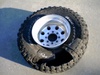
I cleaned the pan as best as possible with brake-cleaner, waited for oil to stop seeping from the hole I drove into the pan, then coated the screw threads and the integral washer with JB-Weld, and tightened it down.
I think I had about 5 or 6 holes, as we have the same problem with salted roads rusting out pans.
Posting Guru
Joined: Feb 2007
Posts: 1,146
Likes: 3
From: Bradenton FL
I think with a talented welder i would cut out and replace pieces of the oil pan before i would cut the crossmember. Or pull it.
That whole deal could cause problems like posted before and you still may have the problem again later.
That whole deal could cause problems like posted before and you still may have the problem again later.