


Front driveshaft angle?

Post Fiend
Joined: May 2004
Posts: 5,277
Likes: 0
From: St George, SC I-95
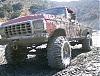
Obviously a leaf spring front suspension but any other specs? year and model lift tires axles?
As of right now the #1 solution is cut and turn the Cs but so many other things come in to play. IE 44" tires a healthy motor and 1310 drive line.
As of right now the #1 solution is cut and turn the Cs but so many other things come in to play. IE 44" tires a healthy motor and 1310 drive line.

just another Rockwell looser
Joined: Feb 2003
Posts: 4,042
Likes: 0
From: Cocoa, FL
cut and turn is the best route....but you may want to think about turning at the diff itself.....just you better have a torch to get them plug welds out....they will laugh at a drill, this way you wont have to make new spring perches......
Post Fiend
Joined: Jul 2006
Posts: 6,948
Likes: 44
Depending on the year of the front axle, changing the angle by rotating the center section may be close to impossible. If the spring perch is cast into the diff, a wedge will have to be made to make the perch square with the spring again, so turning the "C's" are a better option.
While adding wedges can work, it also changes caster and steering becomes faster. This can cause the "bad shopping cart effect" while on the highway.
Usually the double cardan joint binds when the slip joint is not working properly or binding. If the DL angle was too dramatic, it usually results in a broken single joint at the pinion yoke.
Might be thinking that there are other problems here. How much spline is exposed on the slip joint, and how loose is the spline engagement?
It is not way out at the end allowing the shaft to wobble is it? This vibration and changing angle can kill a DC cage quickly.
While adding wedges can work, it also changes caster and steering becomes faster. This can cause the "bad shopping cart effect" while on the highway.
Usually the double cardan joint binds when the slip joint is not working properly or binding. If the DL angle was too dramatic, it usually results in a broken single joint at the pinion yoke.
Might be thinking that there are other problems here. How much spline is exposed on the slip joint, and how loose is the spline engagement?
It is not way out at the end allowing the shaft to wobble is it? This vibration and changing angle can kill a DC cage quickly.
just another Rockwell looser
Joined: Feb 2003
Posts: 4,042
Likes: 0
From: Cocoa, FL
Originally Posted by 75F350
Depending on the year of the front axle, changing the angle by rotating the center section may be close to impossible. If the spring perch is cast into the diff, a wedge will have to be made to make the perch square with the spring again, so turning the "C's" are a better option.

Junior User
Joined: Feb 2008
Posts: 66
Likes: 0
it would be better to turn your axle. is your front axle at a different angle than your rear? if it is then you keep breaking u-joints because your velocity is different from front to back. the more angle your u joints have the more the pinion is going to spin than your drive shaft, and if your back pinion is spinning less or more than your front it will put stress on the u joint causing it to break. hope this helps
Trending Topics
Post Fiend
Joined: Jul 2006
Posts: 6,948
Likes: 44
Originally Posted by quadzjr
if thats the case he will have to mod the perches anyways b/c of rotating the axle up.....
I read that, and read that and I do not understand.
I was commenting on the statement that you made regarding the relocation of just the center section (diff). Turning just the diff itself is tough to do with the OP's axle. I believe that the OP has a 79 truck, and that has a spring perch that is cast into the diff. Rotating the center section will no longer allow the spring perch to line up and mate with the spring.
A later axle with two spring perches on the tubes will allow a modification to the center section all day long, but is much more difficult to the axles with a cast perch. Unlike later axles, in this case the front is easier to turn the "C's" if the axle has a cast driver side spring perch.
I have seen some chevy guys perform this by welding a wedge on the perch, but I am thinking that is far too much work. Thats all.
FTE Stories
Ford Trucks for Ford Truck Enthusiasts

Top 10 Fords at 2026 Carlisle Ford Nationals
Joe Kucinski
3 Best / 3 Worst Parts of Modern Ford Ownership
Brett Foote
10 Amazing Upgrades That Solve Common Ford Truck Owner Headaches
Pouria Savadkouei
Every 2026 Ford Engine Explained
Brett Foote
10 Ugly Ford Trucks That We Still Kinda Love
Joe Kucinski
10 Things Every Truck Owner NEEDS (2026 Edition)
Michael S. Palmer
Rezvani's Latest Post-Apocalyptic Monster Is a Ford F-150 Raptor Underneath
Verdad Gallardo
Top 10 Most Expensive Ford Trucks Ever Sold on Bring a Trailer
Joe Kucinski
2027 Ford Super Duty Buyer's Guide (Every Model, Engine, & Package)
Brett Foote
Posting Guru
Joined: Oct 2004
Posts: 1,424
Likes: 0
Originally Posted by 4x2mudder
it would be better to turn your axle. is your front axle at a different angle than your rear? if it is then you keep breaking u-joints because your velocity is different from front to back. the more angle your u joints have the more the pinion is going to spin than your drive shaft, and if your back pinion is spinning less or more than your front it will put stress on the u joint causing it to break. hope this helps
Posting Guru
Joined: Oct 2004
Posts: 1,424
Likes: 0
Originally Posted by 75F350
I read that, and read that and I do not understand.
I was commenting on the statement that you made regarding the relocation of just the center section (diff). Turning just the diff itself is tough to do with the OP's axle. I believe that the OP has a 79 truck, and that has a spring perch that is cast into the diff. Rotating the center section will no longer allow the spring perch to line up and mate with the spring.
A later axle with two spring perches on the tubes will allow a modification to the center section all day long, but is much more difficult to the axles with a cast perch. Unlike later axles, in this case the front is easier to turn the "C's" if the axle has a cast driver side spring perch.
I have seen some chevy guys perform this by welding a wedge on the perch, but I am thinking that is far too much work. Thats all.
I was commenting on the statement that you made regarding the relocation of just the center section (diff). Turning just the diff itself is tough to do with the OP's axle. I believe that the OP has a 79 truck, and that has a spring perch that is cast into the diff. Rotating the center section will no longer allow the spring perch to line up and mate with the spring.
A later axle with two spring perches on the tubes will allow a modification to the center section all day long, but is much more difficult to the axles with a cast perch. Unlike later axles, in this case the front is easier to turn the "C's" if the axle has a cast driver side spring perch.
I have seen some chevy guys perform this by welding a wedge on the perch, but I am thinking that is far too much work. Thats all.
Originally Posted by 75F350
Rotating the center section will no longer allow the spring perch to line up and mate with the spring.
Post Fiend
Joined: Jul 2006
Posts: 6,948
Likes: 44
littleme13:
This would be true if the spring perch is not cast into the diff case itself, but I believe the OP has a 79 truck that has the driver side spring perch cast directly into the differential casting, so rotating just the center section will not permit the spring to bolt up to the leaf any longer (without modification). The perch will roatate along with the center section, and will be at the wrong angle since it will rotate with the differential center section.
This is why rotating the "C's" was recommended for this application.
This would be true if the spring perch is not cast into the diff case itself, but I believe the OP has a 79 truck that has the driver side spring perch cast directly into the differential casting, so rotating just the center section will not permit the spring to bolt up to the leaf any longer (without modification). The perch will roatate along with the center section, and will be at the wrong angle since it will rotate with the differential center section.
This is why rotating the "C's" was recommended for this application.


