


insulation

Thread Starter
|
Fleet Mechanic
Joined: Sep 2002
Posts: 1,622
Likes: 3
From: okla

insulation
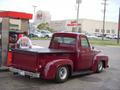
This past weekend I had the chance to do some testing with a non-contact temp sensor on my three hot rods. I have just completed installing B-Quirt over the Lizard Skin sprayed earlier. I was a little concerned about that decision and wanted to see, before upholstery, how it performed. The outside temp was low 90's in bright sun. The car is a 1940 Ford coupe painted black. First I tested outside of an area that does not yet have B-Quiet on it [ran out]. I was shocked to find only a 5 degree difference between the outside and directly opposite on the inside. I had the Lizard Skin applied by a local shop that does so regularly. Did they not do it corectly???? Certainly looked good, but how do you ascertain 40 mils? I later decided to do the underside of the car and sprayed it myself, I don't know if I got 40 mils. I do like how the Lizard Skin seals the surface. Anyway, next I tested the area with B-Quite over the Lizard Skin. WOW, a 60 degree difference. I also tested my Blue 46 coupe with some insulation that comes from the aircraft industry [not sure of the name, black, closed cell foam type stuff] and a headliner. It was 40 degree's different. Then I tested my 53 F100 with two layers of the "jute" backed foil. I put the first layer in with the foil toward outside and then was told by many that was the wrong way, so I intalled a second layer with the foil to the inside. It has a Rod Doors ABS plastic headliner. It also tested at a 40 degree difference. Of course, what I don't know is what a effect a headliner will have on the 40, I hope for the better.
Roast em' if you got 'em


Joined: Mar 2005
Posts: 22,013
Likes: 9,952
From: Rio Rancho, NM

Joe,
Interesting information. It seems like the Lizard Skin and insulation is the winner. Is the Lizard Skin expensive?
There are methods and tools used to check coatings thicknesses. You might contact a local industrial painter, I would bet they have the tools. I used to fab parts for water towers and our crews had the tools as they had to paint the towers after they welded on them.
Bobby
Interesting information. It seems like the Lizard Skin and insulation is the winner. Is the Lizard Skin expensive?
There are methods and tools used to check coatings thicknesses. You might contact a local industrial painter, I would bet they have the tools. I used to fab parts for water towers and our crews had the tools as they had to paint the towers after they welded on them.
Bobby


Postmaster
Joined: Jun 2004
Posts: 4,190
Likes: 2
From: Riverside, So Cal
As far as I understand from the FTE threads on insulation done before and my own research, Lizard Skin (and others) suppress sound by simply adding mass to the panel. They insulate heat by just being a less heat conductive material than the steel. Being only .040 thick means there isn't much material to do heat insulation and it was never my understanding that they were supposed to do much for heat. Many other heat insulation materials seem to do well, as Joe has shown by his testing.
That said, I plan to use Herculiner to do the sound deadening job of the Lizard Skin and Home Depot water heater blanket (bubble wrap) to do the heat insulation part.
Film at eleven....
That said, I plan to use Herculiner to do the sound deadening job of the Lizard Skin and Home Depot water heater blanket (bubble wrap) to do the heat insulation part.
Film at eleven....
Thread Starter
|
Fleet Mechanic
Joined: Sep 2002
Posts: 1,622
Likes: 3
From: okla
Well, Lizard Skin states in their advertising that it will reduce temps by 25/30 degrees. I had some of the Home Depot stuff you referred to Randy Jack. It was not installed in the car but I did some testing of several other types of insulation along with that stuff. In my opinion it has little effect on reducing radiant heat, maybe 10 degrees different. This was based on a rack I made to hold a piece of metal with Lizard skin coating, and a piece without. I then taped the different types to the side opposite the sun. The only one that was at all impressive was the jute backed foil that most street rod shops sell. It showed a 20 degree reduction. This basically what I have in my 53 F100, along with some air space and the Rod Door headliner, that had a net result of 40 degrees reduction. Of course I am no scientist or engineer, just a dumb Okie with a non-contact thermometer. LOL. One more thing, I have used Herculiner Bedliner and while it works fine, I can see that it lacks the "body" of the Lizard skin thay might make a difference in sound reduction. Have you by chance seen any of the posts on www.hotrodders.com re: mxing their own Lizard Skin type stuff? Might look at that. Joe


