


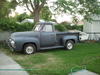

straightening chrome

Thread Starter
|
Senior User

Joined: Jun 2007
Posts: 394
Likes: 0
From: Springfield, Il
straightening chrome
on my 57 the chrome on one end has some damage, no pitting or anything like that just looks like an accordian. i tried to hammer and dolie it close but no luck. i was wondering if i used a propane torch to heat the area if it would damage the chrome to a point of not being able to get it to shine again, has anyone done this method in the past. thanks

Postmaster
Joined: Sep 2005
Posts: 2,958
Likes: 1
I have successfully used hydraulics (10 ton porta power) to straighten chrome bumpers on totalled vehicles in the past. Its a matter of patience and experience to do it without cracking the chrome. Even sometimes then it does not work.
Then again, I worked in a steel fab shop and did them at work. I could make any shape of die to press on the bent spot. I can't do that at home.
I have never touched one with a torch that I was trying to save the chrome on.
Then again, I worked in a steel fab shop and did them at work. I could make any shape of die to press on the bent spot. I can't do that at home.
I have never touched one with a torch that I was trying to save the chrome on.

Hotshot


Joined: Oct 2004
Posts: 15,882
Likes: 88
From: Durham NC
Look at the chromed exhaust pipes on any motorcycle, heat turns chrome dark permanently. Are you sure the "chrome" is that, not stainless steel? Chrome trim is often SS when made as thin strips, and chromed white "potmetal" when cast. Stainless can be very tough to work with, it is much stiffer than mild steel. I have seen people like Barry White straighten SS trim with a shaped steel punch against a highly polished dolly. Be sure your tools have a very smooth polished finish the SS is thin and will take an impression of every scratch or nick in the tool face.
Last edited by AXracer; Jul 24, 2007 at 12:58 PM.

Roast em' if you got 'em


Joined: Mar 2005
Posts: 22,022
Likes: 9,976
From: Rio Rancho, NM

Just a side note: If you look in motorcycle catalogs they usually have an ad for some miracle pooky that supposedly takes away the heat discolorations on exhaust pipes.
Disclaimer: I don't know if it works or not, I've never tried it, I've only seen it listed in catalogs
Definition-- pooky: any semi fluidic product, i.e. silicon, gasket sealer, oil additive, lotion, gear oil, sunscreen, body filler (until it sets), windshield butyl, etc, etc, etc
Bobby
Disclaimer: I don't know if it works or not, I've never tried it, I've only seen it listed in catalogs
Definition-- pooky: any semi fluidic product, i.e. silicon, gasket sealer, oil additive, lotion, gear oil, sunscreen, body filler (until it sets), windshield butyl, etc, etc, etc
Bobby
Hotshot
Joined: Oct 2004
Posts: 15,882
Likes: 88
From: Durham NC
Originally Posted by bobbytnm
Just a side note: If you look in motorcycle catalogs they usually have an ad for some miracle pooky that supposedly takes away the heat discolorations on exhaust pipes.
Disclaimer: I don't know if it works or not, I've never tried it, I've only seen it listed in catalogs
Definition-- pooky: any semi fluidic product, i.e. silicon, gasket sealer, oil additive, lotion, gear oil, sunscreen, body filler (until it sets), windshield butyl, etc, etc, etc
Bobby
Disclaimer: I don't know if it works or not, I've never tried it, I've only seen it listed in catalogs
Definition-- pooky: any semi fluidic product, i.e. silicon, gasket sealer, oil additive, lotion, gear oil, sunscreen, body filler (until it sets), windshield butyl, etc, etc, etc
Bobby


Logistics Pro
Joined: Oct 2002
Posts: 4,489
Likes: 5
From: Valley Center, CA
I'm with Ax. It sounds like you are talking about stainless steel, not chrome. If you are trying to hammer and dolly chrome, it will break. The chrome is actually a clear coating that preserves the shine of the silvery nickel. Most trim that is thin enough to hammer and dolly is Stainless steel. I have repaired a couple of spears, but it is not easy. You might want to practice on an old bent up piece from a swap meet before taking on your real pieces.
1. Hammer out dents so that they are barely proud of the surrounding sufface.
2. Sand the damaged area with 80 grit on a flat block.
3. Sand the damaged area with progressively finer grit on a flat block up to 200.
4. Buff the piece with progressively finer compound ending with white rouge.
It's not that difficult, but you will need lots of time and a buffing wheel. Jag
1. Hammer out dents so that they are barely proud of the surrounding sufface.
2. Sand the damaged area with 80 grit on a flat block.
3. Sand the damaged area with progressively finer grit on a flat block up to 200.
4. Buff the piece with progressively finer compound ending with white rouge.
It's not that difficult, but you will need lots of time and a buffing wheel. Jag
Trending Topics
Roast em' if you got 'em
Joined: Mar 2005
Posts: 22,022
Likes: 9,976
From: Rio Rancho, NM
From what I hear, a big part of the "lots of time" comes from chasing the part across the shop after the buffing wheel grabbed ahold of it and chucked to parts unknown
FTE Stories
Ford Trucks for Ford Truck Enthusiasts

Top 6 Best Deals Available on New Fords & Lincolns Right Now
Brett Foote
This Hennessey Takes the Expedition Tremor's Off-Roading Capability to the Next Level
Verdad Gallardo
Top 10 Fords at 2026 Carlisle Ford Nationals
Joe Kucinski
3 Best / 3 Worst Parts of Modern Ford Ownership
Brett Foote
10 Amazing Upgrades That Solve Common Ford Truck Owner Headaches
Pouria Savadkouei
Every 2026 Ford Engine Explained
Brett Foote
10 Ugly Ford Trucks That We Still Kinda Love
Joe Kucinski
10 Things Every Truck Owner NEEDS (2026 Edition)
Michael S. Palmer
Rezvani's Latest Post-Apocalyptic Monster Is a Ford F-150 Raptor Underneath
Verdad Gallardo
Hotshot
Joined: Oct 2004
Posts: 15,882
Likes: 88
From: Durham NC
True that! I tell my students the buffing wheel is the most dangerous tool in the jewelry studio, it can cause severe injury in an instant. I know a former professor at Ohio State that sliced off three of her fingers buffing a piece of copper, and I had to rescue a fellow jewelry student when the buffer grabbed her long hair and would have scalped her had I not been standing next to her when it happened and pulled out the plug.
A safety lesson on using a buffer:
1. ALWAYS wear eye protection! Tie back loose clothing and hair.
2.The buffing wheel should be rotating from top to bottom when standing in front of it.
3. Only buff with the lower front quadrant of the wheel.
4. Always buff from the middle of the piece out to the edge, NEVER try to buff from the edge inwards.
5. Use a LIGHT pressure against the buff. Pressing harder will only generate more heat not buff quicker. If you have deep scratches, take them out with a series of finer and finer grit abrasives such as wet or dry sandpaper to at least 400 grit before buffing, you cannot remover any heavier scratches than that with the buffer, you just make shiny scratches! (which show worse against the buffed surface)
A safety lesson on using a buffer:
1. ALWAYS wear eye protection! Tie back loose clothing and hair.
2.The buffing wheel should be rotating from top to bottom when standing in front of it.
3. Only buff with the lower front quadrant of the wheel.
4. Always buff from the middle of the piece out to the edge, NEVER try to buff from the edge inwards.
5. Use a LIGHT pressure against the buff. Pressing harder will only generate more heat not buff quicker. If you have deep scratches, take them out with a series of finer and finer grit abrasives such as wet or dry sandpaper to at least 400 grit before buffing, you cannot remover any heavier scratches than that with the buffer, you just make shiny scratches! (which show worse against the buffed surface)
