



Deep Pan Install Tips

Thread Starter
|
Senior User
Joined: Nov 2006
Posts: 245
Likes: 0
From: West Australia
Yeah
Likely your right Ponch - I'll try the maker of the Pan!
Seems this is where I'm at pictorially!

This is the big magnet in the bottom of the removed pan with all the particles around it!

This is the deep pan - with the little pedestal tube thing cast into it - with the now cleaned magnet from the old pan installed in there! You have to admit - it looks like it should go there and common sense might dictate thats a good place for it!
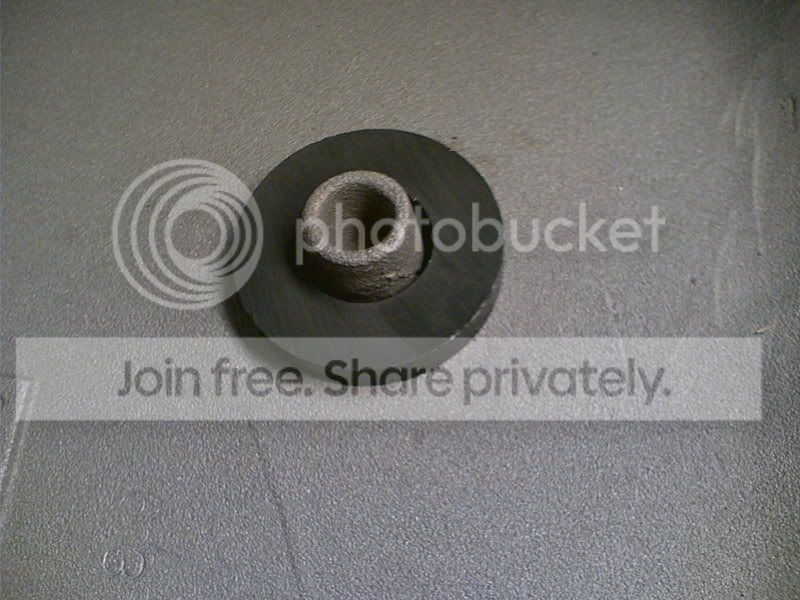
Looks right at home there doesn't it!
The destructions however make no mention of putting this magnet in there!
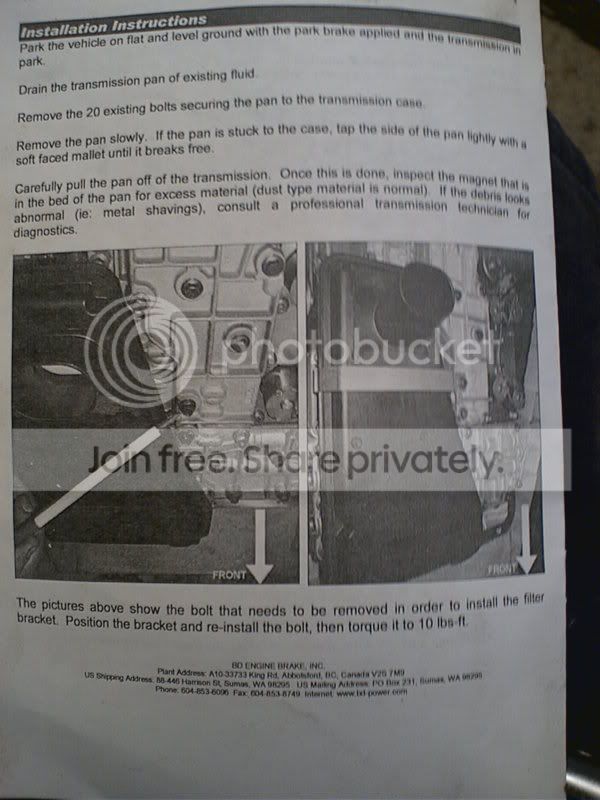
You can see I have the new filter with it's securing bracket attached in place and torqued back to 10 ft-lbs!
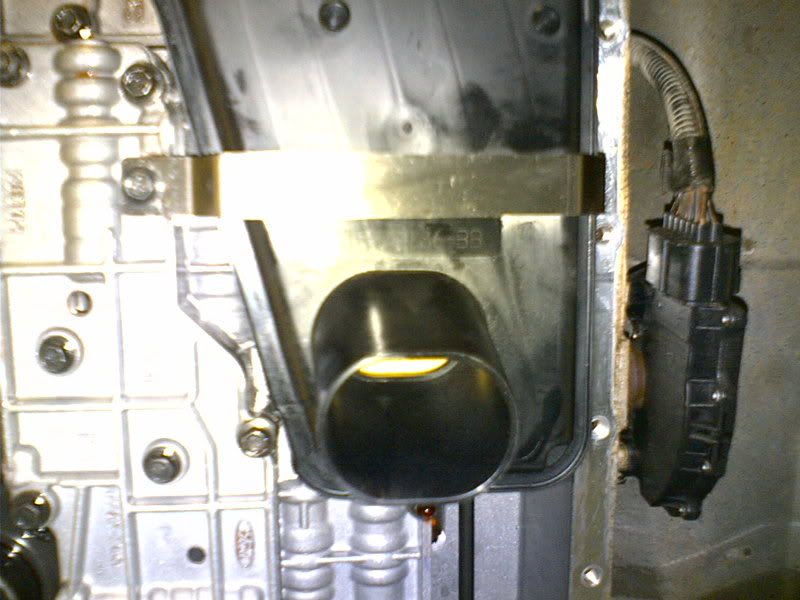
I'm at the point now of replacing the new pan into it's position and screwing her home but thought I'd wait for advice about this magnet bidness first!
Even if that magnet were to somehow jump the locating pedestal (which it sits loosely over) it would have to rise about 6 inches thru the trans fluid to find anything on the underside of the trans to stick too - and to be honest, even if it did so - I sincerely doubt theres anything there that it would 'screw up' operationally if it did. The only "likely" attaching points magnetically, being the steel filter retaining clip or the steel bolts in the valve bodies!
If it did find it's way up there and attached...big deal?
Just curious what other intelligent minds might think!
Hey maybe they will name this magnet mod after me - after all I have more magnets in this truck now - that the local power station!
The Flywest mangapan conversion - I can see it now!

Cheers!
Seems this is where I'm at pictorially!
This is the big magnet in the bottom of the removed pan with all the particles around it!
This is the deep pan - with the little pedestal tube thing cast into it - with the now cleaned magnet from the old pan installed in there! You have to admit - it looks like it should go there and common sense might dictate thats a good place for it!
Looks right at home there doesn't it!
The destructions however make no mention of putting this magnet in there!
You can see I have the new filter with it's securing bracket attached in place and torqued back to 10 ft-lbs!
I'm at the point now of replacing the new pan into it's position and screwing her home but thought I'd wait for advice about this magnet bidness first!
Even if that magnet were to somehow jump the locating pedestal (which it sits loosely over) it would have to rise about 6 inches thru the trans fluid to find anything on the underside of the trans to stick too - and to be honest, even if it did so - I sincerely doubt theres anything there that it would 'screw up' operationally if it did. The only "likely" attaching points magnetically, being the steel filter retaining clip or the steel bolts in the valve bodies!
If it did find it's way up there and attached...big deal?
Just curious what other intelligent minds might think!
Hey maybe they will name this magnet mod after me - after all I have more magnets in this truck now - that the local power station!
The Flywest mangapan conversion - I can see it now!
Cheers!
You can never have too many magnets!
Last edited by Flywest; Jan 17, 2007 at 07:55 AM. Reason: links
Thread Starter
|
Senior User
Joined: Nov 2006
Posts: 245
Likes: 0
From: West Australia
Bump
B.T.T. ^ Boo Uhhhm Mmmm Ppppp
C'mon someone must have some idea?
No reply as yet from BD Diesel in Canada after I emailed em!
Not that I'm gettin antsy or anything!
Thanks in advance!
C'mon someone must have some idea?
No reply as yet from BD Diesel in Canada after I emailed em!
Not that I'm gettin antsy or anything!
Thanks in advance!

Post Fiend
Joined: Feb 2006
Posts: 11,892
Likes: 2
From: Middle Tennessee
Fly, here is my opinion, based on nothing but speculation and thought. I have not done this.
1. The ferrous particles you found likely have been gathering since the truck was put into service, unless it's been serviced. I think the most particles can be found during initial break-in though I'm by no means a tranny expert.
2. If you leave the large magnet over the doohickey, particles will gather there and less on the plug like you mentioned. It will only be removed if you pull the pan. You know this.
3. I believe it is the largest/heaviest particles that will settle to the bottom, (which BTW is now further away), and your pickup tube is now further away from the bottom.
4. The stock filter should take care of the smaller particles in solution until it gets clogged at which point it would need to be serviced anyway.
In the end, I would say leave it out unless the manufacturer says put it there. I would think that if they put that boss there for the magnet they would have mentioned it. Luv those detailed destructions. Hopefull a tranny guru will chime in.
1. The ferrous particles you found likely have been gathering since the truck was put into service, unless it's been serviced. I think the most particles can be found during initial break-in though I'm by no means a tranny expert.
2. If you leave the large magnet over the doohickey, particles will gather there and less on the plug like you mentioned. It will only be removed if you pull the pan. You know this.
3. I believe it is the largest/heaviest particles that will settle to the bottom, (which BTW is now further away), and your pickup tube is now further away from the bottom.
4. The stock filter should take care of the smaller particles in solution until it gets clogged at which point it would need to be serviced anyway.
In the end, I would say leave it out unless the manufacturer says put it there. I would think that if they put that boss there for the magnet they would have mentioned it. Luv those detailed destructions. Hopefull a tranny guru will chime in.
Thread Starter
|
Senior User
Joined: Nov 2006
Posts: 245
Likes: 0
From: West Australia
Thanks Tenn!
Yeah - likely your right - they probably just cast that doohickey post tube thing to give guys like me something to worry about and lose sleep all night!
The fact I will run a in line micron type filter might assist along with the new in pan filter as well - to keep particulate matter like that accumulated around that magnet to a bare minimum with any luck!
You know I REALLY wanna keep that magnet in there don't you?
I could drill thru the top of the cast alloy post and add a split pin retainer for that magnet!!!!
You know in the Tranny Flush directions where it says to connect the tube to the rear most tranny return line and run it in a bucket and turn it off at the first bubbles....to flush the TC and valve bodies etc?....
Well I have a turbo timer so, I can't just turn this thing off anyold time I want...likely I'll be pumping the whole 30 litres (6 Gallons) of ATF into the bucket and the old will get mixed with the new before the turbo timer lets up!
I know you guys once said you can pull this or that thingymabob to kill the engine - but I don't know where all those things are inside my hood?.. I haven't a clue! How would I know what disconbobulator thingy to pull to shut it off at the first sign a bubbles in the clear hose?
This ATF oil cost like $180 bucks or so - and I can't be pumpin it everywhere for 5 mins after it was sposed to shut down coz the turbo timer got a whim of it;s own to run a long time afater key off!
Any easey ideas for a simpleton?...how to do this refill tranny job easey?
It'd be nice to flush the TC as well since the tranny oil to me looked a little brown for my liking and the particulate matter around the pan magnet tells me likely they've never droped the pan to change a filter (supposed to be done every second trans oil change!).
How often should the trans oil be changed within the first 60,000 miles?
Should it have had a new trans oil filter before now?...and that magnet have been cleaned maybe once by now?
Danged Ford service book don't seem to list what each service is sposed to consist of??? All I see is a date and signature and stamp of the dealership it was done at! That don't give any sort of traceable history!
Think I might end up doing all my own servicing hereon in some how!
Not getting any sleep tonight it seems. Was Hoping to finnish this today morning!
Cheers!
The fact I will run a in line micron type filter might assist along with the new in pan filter as well - to keep particulate matter like that accumulated around that magnet to a bare minimum with any luck!
You know I REALLY wanna keep that magnet in there don't you?
I could drill thru the top of the cast alloy post and add a split pin retainer for that magnet!!!!
You know in the Tranny Flush directions where it says to connect the tube to the rear most tranny return line and run it in a bucket and turn it off at the first bubbles....to flush the TC and valve bodies etc?....
Well I have a turbo timer so, I can't just turn this thing off anyold time I want...likely I'll be pumping the whole 30 litres (6 Gallons) of ATF into the bucket and the old will get mixed with the new before the turbo timer lets up!
I know you guys once said you can pull this or that thingymabob to kill the engine - but I don't know where all those things are inside my hood?.. I haven't a clue! How would I know what disconbobulator thingy to pull to shut it off at the first sign a bubbles in the clear hose?
This ATF oil cost like $180 bucks or so - and I can't be pumpin it everywhere for 5 mins after it was sposed to shut down coz the turbo timer got a whim of it;s own to run a long time afater key off!
Any easey ideas for a simpleton?...how to do this refill tranny job easey?
It'd be nice to flush the TC as well since the tranny oil to me looked a little brown for my liking and the particulate matter around the pan magnet tells me likely they've never droped the pan to change a filter (supposed to be done every second trans oil change!).
How often should the trans oil be changed within the first 60,000 miles?
Should it have had a new trans oil filter before now?...and that magnet have been cleaned maybe once by now?
Danged Ford service book don't seem to list what each service is sposed to consist of??? All I see is a date and signature and stamp of the dealership it was done at! That don't give any sort of traceable history!
Think I might end up doing all my own servicing hereon in some how!
Not getting any sleep tonight it seems. Was Hoping to finnish this today morning!
Cheers!
Post Fiend
Joined: Feb 2006
Posts: 11,892
Likes: 2
From: Middle Tennessee
Sorry Fly, I will not try to tell you how to shut off your truck while running with a turbo lifesaver. If you are referring to the IDM relay, I just cannot recommend pulling it while the truck is running for fear of zapping something out. Maybe someone else has a better idea. I would not pull anything on mine to shut it off except the key. It may not hurt anything but I wouldn't chance it on my truck. May want to disable the lifesaver, I don't know.
If you want that magnet in there, then leave it in there. And ye shall become known as Magnetron henceforth.
Your bro-in-law is of no assistance in this endeavor? I know he cannot touch it. Does your TC have a drain plug?
If you want that magnet in there, then leave it in there. And ye shall become known as Magnetron henceforth.
Your bro-in-law is of no assistance in this endeavor? I know he cannot touch it. Does your TC have a drain plug?

Post Fiend
Joined: Sep 2006
Posts: 7,426
Likes: 6
From: Sioux Falls, SD
Like I said before - I'm no tranny expert. But as for as the sludge you showed in the picture I had at least twice that at 60,000 miles when I had the stock torque converter replaced. I believe the owners manual said to change the tranny fluid every 30K (not 100% sure of that) but many folks do it earlier than that depending on how much they were towing and how hot the tranny temps averaged. If the dealer serviced the tranny and your torque converter does not have a drain plug they most likely just drained the pan an added 7 or 8 quarts to top her off.
Be careful with what in line filter you used, I was told by two 4R100 tranny guys that not to get one that is too restrictive and restrct the flow back to the tranny. While you are at it I would recommend blowing out the radiator & tranny cooler with an air compressor. If you had sludge in the pan you most likely will have some in the radiator also.
I wonder if some JB weld would hold that magnet in place at the bottom of your new pan? That sh!* will hold anything.
Take another pic when she's all assembled - you got some 300 people watchin' this post and we all are curious about the final outcome!
2 questions?
1) What type of turbo lifesave do you have? When mine is on and the key out I can hit the brake pedal and it will overide the turbo livefsave and shut the engine off.
2) 2004 F250 7.3L, I thought they stopped making 7.3L's in 2003?
Rich
Be careful with what in line filter you used, I was told by two 4R100 tranny guys that not to get one that is too restrictive and restrct the flow back to the tranny. While you are at it I would recommend blowing out the radiator & tranny cooler with an air compressor. If you had sludge in the pan you most likely will have some in the radiator also.
I wonder if some JB weld would hold that magnet in place at the bottom of your new pan? That sh!* will hold anything.
Take another pic when she's all assembled - you got some 300 people watchin' this post and we all are curious about the final outcome!
2 questions?
1) What type of turbo lifesave do you have? When mine is on and the key out I can hit the brake pedal and it will overide the turbo livefsave and shut the engine off.
2) 2004 F250 7.3L, I thought they stopped making 7.3L's in 2003?
Rich
Last edited by white Buffalo; Jan 17, 2007 at 05:07 PM.
Post Fiend
Joined: Feb 2006
Posts: 11,892
Likes: 2
From: Middle Tennessee
Originally Posted by white Buffalo
2) 2004 F250 7.3L, I thought they stopped making 7.3L's in 2003?
Rich
Thread Starter
|
Senior User
Joined: Nov 2006
Posts: 245
Likes: 0
From: West Australia
We could
Downunder - we could only buy the 7.3 PSD in our year models up to 2006!
There is no new imports for yr 2007 at all by Ford Australia - and I am lead to believe (but could be wrong) that in 2008 we get the 6.4 litre?
Thus the troublesome 6.0 litre hopefully never made it to our shores (with minor exceptions of the few privately owned vehicles brought back home by those aussies living/working stateside for more than a year)!
After sleepingonthe "magnetron man" pan conversion ideaover night and no response as yet from DB Diesel in Canada, I've decided to press ahead with the drill & split (cotter?) pin idea today and 'get er dun'!
You can never have too many magnets on a car, right?
This will be cool- because when it all goes pear shaped and I have to tow her home - there will be about 300 people all over the world to share the pics of my folly with!!
You know, I think the doo hickey post/pedestal thing - could just be where they pour the molten alloy into the lost sand casting mould thru some kinda force fed tube in the manufacturing process!
Cheers!
There is no new imports for yr 2007 at all by Ford Australia - and I am lead to believe (but could be wrong) that in 2008 we get the 6.4 litre?
Thus the troublesome 6.0 litre hopefully never made it to our shores (with minor exceptions of the few privately owned vehicles brought back home by those aussies living/working stateside for more than a year)!
After sleepingonthe "magnetron man" pan conversion ideaover night and no response as yet from DB Diesel in Canada, I've decided to press ahead with the drill & split (cotter?) pin idea today and 'get er dun'!
You can never have too many magnets on a car, right?
This will be cool- because when it all goes pear shaped and I have to tow her home - there will be about 300 people all over the world to share the pics of my folly with!!
You know, I think the doo hickey post/pedestal thing - could just be where they pour the molten alloy into the lost sand casting mould thru some kinda force fed tube in the manufacturing process!
Cheers!
Last edited by Flywest; Jan 17, 2007 at 09:21 PM. Reason: Additional info
FTE Stories
Ford Trucks for Ford Truck Enthusiasts

3 Best / 3 Worst Parts of Modern Ford Ownership
Brett Foote
10 Amazing Upgrades That Solve Common Ford Truck Owner Headaches
Pouria Savadkouei
Every 2026 Ford Engine Explained
Brett Foote
10 Ugly Ford Trucks That We Still Kinda Love
Joe Kucinski
10 Things Every Truck Owner NEEDS (2026 Edition)
Michael S. Palmer
Rezvani's Latest Post-Apocalyptic Monster Is a Ford F-150 Raptor Underneath
Verdad Gallardo
Top 10 Most Expensive Ford Trucks Ever Sold on Bring a Trailer
Joe Kucinski
2027 Ford Super Duty Buyer's Guide (Every Model, Engine, & Package)
Brett Foote
Top 10 Ford Truck Tragedies
Joe Kucinski
Thread Starter
|
Senior User
Joined: Nov 2006
Posts: 245
Likes: 0
From: West Australia
Lost time
Still no advice from BD Diesel...in Canada!
I've lost 36 hours somewhere bedridden with Gastro....so no works taken place to complete the install as yet - with a bit of luck I might be able to do something today if my damn head would just stop pounding!
Cheers!
I've lost 36 hours somewhere bedridden with Gastro....so no works taken place to complete the install as yet - with a bit of luck I might be able to do something today if my damn head would just stop pounding!
Cheers!

Fleet Owner


Joined: Jun 2004
Posts: 25,090
Likes: 1,112
From: Rio Rico, AZ.
Originally Posted by Flywest
Still no advice from BD Diesel...in Canada!
I've lost 36 hours somewhere bedridden with Gastro....so no works taken place to complete the install as yet - with a bit of luck I might be able to do something today if my damn head would just stop pounding!
Cheers!
I've lost 36 hours somewhere bedridden with Gastro....so no works taken place to complete the install as yet - with a bit of luck I might be able to do something today if my damn head would just stop pounding!
Cheers!
Thread Starter
|
Senior User
Joined: Nov 2006
Posts: 245
Likes: 0
From: West Australia
Ok
Heres where I'm at!
1. Still no advice from BD Diesel!
2. I said to hell with it and drilled the sucker and put a split pin in there!
Sadly I didn't have my camera handy (one of the kids has itin his car) so no pics sorry!
3. I had my second eldest son install the pan for me today with my supervision (I'm still too crook to crawl under the car!).
4. I got the oil analysis results back today from "oil guard".
The results for this transmiossion aren't looking too good, well not even one good really!
Sooo...
Anyone know what this means?
In all truth your sposed to take the sample mid flow during an oil change but I didin't do that - i just loosened the drain plug enough to get a trickle to fill the sample jar so maybe I copped all the scum from the bottom of the pan in my result!
After all, you can see the state of the magnet in the photo's above on this thread, and as some have stated - they have seen worse!
I'm assuming, that this oil has been in there 30,000 miles most likely!(60,000 mileson the truck total)...so was about due for the full flush!
I'm due to top her up tomorrow with new fluid - and will attempt to somehow flush that TC and cooler lines so that we are starting with a totally clean system!
I suspect, that these reults are due to the vehicle being used to tow in our heat in the past most likely without any mods to cool her down!
It will be "interesting" to see what the next sample analysis says given the deep pan, new filter, additional cooler and in line micron filter (when it gets here!).
Hopefully it will make quite a difference!
However - I am still left wondering if I should be rebuilding this transmission now or wait till it strands me on the side of the highway somewhere in the middle of timbucktoo!
Anyone else had a crappy oil result like this and lived to tell the tale?
Cheers!
1. Still no advice from BD Diesel!
2. I said to hell with it and drilled the sucker and put a split pin in there!
Sadly I didn't have my camera handy (one of the kids has itin his car) so no pics sorry!
3. I had my second eldest son install the pan for me today with my supervision (I'm still too crook to crawl under the car!).
4. I got the oil analysis results back today from "oil guard".
The results for this transmiossion aren't looking too good, well not even one good really!
TORQUE CONVERTER WEAR INDICATED.
CLUTCH DISC/THRUST WASHER WEAR INDICATED.
SUSPECT CLUTCH/DISC PACK DAMAGE.
SUSPECT GEAR WEAR.
BEARING/GEAR WEAR INDICATED.
DIRT PRESENT.
CHECK ALL DIRT ACCESS POINTS.
RESAMPLE AT 1/2 NORMAL INTERVAL TO FURTHER MONITOR.
FLUSH UNIT THOROUGHLY.
Spectro Results:
<table border="0" cellpadding="5" cellspacing="0" width="100%"><tbody><tr> <td class="TableGrid_HeaderLeft" align="center" nowrap="nowrap" width="1%">Sample ID</td> <td class="TableGrid_Header" title="IRON - Wear Metal. Most Common Source: Various Iron and steel machine parts. i.e. piston, cylinder, gear, block, cam" onmouseover="window.parent.status='IRON';" onmouseout="window.parent.status='';" align="center"> FE</td> <td class="TableGrid_Header" title="CHROMIUM - Wear Metal. Most Common Source: Ring plating, chrome plating, stainless steel." onmouseover="window.parent.status='CHROMIUM';" onmouseout="window.parent.status='';" align="center"> CR</td> <td class="TableGrid_Header" title="LEAD - Wear Metal. Most Common Source: Journal bearings, babbitt, bronze alloys." onmouseover="window.parent.status='LEAD';" onmouseout="window.parent.status='';" align="center"> PB</td> <td class="TableGrid_Header" title="COPPER - Wear Metal, additive. Most Common Source: Cooler core, brass/bronze alloys, babbitt, bushings, slinger rings, antiseize additive" onmouseover="window.parent.status='COPPER';" onmouseout="window.parent.status='';" align="center"> CU</td> <td class="TableGrid_Header" title="TIN - Wear Metal. Most Common Source: Bronze alloys, journal bearing flashing" onmouseover="window.parent.status='TIN';" onmouseout="window.parent.status='';" align="center"> SN</td> <td class="TableGrid_Header" title="ALUMINUM - Wear Metal, contaminant. Most Common Source: Bearings, piston, bushing, blower, cooler, dirt, various minerals" onmouseover="window.parent.status='ALUMINUM';" onmouseout="window.parent.status='';" align="center"> AL</td> <td class="TableGrid_Header" title="NICKEL - Wear Metal. Most Common Source: Stainless steel alloy, plating" onmouseover="window.parent.status='NICKEL';" onmouseout="window.parent.status='';" align="center"> NI</td> <td class="TableGrid_Header" title="SILVER - Wear Metal. Most Common Source: EMD wrist pin bushings, solder, needle bearings, turbo bearings" onmouseover="window.parent.status='SILVER';" onmouseout="window.parent.status='';" align="center"> AG</td> <td class="TableGrid_Header" title="MAGANESE - Wear Metal, additive. Most Common Source: Rings, liner, gasoline fuel additive" onmouseover="window.parent.status='MAGANESE';" onmouseout="window.parent.status='';" align="center"> MN</td> <td class="TableGrid_Header" title="SILICON - Contaminant, additive. Most Common Source: Dirt, antifoam additive, silicone sealants, coolant additive" onmouseover="window.parent.status='SILICON';" onmouseout="window.parent.status='';" align="center"> SI</td> <td class="TableGrid_Header" title="BORON - Additive, contaminant. Most Common Source: EP additive, detergent, coolant inhibitor" onmouseover="window.parent.status='BORON';" onmouseout="window.parent.status='';" align="center"> B</td> <td class="TableGrid_Header" title="SODIUM - Contaminant. Most Common Source: Coolant additive, sea water, process chemicals (caustic)" onmouseover="window.parent.status='SODIUM';" onmouseout="window.parent.status='';" align="center"> NA</td> <td class="TableGrid_Header" title="MAGNESIUM - Additive, contaminant. Most Common Source: Detergent additive, sea water" onmouseover="window.parent.status='MAGNESIUM';" onmouseout="window.parent.status='';" align="center"> MG</td> <td class="TableGrid_Header" title="CALCIUM - Additive, contaminant. Most Common Source: Detergent additive, cement dust, various minerals, hard water" onmouseover="window.parent.status='CALCIUM';" onmouseout="window.parent.status='';" align="center"> CA</td> <td class="TableGrid_Header" title="BARIUM - Additive. Most Common Source: Detergent additive" onmouseover="window.parent.status='BARIUM';" onmouseout="window.parent.status='';" align="center"> BA</td> <td class="TableGrid_Header" title="PHOSPHORUS - Additive. Most Common Source: AW/EP additive" onmouseover="window.parent.status='PHOSPHORUS';" onmouseout="window.parent.status='';" align="center"> P</td> <td class="TableGrid_Header" title="ZINC - Wear Metal, additive. Most Common Source: Brass alloys, AW additives, galvanizing" onmouseover="window.parent.status='ZINC';" onmouseout="window.parent.status='';" align="center"> ZN</td> <td class="TableGrid_Header" title="MOLYBDENUM - Additive. Most Common Source: EP additive. Also check as a possible wear source: Ring plating, alloy" onmouseover="window.parent.status='MOLYBDENUM';" onmouseout="window.parent.status='';" align="center"> MO</td> <td class="TableGrid_Header" title="TITANIUM - Wear Metal. Most Common Source: Gas turbine bearings, turbine blades" onmouseover="window.parent.status='TITANIUM';" onmouseout="window.parent.status='';" align="center"> TI</td> <td class="TableGrid_Header" title="VANADIUM - Wear Metal, contaminant. Most Common Source: Turbine blades, valves, bunker fuel" onmouseover="window.parent.status='VANADIUM';" onmouseout="window.parent.status='';" align="center"> V</td> <td class="TableGrid_Header" title="POTASSIUM - Contaminant. Most Common Source: Coolant additive, fly ash" onmouseover="window.parent.status='POTASSIUM';" onmouseout="window.parent.status='';" align="center"> K</td> </tr> <tr> <td class="ReportData" align="center"><nobr>9922101-R-5152</nobr></td> <td class="ReportData_RowType_Normal" align="center"> 109 </td> <td class="ReportData_RowType_Normal" align="center"> 0 </td> <td class="ReportData_RowType_Normal" align="center"> 31 </td> <td class="ReportData_RowType_Normal" align="center"> 84 </td> <td class="ReportData_RowType_Normal" align="center"> 12 </td> <td class="ReportData_RowType_Normal" align="center"> 6 </td> <td class="ReportData_RowType_Normal" align="center"> 0 </td> <td class="ReportData_RowType_Normal" align="center"> N/A </td> <td class="ReportData_RowType_Normal" align="center"> 0 </td> <td class="ReportData_RowType_Normal" align="center"> 5 </td> <td class="ReportData_RowType_Normal" align="center"> 0 </td> <td class="ReportData_RowType_Normal" align="center"> 4 </td> <td class="ReportData_RowType_Normal" align="center"> 0 </td> <td class="ReportData_RowType_Normal" align="center"> 0 </td> <td class="ReportData_RowType_Normal" align="center"> 0 </td> <td class="ReportData_RowType_Normal" align="center"> 0 </td> <td class="ReportData_RowType_Normal" align="center"> 0 </td> <td class="ReportData_RowType_Normal" align="center"> 2 </td> <td class="ReportData_RowType_Normal" align="center"> 0 </td> <td class="ReportData_RowType_Normal" align="center"> 0 </td> <td class="ReportData_RowType_Normal" align="center"> 1 </td></tr></tbody></table>
CLUTCH DISC/THRUST WASHER WEAR INDICATED.
SUSPECT CLUTCH/DISC PACK DAMAGE.
SUSPECT GEAR WEAR.
BEARING/GEAR WEAR INDICATED.
DIRT PRESENT.
CHECK ALL DIRT ACCESS POINTS.
RESAMPLE AT 1/2 NORMAL INTERVAL TO FURTHER MONITOR.
FLUSH UNIT THOROUGHLY.
Spectro Results:
<table border="0" cellpadding="5" cellspacing="0" width="100%"><tbody><tr> <td class="TableGrid_HeaderLeft" align="center" nowrap="nowrap" width="1%">Sample ID</td> <td class="TableGrid_Header" title="IRON - Wear Metal. Most Common Source: Various Iron and steel machine parts. i.e. piston, cylinder, gear, block, cam" onmouseover="window.parent.status='IRON';" onmouseout="window.parent.status='';" align="center"> FE</td> <td class="TableGrid_Header" title="CHROMIUM - Wear Metal. Most Common Source: Ring plating, chrome plating, stainless steel." onmouseover="window.parent.status='CHROMIUM';" onmouseout="window.parent.status='';" align="center"> CR</td> <td class="TableGrid_Header" title="LEAD - Wear Metal. Most Common Source: Journal bearings, babbitt, bronze alloys." onmouseover="window.parent.status='LEAD';" onmouseout="window.parent.status='';" align="center"> PB</td> <td class="TableGrid_Header" title="COPPER - Wear Metal, additive. Most Common Source: Cooler core, brass/bronze alloys, babbitt, bushings, slinger rings, antiseize additive" onmouseover="window.parent.status='COPPER';" onmouseout="window.parent.status='';" align="center"> CU</td> <td class="TableGrid_Header" title="TIN - Wear Metal. Most Common Source: Bronze alloys, journal bearing flashing" onmouseover="window.parent.status='TIN';" onmouseout="window.parent.status='';" align="center"> SN</td> <td class="TableGrid_Header" title="ALUMINUM - Wear Metal, contaminant. Most Common Source: Bearings, piston, bushing, blower, cooler, dirt, various minerals" onmouseover="window.parent.status='ALUMINUM';" onmouseout="window.parent.status='';" align="center"> AL</td> <td class="TableGrid_Header" title="NICKEL - Wear Metal. Most Common Source: Stainless steel alloy, plating" onmouseover="window.parent.status='NICKEL';" onmouseout="window.parent.status='';" align="center"> NI</td> <td class="TableGrid_Header" title="SILVER - Wear Metal. Most Common Source: EMD wrist pin bushings, solder, needle bearings, turbo bearings" onmouseover="window.parent.status='SILVER';" onmouseout="window.parent.status='';" align="center"> AG</td> <td class="TableGrid_Header" title="MAGANESE - Wear Metal, additive. Most Common Source: Rings, liner, gasoline fuel additive" onmouseover="window.parent.status='MAGANESE';" onmouseout="window.parent.status='';" align="center"> MN</td> <td class="TableGrid_Header" title="SILICON - Contaminant, additive. Most Common Source: Dirt, antifoam additive, silicone sealants, coolant additive" onmouseover="window.parent.status='SILICON';" onmouseout="window.parent.status='';" align="center"> SI</td> <td class="TableGrid_Header" title="BORON - Additive, contaminant. Most Common Source: EP additive, detergent, coolant inhibitor" onmouseover="window.parent.status='BORON';" onmouseout="window.parent.status='';" align="center"> B</td> <td class="TableGrid_Header" title="SODIUM - Contaminant. Most Common Source: Coolant additive, sea water, process chemicals (caustic)" onmouseover="window.parent.status='SODIUM';" onmouseout="window.parent.status='';" align="center"> NA</td> <td class="TableGrid_Header" title="MAGNESIUM - Additive, contaminant. Most Common Source: Detergent additive, sea water" onmouseover="window.parent.status='MAGNESIUM';" onmouseout="window.parent.status='';" align="center"> MG</td> <td class="TableGrid_Header" title="CALCIUM - Additive, contaminant. Most Common Source: Detergent additive, cement dust, various minerals, hard water" onmouseover="window.parent.status='CALCIUM';" onmouseout="window.parent.status='';" align="center"> CA</td> <td class="TableGrid_Header" title="BARIUM - Additive. Most Common Source: Detergent additive" onmouseover="window.parent.status='BARIUM';" onmouseout="window.parent.status='';" align="center"> BA</td> <td class="TableGrid_Header" title="PHOSPHORUS - Additive. Most Common Source: AW/EP additive" onmouseover="window.parent.status='PHOSPHORUS';" onmouseout="window.parent.status='';" align="center"> P</td> <td class="TableGrid_Header" title="ZINC - Wear Metal, additive. Most Common Source: Brass alloys, AW additives, galvanizing" onmouseover="window.parent.status='ZINC';" onmouseout="window.parent.status='';" align="center"> ZN</td> <td class="TableGrid_Header" title="MOLYBDENUM - Additive. Most Common Source: EP additive. Also check as a possible wear source: Ring plating, alloy" onmouseover="window.parent.status='MOLYBDENUM';" onmouseout="window.parent.status='';" align="center"> MO</td> <td class="TableGrid_Header" title="TITANIUM - Wear Metal. Most Common Source: Gas turbine bearings, turbine blades" onmouseover="window.parent.status='TITANIUM';" onmouseout="window.parent.status='';" align="center"> TI</td> <td class="TableGrid_Header" title="VANADIUM - Wear Metal, contaminant. Most Common Source: Turbine blades, valves, bunker fuel" onmouseover="window.parent.status='VANADIUM';" onmouseout="window.parent.status='';" align="center"> V</td> <td class="TableGrid_Header" title="POTASSIUM - Contaminant. Most Common Source: Coolant additive, fly ash" onmouseover="window.parent.status='POTASSIUM';" onmouseout="window.parent.status='';" align="center"> K</td> </tr> <tr> <td class="ReportData" align="center"><nobr>9922101-R-5152</nobr></td> <td class="ReportData_RowType_Normal" align="center"> 109 </td> <td class="ReportData_RowType_Normal" align="center"> 0 </td> <td class="ReportData_RowType_Normal" align="center"> 31 </td> <td class="ReportData_RowType_Normal" align="center"> 84 </td> <td class="ReportData_RowType_Normal" align="center"> 12 </td> <td class="ReportData_RowType_Normal" align="center"> 6 </td> <td class="ReportData_RowType_Normal" align="center"> 0 </td> <td class="ReportData_RowType_Normal" align="center"> N/A </td> <td class="ReportData_RowType_Normal" align="center"> 0 </td> <td class="ReportData_RowType_Normal" align="center"> 5 </td> <td class="ReportData_RowType_Normal" align="center"> 0 </td> <td class="ReportData_RowType_Normal" align="center"> 4 </td> <td class="ReportData_RowType_Normal" align="center"> 0 </td> <td class="ReportData_RowType_Normal" align="center"> 0 </td> <td class="ReportData_RowType_Normal" align="center"> 0 </td> <td class="ReportData_RowType_Normal" align="center"> 0 </td> <td class="ReportData_RowType_Normal" align="center"> 0 </td> <td class="ReportData_RowType_Normal" align="center"> 2 </td> <td class="ReportData_RowType_Normal" align="center"> 0 </td> <td class="ReportData_RowType_Normal" align="center"> 0 </td> <td class="ReportData_RowType_Normal" align="center"> 1 </td></tr></tbody></table>
Anyone know what this means?
In all truth your sposed to take the sample mid flow during an oil change but I didin't do that - i just loosened the drain plug enough to get a trickle to fill the sample jar so maybe I copped all the scum from the bottom of the pan in my result!
After all, you can see the state of the magnet in the photo's above on this thread, and as some have stated - they have seen worse!
I'm assuming, that this oil has been in there 30,000 miles most likely!(60,000 mileson the truck total)...so was about due for the full flush!
I'm due to top her up tomorrow with new fluid - and will attempt to somehow flush that TC and cooler lines so that we are starting with a totally clean system!
I suspect, that these reults are due to the vehicle being used to tow in our heat in the past most likely without any mods to cool her down!
It will be "interesting" to see what the next sample analysis says given the deep pan, new filter, additional cooler and in line micron filter (when it gets here!).
Hopefully it will make quite a difference!
However - I am still left wondering if I should be rebuilding this transmission now or wait till it strands me on the side of the highway somewhere in the middle of timbucktoo!
Anyone else had a crappy oil result like this and lived to tell the tale?
Cheers!
Post Fiend
Joined: Feb 2006
Posts: 11,892
Likes: 2
From: Middle Tennessee
Originally Posted by Flywest
It will be "interesting" to see what the next sample analysis says given the deep pan, new filter, additional cooler and in line micron filter (when it gets here!).
Hopefully it will make quite a difference!
However - I am still left wondering if I should be rebuilding this transmission now or wait till it strands me on the side of the highway somewhere in the middle of timbucktoo!
Anyone else had a crappy oil result like this and lived to tell the tale?
Cheers!
Hopefully it will make quite a difference!
However - I am still left wondering if I should be rebuilding this transmission now or wait till it strands me on the side of the highway somewhere in the middle of timbucktoo!
Anyone else had a crappy oil result like this and lived to tell the tale?
Cheers!
Has the tranny ever given you a reason to feel it was on it's way out?
Finally, and I am not sure, but fluid analysis conducted with aftermarket filtration may not tell the whole story depending on the micron level of the filter. I don't know the exact particle size that will be trapped and the full analysis procedure, but I would suspect any indicators of wear that a filter can trap won't show up on an analysis. So you could end up looking good when you aren't. Having said that, you may be just fine if that is your original fluid. These are just some of the things I think about with OAs. Oh before I get hammered, I know they check microscopic levels, JMO.