


1 Row Stock Radiator?

Thread Starter
|
Cargo Master

Joined: Dec 2004
Posts: 3,362
Likes: 22
From: Florence, SC
1 Row Stock Radiator?
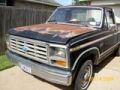
Does anyone in here know how many rows the STOCK radiator has for 1980 - 1986 F-150? My application is a 1985 F-150 302 atomatic 2-bbl carb, and the dealer replacement lists a 1 row radiator. Does this sound correct?

Fleet Owner
Joined: Sep 2005
Posts: 28,609
Likes: 18
From: Lake Tahoe, Nevada

Thread Starter
|
Cargo Master
Joined: Dec 2004
Posts: 3,362
Likes: 22
From: Florence, SC
Thanks guys! Does anyone know who made the stock radiator that Ford used in their F-150s in 1985? I have heard Modine from one source and then someone else told me Visteon made the factory piece. My stock 1 row radiator has lasted me for 22 years so far, and I would like to get an exact replacement without paying Ford $200.
Trending Topics
Cargo Master


Joined: Apr 2003
Posts: 2,058
Likes: 424
From: Too close to Houston
Look in your yellow pages. Any decent radiator shop should be able to put a new core in your radiator and make it good as new. My 1-row works fine, but I wouldn't be opposed to putting a 2-row in it if it needed fixing anyway.
FTE Stories
Ford Trucks for Ford Truck Enthusiasts

Top 10 Most Expensive Ford Trucks Ever Sold on Bring a Trailer
Joe Kucinski
2027 Ford Super Duty Buyer's Guide (Every Model, Engine, & Package)
Brett Foote
Top 10 Ford Truck Tragedies
Joe Kucinski
AEV FXL Super Duty - the Super Duty Raptor Ford Doesn't Make
Brett Foote
Lobo Vs Lobo: Proof the F-150 Lobo Should Be Even Lower!
Michael S. Palmer
Ford's 2001 Explorer Sportsman Concept Looks For a New Home
Verdad Gallardo
10 Best Ford Truck Engines We Miss the Most!
Joe Kucinski
2026 Shelby F-150 Off-Road: Better Than a Raptor R?
Brett Foote
2027 Super Duty Carhartt Package First Look: 12 Things You NEED to Know!
Michael S. Palmer
Postmaster
Joined: May 2004
Posts: 2,854
Likes: 0
I used to think if you had A/C you got a thicker radiator, but going over my 80-83 parts book shows that all F-series got a 1 1/2" thick radiator, except:
80-82 302 AT w/ HD Cooling...2 17/64", 80-81 351W MT w/ HD Cooling...2 17/64, 80-81 351W AT with A/C...2 17/64". 83 diesels and 460's....3".
There were an assortment of widths and heights though.
Ford used four categories....Std Cooling, Extra Cooling, HD Cooling, and A/C.
80-82 302 AT w/ HD Cooling...2 17/64", 80-81 351W MT w/ HD Cooling...2 17/64, 80-81 351W AT with A/C...2 17/64". 83 diesels and 460's....3".
There were an assortment of widths and heights though.
Ford used four categories....Std Cooling, Extra Cooling, HD Cooling, and A/C.

Fleet Owner
Joined: Sep 2005
Posts: 28,609
Likes: 18
From: Lake Tahoe, Nevada
Originally Posted by loudfords
Thickness helps too, slows down the flow giving it more time to cool. ie coolant will spend twice as long in a 2 row rad than a 1 row.
Check out the link in post #6
Fleet Owner
Joined: Sep 2005
Posts: 28,609
Likes: 18
From: Lake Tahoe, Nevada
The slower the flow, the more the coolant molecules cling to the inside surface of the radiator tubes. The rate of flow within each tube is not consistant. Increasing the velocity creates turbulance which exposes more molecules to the tube surface which makes for greater efficiency.
Each row of tubes behind the front row is less and less effective because the air, having been heated by the front row, is hotter. The greater the temperature between the air and the tubes, the greater the heat transfer. The most efficient radiator would have only one row, but the vehicle design does not allow for that much frontal surface area.
Each row of tubes behind the front row is less and less effective because the air, having been heated by the front row, is hotter. The greater the temperature between the air and the tubes, the greater the heat transfer. The most efficient radiator would have only one row, but the vehicle design does not allow for that much frontal surface area.