



Boosting rear weight load???

Thread Starter
|
New User
Joined: Jan 2006
Posts: 2
Likes: 0
Boosting rear weight load???
’97 F150 V6 Stick 2wheel drive
I often carry seemingly heavy loads during the week. Towards the end of a work week the truck often looks like both a low rider and an airplane ready to take off. I need to know a cost efficient method of carrying the heavy weight in the back so I don’t break the springs or ??
Note: I also pull a small trailer behind the truck.
Someone recommended to me to install inflatable air bags in the back, and to inflate them towards the end of the week when the load begins to get heavy, and to de-inflate them after the truck was empty. This seems like an easy solution and I would not mind doing this.
Does any one else have any other suggestions? Has anybody else done this? How difficult is something like this to install and how much should I look to budget for it? Are there any products that can be recommended.
Note: I am on a slight budget.
Thanks for any input.
Pierce.
I often carry seemingly heavy loads during the week. Towards the end of a work week the truck often looks like both a low rider and an airplane ready to take off. I need to know a cost efficient method of carrying the heavy weight in the back so I don’t break the springs or ??
Note: I also pull a small trailer behind the truck.
Someone recommended to me to install inflatable air bags in the back, and to inflate them towards the end of the week when the load begins to get heavy, and to de-inflate them after the truck was empty. This seems like an easy solution and I would not mind doing this.
Does any one else have any other suggestions? Has anybody else done this? How difficult is something like this to install and how much should I look to budget for it? Are there any products that can be recommended.
Note: I am on a slight budget.
Thanks for any input.
Pierce.

New User
Joined: Oct 2005
Posts: 9
Likes: 0
I have a 97 F150 4x4 with 5.4L in it. I put air bags on mine. Hauled a 2000 pound pickup sprayer from Devils Lake, ND to Great Falls MT. It was a little to much of a load for a 1/2 ton but with the air bags to level the load I did really well. It has been a year since then and everything still working good! I then installed airbags on my 3/4 ton which I use for that sprayer with 500 gallons of water. Basically needed it to help level the pickup and help with the load to help maintain the pinion angle and etc. The info on air bags that you shared is the same info I have heard. The instructions recomend very low pressure when not under load. My Spring guys do not like the airbags at all. They are afraid that under constant load for long periods the air bags put to much pressure in a small area of the frame and cause damage. But since the extreme loads I have aren't long term it should work out for me ok. My uncle is a heavy equipment mechanic, and with the 1/2 ton fords the company has they have installed overloads on them since they are under load a lot and frequently. So, in my opinion... If it is just a weekend hauler with the camper or landscaping jobs or short term loads, air bags are ok. However, if it is under daily loads and heavy loads I would go with an overload spring system. I am really not certain on cost of these. But maybe someone else can help with costs and additional insight.

Posting Guru
Joined: May 2002
Posts: 1,673
Likes: 0
From: Chicago Area
The problem with the air bags (and overload springs) is that, while they do take some of the load off the springs, they do nothing for the remaining parts. I don't think anyone but the Ford engineers knows what the "weakest link" is, so there is no way of knowing what these loads might be doing to the axle, frame, etc.
As a practical matter, serious damage usually occurs in what is sometimes called a "jerk". Technically, that's the rate of change of acceleration. So if the road and your driving is smooth, you'll probably get away with it. But hit a pot hole and you will have trouble. And that can occur any day of the week.
I guess in your situation, I would lean toward the air bags because they allow you to keep your truck level under varying load conditions. But you must understand that any time you exceed the factory load rating you are at least shortening the life of your truck, and possibly are in a dangerous situation. Nobody, Ford included, can afford to overdesign anything these days.
As a practical matter, serious damage usually occurs in what is sometimes called a "jerk". Technically, that's the rate of change of acceleration. So if the road and your driving is smooth, you'll probably get away with it. But hit a pot hole and you will have trouble. And that can occur any day of the week.
I guess in your situation, I would lean toward the air bags because they allow you to keep your truck level under varying load conditions. But you must understand that any time you exceed the factory load rating you are at least shortening the life of your truck, and possibly are in a dangerous situation. Nobody, Ford included, can afford to overdesign anything these days.
Last edited by MrBSS; Jan 6, 2006 at 11:14 AM.
Posting Guru
Joined: May 2002
Posts: 1,673
Likes: 0
From: Chicago Area
PS: If anyone has actually seen frame damage from air bags, then that should be taken into account, but otherwise, it sounds like a SWAG.... Scientific Wild *** Guess. I'm sure Firestone and Airlift know how to design proper mountings.

Senior User
Joined: Feb 2005
Posts: 218
Likes: 0
From: Western Iowa
I have Timbren's on my truck. They replace the bump stops and are a rubber dount.
I pull a 5-wheel trailer (1200 lb hitch weight) and load the bed with firewood and other stuff. My truck sits flat and the Timbren's do not change athe unload ride.
I pull a 5-wheel trailer (1200 lb hitch weight) and load the bed with firewood and other stuff. My truck sits flat and the Timbren's do not change athe unload ride.

Postmaster
Joined: Jul 2001
Posts: 4,038
Likes: 3
From: South Kitsap County, WA
Isn't the load rating on a V-6 5spd F150 pretty low because of the M5OD tranny? It is, so you spend a couple hundred bucks now on a helper spring kit/air bags or your budget gets really stretched when you replace the clutch or tranny... the list could go on. You're better off trading the truck in on one with a bigger payload... or to quit overloading the thing.
Sorry about being negative, but your case reminds me of how I have to laugh at a neighbor who did the same thing with a Tundra.... he partially replaced his braking system three times in five years, with air bags and helper springs. He would tow a 4500LB gw trailer hunting, but then over load that and his bed beyond any rated capacity.
You upgrade one area... don't forget there's other systems too. The engine, transmission, suspension, axles, brakes, tires, and wheels all play a part in load rating, not just the springs.
Off the soap box.
-Kerry
Sorry about being negative, but your case reminds me of how I have to laugh at a neighbor who did the same thing with a Tundra.... he partially replaced his braking system three times in five years, with air bags and helper springs. He would tow a 4500LB gw trailer hunting, but then over load that and his bed beyond any rated capacity.
You upgrade one area... don't forget there's other systems too. The engine, transmission, suspension, axles, brakes, tires, and wheels all play a part in load rating, not just the springs.
Off the soap box.
-Kerry
Trending Topics
Senior User
Joined: Oct 2003
Posts: 432
Likes: 0
From: Bishopville, MD
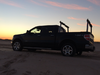
My 2004 Heritage v6 auto scab is rated for 1760 load capacity. I have the hellwig 991 bolt on overload kit the picture below is with 2200 pounds of wood pellets in the back it still was off the oem bump stops. The rear axle and transmission is really getting the brunt of the abuse with an overloaded truck. The towing capacity is decreased when using the mazda 5spd not the load capacity.

This picture is with 1550 pounds of gravel in the bed

Here it is empty

This picture is with 1550 pounds of gravel in the bed
Here it is empty
Last edited by crabhab; Jan 6, 2006 at 08:15 PM.
FTE Stories
Ford Trucks for Ford Truck Enthusiasts

Top 10 Fords at 2026 Carlisle Ford Nationals
Joe Kucinski
3 Best / 3 Worst Parts of Modern Ford Ownership
Brett Foote
10 Amazing Upgrades That Solve Common Ford Truck Owner Headaches
Pouria Savadkouei
Every 2026 Ford Engine Explained
Brett Foote
10 Ugly Ford Trucks That We Still Kinda Love
Joe Kucinski
10 Things Every Truck Owner NEEDS (2026 Edition)
Michael S. Palmer
Rezvani's Latest Post-Apocalyptic Monster Is a Ford F-150 Raptor Underneath
Verdad Gallardo
Top 10 Most Expensive Ford Trucks Ever Sold on Bring a Trailer
Joe Kucinski
2027 Ford Super Duty Buyer's Guide (Every Model, Engine, & Package)
Brett Foote
Postmaster
Joined: Jul 2001
Posts: 4,038
Likes: 3
From: South Kitsap County, WA
You're correct crabhab, I mispoke... the payload rating is not effected by the manual, the manual transmission reduced the GCWR which reduces your effective tow rating.
I'm just going to be devil's advocate one more time, though.
How do you figure effective max payload? It's not just the rating the factory puts in a book... the Ford book gives you the max rating when the truck is bone dry, empty, and no options... add oil, gas - all the fluids, your weight, the weight of passengers, any options (and I mean going from an XL to an XLT adds weight you'd never think about)...
Want an easier way? Take your truck to a scale... weigh it with the tank full and you in it. Then subtract that weight from the GVWR on the door jamb... that's you're effective payload. The GVWR is based on all the components (suspension, engine, tranny, brakes, axles) working together. Upgrading one area (like the suspension) will first subtract from the GVWR by adding weight, then will pin-point the next weakest area (usually brakes).
-Kerry
I'm just going to be devil's advocate one more time, though.
How do you figure effective max payload? It's not just the rating the factory puts in a book... the Ford book gives you the max rating when the truck is bone dry, empty, and no options... add oil, gas - all the fluids, your weight, the weight of passengers, any options (and I mean going from an XL to an XLT adds weight you'd never think about)...
Want an easier way? Take your truck to a scale... weigh it with the tank full and you in it. Then subtract that weight from the GVWR on the door jamb... that's you're effective payload. The GVWR is based on all the components (suspension, engine, tranny, brakes, axles) working together. Upgrading one area (like the suspension) will first subtract from the GVWR by adding weight, then will pin-point the next weakest area (usually brakes).
-Kerry
Senior User
Joined: Oct 2003
Posts: 432
Likes: 0
From: Bishopville, MD
7700,
Sorry I wasnt trying to come across so curt as it is easy to do on a forum. I agree 100% with your carrying formula I was actually 200 lbs over my GVWR (6050) with the 1500 pounds of stone in the picture. I was way over GVWR with the wood pellets (I only had to drive 4 miles to home)!
I wish I had a 7700 GVWR F150 i have looked at a couple of them all the time at a used truck dealer in the area. I would like to take one and add a dump insert and a light snow plow on the front. Does yours ride rough? I like the fact I can jump in the bed of a 7700 and it doesnt budge!!! Good looking truck in your gallery.
Sorry I wasnt trying to come across so curt as it is easy to do on a forum. I agree 100% with your carrying formula I was actually 200 lbs over my GVWR (6050) with the 1500 pounds of stone in the picture. I was way over GVWR with the wood pellets (I only had to drive 4 miles to home)!
I wish I had a 7700 GVWR F150 i have looked at a couple of them all the time at a used truck dealer in the area. I would like to take one and add a dump insert and a light snow plow on the front. Does yours ride rough? I like the fact I can jump in the bed of a 7700 and it doesnt budge!!! Good looking truck in your gallery.


Postmaster
Joined: Jul 2001
Posts: 4,038
Likes: 3
From: South Kitsap County, WA
Originally Posted by crabhab
7700,
Sorry I wasnt trying to come across so curt as it is easy to do on a forum. I agree 100% with your carrying formula I was actually 200 lbs over my GVWR (6050) with the 1500 pounds of stone in the picture. I was way over GVWR with the wood pellets (I only had to drive 4 miles to home)!
I wish I had a 7700 GVWR F150 i have looked at a couple of them all the time at a used truck dealer in the area. I would like to take one and add a dump insert and a light snow plow on the front. Does yours ride rough? I like the fact I can jump in the bed of a 7700 and it doesnt budge!!! Good looking truck in your gallery.
Sorry I wasnt trying to come across so curt as it is easy to do on a forum. I agree 100% with your carrying formula I was actually 200 lbs over my GVWR (6050) with the 1500 pounds of stone in the picture. I was way over GVWR with the wood pellets (I only had to drive 4 miles to home)!
I wish I had a 7700 GVWR F150 i have looked at a couple of them all the time at a used truck dealer in the area. I would like to take one and add a dump insert and a light snow plow on the front. Does yours ride rough? I like the fact I can jump in the bed of a 7700 and it doesnt budge!!! Good looking truck in your gallery.
I'm sorry that I had to come over the top... it's not anything personal, just that I've gotten tired of old school thinking - just throw on a set of helpers or air bags it'll be fine. I try to give the technical reasons that is not a good idea... more of an insurance adjuster's perspective, if you will. If you were to ever get in a wreck with an overloaded truck... it'll give just another reason to drop you or raise your insurance rates.
As far my truck, is does ride really rough as compared to a 2wd standard payload F150. When I bought mine, many of the local dealers would use the book values for a standard duty... so I figure I saved at least $1500. Now, many of the retail guides (NADA, Edmunds, iirc) have a block to add the 7700 or HD option. It's about the same on gas as the standard F150, even with the added weight and 3.73s.
-Kerry

Thread
Thread Starter
Forum
Replies
Last Post
Bri2004
Clutch, Transmission, Differential, Axle & Transfer Case
9
Sep 6, 2011 11:42 AM
Camphill
2007 - 2014 Expedition & Navigator
2
Sep 28, 2008 08:54 AM
67Duffy
1961 - 1966 F-100 & Larger F-Series Trucks
4
Sep 15, 2007 03:21 AM
