


I Can Fix It Myself!

Thread Starter
|
Freshman User
Joined: Mar 2005
Posts: 29
Likes: 0
From: Bonham, Texas
 I Can Fix It Myself!
Dear Friends,
When I was in college, I had an already-used-hard 78 Toyota Celica, which was pretty simple mechanically. After having to buy some metric tools, my dad (mechanic extraordinaire) and I kept it running for six years and 100,000 miles. But for the last 12 years, I've been driving new-ish cars with engines that are:
1. heavily computerized
2. squished/crammed into the engine compartment where you can't reach anything
So, I've gotten lazy and lost my confidence on working under the hood. A few years ago, I even started going to (brace yourselves) Wal-Mart (gasp) for my oil changes.
BUT, these past three months, since God GAVE me my Sacred 69, I've had a ball fixing stuff myself!
First, it would crank but not start. Someone said to me, "The carburetor float is probably stuck in goo from old gas from when the truck was sitting." So I just unscrewed the top half of the carb and sprayed carb cleaner in there, then closed it back up and it started!
Second, my three-on-the-tree wouldn't shift, but someone else told me to spray the elbows with WD-40, which I did, and now it works perfectly!
Next, I needed more than just two seatbelts, because I have oodles of kids who always want to go with me. So I grabbed two out of a van at the "Automotive Parts Recycling Center" on a sunny day and bolted them in!
Tonight, I sprung a leak while parked at Wal-Mart. I came out from doing the shopping (my wife's sick), and there was a green puddle under the front of my truck. I opened the hood, and it was easy to see the little hole in the upper radiator hose. So, since God had helped me break down in such a convenient place as a shopping center, I walked down the street to Autozone, grabbed an upper (and a lower), then back into WM for antifreeze and distilled water. Once ready, it took all of about 5 minutes to do the repair!
Lesson: this was easy because of where I broke down, but I SHOULD have had my antifreeze and radiator hoses in the tool box already! (I DID have the tool box!)
Question: what other parts are likely to break on me with this model truck, that I could keep on hand?
I'm having great fun, and it seems as if in addition to being a stylish old truck, my sacred 69 is also going to be extremely inexpensive to maintain.
Having fun!
JRY
When I was in college, I had an already-used-hard 78 Toyota Celica, which was pretty simple mechanically. After having to buy some metric tools, my dad (mechanic extraordinaire) and I kept it running for six years and 100,000 miles. But for the last 12 years, I've been driving new-ish cars with engines that are:
1. heavily computerized
2. squished/crammed into the engine compartment where you can't reach anything
So, I've gotten lazy and lost my confidence on working under the hood. A few years ago, I even started going to (brace yourselves) Wal-Mart (gasp) for my oil changes.
BUT, these past three months, since God GAVE me my Sacred 69, I've had a ball fixing stuff myself!
First, it would crank but not start. Someone said to me, "The carburetor float is probably stuck in goo from old gas from when the truck was sitting." So I just unscrewed the top half of the carb and sprayed carb cleaner in there, then closed it back up and it started!
Second, my three-on-the-tree wouldn't shift, but someone else told me to spray the elbows with WD-40, which I did, and now it works perfectly!
Next, I needed more than just two seatbelts, because I have oodles of kids who always want to go with me. So I grabbed two out of a van at the "Automotive Parts Recycling Center" on a sunny day and bolted them in!
Tonight, I sprung a leak while parked at Wal-Mart. I came out from doing the shopping (my wife's sick), and there was a green puddle under the front of my truck. I opened the hood, and it was easy to see the little hole in the upper radiator hose. So, since God had helped me break down in such a convenient place as a shopping center, I walked down the street to Autozone, grabbed an upper (and a lower), then back into WM for antifreeze and distilled water. Once ready, it took all of about 5 minutes to do the repair!
Lesson: this was easy because of where I broke down, but I SHOULD have had my antifreeze and radiator hoses in the tool box already! (I DID have the tool box!)
Question: what other parts are likely to break on me with this model truck, that I could keep on hand?
I'm having great fun, and it seems as if in addition to being a stylish old truck, my sacred 69 is also going to be extremely inexpensive to maintain.
Having fun!
JRY

Elder User
Joined: Aug 2003
Posts: 693
Likes: 0
From: Tuttle, Oklahoma
a truck that old you should expect the un-expected, but there is no way you can plan on having the parts that are going to break. my suggestion is go over it with a fine toothed comb, finding problematic areas such as U-JOINTS, BEARINGS, SHOCKS, WIRING, BULBS, ETC. and just have the tools needed to do the job. a good trouble kit in your tool box could consist of an inexpensive ratchet/wrench set, pliers, screw drivers, hammer, belts, hose repair kit, tire plugs and a can of air or two, a GOOD roll of duct tape, a roll of bailing wire, a flashlight, and something to drink and a non perishable snack.
I suggest you go over your bearings and u-joints and put new ones in if you have even the slightest feeling that they may be nearing the end of their life, those will leave you stranded and unable to just fix it and be on your way. other than that I think some
I suggest you go over your bearings and u-joints and put new ones in if you have even the slightest feeling that they may be nearing the end of their life, those will leave you stranded and unable to just fix it and be on your way. other than that I think some

Postmaster
Joined: Apr 2002
Posts: 3,613
Likes: 6
From: Coal country
Welcome back to the world of turning wrenches! One of the neat things about these old trucks is that they are easy to work on.
As to predicting anything, if it is soft, or in liquid, or rubs on something, it stands a greater chance of going bad.
Are you comfortable with doing brakes? At the very least I would pull the drums and inspect for brake fluid seeping. Pull the rubber cup back a little bit from the wheel cylinder, and if you see wet, replace it.
Seriously learning to do those brakes will give you more confidence and a peace of mind about your cargo.
The two front flex lines and the single rear flex line to the rear axle are often overlooked. With time, they tend to swell on the inside, leading to problems.
Hope this gives you some thoughts to ponder.
As to predicting anything, if it is soft, or in liquid, or rubs on something, it stands a greater chance of going bad.
Are you comfortable with doing brakes? At the very least I would pull the drums and inspect for brake fluid seeping. Pull the rubber cup back a little bit from the wheel cylinder, and if you see wet, replace it.
Seriously learning to do those brakes will give you more confidence and a peace of mind about your cargo.
The two front flex lines and the single rear flex line to the rear axle are often overlooked. With time, they tend to swell on the inside, leading to problems.
Hope this gives you some thoughts to ponder.

Post Fiend
Joined: Sep 2004
Posts: 5,231
Likes: 1
From: Near Fresno, California
Check your rear wheel bearings, and carry a spare front wheel bearing in your box. If you have a 3/4 ton you can also carry a rear wheel bearing, but the 1/2 ton ones are very difficult to replace on the side of the road. Wheel bearings seldom fail, but when they do it leaves you stranded.
I have worked these trucks since they were new and wheel bearings are the only thing that ever left me stranded.
I have worked these trucks since they were new and wheel bearings are the only thing that ever left me stranded.
Trending Topics

Senior User
Joined: Feb 2005
Posts: 424
Likes: 0
From: Puyallup WA.
When I was a kid runing around with my dad in his 72 F250 4X4 the two most common problems we had were crud in the carb and the points going out. Both are easy fixes. Always carry a spare set of points and a basic set of tools. If you forget the feeler guage to gap the points you can use a match book cover It will get you home so you can gap the points properly.
FTE Stories
Ford Trucks for Ford Truck Enthusiasts

Top 10 Most Expensive Ford Trucks Ever Sold on Bring a Trailer
Joe Kucinski
2027 Ford Super Duty Buyer's Guide (Every Model, Engine, & Package)
Brett Foote
Top 10 Ford Truck Tragedies
Joe Kucinski
AEV FXL Super Duty - the Super Duty Raptor Ford Doesn't Make
Brett Foote
Lobo Vs Lobo: Proof the F-150 Lobo Should Be Even Lower!
Michael S. Palmer
Ford's 2001 Explorer Sportsman Concept Looks For a New Home
Verdad Gallardo
10 Best Ford Truck Engines We Miss the Most!
Joe Kucinski
2026 Shelby F-150 Off-Road: Better Than a Raptor R?
Brett Foote
2027 Super Duty Carhartt Package First Look: 12 Things You NEED to Know!
Michael S. Palmer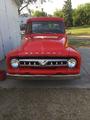
Moderator

Joined: Dec 2003
Posts: 97,572
Likes: 2,005
From: Saskatoon, Saskatchewan

You may want to consider converting the points & condenser to something like Pertronixs system or getting a Ford factory transistor ignition. Not totaly necessary but it alot more reliable and trouble free. One less hassle that can bite you in the butt, leave you sranded on the road.  Also you won`t have to remember to keep adjusting the points.
  May give a little better fuel milage.
Also you won`t have to remember to keep adjusting the points. May give a little better fuel milage.