


'78 400 with persistent misfire

Thread Starter
|
New User
Joined: Aug 2003
Posts: 3
Likes: 0
'78 400 with persistent misfire
I have a '78 Country Squire (well, it's as _big_ and as _heavy_ as a truck -- close enough?) with a 400 that has about 130k miles on it. It has an intermittent, but frequent, misfire on #4 (rear pass. side) -- not missing continuously, but enough so that I don't see the typical 50 RPM drop when I pull the plug wire. It continues to misfire intermittently several times per second when I rev it up to 2~2.5k in neutral (have not tried higher). Seems to be better under load, though.
Over the past four years, for various reasons, I've replaced the following with new or remanufactured parts:
- distributor
- timing gears/chain
- vacuum hoses (Three cheers for Mitchell's Manuals!)
- carburetor
- ignition coil
Everything is stock:
- DS-II ignition
- 2150 carb remanufactured by Holley
(which is already starting to leak at the throttle shaft bushings after only three years...)
- original stock manifold, cam etc.
Dry compression is very good on all eight -- 153 ~ 165psi with #4 right in the middle of the range.
PCV vent and valve clear and free.
Wet float level set to spec.
EGR is enabled, and I monitored it with a vacuum gauge teed-in right at the valve to make sure it is allowed to close at idle. I had the valve and spacer off about a year ago to clean and check it - it closes completely.
Strong spark at the plug -- I can hear the spark loud and clear when I pull the wire 1/2 inch off the plug.
Spark plug is clean and dry -- slight tan deposits no different than the other seven.
Idle mixture is out three turns (spec is 1.5) with no improvement beyond that -- and I'm reluctant to run it even that high because I don't want to cook the cats.
Vacuum port (for body/brakes) looks like it comes right out of the #4 passage at the back of the intake manifold, so I disconnected and blocked it in case of a leak at one of the loads-- no effect.
So I guess the question is: what else can I check? Is there something inherent in the design of the stock carburetor/manifold that results in a lean mixture to #4? Is there some place where a vacuum leak commonly occurs that will affect only this one cylinder? Do I just have to live with the lope?
Like indyjames500, I am (or rather, my wife is) rather attached to my 2.5 tons of good old fashioned Detroit steel, so pushing it off the levee into the river is probably not going to be an acceptable solution.
Any ideas, insight, suggestions, questions?
Thanks for all your help.
Best Regards,
TrebleMaker
Over the past four years, for various reasons, I've replaced the following with new or remanufactured parts:
- distributor
- timing gears/chain
- vacuum hoses (Three cheers for Mitchell's Manuals!)
- carburetor
- ignition coil
Everything is stock:
- DS-II ignition
- 2150 carb remanufactured by Holley
(which is already starting to leak at the throttle shaft bushings after only three years...)
- original stock manifold, cam etc.
Dry compression is very good on all eight -- 153 ~ 165psi with #4 right in the middle of the range.
PCV vent and valve clear and free.
Wet float level set to spec.
EGR is enabled, and I monitored it with a vacuum gauge teed-in right at the valve to make sure it is allowed to close at idle. I had the valve and spacer off about a year ago to clean and check it - it closes completely.
Strong spark at the plug -- I can hear the spark loud and clear when I pull the wire 1/2 inch off the plug.
Spark plug is clean and dry -- slight tan deposits no different than the other seven.
Idle mixture is out three turns (spec is 1.5) with no improvement beyond that -- and I'm reluctant to run it even that high because I don't want to cook the cats.
Vacuum port (for body/brakes) looks like it comes right out of the #4 passage at the back of the intake manifold, so I disconnected and blocked it in case of a leak at one of the loads-- no effect.
So I guess the question is: what else can I check? Is there something inherent in the design of the stock carburetor/manifold that results in a lean mixture to #4? Is there some place where a vacuum leak commonly occurs that will affect only this one cylinder? Do I just have to live with the lope?
Like indyjames500, I am (or rather, my wife is) rather attached to my 2.5 tons of good old fashioned Detroit steel, so pushing it off the levee into the river is probably not going to be an acceptable solution.
Any ideas, insight, suggestions, questions?
Thanks for all your help.
Best Regards,
TrebleMaker

Senior User
Joined: Oct 2003
Posts: 347
Likes: 0
From: in a house
welcome treblemaker,
I don't think you'll make any enemies with a LTD wagon, I've never seen a guest list. besides what better place would you get the info you need. good info BTW on you dilemma. your car is the first thing I look for in the bone yards since they came stock with the 400 and 460 as option.
I have had a similar prob with my 400 since bought in 92 but in both banks of the engine when at idle or steady rpm. never pin pointed the cylinders, not real noticable its just anoying that its there. you wouldn't believe how much time I have spent with my ear to the tail pipes. it almost never does it in a pattern, the engine may cycle 3 or 4 times before it does it.
I have changed everthing external but the distributor housing. the miss was there when it was stock and it continues with all the aftermarket parts. did it with the 2150 carb and now the edlebrock. with or without the smog equipment. its a mystery.
the engine has also been rebuilt and the only thing reused is the heads. is this my ghost? I'll find out in a couple of weeks when I take the heads off during some more upgrades. maybe a cracked valve or worn seat? my compressing is good but lower around 145psi to your 153-165 which is real good. I have tried rerouting plug wires. tuned the engine to 19-20" of vacuum. still never fixed it. I just live with it.
hope that at least rules out a few things for ya.
I don't think you'll make any enemies with a LTD wagon, I've never seen a guest list. besides what better place would you get the info you need. good info BTW on you dilemma. your car is the first thing I look for in the bone yards since they came stock with the 400 and 460 as option.
I have had a similar prob with my 400 since bought in 92 but in both banks of the engine when at idle or steady rpm. never pin pointed the cylinders, not real noticable its just anoying that its there. you wouldn't believe how much time I have spent with my ear to the tail pipes. it almost never does it in a pattern, the engine may cycle 3 or 4 times before it does it.
I have changed everthing external but the distributor housing. the miss was there when it was stock and it continues with all the aftermarket parts. did it with the 2150 carb and now the edlebrock. with or without the smog equipment. its a mystery.
the engine has also been rebuilt and the only thing reused is the heads. is this my ghost? I'll find out in a couple of weeks when I take the heads off during some more upgrades. maybe a cracked valve or worn seat? my compressing is good but lower around 145psi to your 153-165 which is real good. I have tried rerouting plug wires. tuned the engine to 19-20" of vacuum. still never fixed it. I just live with it.
hope that at least rules out a few things for ya.
Thread Starter
|
New User
Joined: Aug 2003
Posts: 3
Likes: 0
Thanks for your replles. I've had the car for four years and it's done this no matter what I change. I forgot to mention that plug wires were changed about a year ago, and I've checked the resistance.
Could a weak valve spring or cracked/bent rocker or pushrod cause this without affecting cranking compression? Whats' the best way to check these?
I've thought about checking for vacuum leaks with propane or starter fluid, but don't like the idea of spraying that stuff around a hot engine, and I'm not sure how much of an RPM kick to expect if there is a leak (so would I know it if I found one).
All theory and no practice makes Jack's car a dull performer. So I appreciate any practical advice for how to find and exorcise this daemon from the family battle barge.
Thanks and Best Regards,
Treblemaker,
Who takes his mixed metaphors stirred, not shaken.
Could a weak valve spring or cracked/bent rocker or pushrod cause this without affecting cranking compression? Whats' the best way to check these?
I've thought about checking for vacuum leaks with propane or starter fluid, but don't like the idea of spraying that stuff around a hot engine, and I'm not sure how much of an RPM kick to expect if there is a leak (so would I know it if I found one).
All theory and no practice makes Jack's car a dull performer. So I appreciate any practical advice for how to find and exorcise this daemon from the family battle barge.
Thanks and Best Regards,
Treblemaker,
Who takes his mixed metaphors stirred, not shaken.

Lead Driver


Joined: Mar 2004
Posts: 8,924
Likes: 153
Sounds to me like you need shorter push rod. Check pushrod lenth. You may be able to shim it some ,around .02-.035 at the most .Drill a 5/16 hole in apiece of body metal and cut it to fit under the rocker stand. torqe the stand down. This should solve your problem. If it hasnt burnd up the valve and seat.
Senior User
Joined: Oct 2003
Posts: 347
Likes: 0
From: in a house
mark a
you saying its from too much lifter pre-load. that plus a weak sping may do it, but the effected cylinder would have a lower compression reading
treblemaker, if you do decide to check you valve train for proper lifter preload you want to use a dial indicator w/ a magnetic base to get the best results. I think you want about .006 to 008" of preload. your chiltons or hayes will have the specs. and this chart will save you some time.
http://stangstable.com/Vlash.htm#Valve%20Lash%20Chart
you may also want to pressure test your springs being that they do have 130k miles on them.
Sanders, how did you discover your bad valve?
you saying its from too much lifter pre-load. that plus a weak sping may do it, but the effected cylinder would have a lower compression reading
treblemaker, if you do decide to check you valve train for proper lifter preload you want to use a dial indicator w/ a magnetic base to get the best results. I think you want about .006 to 008" of preload. your chiltons or hayes will have the specs. and this chart will save you some time.
http://stangstable.com/Vlash.htm#Valve%20Lash%20Chart
you may also want to pressure test your springs being that they do have 130k miles on them.
Sanders, how did you discover your bad valve?
Trending Topics
Posting Guru

Joined: Aug 2000
Posts: 2,416
Likes: 4
From: PacNW
Vacuum leaks at the intake are fairly common on 335 series engines. Since you have good compression it's doubtful you have a valve problem. Spark plug wire routing is also critical on these engines but it's normally the #7 & #8 wires where you get "crossfire".
If you're nervous about using propane or ether then carb cleaner is a somewhat less flammable solution. Spray it around the runner going to #4 and listen for a change in the idle quality.
If you're nervous about using propane or ether then carb cleaner is a somewhat less flammable solution. Spray it around the runner going to #4 and listen for a change in the idle quality.
FTE Stories
Ford Trucks for Ford Truck Enthusiasts

3 Best / Worst Features Of The 2025+ Ford Expedition
Brett Foote
10 Ways Ford is LOSING to the Competition
Joe Kucinski
Top 6 Best Deals Available on New Fords & Lincolns Right Now
Brett Foote
This Hennessey Takes the Expedition Tremor's Off-Roading Capability to the Next Level
Verdad Gallardo
Top 10 Fords at 2026 Carlisle Ford Nationals
Joe Kucinski
3 Best / 3 Worst Parts of Modern Ford Ownership
Brett Foote
10 Amazing Upgrades That Solve Common Ford Truck Owner Headaches
Pouria Savadkouei
Every 2026 Ford Engine Explained
Brett Foote
10 Ugly Ford Trucks That We Still Kinda Love
Joe Kucinski
Thread Starter
|
New User
Joined: Aug 2003
Posts: 3
Likes: 0
Thank you all for the excellent responses.
Bill, am I being too paranoid about using ether or propane to find a vacuum leak? I guess the fan does a pretty good job of blowing it away.
I've not been able to find a lot of details on how to do a leak-down test. I can remove the check valve from my compression tester and inject 100psi air via the release valve on the side of the gauge. Is 100psi enough for a meaningful test, and how long to wait before measuring how much it's leaked down? How close should the leakdown measurements be among all the cylinders?
Thanks and Best Regards,
Treblemaker
Bill, am I being too paranoid about using ether or propane to find a vacuum leak? I guess the fan does a pretty good job of blowing it away.
I've not been able to find a lot of details on how to do a leak-down test. I can remove the check valve from my compression tester and inject 100psi air via the release valve on the side of the gauge. Is 100psi enough for a meaningful test, and how long to wait before measuring how much it's leaked down? How close should the leakdown measurements be among all the cylinders?
Thanks and Best Regards,
Treblemaker

Postmaster
Joined: Aug 2001
Posts: 4,270
Likes: 5
From: Delaware
Those symptoms are typical of a bad valve. The valve will seal sometimes, then as it rotates it will leak. The cylinder may still fire, but the power will be uneven.
A compression gauge records the highest compression pulses, the lower ones get masked.
A leak down test is a better tool, but you have to repeat it on the same cylinder multiple times, cranking the motor between tests.
A compression gauge records the highest compression pulses, the lower ones get masked.
A leak down test is a better tool, but you have to repeat it on the same cylinder multiple times, cranking the motor between tests.

Junior User
Joined: May 2003
Posts: 91
Likes: 0
I agree with danlee, sure sounds like a bad valve. It may pass enough air to hear it when you connect it up to 100psi.
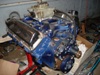
Here is a pic of what one might look like.

We found this by pulling the rockers on that cylinder and then connecting the 100psi from the garage air to the sparkplug hole. You can hear the air rushing out pretty easily.
Here is a pic of what one might look like.
We found this by pulling the rockers on that cylinder and then connecting the 100psi from the garage air to the sparkplug hole. You can hear the air rushing out pretty easily.

Lead Driver
Joined: Nov 2000
Posts: 6,652
Likes: 353
From: Albuquerque
My two cents. If you have good compression numbers it's probably OK internally. It could be a sticking valve = a candidate for a good dose of Sea Foam or MM oil.
You might also try advancing you intial timing a little bit. Do you know where it is set?
You might also try advancing you intial timing a little bit. Do you know where it is set?

Thread
Thread Starter
Forum
Replies
Last Post
NateTheGreat
1957 - 1960 F100 & Larger F-Series Trucks
11
Sep 6, 2016 06:59 PM
mrmauser303
1967 - 1972 F-100 & Larger F-Series Trucks
21
Apr 23, 2016 02:41 PM
smith1978
1973 - 1979 F-100 & Larger F-Series Trucks
30
May 27, 2015 02:26 PM
CoachmenCaperXl
Ford Inline Six, 200, 250, 4.9L / 300
43
Oct 30, 2011 02:36 PM
