


What heads are these????

Thread Starter
|
New User
Joined: Dec 2003
Posts: 22
Likes: 0
From: Fayetteville, AR
 What heads are these????
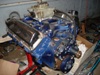
The casting number is D5AEA-2-A. They are on one of my 400M's and I have already done quite a bit of work to them. Was that work in vein? They don't seem to flow very well above 5500rpm.
Who makes alum. heads for these motors?
The heads from a windsor motor I hear will fit with minor mod's to the intake bolt holes and minor gasket matching. Is this true?
I need more flow, so please let me know.
Who makes alum. heads for these motors?
The heads from a windsor motor I hear will fit with minor mod's to the intake bolt holes and minor gasket matching. Is this true?
I need more flow, so please let me know.

Elder User
Joined: Sep 2003
Posts: 908
Likes: 4
If you want more flow at high RPMs the 351C-4V heads are the ones you want. Or 302C Aussies.
Most people are content to use the 400 as a low RPM torque motor, which is what it is designed to be. If you're trying to live above 6 grand regularly, perhaps the 351C or the small block is a better choice.
Most people are content to use the 400 as a low RPM torque motor, which is what it is designed to be. If you're trying to live above 6 grand regularly, perhaps the 351C or the small block is a better choice.
Posting Guru

Joined: Aug 2000
Posts: 2,416
Likes: 4
From: PacNW
Those are your basic 351M/400 heads with 2.04"/1.66" valves, basically 351C 2V heads.
I'd be interested to know what your numbers are now. What do you mean by "quite a bit of work"?
One of the best ways to increase the flow numbers is to install the larger 4V valves. It's relatively easy to do and the gains can be quite impressive. You can also get a larger selection of hi-po valves with narrower stems, etc. with the larger valves.
I'd be interested to know what your numbers are now. What do you mean by "quite a bit of work"?
One of the best ways to increase the flow numbers is to install the larger 4V valves. It's relatively easy to do and the gains can be quite impressive. You can also get a larger selection of hi-po valves with narrower stems, etc. with the larger valves.

Elder User

Joined: Apr 2003
Posts: 821
Likes: 0
From: Normal, IL
Open up the exhaust side, and clean up the intake side on a set of Aussie heads. True fact: the exhaust side flows better on 2 bbl. heads than 4 bbl. heads. With a cleanup of the intake side, these should be worth around 7000 rpm. Stock 400 heads have been at 6500 rpm in the smaller race truck. The 2 bbl. heads will pull great, from idle to whenever you lift.

Postmaster
Joined: Aug 2001
Posts: 4,270
Likes: 5
From: Delaware
I am working on a set of ChI Aluminum heads (www.chiheads.com) for my 400. They flow > 300 cfm out-of-the box. They have a 66cc combustion chamber.
Be careful with any replacement head. If you decrease the CC cc's, you raise the compression. With an otherwise stock motor you can get detonation with many of these heads.
What kind of cam do you have that will go above 5500 RPM?
Be careful with any replacement head. If you decrease the CC cc's, you raise the compression. With an otherwise stock motor you can get detonation with many of these heads.
What kind of cam do you have that will go above 5500 RPM?
Thread Starter
|
New User
Joined: Dec 2003
Posts: 22
Likes: 0
From: Fayetteville, AR
Well I don't think a 400M can be much further from stock but I am working on it!
I feel a little like an idiot. After posting this morning I got my cam card out and alas, it's only good 2000 up to 5500rpm... doogh!!!
Here's the low-down:
.030 400M balanced
Keith black fordged alum pistons 9.4 to 1 (aprox)
Holley street dominator single plane (gasket matched)
Demon 800cfm, vac. sec. carb
Heads; gasket matched, mechined for studs and triple spings
hardened seats, titanium locks and retainers
Mainley severe duty stainless valves, pocket port and smoothed intake and exhaust
chomemoly pushrods, guides
1.7 comp cams alum roller rockers
Comp Cams 284RF-HR10; 224 dura @.050; 110 lobe sep .566 lift
single pattern hydrolic roller cam
high volume oil pump; high volume Flow Cooler alum water pump
MSD digital 6, MSD blaster 2
C6 with B&M shift kit and TCI 11" converter
Looks like time for a bigger cam, converter, and finish porting the cr@p out of the heads. WOOO-HAAA
Nitrous is still in the future (ie; forgded pistons, stainless valves, ignition retard on the digital 6)
With a clay test, I had almost 5/8 inch clearance between piston and valve. More than enough to acomidate the largest hyd roller Comp has for this engine wich is good 3000 to 6500.
Do you all think that I might have better luck with a dual pattern cam? I already have the cam timing retarded 4 deg so that the affective power band is raised. I screwed up and advanced 4 deg the first time and it would pull a house off the foundation but wouldn't go above 4200/4500rpm.
Questions, comments, ideas... let me know what you think.
Catching rubber at 80mph going to third rocks!!
I feel a little like an idiot. After posting this morning I got my cam card out and alas, it's only good 2000 up to 5500rpm... doogh!!!
Here's the low-down:
.030 400M balanced
Keith black fordged alum pistons 9.4 to 1 (aprox)
Holley street dominator single plane (gasket matched)
Demon 800cfm, vac. sec. carb
Heads; gasket matched, mechined for studs and triple spings
hardened seats, titanium locks and retainers
Mainley severe duty stainless valves, pocket port and smoothed intake and exhaust
chomemoly pushrods, guides
1.7 comp cams alum roller rockers
Comp Cams 284RF-HR10; 224 dura @.050; 110 lobe sep .566 lift
single pattern hydrolic roller cam
high volume oil pump; high volume Flow Cooler alum water pump
MSD digital 6, MSD blaster 2
C6 with B&M shift kit and TCI 11" converter
Looks like time for a bigger cam, converter, and finish porting the cr@p out of the heads. WOOO-HAAA
Nitrous is still in the future (ie; forgded pistons, stainless valves, ignition retard on the digital 6)
With a clay test, I had almost 5/8 inch clearance between piston and valve. More than enough to acomidate the largest hyd roller Comp has for this engine wich is good 3000 to 6500.
Do you all think that I might have better luck with a dual pattern cam? I already have the cam timing retarded 4 deg so that the affective power band is raised. I screwed up and advanced 4 deg the first time and it would pull a house off the foundation but wouldn't go above 4200/4500rpm.
Questions, comments, ideas... let me know what you think.
Catching rubber at 80mph going to third rocks!!
Postmaster
Joined: Aug 2001
Posts: 4,270
Likes: 5
From: Delaware
That is similar to what I am building, but I have Ohio Flattop pistons and 66cc Aussie aluminum heads for a static compression of about 10.35:1. My cam is a Preditor Roller 281 single pattern 110 degree centers with 0.595 lift. Dyno2000 gives me Torque = 539@4500 RPM and HP = 540@6000 RPM.
The Aussie heads flow 319 cfm (I) and 219 cfm (E) at 0.600 lift out-of the box.
Where did you get the KB pistons? Are they 351C pistons?
What is you head flow now? Have you measured it?
It is usually the exhaust flow that restricts these motors. The Aussie heads have a raised exhaust port similar to a NASCAR Yates head, so the exhaust flow is much better. Dual pattern cams overcome some of this restriction with a longer exhaust valve duration. So your choice is to find a dual pattern hydraulic roller or get the exhaust flow up near 200 cfm at maximum cam lift.
The Aussie heads flow 319 cfm (I) and 219 cfm (E) at 0.600 lift out-of the box.
Where did you get the KB pistons? Are they 351C pistons?
What is you head flow now? Have you measured it?
It is usually the exhaust flow that restricts these motors. The Aussie heads have a raised exhaust port similar to a NASCAR Yates head, so the exhaust flow is much better. Dual pattern cams overcome some of this restriction with a longer exhaust valve duration. So your choice is to find a dual pattern hydraulic roller or get the exhaust flow up near 200 cfm at maximum cam lift.
Last edited by danlee; Dec 21, 2003 at 09:09 PM.
Trending Topics
Elder User
Joined: Apr 2003
Posts: 821
Likes: 0
From: Normal, IL
All that the cam is, is a cheapo version of a Performer Plus, with roller rockers(pedestal mount), stock replacement valve springs, and it was done with an 800 cfm Holley. Don't beleive anyone when they say that a 400 only needs a 650, they're wrong. A 650 runs out of steam at about the 140 ft. mark on a 200 foot track. All of this was done on slightlly cleaned up castings. Let's remember folks, these are Cleveland's, not SBC's.
It did this the most consistantly going through a factory four bbl. cleveland intake, running through weiand adapters, tapered ported from intake to heads, with a 1 inch open plenum spacer.
It did this the most consistantly going through a factory four bbl. cleveland intake, running through weiand adapters, tapered ported from intake to heads, with a 1 inch open plenum spacer.
Last edited by There Goes The Neighborhood; Dec 21, 2003 at 09:22 PM.
FTE Stories
Ford Trucks for Ford Truck Enthusiasts

Rezvani's Latest Post-Apocalytic Monster Is a Ford F-150 Raptor Underneath
Verdad Gallardo
Top 10 Most Expensive Ford Trucks Ever Sold on Bring a Trailer
Joe Kucinski
2027 Ford Super Duty Buyer's Guide (Every Model, Engine, & Package)
Brett Foote
Top 10 Ford Truck Tragedies
Joe Kucinski
AEV FXL Super Duty - the Super Duty Raptor Ford Doesn't Make
Brett Foote
Lobo Vs Lobo: Proof the F-150 Lobo Should Be Even Lower!
Michael S. Palmer
Ford's 2001 Explorer Sportsman Concept Looks For a New Home
Verdad Gallardo
10 Best Ford Truck Engines We Miss the Most!
Joe Kucinski
2026 Shelby F-150 Off-Road: Better Than a Raptor R?
Brett Foote
Thread Starter
|
New User
Joined: Dec 2003
Posts: 22
Likes: 0
From: Fayetteville, AR
That's pretty good!
It was a "Stage 1 bowl blend and gasket match". Good for street but not good enough for the level I'm looking for.
228cfm at .600 lift (I) 173cfm (E)
I need to see what my porting man can do to acheive numbers closer to the Aussie's.
As for the pistons I'm not sure. I told the mech shop what I wanted and the hooked me up; forgded and streetable.
Forget the fulltime street part, I'm out to roast some bowties!!
It was a "Stage 1 bowl blend and gasket match". Good for street but not good enough for the level I'm looking for.
228cfm at .600 lift (I) 173cfm (E)
I need to see what my porting man can do to acheive numbers closer to the Aussie's.
As for the pistons I'm not sure. I told the mech shop what I wanted and the hooked me up; forgded and streetable.
Forget the fulltime street part, I'm out to roast some bowties!!
Elder User
Joined: Apr 2003
Posts: 821
Likes: 0
From: Normal, IL
Set the cam timing straight up. Check the December issue of Muscle Mustangs and Fast Fords. They did a test of cam timing at 0, 4A, and 4R, and found that with the cam timing at 4 *advanced provided the most power from peak to peak, with peak gains of 24 hp. and the engine pulled just as hard as with the timing retarded.

Posting Guru
Joined: Jun 2002
Posts: 1,099
Likes: 0
Don't gasket match
AKA Porting for Dummies
TIP: Edelbrock Performer Manifold. The Performer was not strictly built as a performance intake for the 2v. It was developed for the 2v crowd that wanted a 4v and the performance of chunking an iron intake for aluminum.
NOTE: After just purchasing the Edelbrock Performer for my 351C 2V, there is a SPECIAL INSTRUCTIONS section that is nice to know: The port size of the Performer 351-2V and the Performer 351-4V manifold was thoroughly researched and was designed smaller than the head port for several reasons. Although appearing small in size, the legs of this manifold not only flow more than the port in the head, but they also increase the flow in the head. The design of this manifold allows us to use great runner speed which prevents fuel dropout and gives us better fuel and air suspension. This combination is excellent for throttle response, total performance, and provides very favorable emission qualities. As a final note, please do not attempt to match the manifold to the ports. This will not only hurt performance, but it will upset many of the fine features that took months of research and development.
TIP: Edelbrock Performer Manifold. The Performer was not strictly built as a performance intake for the 2v. It was developed for the 2v crowd that wanted a 4v and the performance of chunking an iron intake for aluminum.
NOTE: After just purchasing the Edelbrock Performer for my 351C 2V, there is a SPECIAL INSTRUCTIONS section that is nice to know: The port size of the Performer 351-2V and the Performer 351-4V manifold was thoroughly researched and was designed smaller than the head port for several reasons. Although appearing small in size, the legs of this manifold not only flow more than the port in the head, but they also increase the flow in the head. The design of this manifold allows us to use great runner speed which prevents fuel dropout and gives us better fuel and air suspension. This combination is excellent for throttle response, total performance, and provides very favorable emission qualities. As a final note, please do not attempt to match the manifold to the ports. This will not only hurt performance, but it will upset many of the fine features that took months of research and development.
Thread Starter
|
New User
Joined: Dec 2003
Posts: 22
Likes: 0
From: Fayetteville, AR
.100 int 75 ex 64.75
.200 int 123.5 ex 92.5
.300 int 179 ex 123.5
.400 int 216.25 ex 154.5
.500 int 219 ex 154.5
.550 int 228 ex 173
.600 int 228 ex 173
.650 int 219 ex 166.8
28" water; 75deg; spring height int.1.920 ex 1.915
Thanks danlee, it will be interesting to see what your program comes up with!
.200 int 123.5 ex 92.5
.300 int 179 ex 123.5
.400 int 216.25 ex 154.5
.500 int 219 ex 154.5
.550 int 228 ex 173
.600 int 228 ex 173
.650 int 219 ex 166.8
28" water; 75deg; spring height int.1.920 ex 1.915
Thanks danlee, it will be interesting to see what your program comes up with!

Posting Legend
Joined: Sep 2001
Posts: 30,255
Likes: 37
From your original post you asked about Windsor heads. Most of the time people try to put Cleveland heads on a Windsor to get better flow making them into a "Clevor". I have never seen any results using aftermarket Wheezer heads on a 400.
You can gaina few ponies by dropping the HV oil pump also. It is not needed if your engine clearances are set up properly.
You can gaina few ponies by dropping the HV oil pump also. It is not needed if your engine clearances are set up properly.
Postmaster
Joined: Aug 2001
Posts: 4,270
Likes: 5
From: Delaware
I simulated your motor. This is what I got.
Torque = 475 ft-lbs @ 4500 RPM
HP = 439 @ 5500 RPM.
I tried several combinations of increased lift, more carb, higher compression. The effect of these changes was to increase the torque and HP, not the RPM.
I increased the duratiion to 300, first exhaust then intake. The torque dropped and the HP came up as did the RPM. With both the intake and exhaust at 300 degrees and 0.600 lift, the peak HP was at 6000 RPM. Of course you couldn't drive that cam on the street.
I went back to the original specs, and changer the heads to the CHI Aluminum heads. Here is the result.
Torque = 517 ft-lbs @ 4500 RPM
HP = 519 @ 6000 RPM.
Go with the Flow!
Torque = 475 ft-lbs @ 4500 RPM
HP = 439 @ 5500 RPM.
I tried several combinations of increased lift, more carb, higher compression. The effect of these changes was to increase the torque and HP, not the RPM.
I increased the duratiion to 300, first exhaust then intake. The torque dropped and the HP came up as did the RPM. With both the intake and exhaust at 300 degrees and 0.600 lift, the peak HP was at 6000 RPM. Of course you couldn't drive that cam on the street.
I went back to the original specs, and changer the heads to the CHI Aluminum heads. Here is the result.
Torque = 517 ft-lbs @ 4500 RPM
HP = 519 @ 6000 RPM.
Go with the Flow!