When you click on links to various merchants on this site and make a purchase, this can result in this site earning a commission. Affiliate programs and affiliations include, but are not limited to, the eBay Partner Network.
Run the same pressures all the time (empty and towing):
Front: 80 PSI
Rear duals: 72–75 PSI
Goal: simplicity, no need to air up/down.
Option B – Adjust Based on Load
Change pressures depending on whether I’m towing or not:
Towing:
Front: 80 PSI
Rear duals: 72–75 PSI
Empty / weekly drive:
Front: 70–75 PSI
Rear duals: 60–65 PSI
Goal: better ride and traction when unloaded, while still matching load when towing.
Sidewall max is 110 front / 120 rear, but I’m trying to base this on actual axle weights rather than just running near max.
You cannot run a 19.5 commercial tire below 70 PSI. Below 70 it is considered having run flat and is too dangerous to operate again without professional inspection of the steel corded sidewalls. Unlike LT and ST tires, commercial cannot be aired down to the same load chart pressures.
Living in a midwest winter climate that can, like today have a 40 degree temperature swing, I don't tend to run my rears below 76-78.
Lil SRW tires: 65-70 front, 88 rear, towing heavy.
Door sticker is for noobs, and doesnt cover the needs of people living in the wilderness or a farm.
love it when some non engineer runs their mouth saying they know better.
post your analysis. Show your work. Just because you have not yet had a problem doesn’t mean you are not 20 seconds from massive failure. When the engineers tell you not to launch after the temp goes below freezing and you do it anyway, why are you surprised when your space shuttle blows up?
Curious what others think about this — I’ve seen a couple replies saying you shouldn’t run 19.5s below 70 PSI, and I’m trying to understand the reasoning behind that.
For reference, standard load/inflation tables for 245/70R19.5 (dual application) — from the Tire and Rim Association Yearbook, which manufacturers like Michelin and Goodyear follow — show:
60 PSI → ~2,470 lb
65 PSI → ~2,680 lb
70 PSI → ~2,860 lb
75 PSI → ~3,000 lb
80 PSI → ~3,120 lb
In my case, my rear duals are ~1,880 lb per tire when towing, and lighter when empty — which seems well within rated capacity even below 70 PSI.
So I’m trying to reconcile this: is the “don’t go below 70 PSI” guidance mainly about potential steel sidewall damage if the tire has ever been run under load at low pressure, or is it more of a general safety margin / fleet rule of thumb?
Just looking to understand the rationale better — appreciate any insights from those experienced with 19.5s.
The tire load inflation tables are really just a math solution, X number of square inches of contact patch multiplied by the PSI equals the load that can be handled. The 70PSI rule for the commercial 19.5s is a safety concern due to the potential damage that can be done to the tire under that pressure. And don’t forget the 19.5” wheels don’t have a safety bead like typical wheels, the 19.5 will self dismount if aired down too far.
The official calculation from Continental is 80% or less of recommended operating pressure. With the 80 psi rear value for the F-450 that would be 64. 70 is usually given as the safer cutoff value and I have seen it come up in other Continental commercial tire datasheets.
Thank you all for spending time giving me your wisdom on this topic. I am trying to understand this topic better and you all are an excellent source. Can we continue this a bit more please?I went back and read through the long thread above specifically on 19.5" commercial tires (steel sidewall construction, underinflation risk, zipper failures, etc.). That thread seemed to be focused on tires that had been operated in an underinflated and/or overloaded condition. I don’t feel like I’ve landed on a firm conclusion yet, but it definitely raised some good points on both sides.
What I’m trying to do is understand the actual tradeoffs with 19.5s — not just “run them high to be safe” vs “air down for comfort,” but how this really works from an engineering and real-world standpoint.
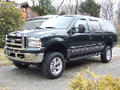
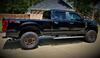
For context, my setup is a 2022 F-450 dually with CAT scale weights showing:
Tires: 245/70R19.5 (Hercules Strong Guard H-RA front / H-DO rear) Sidewall Max Cold PSI:
Front: 110 PSI
Rear (duals): 120 PSI
On one hand, I see the concerns about sidewall flex, fatigue, and potential internal damage if a 19.5 tire has been run significantly underinflated under load. That risk seems very real. On the other hand, the published load/inflation tables for 19.5s (from sources like the Tire and Rim Association and major manufacturers) that clearly show allowable load capacities at pressures below what some are suggesting as a hard minimum.
So I’m trying to reconcile:
How to properly use load tables in practice with 19.5s
Where the line is between “within rated capacity” and “increasing risk of damage”
How much safety margin is actually appropriate vs conservative habit
And what experienced 19.5 users are actually running over time
Not trying to argue a position — just looking to better understand the engineering, the risk, and the real-world experience from those who’ve run these tires long-term.
Thanks again for sharing your wisdom.
70 PSI is the minimum pressure I will run on my 19.5”s, actually I run the placarded pressures front and rear as the truck is a dedicated tow rig and sees very little unloaded use, just driving around our travel destinations. With these heavy steel carcass commercial tires I really don’t think you are going to feel much if any increase in comfort running a lower pressure, these tires are hard with stiff sidewalls.
Thank you all for spending time giving me your wisdom on this topic. I am trying to understand this topic better and you all are an excellent source. Can we continue this a bit more please?I went back and read through the long thread above specifically on 19.5" commercial tires (steel sidewall construction, underinflation risk, zipper failures, etc.). That thread seemed to be focused on tires that had been operated in an underinflated and/or overloaded condition. I don’t feel like I’ve landed on a firm conclusion yet, but it definitely raised some good points on both sides.
What I’m trying to do is understand the actual tradeoffs with 19.5s — not just “run them high to be safe” vs “air down for comfort,” but how this really works from an engineering and real-world standpoint.
For context, my setup is a 2022 F-450 dually with CAT scale weights showing:
Tires: 245/70R19.5 (Hercules Strong Guard H-RA front / H-DO rear) Sidewall Max Cold PSI:
Front: 110 PSI
Rear (duals): 120 PSI
On one hand, I see the concerns about sidewall flex, fatigue, and potential internal damage if a 19.5 tire has been run significantly underinflated under load. That risk seems very real. On the other hand, the published load/inflation tables for 19.5s (from sources like the Tire and Rim Association and major manufacturers) that clearly show allowable load capacities at pressures below what some are suggesting as a hard minimum.
So I’m trying to reconcile:
How to properly use load tables in practice with 19.5s
Where the line is between “within rated capacity” and “increasing risk of damage”
How much safety margin is actually appropriate vs conservative habit
And what experienced 19.5 users are actually running over time
Not trying to argue a position — just looking to better understand the engineering, the risk, and the real-world experience from those who’ve run these tires long-term.
Thanks again for sharing your wisdom.
The load chart from Continental for their 225/70R19.5 truck tires does not go below 70 PSI. This is the tire brand and size Ford ships 450s with. 2024+ have been the HDR 5. Running a 245 tire on the factory 6" rim is already out of spec for the rim and tire. Plenty of people choose to do it, but the engineering specs say "no". A 245 tire requires a 6.75" wheel.
Curious what others running 19.5s on a dually think, especially those using actual scale weights vs door sticker pressures.
Truck: 2022 Ford F-450 4x4 dually Tires: 245/70R19.5 (Hercules Strong Guard H-RA front / H-DO rear) Sidewall Max Cold PSI:
Front: 110 PSI
Rear (duals): 120 PSI
Option B – Adjust Based on Load
Empty / weekly drive:
Front: 70–75 PSI
Rear duals: 60–65 PSI
Goal: better ride and traction when unloaded, while still matching load when towing.
Sidewall max is 110 front / 120 rear, but I’m trying to base this on actual axle weights rather than just running near max.
Originally Posted by DH3
Curious what others think about this — I’ve seen a couple replies saying you shouldn’t run 19.5s below 70 PSI, and I’m trying to understand the reasoning behind that.
So I’m trying to reconcile this: is the “don’t go below 70 PSI” guidance mainly about potential steel sidewall damage if the tire has ever been run under load at low pressure, or is it more of a general safety margin / fleet rule of thumb?
Just looking to understand the rationale better — appreciate any insights from those experienced with 19.5s.
Originally Posted by DH3
Thank you all for spending time giving me your wisdom on this topic. I am trying to understand this topic better and you all are an excellent source. Can we continue this a bit more please?I went back and read through the long thread above specifically on 19.5" commercial tires (steel sidewall construction, underinflation risk, zipper failures, etc.). That thread seemed to be focused on tires that had been operated in an underinflated and/or overloaded condition. I don’t feel like I’ve landed on a firm conclusion yet, but it definitely raised some good points on both sides.
What I’m trying to do is understand the actual tradeoffs with 19.5s — not just “run them high to be safe” vs “air down for comfort,” but how this really works from an engineering and real-world standpoint.
For context, my setup is a 2022 F-450 dually with CAT scale weights showing:
Tires: 245/70R19.5 (Hercules Strong Guard H-RA front / H-DO rear) Sidewall Max Cold PSI:
Front: 110 PSI
Rear (duals): 120 PSI
On one hand, I see the concerns about sidewall flex, fatigue, and potential internal damage if a 19.5 tire has been run significantly underinflated under load. That risk seems very real. On the other hand, the published load/inflation tables for 19.5s (from sources like the Tire and Rim Association and major manufacturers) that clearly show allowable load capacities at pressures below what some are suggesting as a hard minimum.
So I’m trying to reconcile:
How to properly use load tables in practice with 19.5s
Where the line is between “within rated capacity” and “increasing risk of damage”
How much safety margin is actually appropriate vs conservative habit
And what experienced 19.5 users are actually running over time
Not trying to argue a position — just looking to better understand the engineering, the risk, and the real-world experience from those who’ve run these tires long-term.
Thanks again for sharing your wisdom.
The engineering is already worked out by the tire, wheel, and vehicle manufacturers. One need but only follow the published recommendations to best benefit from the established engineering.
The risk is best understood by those who have rolled the dice and paid the price. Been there, done that, four times now, and by grace, luck, or force of will, still live to tell the stories.
The real-world experience, from someone who has run 19.5" tires exclusively on personal truck for the last 26 years, who has also concurrently consulted fleet operators using these tires for the last 36 years... has not always been pleasant. But the pain points are enough to get sober from any cavalier cocktails of "It'll be fine" wine.
The inner steel OEM wheel manufactured by Maxion in Mexico is pressure rated for 115 psi. In the posts quoted above, the 120 psi pressure rating of the Hercules Strong Guard H-DO 245/70R19.5 rear dual tires was referenced several times, and confirmed by the Hercules Medium Truck Tire Load Inflation Table.
This mismatch between tire pressure rating (visible) and wheel pressure rating (not visible) alone is potentially dangerous, as the maximum wheel pressure rating of the inside dual wheel is not visually accessible nor readily ascertainable, while the maximum tire pressure is readily visible, and reasonably assumable for identical tires.
Since this entire conversation is about deviating from the Ford specified tire pressures identified on the Federal Certification Label affixed to the B pillar, and only the pressures on the out of spec tires are being referenced as guidelines, then following the embossed pressure ratings on the tire now becomes a big deal... as well as an uncontrolled risk in the judgement of the unknowing, who diligently look at the pressure rating of the tire.
If an untrained owner, operator, or service person were to inflate the tire to the pressure rating embossed on the tire, then the wheel would be over-pressurized beyond the wheel's maximum pressure rating. While this may not be likely with an owner who is aware of the mismatch, that owner could be away on a business trip, while the spouse at home needs the truck to pick up bales of hay for the horses, and low and behold, the tire is low. The spouse may entrust the neighbor to air up the tire, who believes it best to fill the tire up all the way to maximum pressure, so that the air will last and the tire won't go flat again on the trip to get the hay, under the presumption that the original cause of the flat is a slow leak. That innocently, with the best of intentions, the wheel becomes over pressurized.
Tires invariably increase in pressure during operation, by as much as 5 psi. Observe that the OEM specified tire size fitment for the OEM wheels have a maximum cold inflation pressure of 110 psi. Since the tire ratings are visible (by federal regulation), and the wheel ratings are not always visible unless removing the wheel from the vehicle, the tire ratings should not exceed the wheel ratings.
The same principle applies to the wheel weight rating, where the OEM wheel has a maximum weight rating of 3,750 lbs., while the oversized Hercules 245/70R19.5 Load Range H 16 ply tire has a maximum single tire weight rating of 4,940 lbs. embossed visibly on the tire sidewall. That is not a 32% higher safety margin built into the tire. Instead, that is a 200% higher liability in the tire. Double the trouble.
Not only does the visible tire rating vastly exceed the invisible wheel rating, the tire itself is too stiff for the actual weight being carried, which is punishing inspiration that causes the owner/operator to air down the tire when unloaded, for a less back breaking ride, which compounds the life threatening safety liability, as explained in the archived posts referenced, and as repeated below.
Unlike Load Range E light truck tires that are sized to even numbered wheel diameters (16", 17", 18", 20") with steep 5 degree bead tapers for bead retention, and pliable side walls with no metal in them to enable the tires to be mounted over those steep 5 degree bead tapers... the Load Range F, G, and H commercial truck tires that are sized to xx.5" wheel diameters (17.5", 19.5", 22.5", 24.5") with shallow 15 degree bead tapers have steel cords that wrap radially around the tire carcass from bead to bead... not just steel belts under the tread deck.
It is the radially oriented steel carcass structure that enables these half sized commercial tires to withstand pressures greater than 80 psi, and those higher air pressures enable these tires to carry higher weights in the same overall diameter and cross section of rubber donut. The bead taper has to be a shallower 15 degrees, because these steel lined tire carcasses are otherwise too stiff to stretch over a steep 5 degree bead taper.
Yet the steel carcass isn't solid steel plate. Rather, it is basketweave band of steel wire strings, no larger than the diameter of a fly fishing line, perhaps even less, depending on the tire. The diameter of a steel coat hanger exponentially dwarfs the diameter of an individual steel tire sidewall cord string, yet anyone can bend a coat hanger back and forth a few times, and coat hanger would separate into two pieces at the bend, from work hardening and metal fatigue.
It might take only 6 back and forth bends to break apart a coat hangar, while a truck tire that fills the wheel wells of an F-450 rotates at least 610 times per mile (245/70R19.5) or 640 times per mile (225/70R19.5). At 60 miles per hour, the steel wires in the sidewall are bending more than 600 times every minute. That is a lot of metal fatigue, that is entirely invisible. This is the principle reason why it is ill advised to "air down" 19.5" tires below minimum inflation pressures. When that metal sidewall fatigues and separates, the tire can no longer hold the high pressure, because that higher pressure rating relied on the steel sidewalls that bound the entire carcass of the tire radially, from bead to bead.
It is like bending a soda can back and forth a few too many times. The soda can easily separates, and can no longer hold soda.
Only an aired down truck tire that is reinflated to higher pressures in preparation to haul or tow a load again... can violently separate without any warning. Such zipper failures from fatigued steel wire sidewalls have killed enough tire servicing personnel that some popular tire shops like Costco and even some store locations of America's Tire have policies that prohibit the mounting and installation of 19.5 commercial tires. That is why inflation cages are used in shops that do service 19.5, 22.5, and 24.5 tires. The tire shop has no way to know if the tire being serviced was "aired down", and thus run in an under inflated state, that would cause the steel sidewalls to bend back and forth 600 times per minute, and fatigue the steel.
Ford addresses this risk in the Owners Manual, and with pictograms on the door jamb, advising owners of F-450 pickups and chassis cabs equipped with 19.5 tires to use lock-on air chucks attached to an air hose inflation extension not less than 6' in length, and to stand to the side and away from the face of the 19.5" tire being inflated. The precautionary WARNINGS all seem like CYA liability escape language, until seeing a zipper failure happen, or knowing someone who was permanently disabled by such an event.
The use of 245 width tires on 6.0" wide OEM wheels compounds this problem, because the 6.0" wheel is not wide enough to support the shoulders of the 245 tire, which requires, at the bare minimum, a 6.75" wheel, and the typical manufacturing "measuring width" of an inflated 245 tire for purposes of determining loaded radius and loaded section width, is actually a 7.5" wheel.
When mounting a 245/70R19.5 tire on a narrow 6" wheel, even more cyclical bending stress is applied to the steel corded sidewalls, as the loaded section gets pin-cushion deflected from being squeezed in at the bead, while being compressed by the load above the contact patch, over 600 times per mile. The only counter measure to this is increased inflation pressures. Decreased inflation pressures can exacerbate the pin-cushion deflection that increases the amplitude of the steel sidewall bending stress.
Therefore, there is no "safety margin" in oversized, overrated, Load Range H tires.
The engineering is resoundingly reflected in the undeviating consistency of tire size to wheel size specifications that are replicated unfailingly across all manufacturers and brands of commercial truck tires.
If that 2022 F-450 fitted with Hercules 245/70R19.5 Load Range H tires on OEM Ford stock wheels came into my possession, I would remove those tires immediately, and sell them while the DOT date codes are still fresh enough to be of value to someone with the proper wheels to support their rated load, pressure, and sidewalls.
I would then shop for replacement tires properly sized and rated for the wheels, and for the truck, with the knowledge that tires that are over rated can conceal the fact that the wheels are not rated to handle the pressure and weight ratings embossed on the overrated tire. Moreover, tires that are oversized and overrated are stiffer, and thus penalize the occupants with ride discomfort for no gain in truck capacity beyond the rating of the wheels and truck itself, where airing down such tires below minimum inflation pressures compounds risk, obliterating any so called "safety margin" imagined.
I stumbled across this thread today because I am shopping for another set of 19.5 tires right now, and in so doing, I search the forums for user feedback on various brands and models of tires, for any user insights and experiences with more recently introduced tires, but not for size and specification... since all the specs have already been worked out for me by the existing engineering that I already paid for with the price of the truck.
My personal requirements for 19.5" replacement tires in F-450 / F-550 fitments are as follows...
225/70R19.5G 128/126N Dual Rear Wheel Tire Fitments for OEM 19.5" x 6.00" wheel applications:
Resolute Requirements:
1. Match Tire Manufacturer Wheel Width and Dually Spacing Specified for selected Tire Size
2. Meet Vehicle Manufacturer Specifications for Tire Speed Rating (N), Load Rating (G), and RPM (~636 +/- 0.6%)
4. Maintain OEM Standing Start Strain / Torque Gradeability on steep incline at Maximum GCWR
5. Match Tire Size to both VIN and Load Inflation Federal Certification Labels affixed to vehicle
6. Meet, without the tire sidewall markings exceeding, the pressure rating and load rating of the OEM wheel.
7. Adhere to Federal Motor Vehicle Safety Standards (FMVSS) and Title 49 of Code of Federal Regulations
8. Abide by U.S. Tire Manufacturers Association (USTMA) Tire Industry Safety Bulletins (TISBs).
Elective Stipulations:
9. 3PMSF - Three Peak Mountain Snowflake Rating (Certified by 3rd Party European Laboratory to score 25% higher in deep snow than the Standard Reference Test Tire in accordance with a standardized ISO test procedure pre-defined by UN/ECE Regulation 117, which has no regulatory equivalent in North America.)
10. M+S - Mud + Snow Rated (Does not require 3rd Party Certification, is not regulated, and is not equal to, but may be marked concurrent with, 3PMSF.)
Thanks for your kind words, @Tsax6010 , but more often than not, I learn more myself, than school anyone else, when tackling these questions.
Case in point: As I mentioned in the post above, I happened to be 19.5" tire shopping again this week, and part of that routine involves checking Craigslist for new take-off OEM tires and wheels jettisoned by new F-450 pickup truck owners who immediately jack up their trucks with lift and leveling kits, and want bigger tires to "meat" their aesthetic tastes. Sometimes, some good bargains can be had, which is another advantage of sticking with the stock tire size. But this time, no luck. So I ordered new tires.
In the meantime, one Craigslist ad that caught my eye had listed a set of used Hercules Strong Guard H-RA tires, which made me think of this thread, so I clicked on the listing. It was only after seeing the photos of the tires close up that I realized that unlike the N speed rated Hercules Strong Guard H-DO 19.5" tires that @DH3 has on the drive axle of an F-450 pickup, the Hercules Strong Guard H-RA tires that DH3 has on the steer axle of the F-450 Pickup truck are only speed rated "L."
Since the F-450 pickup is governed at 88 mph, this truck can go faster than the maximum speed rating of the Hercules H-RA tires that DH3 has on the steering axle.
So this is another safety concern for DH3 to think about.
In the meantime, the lesson for me is another reminder to check each and every separate model of tire, even tires within the same sub-brand model family (ie Hercules "Strong Guard", because there can still be differences in speed ratings between tires within the same brand and model family.
I believe DH3 is a real person, based on DH3's first post back on September 29, 2024.
But even if DH3 was an AI Bot, the issues of tire speed rating, wheel pressure rating, and tire capacities that exceed wheel capacities... all of which DH3 inadvertently revealed with the questions raised in the three posts made subsequent to that first post... are still worth talking about.
Rezvani's Latest Post-Apocalyptic Monster Is a Ford F-150 Raptor Underneath
Slideshow: Called the Fortress, the 850-horsepower pickup combines Raptor underpinnings with military-inspired features, survival equipment, and a starting price of $285,000.