When you click on links to various merchants on this site and make a purchase, this can result in this site earning a commission. Affiliate programs and affiliations include, but are not limited to, the eBay Partner Network.
How much space do I need between the top of the cab and the bottom of the over head camper? I need to make a spacer for the bed to raise up my camper and would like to know what is recommended. Thanks,
3 inches or so has worked for me. All campers rock a bit front to back over bumps and in the wind on paved roads, more so off road or if you fail to see a speed hump(ask me how I know). As low and as far forward as possible is the goal. Too high unnecessarily raises the center of gravity. A lightweight solution should also be a consideration, as this will affect your overall payload.There are examples of solutions (my cedar decking platform included) elsewhere in this forum.
Last edited by koolhandluke1; Sep 25, 2025 at 06:46 PM.
Reason: Spelling error
Good advice 👍
I will add, take into consideration the type of roads, terrain you travel.
In other words, if you have a huge camper on a dually and you're not traveling the back roads, mainly hiway and rv parks lower is fine
on the other hand, if a little more in the back country so to speak your truck and camper are going to need more clearance for articulation therefore, more clearance.
Good luck
I've run as little a 1" and only touched the lights once. Luckily it didn't cause any damage. Strictly on road with a dually. Off road would be a different matter.
I usually just add a 1" thick foam board under my rubber bed mat.
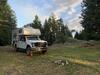
There is some good information in the link above. I have a photo of my clearance of 3 inches between the cab and camper. I do some off road and 3 inches has been enough for what I need.
When the Old Man had our camper, I noticed more of a truck frame 'twist' than fore/aft bending. This was on a standard cab 8' bed F250 with a very heavy 11.5' slide-in camper. Alone, the truck didn't twist much, but with the high center-of-gravity camper, it twisted more. I should also note that our camper was anchored to 7.5' long 4" channel-iron beams athwartships (sideways across/underneath the truck frame) both at the front and rear of the bed. I think that's just how they anchored slide-ins campers back in the '70s
I measured my Ford branded camper on my 17 F350 and if I remember correctly, I had between 3 and 4 inches. When driving down the interstate watching the cabover bounce around through my sunroof there is no way I would only want an inch or so space.
It seems to have fallen out of fashion lately, but folks used to use purpose-built hydraulic dampers to dampen the motions of the overhang over the cab:
Not mine, a pic from the Internet with my callouts added
Pickup frames and campers are stiffer now, so I guess it's a little less of an issue, but those dampers definitely help with those motions, especially the overhang-downward motions toward the top of the cab.
Back in the olden days, the 2-door cabs would have these mounted to the body near the lower corners of the windshield, and the 4-doors had a chunk of fixed bodywork between the top halves of the front and rear doors that was part of the B-pillar that was a great place to mount them. It's more difficult on the newer trucks, and is often a much better idea to use one of those air-cushion things that inflates between the top of the cab and the bottom of the overhang.
My last cabover was a Lance 11.5' with an extended overhang. Before that, we had a Lance 11.5' with a standard overhang. On both, we had these dampers installed. Made a big difference. Ran a couple of times without them. It's doable, but felt (and looked) so much better with them.
I have a Northern Lite on my F-350. I raised mine using 2 inch high PSI foam board (green at Lowes, pink at Home Depot) with a rubber mat on top of that. Never had any contact and the foam is in good shape. Easy in and easy out.
This Hennessey Takes the Expedition Tremor's Off-Roading Capability to the Next Level
Slideshow: The VelociRaptor Expedition gains a lift, upgraded suspension, Brembo brakes, and trail-ready equipment while retaining the stock 440-horsepower EcoBoost V6.
Rezvani's Latest Post-Apocalyptic Monster Is a Ford F-150 Raptor Underneath
Slideshow: Called the Fortress, the 850-horsepower pickup combines Raptor underpinnings with military-inspired features, survival equipment, and a starting price of $285,000.


 ). As low and as far forward as possible is the goal. Too high unnecessarily raises the center of gravity. A lightweight solution should also be a consideration, as this will affect your overall payload.There are examples of solutions (my cedar decking platform included) elsewhere in this forum.