When you click on links to various merchants on this site and make a purchase, this can result in this site earning a commission. Affiliate programs and affiliations include, but are not limited to, the eBay Partner Network.
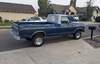
Hi everyone. New here and recently bought a 1978 f150. I upped the alternator already. I was wondering if upgrading the spark plug wires, and coil is worth it. Not doing anything crazy, just want it to run better and get little better mileage. Some
Pictures below
How many miles on it? I see an aluminum intake (maybe Performer 400), can't see the carb. Looks like 2wd judging by how she sets. It is a aerodynamic slug though, and speed is the enemy of gas mileage. It's not gonna get much over 12-13, and even less if driven at 70 mph etc. It looks like not ancient plug wires, at least I can see they are blue. My '77 still has it's 1977 coil, no need to change it. As to mileage, mine has 351M, 600 Holley, is on it's 3rd set of bearings, auto trans, 3.50 gearing, torque cam, and recently got 13.65 mpg in a recent long drive, I was plumb tickled. I fully expected 11-12, maybe 12.5. Was all 55 mph highway / roadway, no interstates used and no load and I'm easy on the go pedal. You might do better if 2wd, might be geared higher than my 4wd. There's no need to run two fuel filters end to end though, the first one to stop up will kill it anyway.
How's it running currently? Any misfires, smells rich, detonation, running hot, etc...
What are you expecting for mileage? What are you getting currently?
Nice looking truck.
it runs decent right now. It does have misfires and smells rich. There is no detonation but the plugs are definitely worn and at end of life. I guess better mileage wasn’t the best wording. More just running effectively.
How many miles on it? I see an aluminum intake (maybe Performer 400), can't see the carb. Looks like 2wd judging by how she sets. It is a aerodynamic slug though, and speed is the enemy of gas mileage. It's not gonna get much over 12-13, and even less if driven at 70 mph etc. It looks like not ancient plug wires, at least I can see they are blue. My '77 still has it's 1977 coil, no need to change it. As to mileage, mine has 351M, 600 Holley, is on it's 3rd set of bearings, auto trans, 3.50 gearing, torque cam, and recently got 13.65 mpg in a recent long drive, I was plumb tickled. I fully expected 11-12, maybe 12.5. Was all 55 mph highway / roadway, no interstates used and no load and I'm easy on the go pedal. You might do better if 2wd, might be geared higher than my 4wd. There's no need to run two fuel filters end to end though, the first one to stop up will kill it anyway.
Yep ..... "Nice Unit" there.
67000 forever hah. I dont know. It doesn’t work. Guess not looking for better mileage but efficiency. Just want it to run as good as possible. Starting with small things right until I can get a better budget. It is 2wd. I’m not too mechanically inclined but I’m working on what I can and watching YouTube videos to see how to do things.
I'm thinking simple tune up first and invest in a couple tools if you haven't already.
Timing light preferably with tach built in and ability to adjust so you can read total advance and track timing curve.
Vacuum/fuel pressure gauge
Basic hand tools
Change oil & filter
Replace fuel filter
Fresh plugs (Autolite, Motorcraft or NGK)
Cap & Rotor - I prefer brass terminals which is usually the "premium" or "lifetime" option at parts store, only replace if you're seeing pitting on the end of rotor or on the terminals inside the cap
Maybe new plug wires - I'd replace these if the misfire isn't resolved
New air filter (yours looks like it really needs one of those based on the picture)
Get truck to full operating temp taking it for a short drive, don't let it just idle in driveway to get up to temp, you'll get to temp much faster putting a load on driving around.
Check for vacuum leaks on intake at base of carb, and mating surfaces with cylinder heads and engine block. Check all vacuum lines for snug fit and that they're not deteriorated.
Check and adjust base timing with vacuum advance disconnected, each engine is different and this is an adjustment that you'll need to play with to find the sweet spot for yours, starting at 10 BTDC ( advanced) for a baseline. Once you make all your other adjustments take truck for a drive, if you don't hear detonation under light load add a degree or two of advance, test drive again, keep doing that until you start to hear pinging at light load and back off a degree or two or to whatever setting you felt had the best power. General idea is add as much advance as the engine can handle without detonation. This may need adjustments throughout year depending how much your ambient temperature and humidity change, but only by a couple degrees. When hotter back off the advance, when colder add some advance.
Adjust timing first then you can adjust carb settings.
Adjusting carb is where the tach and vacuum gauge come into play. Connect vacuum gauge to manifold vacuum, fire engine up, make sure choke is disengaged. Set idle speed, for an automatic trans, about 800 in Park, final adjustment should be done with transmission in drive with foot on brake, around 750 give or take 25 rpm. If a manual, set at 750 give or take 25 rpm (during cold winter months I usually bump up to 825 or so, but that's when it drops below freezing). When idle is set, find idle mixture screws, turning them clockwise (closing them) evenly until you hear RPM start to drop, if there's no drop in RPM you're idle is set too high, there's a vacuum leak or your float may need adjustment or the needle/seat isn't closing properly.
When you hear idle drop, start to turn idle mixture screws counter clockwise (opening them) while keeping an eye on vacuum gauge, keep adjusting those screws until you attain the highest vacuum reading you can get. That'll probably be 15-20 inches. While doing this keep an eye on idle speed and make adjustments as needed to keep it at target RPM. Ideally you're making these adjustments with air filter in place but that's not always possible. The vacuum reading should be nice and steady, if it's bouncing around a lot that can indicate internal engine issues.
Now it's time to take it for a drive and see how it runs. You'll probably need to make adjustments to base timing, more advance improves bottom end performance and you may end up at 13 or 14 degrees advanced. Each time you adjust timing you'll need to go back and make carb adjustments, very small changes. There can be a big difference between 1/2 or 1/4 turn on a mixture screw for example.
That'll set the base line. After all that you can then start "reading" the spark plugs to make more fine tune adjustments to things like carb jets, metering rods, accelerator pumps, secondary activation, etc, but those adjustments vary a lot depending on what carb you're using.
I know this may sound like a lot but a few hours, 1/2" wrench, couple screw drivers and a little patience you'll be amazed at how efficient you can get these engines to run. That said it's still not a fuel injected car that makes these adjustments on the fly. You are the computer in this case and will need to make periodic adjustments throughout the year to keep it running in optimal condition.
This Hennessey Takes the Expedition Tremor's Off-Roading Capability to the Next Level
Slideshow: The VelociRaptor Expedition gains a lift, upgraded suspension, Brembo brakes, and trail-ready equipment while retaining the stock 440-horsepower EcoBoost V6.
Rezvani's Latest Post-Apocalyptic Monster Is a Ford F-150 Raptor Underneath
Slideshow: Called the Fortress, the 850-horsepower pickup combines Raptor underpinnings with military-inspired features, survival equipment, and a starting price of $285,000.