When you click on links to various merchants on this site and make a purchase, this can result in this site earning a commission. Affiliate programs and affiliations include, but are not limited to, the eBay Partner Network.
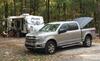
2022 F250 Super Poopy towing a 25RDS Hideout GVWR 7600. Tongue weight estimate 7-900 lbs. Trailer length 30' hitch to slinky holder.
I typically use a Curt WDH and have no issues but last time I towed I just used my regular drop hitch and did not notice much difference in the towing characteristics.
I plan to use it (WDH) when towing longer distances or in cases when I know the winds will be up (az spring / summer time)....
Just curious what the discussion will look like around the need for a WDH with my set up. Pro/Con.
On a truck capable of towing more than double that weight, No it isn't necessary. IF the camper were unbalanced and it caused it to be tongue light maybe. A properly loaded trailer with low wind it is not necessary. I blame RV forums for the default answer of "Every camper requires a WDH". Just like people claiming you should never exceed some arbitrary percentage of the max tow rating like 80% or 75%.
If you towed it on just a drop hitch and it did fine without swaying you have proved that it isnt necessary in the conditions you experienced. An F250/350 is a much more solid towing platform than a half-ton with it's spongy car-like riding suspension. A 3/4-1-ton rides rough because it is designed with towing and payload in mind. A 1/2-ton rides more plush empty because it has commuting in mind and payload/towing comes second.
You probably don't need the weight distribution part of the hitch, but the sway control part would sure be handy to have. I have a 14K pound equipment trailer as well as my RV camper trailer.
Its normal for equipment trailers to not use weight distribution hitches even though they can be just as long (or longer) and often times way heavier than an RV camper trailer. But wind is b!tch, and the big flat sides of a camper trailer catch the heck out of that wind and causes it to sway.
So even though I often use the same tow vehicle for both trailers, I use a WDH ( with its sway control features) when towing the camper, but just a regular B&W drop hitch when towing the equipment trailer.
I live in central TX, so we get wind here too, maybe not as bad as AZ but plenty enough, and I wouldn't want to tow the camper without some form of sway control.
...
Funny you mention rv forums. I did post this on one and so far they have me killing kids that decide to sit in potholes because I would have no weight on my front tires and unable to stear around without them skidding over the kid...
I'd say not necessary, but I know on my F150, it says to use a wdh after 500# tongue weight. You might check on that, and make sure your hitch is rated for that weight, wdh shank and hitch are rated for much more than a drop hitch as you show. I know my drop hitch is only rated for 5k weight. And yes, the rv forums are one extreme, FB pages the other extreme. Good luck, nice set-up.
With both my current and prior campers, I could tell when I didn't have enough weight being put back on the front axle. Every vehicle that came up from behind and passed me would cause the entire rig to get sucked towards the passing vehicle. With the WDH properly configured, I don't have that problem.
My campers are heavier than what the OP is pulling so I end up with a lot more tongue weight that needs to be addressed.
At least since 2017, the Super Duty receiver hitches don't have the warning that they can carry X lbs without WDH and X + Y lbs with a WDH. That doesn't mean that the truck/trailer doesn't need a WDH. It simply means that the receiver is strong enough to carry the entire tongue weight. If the rear of the truck squats too much, too much weight may have been removed from the front axle. A WDH may or may not be able to correct that depending upon how much tongue weight we're talking about.
Is whatever people say on a forum going to change your mind?, I didn't think so. I always enjoy the If I'm not going far thought, things are always safer close to home.
Many years ago when we bought our 1st RV it was a 32' travel trailer. I was ignorant and believed that a WD hitch was required for all travel trailers. I have now learned this is not the case and it is a case by case basis with many considerations.
Is whatever people say on a forum going to change your mind?, I didn't think so. I always enjoy the If I'm not going far thought, things are always safer close to home.
Funny you mention rv forums. I did post this on one and so far they have me killing kids that decide to sit in potholes because I would have no weight on my front tires and unable to stear around without them skidding over the kid...
Those guys also insisted I was going to wreck a school bus of orphans and Nuns because I was towing my 6k camper with my old F150.
Seriously though to the OP's question I am running the same Equalizer 4PT hitch on my F250 as I was on my old F150 but mostly for the anti sway feature. We just got back from a 1200 mile round trip to West Virginia and it was pretty windy but the hitch made it almost unnoticeable. I did tow locally using a normal drop hitch in windy conditions and it's doable but would be exhausting on a long trip.
Is WDH needed? no, but sway control is. It makes a noticeable difference. A good 4 point sway control will make that trailer track like a 5th wheel, you wont notice anything passing or being passed, but you will without it.
To those who say let the trucks sway control handle it, when the trucks sway control kicks in, the rig is already IN SWAY. It will not prevent sway, just stop sway.
The only reason I use the WDH is because of the crappy road conditions here in Washington. It helps keep a smoother ride from the joint conditions in the road and the pot holes!
The only reason I use the WDH is because of the crappy road conditions here in Washington. It helps keep a smoother ride from the joint conditions in the road and the pot holes!
Smokeploe
just remember, those joint condition and pot holes are legal
This Hennessey Takes the Expedition Tremor's Off-Roading Capability to the Next Level
Slideshow: The VelociRaptor Expedition gains a lift, upgraded suspension, Brembo brakes, and trail-ready equipment while retaining the stock 440-horsepower EcoBoost V6.
Rezvani's Latest Post-Apocalyptic Monster Is a Ford F-150 Raptor Underneath
Slideshow: Called the Fortress, the 850-horsepower pickup combines Raptor underpinnings with military-inspired features, survival equipment, and a starting price of $285,000.