



'79 f250 issues again

Thread Starter
|
Cross-Country


Joined: Nov 2023
Posts: 65
Likes: 6
From: Way up northwest minn
 '79 f250 issues again
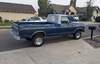
(1979 F250 custom with a 351M and likely original ~96k miles )
Lately my truck wont start in the cold what so ever, but the first winter (last winter) it did just fine I didn't even need to pump the gas pedal, this winter I turn the key it starts and in less than a second it dies again, I know it has fuel when I poured gas into the carburetor (and the fuel system is redone earlier when I got the truck) it has spark obviously choke works accel. pump works. I disconnected/plugged some vacuum lines to remove that from the equation and hooked the vacuum advance right to the manifold (yes I know ported or manifold is controversial) to simplify things. Can't verify timing as I don't have the money to get a timing light and the distributor is stuck anyways. Any ideas? It worked fine in the summer and fall besides some what I assume is spark knock (I don't think the EGR ever worked when the PVS for it was broken before I got the truck which I read might cause it).
I can't seem to diagnose this at all, its been this way since a couple weeks ago (which was 30 some degrees out and it started eventually, but drove fine) and before that when it was colder
its not a humongous deal as I don't have a official job yet (I help my uncle with farming) so I'm not in a big hurry to get it going. it just doesn't make any sense
Lately my truck wont start in the cold what so ever, but the first winter (last winter) it did just fine I didn't even need to pump the gas pedal, this winter I turn the key it starts and in less than a second it dies again, I know it has fuel when I poured gas into the carburetor (and the fuel system is redone earlier when I got the truck) it has spark obviously choke works accel. pump works. I disconnected/plugged some vacuum lines to remove that from the equation and hooked the vacuum advance right to the manifold (yes I know ported or manifold is controversial) to simplify things. Can't verify timing as I don't have the money to get a timing light and the distributor is stuck anyways. Any ideas? It worked fine in the summer and fall besides some what I assume is spark knock (I don't think the EGR ever worked when the PVS for it was broken before I got the truck which I read might cause it).
I can't seem to diagnose this at all, its been this way since a couple weeks ago (which was 30 some degrees out and it started eventually, but drove fine) and before that when it was colder
its not a humongous deal as I don't have a official job yet (I help my uncle with farming) so I'm not in a big hurry to get it going. it just doesn't make any sense

Hotshot


Joined: Feb 2004
Posts: 10,797
Likes: 2,599
From: The Shenandoah Valley
Sounds like a choke setting issue. I do not have the stock carburetor, my choke is a manual choke, I set it by pulling the **** out, start the truck with a pump of the pedal ... then once it is started I have to start opening the choke listening for cleanest running..
As to timing, I use ported vacuum on mine, with timing at 34-35 degrees with line blocked and engine revved up to about 2,000 plus, but while some adjust timing by ear and try between settings, I don't. If the distributor is stuck, it's a moot point.
As to timing, I use ported vacuum on mine, with timing at 34-35 degrees with line blocked and engine revved up to about 2,000 plus, but while some adjust timing by ear and try between settings, I don't. If the distributor is stuck, it's a moot point.
Last edited by tbear853; Feb 10, 2025 at 11:42 AM. Reason: spelling error I missed, sorry.
Thread Starter
|
Cross-Country
Joined: Nov 2023
Posts: 65
Likes: 6
From: Way up northwest minn
A choke what issue?
I will try ported vacuum for the advance eventually, i'm still doing research on it (vacuum timing) but does ported provide better cold starting than the other? from what i'm understanding ported is for (daily) drivers and manifold is for hotrods/performance, right?
I will try ported vacuum for the advance eventually, i'm still doing research on it (vacuum timing) but does ported provide better cold starting than the other? from what i'm understanding ported is for (daily) drivers and manifold is for hotrods/performance, right?
Hotshot
Joined: Feb 2004
Posts: 10,797
Likes: 2,599
From: The Shenandoah Valley
A choke what issue?
I will try ported vacuum for the advance eventually, i'm still doing research on it (vacuum timing) but does ported provide better cold starting than the other? from what i'm understanding ported is for (daily) drivers and manifold is for hotrods/performance, right?
I will try ported vacuum for the advance eventually, i'm still doing research on it (vacuum timing) but does ported provide better cold starting than the other? from what i'm understanding ported is for (daily) drivers and manifold is for hotrods/performance, right?
Too much choke or a choke just not opening up can both ease starting, then shut down if set too rich or staying shut too long. Ported vacuum just relaxes the vacuum advance at near idle, with manifold vacuum the vacuum advance stays in and many engines will "run on" at shut down. I've used both at different times, mine likes ported vacuum best and when I let up off the gas, it slows better. I have tried both ways stopping on a drive to open the hood and swapping hose to other port, always plug the unused port.
As I recall, using manifold vacuum was a way advertised to improve gas mileage by requiring less throttle at low speed cruise conditions. Back in the '70s our older '60s and early '70s cars had ported vacuum.
Thread Starter
|
Cross-Country
Joined: Nov 2023
Posts: 65
Likes: 6
From: Way up northwest minn
i forgot to mention that it seems to have detonation/spark knock but that could have been due to that piece being broken, I'd like to have egr since it helps mileage but I need to replace things for that, if it even works.
Thread Starter
|
Cross-Country
Joined: Nov 2023
Posts: 65
Likes: 6
From: Way up northwest minn
"Setting" was supposed to be there, but I missed that two "t" s were "awol". Fixed now.
Too much choke or a choke just not opening up can both ease starting, then shut down if set too rich or staying shut too long. Ported vacuum just relaxes the vacuum advance at near idle, with manifold vacuum the vacuum advance stays in and many engines will "run on" at shut down. I've used both at different times, mine likes ported vacuum best and when I let up off the gas, it slows better. I have tried both ways stopping on a drive to open the hood and swapping hose to other port, always plug the unused port.
As I recall, using manifold vacuum was a way advertised to improve gas mileage by requiring less throttle at low speed cruise conditions. Back in the '70s our older '60s and early '70s cars had ported vacuum.
Too much choke or a choke just not opening up can both ease starting, then shut down if set too rich or staying shut too long. Ported vacuum just relaxes the vacuum advance at near idle, with manifold vacuum the vacuum advance stays in and many engines will "run on" at shut down. I've used both at different times, mine likes ported vacuum best and when I let up off the gas, it slows better. I have tried both ways stopping on a drive to open the hood and swapping hose to other port, always plug the unused port.
As I recall, using manifold vacuum was a way advertised to improve gas mileage by requiring less throttle at low speed cruise conditions. Back in the '70s our older '60s and early '70s cars had ported vacuum.
Trending Topics

Lead Driver


Joined: Jul 2017
Posts: 9,597
Likes: 1,172
From: San Jose, CA
How quickly does it die after it starts?
If it dies instantly, such as when you let the key snap back into the ON position, perhaps it’s electrical.
You might have power to the ignition system only when the key is in the start position.
If it runs for a few moments however, then you’re probably more correct to be looking at fuel and vacuum.
You did leave the vacuum hose connected to the choke pull-off diaphragm though, didn’t you?
How far does the choke close when it’s cold and you push the throttle once? And when you are cranking the starter, or when the engine just starts to fire up, does the choke pull open slightly like it’s supposed to?
If it dies instantly, such as when you let the key snap back into the ON position, perhaps it’s electrical.
You might have power to the ignition system only when the key is in the start position.
If it runs for a few moments however, then you’re probably more correct to be looking at fuel and vacuum.
You did leave the vacuum hose connected to the choke pull-off diaphragm though, didn’t you?
How far does the choke close when it’s cold and you push the throttle once? And when you are cranking the starter, or when the engine just starts to fire up, does the choke pull open slightly like it’s supposed to?
FTE Stories
Ford Trucks for Ford Truck Enthusiasts

Top 10 Most Expensive Ford Trucks Ever Sold on Bring a Trailer
Joe Kucinski
2027 Ford Super Duty Buyer's Guide (Every Model, Engine, & Package)
Brett Foote
Top 10 Ford Truck Tragedies
Joe Kucinski
AEV FXL Super Duty - the Super Duty Raptor Ford Doesn't Make
Brett Foote
Lobo Vs Lobo: Proof the F-150 Lobo Should Be Even Lower!
Michael S. Palmer
Ford's 2001 Explorer Sportsman Concept Looks For a New Home
Verdad Gallardo
10 Best Ford Truck Engines We Miss the Most!
Joe Kucinski
2026 Shelby F-150 Off-Road: Better Than a Raptor R?
Brett Foote
2027 Super Duty Carhartt Package First Look: 12 Things You NEED to Know!
Michael S. Palmer
Thread Starter
|
Cross-Country
Joined: Nov 2023
Posts: 65
Likes: 6
From: Way up northwest minn
How quickly does it die after it starts?
If it dies instantly, such as when you let the key snap back into the ON position, perhaps it’s electrical.
You might have power to the ignition system only when the key is in the start position.
If it runs for a few moments however, then you’re probably more correct to be looking at fuel and vacuum.
You did leave the vacuum hose connected to the choke pull-off diaphragm though, didn’t you?
How far does the choke close when it’s cold and you push the throttle once? And when you are cranking the starter, or when the engine just starts to fire up, does the choke pull open slightly like it’s supposed to?
If it dies instantly, such as when you let the key snap back into the ON position, perhaps it’s electrical.
You might have power to the ignition system only when the key is in the start position.
If it runs for a few moments however, then you’re probably more correct to be looking at fuel and vacuum.
You did leave the vacuum hose connected to the choke pull-off diaphragm though, didn’t you?
How far does the choke close when it’s cold and you push the throttle once? And when you are cranking the starter, or when the engine just starts to fire up, does the choke pull open slightly like it’s supposed to?
yes i left any lines attached to the choke, i did see its closed all the way after pushing the throttle, not sure i'll have to check.
Thread Starter
|
Cross-Country
Joined: Nov 2023
Posts: 65
Likes: 6
From: Way up northwest minn
while I went out to check on my chickens I fiddled with the choke linkages and it seems it was slightly sticky so maybe that's the issue, not the choke vane (and singular linkage) itself but the part of the other linkages that move it as it warms up and such. It was also barely opening when I moved the throttle linkage, but I still need to try and start it again
Hotshot
Joined: Feb 2004
Posts: 10,797
Likes: 2,599
From: The Shenandoah Valley
In your opinion is the manual choke better? I did have troubles with the choke sticking last time I drove it since it had flooded at a gas station. I'm definitely going to need to get some plugs though and terminate vac circuits the right way. i haven't tried starting it with ported vacuum yet, also which ports are the right ones on the carburetor? I have the manifold vac plugged into a vacuum port right on the manifold but i know there's one on the carb just not sure which is the right one
I haven't had the stock carb on my truck in near 40 years. I could look at the carb and probably recall the ported vacuum, was usually up on the right side maybe?
Lead Driver
Joined: Jul 2017
Posts: 9,597
Likes: 1,172
From: San Jose, CA
I found that the older carburetor gets, the more often the periodic cleaning and lubricating of the choke linkage becomes necessary.
Unless it’s really gummed up bad on the outside, maintenance is as simple as a good dousing with some spray carburetor cleaner, letting it dry, then hitting it with a light lubricant like WD-40 (which isn’t a lubricant at all) but works well or something similar.
You don’t generally want something thick and gooey usually, so WD-40 is still my go to.
Unless it’s really gummed up bad on the outside, maintenance is as simple as a good dousing with some spray carburetor cleaner, letting it dry, then hitting it with a light lubricant like WD-40 (which isn’t a lubricant at all) but works well or something similar.
You don’t generally want something thick and gooey usually, so WD-40 is still my go to.
Fleet Mechanic

Joined: Mar 2013
Posts: 1,661
Likes: 1,062
From: Montana
You mentioned you had what you thought was spark knock (pinging) but your dizzy is frozen and cannot be adjusted.
If you have spark knock you are too far advanced on your base timing. Too much advance will make it hard to start and stay running.
Regarding vacuum advance, connected to manifold vacuum will give you even more advance at idle and will make it stall if base ignition is already too far advanced.
Moving back to ported vacuum may not help in this particular situation. When the choke is closed and the high idle cam is engaged on the carb, your throttle plates will be opened more than at base curb idle and are probably open far enough for timed vacuum port to get a vacuum signal, again adding more advance.
Since you are unable to move your dizzy at all, and from the sounds of it, you have too much base timing, I would disconnect vacuum advance all together and cap any vacuum ports. See if it runs okay that way. If it does, I would grab some penetrating fluid or make your own with a mix of atf and gasoline or acetone and start soaking the base of the distributor and try to get it broke loose (ideally without breaking the dizzy). See if you can borrow or rent a timing light and adjust your base timing.
I personally use manifold vacuum on my rig since it runs better in my situation. I also prefer manual choke versus electric, I have used both, but to get an electric choke dialed in for my climate isn't a set it and forget it deal. It is currently -15F headed to -20F overnight, 6 months from now it will be 90-100F. There isn't a tune or electric choke setting that will be ideal for that kind of temp range. I have to make adjustments throughout year if I want it to run optimally and/or efficiently. Ambient temp, relative humidity and elevation all have an impact on how "optimal" your tune is and how well the rig will run. Toss electric choke into the mix and it will cause issues if not set correctly for current conditions. At least with a manual choke you eliminate that from the list of variables causing issues.
If you have spark knock you are too far advanced on your base timing. Too much advance will make it hard to start and stay running.
Regarding vacuum advance, connected to manifold vacuum will give you even more advance at idle and will make it stall if base ignition is already too far advanced.
Moving back to ported vacuum may not help in this particular situation. When the choke is closed and the high idle cam is engaged on the carb, your throttle plates will be opened more than at base curb idle and are probably open far enough for timed vacuum port to get a vacuum signal, again adding more advance.
Since you are unable to move your dizzy at all, and from the sounds of it, you have too much base timing, I would disconnect vacuum advance all together and cap any vacuum ports. See if it runs okay that way. If it does, I would grab some penetrating fluid or make your own with a mix of atf and gasoline or acetone and start soaking the base of the distributor and try to get it broke loose (ideally without breaking the dizzy). See if you can borrow or rent a timing light and adjust your base timing.
I personally use manifold vacuum on my rig since it runs better in my situation. I also prefer manual choke versus electric, I have used both, but to get an electric choke dialed in for my climate isn't a set it and forget it deal. It is currently -15F headed to -20F overnight, 6 months from now it will be 90-100F. There isn't a tune or electric choke setting that will be ideal for that kind of temp range. I have to make adjustments throughout year if I want it to run optimally and/or efficiently. Ambient temp, relative humidity and elevation all have an impact on how "optimal" your tune is and how well the rig will run. Toss electric choke into the mix and it will cause issues if not set correctly for current conditions. At least with a manual choke you eliminate that from the list of variables causing issues.
Lead Driver
Joined: Jul 2017
Posts: 9,597
Likes: 1,172
From: San Jose, CA
Dying instantly does not sound immediately like fuel. Still could be, of course, but it’s less likely now.
When it tries to die, do you try pumping the gas pedal a lot to see if it will stay running?
Next time it will start, but then die, go out and pop the air cleaner off and look down the throat and row the throttle back a couple of times. If you see a squirt of fuel, then lack of gas is not your issue.
If it dies as soon as you stop pumping, then it seems that there is still gas in the carburetor, but it’s not coming through the main circuits.
But if you can see a squirt of fuel, then pumping the accelerator while you are trying to keep it running, should actually keep it running.
if it dies, even in the presence of gasoline, you have an electrical problem.
In the good words of Dr. Jacobs, “90% of carburetor problems are electrical“ 🙄😉😁
When it tries to die, do you try pumping the gas pedal a lot to see if it will stay running?
Next time it will start, but then die, go out and pop the air cleaner off and look down the throat and row the throttle back a couple of times. If you see a squirt of fuel, then lack of gas is not your issue.
If it dies as soon as you stop pumping, then it seems that there is still gas in the carburetor, but it’s not coming through the main circuits.
But if you can see a squirt of fuel, then pumping the accelerator while you are trying to keep it running, should actually keep it running.
if it dies, even in the presence of gasoline, you have an electrical problem.
In the good words of Dr. Jacobs, “90% of carburetor problems are electrical“ 🙄😉😁
Thread Starter
|
Cross-Country
Joined: Nov 2023
Posts: 65
Likes: 6
From: Way up northwest minn
You mentioned you had what you thought was spark knock (pinging) but your dizzy is frozen and cannot be adjusted.
If you have spark knock you are too far advanced on your base timing. Too much advance will make it hard to start and stay running.
Regarding vacuum advance, connected to manifold vacuum will give you even more advance at idle and will make it stall if base ignition is already too far advanced.
Moving back to ported vacuum may not help in this particular situation. When the choke is closed and the high idle cam is engaged on the carb, your throttle plates will be opened more than at base curb idle and are probably open far enough for timed vacuum port to get a vacuum signal, again adding more advance.
Since you are unable to move your dizzy at all, and from the sounds of it, you have too much base timing, I would disconnect vacuum advance all together and cap any vacuum ports. See if it runs okay that way. If it does, I would grab some penetrating fluid or make your own with a mix of atf and gasoline or acetone and start soaking the base of the distributor and try to get it broke loose (ideally without breaking the dizzy). See if you can borrow or rent a timing light and adjust your base timing.
I personally use manifold vacuum on my rig since it runs better in my situation. I also prefer manual choke versus electric, I have used both, but to get an electric choke dialed in for my climate isn't a set it and forget it deal. It is currently -15F headed to -20F overnight, 6 months from now it will be 90-100F. There isn't a tune or electric choke setting that will be ideal for that kind of temp range. I have to make adjustments throughout year if I want it to run optimally and/or efficiently. Ambient temp, relative humidity and elevation all have an impact on how "optimal" your tune is and how well the rig will run. Toss electric choke into the mix and it will cause issues if not set correctly for current conditions. At least with a manual choke you eliminate that from the list of variables causing issues.
If you have spark knock you are too far advanced on your base timing. Too much advance will make it hard to start and stay running.
Regarding vacuum advance, connected to manifold vacuum will give you even more advance at idle and will make it stall if base ignition is already too far advanced.
Moving back to ported vacuum may not help in this particular situation. When the choke is closed and the high idle cam is engaged on the carb, your throttle plates will be opened more than at base curb idle and are probably open far enough for timed vacuum port to get a vacuum signal, again adding more advance.
Since you are unable to move your dizzy at all, and from the sounds of it, you have too much base timing, I would disconnect vacuum advance all together and cap any vacuum ports. See if it runs okay that way. If it does, I would grab some penetrating fluid or make your own with a mix of atf and gasoline or acetone and start soaking the base of the distributor and try to get it broke loose (ideally without breaking the dizzy). See if you can borrow or rent a timing light and adjust your base timing.
I personally use manifold vacuum on my rig since it runs better in my situation. I also prefer manual choke versus electric, I have used both, but to get an electric choke dialed in for my climate isn't a set it and forget it deal. It is currently -15F headed to -20F overnight, 6 months from now it will be 90-100F. There isn't a tune or electric choke setting that will be ideal for that kind of temp range. I have to make adjustments throughout year if I want it to run optimally and/or efficiently. Ambient temp, relative humidity and elevation all have an impact on how "optimal" your tune is and how well the rig will run. Toss electric choke into the mix and it will cause issues if not set correctly for current conditions. At least with a manual choke you eliminate that from the list of variables causing issues.