

Making heater work faster?

Thread Starter
|
Fleet Mechanic


Joined: Nov 2022
Posts: 1,697
Likes: 416
Making heater work faster?
Does anyone know how to make the heater... heat faster? I just replaced the formed hose from the water pump, so its not kinked anymore, but I feel like it takes so long to get warm.
I'm asking because it's becoming winter fast (snow/rain today) temps in the 20s-30s in the mornings and nights. It would be nice to have a slightly more efficient heater.
I'm asking because it's becoming winter fast (snow/rain today) temps in the 20s-30s in the mornings and nights. It would be nice to have a slightly more efficient heater.

Hotshot
Joined: Nov 2017
Posts: 17,483
Likes: 2,772
From: Northern Ontario
Use an electric heater in the cab. Use a block heater of some type to heat the engine prior to running, it’ll get heat into the cab faster.
Not much else you can do, the coolant needs time to warm up.
How long is it taking to warm up? Pickups usually warm up pretty quick with a small cabin to heat.
Not much else you can do, the coolant needs time to warm up.
How long is it taking to warm up? Pickups usually warm up pretty quick with a small cabin to heat.
FTE Legend


Joined: Jun 2006
Posts: 31,930
Likes: 1,499
From: Ottawa, Ontario
What engine?
The 4.9 and 5.0 don't make the volume of heat the larger motors do, I have found it helps to block off part of tthe rad in winter months to help get the engine get up to temp faster.
The 4.9 and 5.0 don't make the volume of heat the larger motors do, I have found it helps to block off part of tthe rad in winter months to help get the engine get up to temp faster.

Cargo Master


Joined: Aug 2021
Posts: 2,252
Likes: 742
From: Maryland
"Warming up the car" was definitely a thing back in the day. I still do.
I tyrapped my vacuum operated outside air door, so it stays in recirc position.
I've known two people personally in the last year, who's emergency brake cables broke, (manual transmissions) and their vehicles rolled away, while idling, so now I'm a wheel chocker.
I tyrapped my vacuum operated outside air door, so it stays in recirc position.
I've known two people personally in the last year, who's emergency brake cables broke, (manual transmissions) and their vehicles rolled away, while idling, so now I'm a wheel chocker.

Butt-Head
Joined: Apr 2004
Posts: 9,432
Likes: 2,919
From: Reed Point, MT
True, there's no perfect seal on the thermostat (usually has an air bleed and a metal to metal seal that is imperfect) but the volume of coolant through it is inconsequential (or should be) in keeping the engine from warming up.
The best way to get the engine warm and producing heat is to put a load on it (especially a diesel!) but these days it seems that people just expect to start the engine and go back to their heated home, have a clear windshield within 34.25 seconds, and drive away toasty. Windshield scrapers exist for a reason but standing out in the cold wearing shorts and flip-flops while holding a double chai frappe latte for an extra minute is way too hard. I see that "dressing for the conditions" escapes a lot of people these recent years. I want to say to some of them, "You moved from Texas to Montana - it gets winter here sometimes. Time to accept your mistake and bundle up."
Also, one more thing to consider is that it will take varying amounts of time for perceptively "warm" air to come from the heater depending on ambient temperatures. Getting to, say, 60 degrees of coolant temperature on a 20 degree day (starting with 20 degree coolant) is only a 40 degree rise and the air blowing across the heater core has to only absorb 40 degrees of heat with the cold air blowing across it. Change those ambient/initial coolant numbers to -30 degrees and the temperature differential is 90 degrees - quite the difference to make up and quite the air temperature difference to overcome in a heater core with 30 square inches of surface area. It's simply going to take longer and there's no way around it.
Lead Driver
Joined: Jun 2021
Posts: 5,219
Likes: 805
Not to be argumentative, but how exactly does blocking airflow across the radiator that has little to no coolant flow through it before the thermostat opens anyway make the engine warm up faster? There is a valid point that the restriction of airflow across the radiator will minimize the temperature drop of already-hot coolant as the vehicle is moving thus keeping the engine slightly warmer once up to operating temperature, but coolant flow BEFORE the thermostat opens is pretty well limited to flow through the block, head(s), and heater core in a properly-functioning system.
True, there's no perfect seal on the thermostat (usually has an air bleed and a metal to metal seal that is imperfect) but the volume of coolant through it is inconsequential (or should be) in keeping the engine from warming up.
The best way to get the engine warm and producing heat is to put a load on it (especially a diesel!) but these days it seems that people just expect to start the engine and go back to their heated home, have a clear windshield within 34.25 seconds, and drive away toasty. Windshield scrapers exist for a reason but standing out in the cold wearing shorts and flip-flops while holding a double chai frappe latte for an extra minute is way too hard. I see that "dressing for the conditions" escapes a lot of people these recent years. I want to say to some of them, "You moved from Texas to Montana - it gets winter here sometimes. Time to accept your mistake and bundle up."
Also, one more thing to consider is that it will take varying amounts of time for perceptively "warm" air to come from the heater depending on ambient temperatures. Getting to, say, 60 degrees of coolant temperature on a 20 degree day (starting with 20 degree coolant) is only a 40 degree rise and the air blowing across the heater core has to only absorb 40 degrees of heat with the cold air blowing across it. Change those ambient/initial coolant numbers to -30 degrees and the temperature differential is 90 degrees - quite the difference to make up and quite the air temperature difference to overcome in a heater core with 30 square inches of surface area. It's simply going to take longer and there's no way around it.
True, there's no perfect seal on the thermostat (usually has an air bleed and a metal to metal seal that is imperfect) but the volume of coolant through it is inconsequential (or should be) in keeping the engine from warming up.
The best way to get the engine warm and producing heat is to put a load on it (especially a diesel!) but these days it seems that people just expect to start the engine and go back to their heated home, have a clear windshield within 34.25 seconds, and drive away toasty. Windshield scrapers exist for a reason but standing out in the cold wearing shorts and flip-flops while holding a double chai frappe latte for an extra minute is way too hard. I see that "dressing for the conditions" escapes a lot of people these recent years. I want to say to some of them, "You moved from Texas to Montana - it gets winter here sometimes. Time to accept your mistake and bundle up."
Also, one more thing to consider is that it will take varying amounts of time for perceptively "warm" air to come from the heater depending on ambient temperatures. Getting to, say, 60 degrees of coolant temperature on a 20 degree day (starting with 20 degree coolant) is only a 40 degree rise and the air blowing across the heater core has to only absorb 40 degrees of heat with the cold air blowing across it. Change those ambient/initial coolant numbers to -30 degrees and the temperature differential is 90 degrees - quite the difference to make up and quite the air temperature difference to overcome in a heater core with 30 square inches of surface area. It's simply going to take longer and there's no way around it.
But if you block some or you let it fully warm before driving, it will stay in the more cozy 190-200
Ive noticed this on other vehicles too.
Trending Topics

Cargo Master

Joined: Mar 2003
Posts: 2,333
Likes: 296
Use an electric heater in the cab. Use a block heater of some type to heat the engine prior to running, it’ll get heat into the cab faster.
Not much else you can do, the coolant needs time to warm up.
How long is it taking to warm up? Pickups usually warm up pretty quick with a small cabin to heat.
Not much else you can do, the coolant needs time to warm up.
How long is it taking to warm up? Pickups usually warm up pretty quick with a small cabin to heat.
Plug it into a timer that energizes it about 2 hrs before I need to drive. When I go out to the truck the heater core has warm coolant in it already due to the percolating effect.
Heater taps into lower block drain is installed back into heater hose and I attached the pump itself to passenger front frame rail.
Works really well
FTE Stories
Ford Trucks for Ford Truck Enthusiasts

2027 Ford Super Duty Buyer's Guide (Every Model, Engine, & Package)
Brett Foote
Top 10 Ford Truck Tragedies
Joe Kucinski
AEV FXL Super Duty - the Super Duty Raptor Ford Doesn't Make
Brett Foote
Lobo Vs Lobo: Proof the F-150 Lobo Should Be Even Lower!
Michael S. Palmer
Ford's 2001 Explorer Sportsman Concept Looks For a New Home
Verdad Gallardo
10 Best Ford Truck Engines We Miss the Most!
Joe Kucinski
2026 Shelby F-150 Off-Road: Better Than a Raptor R?
Brett Foote
2027 Super Duty Carhartt Package First Look: 12 Things You NEED to Know!
Michael S. Palmer
10 Most Surprising 2026 Ford Truck Features!
Joe Kucinski
Thread Starter
|
Fleet Mechanic
Joined: Nov 2022
Posts: 1,697
Likes: 416
Liking these ideas, update with more information:
My work commute is very short, like 5-7 minutes (dry roads). My heater used to start getting warm by the time I'm almost there. Lately it takes a very long time, if at all. Suspecting the blend door.
302
I don't let it warm up by idling. Usually, the idle sequence is my warm up, or however long it takes to dig it out and scrape the ice off.
The one issue with plugging it in, 3 days a week, I have to leave at 4:45. However the outlet timer would negate that.
Coolant heater is not a bad idea, and would really help with defrost.
My work commute is very short, like 5-7 minutes (dry roads). My heater used to start getting warm by the time I'm almost there. Lately it takes a very long time, if at all. Suspecting the blend door.
302
I don't let it warm up by idling. Usually, the idle sequence is my warm up, or however long it takes to dig it out and scrape the ice off.
The one issue with plugging it in, 3 days a week, I have to leave at 4:45. However the outlet timer would negate that.
Coolant heater is not a bad idea, and would really help with defrost.
FTE Legend
Joined: Jun 2006
Posts: 31,930
Likes: 1,499
From: Ottawa, Ontario
Good points here and yeah before the thermostat opens it won't make much if any difference, the key thing is that the fan runs constantly on these trucks which can super cool the fluid in the rad which then drastically cools the fluid in the engine once the stat does open.. and that makes the whole warmup cycle take longer. Also note that the fan pulls air through the rad which means it's also blowing that cold air over the engine.. makes a good case for an electric fan. I have also observed that installing a higher volume rad(single to double core) makes the warmup cycle even longer and more cyclic in winter months, I made this mistsake with one of my 5.0 trucks and had to install one of those rad covers to drive it on the highway in the winter, even if fully warmed up it would quickly fall back to cold at hwy speed.
Cargo Master
Joined: Aug 2021
Posts: 2,252
Likes: 742
From: Maryland
I'll admit to being OCD with my vehicles, but I would lengthen that ride enough, so everything gets up to operating temperature for a while.
Like if I'm just going to run to town, I'll warm mine up for 5 minutes, then stop at the town park or something, and let it idle, or not shut it off at the bank drive through.
I've always heard that short trips are harder on engines.
Like if I'm just going to run to town, I'll warm mine up for 5 minutes, then stop at the town park or something, and let it idle, or not shut it off at the bank drive through.
I've always heard that short trips are harder on engines.
Thread Starter
|
Fleet Mechanic
Joined: Nov 2022
Posts: 1,697
Likes: 416
I'll admit to being OCD with my vehicles, but I would lengthen that ride enough, so everything gets up to operating temperature for a while.
Like if I'm just going to run to town, I'll warm mine up for 5 minutes, then stop at the town park or something, and let it idle, or not shut it off at the bank drive through.
I've always heard that short trips are harder on engines.
Like if I'm just going to run to town, I'll warm mine up for 5 minutes, then stop at the town park or something, and let it idle, or not shut it off at the bank drive through.
I've always heard that short trips are harder on engines.
I've heard short trips lead to excessive carbon buildup, so maybe I'll try the "water trick" sometime. I really can't lengthen the ride. However when I need to refuel, I drive like 20-25 minutes away, (that station is a lot cheaper as well
 ) so it can get fully warm. It's also a hilly drive, so the engine gets a good workout.
Hotshot
Joined: Nov 2017
Posts: 17,483
Likes: 2,772
From: Northern Ontario
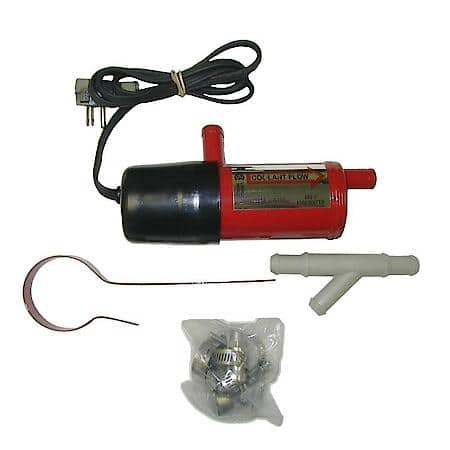
I haven't used it for several years but I have a Katz percolating red canister coolant heater on mine. Not even sure if they still have them.
Plug it into a timer that energizes it about 2 hrs before I need to drive. When I go out to the truck the heater core has warm coolant in it already due to the percolating effect.
Heater taps into lower block drain is installed back into heater hose and I attached the pump itself to passenger front frame rail.
Works really well
Plug it into a timer that energizes it about 2 hrs before I need to drive. When I go out to the truck the heater core has warm coolant in it already due to the percolating effect.
Heater taps into lower block drain is installed back into heater hose and I attached the pump itself to passenger front frame rail.
Works really well
https://polarind.ca/heat/
OP. 5 minute drive isn’t going to do much unfortunately. I’d get a block heater of some type, and timer. I usually warm things up in winter. Mostly because I don’t like rock hard cold seats...
It is hard on the exhaust for one, all it does is collect water moisture and continually builds up in there, eventually rusting it out. Moisture also collects in the oil and engine internally. Builds up over time. It needs to get up to temp to burn that moisture out.
I had some strange marks on my 351 cam that I showed around to a few people, none of us could figure it out. They cleaned off with solvents. Only theory I came up with was very short runs in the cold. 1-2 minute or less. Ie, truck is in the way, -35c, need to fire it up and move it, no time to run it. It runs for just enough time to develop moisture Vapor internally, but not enough to warm any components internally. Shut down, moisture falls out of suspension, collects on areas like the cam lobes and refreezes instantly, frosts it if you will, similar to frosting a spark plug. Next time you turn it over the moisture droplets drag and leave marks. One small example of possible moisture collecting.
Anyway, short tripping cold vehicles can be hard on them. Go get a coffee with it, lol.