


Trailer puller 347


Thread Starter
|
4wd Low
Joined: Nov 2012
Posts: 12
Likes: 0
Trailer puller 347
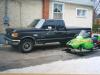
I have a 1994 4wd that I use to pull a 26ft 5th wheel trailer. It has a 302 with over 200k and is weak. I changed to 4.56 gears with 31" tires and a new E40D transmission. The question is, I have a 347 stroker I was thinking of dropping in it. It is currently in my hotrod so I need to detune it and go for more torque for pulling. It's a full roller motor, GT40X heads that have extensive porting/springs and very aggressive cam, tunnel ram. So, do I take the 347 and change the cam and keep the EFI that is on the truck now or dual plane intake with 750 Holley? Then headers or stock manifolds with dual exhaust. Not looking to race it, just make it dependable and pull my camp trailer.


Cargo Master


Joined: Mar 2007
Posts: 2,840
Likes: 1,033
I've got a 29ft 5th wheel and tow with a Kenne Bell supercharged stock[ish] 351w. It's not enough, even with 4.10 gears.
A 347 will be better than a 302, but I don't think it will be enough. I guess if you pull on flat tail wind days, it might be fine.
A 347 will be better than a 302, but I don't think it will be enough. I guess if you pull on flat tail wind days, it might be fine.

Cargo Master


Joined: Oct 2020
Posts: 2,685
Likes: 789
A larger engine is a good way to go when it comes to having more power for towing and other heavy duty work but it isn't without some drawbacks. One factor to think about is the heat load and duty cycle that the piston has to deal with in use. To get a 3.400 stroke and a 5.400 rod to fit into a block with an 8.200 deck height the piston has to be made with a short pin height and it does not have a whole lot of material. This makes dealing with the heat more difficult and this can cause problems with reliability.
I found this out one time with a low compression 505 big Chevy that I built for a customer with a 1 ton 4x4 truck that he used for everything. It always ran great but after a few years he decided to use the engine in a mud racing application so he had me change it around for higher compression etc. When I tore it down the pistons had obviously been run pretty hot. They were not scuffed in any way but they were covered with caramelized oil all the way down to the bottoms of the pin bosses. The tops of the rods had it too. In an engine built like a traditional "truck" engine with its MUCH more massive piston this wouldn't have happened.
I found this out one time with a low compression 505 big Chevy that I built for a customer with a 1 ton 4x4 truck that he used for everything. It always ran great but after a few years he decided to use the engine in a mud racing application so he had me change it around for higher compression etc. When I tore it down the pistons had obviously been run pretty hot. They were not scuffed in any way but they were covered with caramelized oil all the way down to the bottoms of the pin bosses. The tops of the rods had it too. In an engine built like a traditional "truck" engine with its MUCH more massive piston this wouldn't have happened.
Cargo Master
Joined: Mar 2007
Posts: 2,840
Likes: 1,033
Without a doubt, a small engine making the same power as a large engine will mean the small engine will be working more. That is why everything needs to be addressed. Cooling system, oil cooling, oiling, etc.
It seems to be today's engines are all 4 cylinder turbos. Some with power as much as 425hp. I just can't see those engines lasting long. Even with all the tricks the factory does to address that kind of power.
It seems to be today's engines are all 4 cylinder turbos. Some with power as much as 425hp. I just can't see those engines lasting long. Even with all the tricks the factory does to address that kind of power.
Cargo Master
Joined: Oct 2020
Posts: 2,685
Likes: 789
Without a doubt, a small engine making the same power as a large engine will mean the small engine will be working more. That is why everything needs to be addressed. Cooling system, oil cooling, oiling, etc.
It seems to be today's engines are all 4 cylinder turbos. Some with power as much as 425hp. I just can't see those engines lasting long. Even with all the tricks the factory does to address that kind of power.
It seems to be today's engines are all 4 cylinder turbos. Some with power as much as 425hp. I just can't see those engines lasting long. Even with all the tricks the factory does to address that kind of power.
Cargo Master
Joined: Mar 2007
Posts: 2,840
Likes: 1,033
Yes, to a point. I honestly feel that American V8's have always lacked power compared to their size [stock trim]. Maybe not so much in the last few years, but certainly in the past.
I have seen a lot of issues with these new 2.0T engines. I work on German cars and all the manufacturers are having long term issues. My feeling is that it will be very rare to see one last much more than 150k. It takes a lot of money to get them to 100k.
I have seen a lot of issues with these new 2.0T engines. I work on German cars and all the manufacturers are having long term issues. My feeling is that it will be very rare to see one last much more than 150k. It takes a lot of money to get them to 100k.

Thread
Thread Starter
Forum
Replies
Last Post
kowabunga138
2017 - 2022 Super Duty
6
Nov 16, 2020 05:01 AM


