When you click on links to various merchants on this site and make a purchase, this can result in this site earning a commission. Affiliate programs and affiliations include, but are not limited to, the eBay Partner Network.
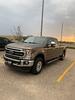
Short trip for salmon yesterday. Truck has over sized Michelin tires so mileage is actually a few tenths more than indicated. Cooler in back, some gear in the bed, and full tank of gas. Diamondback tonneau cover on the bed. Plenty of hills.
PS: I even caught some salmon
Just made Northwest Indiana to Orlando on Saturday. 2024 F350 7.3 ccsb 4x4. 15.9 mpg, had about 1200 miles on it when we started. No trailer, 2 adults, 2 kids, just luggage.
Short trip for salmon yesterday. Truck has over sized Michelin tires so mileage is actually a few tenths more than indicated. Cooler in back, some gear in the bed, and full tank of gas. Diamondback tonneau cover on the bed. Plenty of hills.
PS: I even caught some salmon
When adding larger tires usually means less mpg's. Need to track your mileage via a phone app and hand calculate to be accurate.
When adding larger tires usually means less mpg's. Need to track your mileage via a phone app and hand calculate to be accurate.
Wouldn't larger tires mean you have traveled farther than the truck thinks. If you have travelled farther, then your actual miles per gallon should be larger. (Of course, that means that the truck's mpg calculation is too small and should be fudged up a tad.)
Wouldn't larger tires mean you have traveled farther than the truck thinks. If you have travelled farther, then your actual miles per gallon should be larger. (Of course, that means that the truck's mpg calculation is too small and should be fudged up a tad.)
Correct. And I have hand calculated the mpg before (several times). I am always within .3 mpg of what the dash trip meter shows.
Wouldn't larger tires mean you have traveled farther than the truck thinks. If you have travelled farther, then your actual miles per gallon should be larger. (Of course, that means that the truck's mpg calculation is too small and should be fudged up a tad.)
Only to a point. At some point (and it varies based on the tire/rim combo, any lifts, etc), those larger tires' higher unsprung weight and rolling resistance starts to eat into your MPG. And it's a fast, noticeable reduction. For instance, I had an '03 6.0, no lift but it had 315/75R16's on it when I bought it, looked awesome but rubbed before full lock. I downsized them to 285/75R16's and actually picked up about a mile per gallon.
It also depends on your tuning, the stock tune is intended for the stock size tires/driveline setup/aerodynamic drag of the stock setup. Altering any portion affects that relationship. Larger tires tend to make your speedo read slow, meaning you're travelling faster than it claims...which means more aerodynamic drag due to the higher speed. That's an exponential relationship, meaning it eats into your mileage faster.
Nothing is as simple as it seems. However, if you re-calibrated for the bigger tires, putting your drag back to where it had been, you'll see the higher mileage as long as you're not over that point I brought up above.
I've gotten into the low 17s before on an all interstate trip to Miami (around 300 miles) and it was within three 10ths when I did the 'rithmetic after filling up. It wasn't getting any better than that and it dropped like a stone within 15 minutes of driving in city traffic.
Wouldn't larger tires mean you have traveled farther than the truck thinks. If you have travelled farther, then your actual miles per gallon should be larger. (Of course, that means that the truck's mpg calculation is too small and should be fudged up a tad.)
my 13 and now my 21 reset the computer when I swap from winter to summer tires. So I haven’t had to worry about my Speedo being off. Depending on driving it might take to days to dial it in.
and, I drive a pickup and and hardly even look at my mileage. My wife’s Subaru makes up the difference for me.
Larger tires tend to make your speedo read slow, meaning you're travelling faster than it claims...which means more aerodynamic drag due to the higher speed. That's an exponential relationship, meaning it eats into your mileage faster.
That's a take I hadn't heard before but it makes sense.
I would add that taller tires will raise the vehicle, which also decreases aerodynamic efficiency.
Larger tires tend to make your speedo read slow, meaning you're travelling faster than it claims...which means more aerodynamic drag due to the higher speed.
Most of us who know our speedo is off will usually adjust for it. Normally on a stock vehicle, I would set cruise control at 72mph on the highway near me. In my truck with slightly larger tires ( I think only 1" taller than stock), I will set it at 69-70mph.
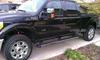
I went from 33's to 37's. Was going to do the rough country speedo healer but truck pulls Waze up on center screen with mph on android auto so thats what I use. My truck was always within 1/10th of being accurate mpg hand calculated prior to 37's. Now I just add 9% more miles if I'm hand calculating. Might not be exactly right but I'd think close. 23' 7.3.
I went from 33's to 37's. Was going to do the rough country speedo healer but truck pulls Waze up on center screen with mph on android auto so thats what I use. My truck was always within 1/10th of being accurate mpg hand calculated prior to 37's. Now I just add 9% more miles if I'm hand calculating. Might not be exactly right but I'd think close. 23' 7.3.
What do you mean add 9% more. If you have last and present mileage with the gallons at fill up that will tell you exactly. Other than that way you still just guessing.
What do you mean add 9% more. If you have last and present mileage with the gallons at fill up that will tell you exactly. Other than that way you still just guessing.
My 37's are 9% larger than the oem tires so I add 9% or multiple the trip miles by 1.09 to the trip reading and divide by gallons used.