When you click on links to various merchants on this site and make a purchase, this can result in this site earning a commission. Affiliate programs and affiliations include, but are not limited to, the eBay Partner Network.
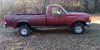
I have a 1993 F250 with the dual tanks. Some previous owner swapped the bed, but the body lines line up with the cab. My problem is that I need to replace the gas caps, and the ones I have on there don't look anything like what parts stores show for 1993 F250. Can anyone tell me, or even speculate, what is going on with these caps? I've been unable to match them so far. They are rotted out and need to be good to pass emissions.
You have the older style filler necks
You just need to swap those filler necks and get the newer style caps to pass I/M
The I/M technician uses the machine to test your cap (part of the procedure)
Those old caps will not fit the adapters and the guy would get fined 10 grand if he fouled up
They (the county) send so many test vehicles around, he probably took one look at those caps and thought wtf
They purposefully send those test vehicles out there to try to catch inspectors and shops doing shady or illegal inspections
We used to fudge them, and people still do, but it is getting harder now that photos must be taken and all the rest
My completely stock 69 Z-28 never would pass
Thank god those old ones are exempt now
The county played games with us for years, so we just played back
There are two hose clamps per filler neck, one for support, one for attaching the outer hose to the filler neck. You can access them without dropping the tanks.
Should be a 5/16" screw head.
This is what they look like for sale. I think you're saying I would toss the new rubber and could access the clamp close to the filler in this pic. Might be rough separating the rubber on the old one, but better than dropping the tank. Do you happen to know if the design is the same for front and rear tanks? Thanks!
This is what they look like for sale. I think you're saying I would toss the new rubber and could access the clamp close to the filler in this pic. Might be rough separating the rubber on the old one, but better than dropping the tank. Do you happen to know if the design is the same for front and rear tanks? Thanks!
From LMC Truck:
Unless the outer hose is damaged, I would just buy the assembly labeled "3".
Loosen the upper clamp labeled "5" and remove the old filler neck, then slide the new inner hose/filler neck assembly in.
You'll also have the support clamp to loosen, which isn't shown in this diagram.
The front and rear are similar, but not exactly the same.
You can access the hose clamps at the fuel tanks without lowering them, but you're working blind. You shouldn't need to though, if the outer hose isn't damaged.
Mine weren't that difficult to separate.
Thanks for the help. Any idea what this is trying to tell me? Different part numbers, same description (43-3338A and 43-3339A). I don't know if I have styleside or what, but I have two tanks to do, so maybe 43-3338B and 43-3339C for side and rear?
"A", "B" and "C" are foot notes.
You need 43-3338 for the front tank and 43-3339 for the rear tank.
"Styleside" is as opposed to "flareside" or "step side".
The PO swapped the bed with the same year range but you have the old (possibly “bullnose”) filler necks? That doesn’t make sense to me. Can we get a picture of the bed on the truck?
Cool, thanks. I wasn't aware the bodies lined up so closely across the generations. Hopefully the filler openings are close enough so I can make the new filler necks work.
I knew the axle was full float because of the "snout" sticking out. Odd that they would make the lugs so excessively long. I have a FF 14-bolt on my chevy and the lugs are normal, at least for a truck.
So I am confused...I don't live in a commy state so this emissions testing is not familiar. Can you not just get the correct fuel caps for the bed/filler setup and get it inspected that way? I feel I am missing something here...
It's all very confusing. In Arizona, OBD2 vehicles are just checked for codes, plus they check that the gas gap seals. Older vehicles drive on the rollers and they put a sniffer on the exhaust with particular limits for each vehicle. Plus the gas cap thing. Plus they look to see that nothing has been modified, especially the cat converter. Not sure about stuff under the hood. They look under there, but not long enough to notice minor things. It's a load of BS and a waste of everyone's time at this point IMO, since the newer vehicles are clean and never go out of tune and there are so few old ones on the road. AZ may be the worst since emission inspections go back to 1967 vehicles or something. Even CA has a 25 year rolling exemption.
It took me a while to understand that "check engine" codes are primarily a scheme between the gov't and car manufacturers to find faulty or modified/removed emissions stuff. They seldom point to something that is actually necessary for the vehicle to drive properly. There are elaborate mechanisms to check everything, such as pumps to check that there aren't any tiny air leaks in the gas tank or cap.
Anyway, I need a cap that matches the vehicle year, or at least looks modern, not like something off a tractor. I'll be replacing the filler necks and getting normal caps.
Rezvani's Latest Post-Apocalytic Monster Is a Ford F-150 Raptor Underneath
Slideshow: Called the Fortress, the 850-horsepower pickup combines Raptor underpinnings with military-inspired features, survival equipment, and a starting price of $285,000.