






Schizophrenic 7.3L

Thread Starter
|
Tuned


Joined: Oct 2020
Posts: 411
Likes: 284
From: Northern Sierra Nevada
Schizophrenic 7.3L
We're currently on a two week camper trip through AZ and NM Indian Country with my brother John and his wife Krys.
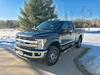
Jeanie and I run a 2020 7.3 F-350 XL SB SC with Northstar Laredo and they have a 2022 7.3 F-350 XL LB SC with 10 foot Alaskan. This was a good test to see the difference between our 4:30 gears and Bro's 3.73 gears on virtually the same truck carrying about the same load.
I gassed up at COSTCO but there was a problem with the pumps on the island I was on. Regular gas was not to be had.
All the pumps had 91 octane gas at the 87 octane price. Great! This is a test. We filled with 91 octane, and what a difference it made! I hardly used any pedal at 65 mph. But with the newfound power came a downside: namely you couldn't stop playing with that newfound power passing trucks *****-nilly and suffering a net mpg loss. Even pulling hills was a breeze, with minimal downshifting. You could accelerate uphill in 10th gear. Bro John thinks the computer advanced the timing up to detonation (ping) and set the timing just below that point. What a ride! But it didn't last. Once the tank was out of 91 octane, the fuel in s.e.NM was 85 octane.
What a difference! The 7.3 was a slug. You had to mash down on the stupid pedal to make the 10K pound truck/camper move and it constantly downshifted, way down to 5th and 6th gears when we hit the slightest uphill. The only good news is the computer was saving me from myself by continuing to deliver very good mpg.
jefe
Jeanie and I run a 2020 7.3 F-350 XL SB SC with Northstar Laredo and they have a 2022 7.3 F-350 XL LB SC with 10 foot Alaskan. This was a good test to see the difference between our 4:30 gears and Bro's 3.73 gears on virtually the same truck carrying about the same load.
I gassed up at COSTCO but there was a problem with the pumps on the island I was on. Regular gas was not to be had.
All the pumps had 91 octane gas at the 87 octane price. Great! This is a test. We filled with 91 octane, and what a difference it made! I hardly used any pedal at 65 mph. But with the newfound power came a downside: namely you couldn't stop playing with that newfound power passing trucks *****-nilly and suffering a net mpg loss. Even pulling hills was a breeze, with minimal downshifting. You could accelerate uphill in 10th gear. Bro John thinks the computer advanced the timing up to detonation (ping) and set the timing just below that point. What a ride! But it didn't last. Once the tank was out of 91 octane, the fuel in s.e.NM was 85 octane.
What a difference! The 7.3 was a slug. You had to mash down on the stupid pedal to make the 10K pound truck/camper move and it constantly downshifted, way down to 5th and 6th gears when we hit the slightest uphill. The only good news is the computer was saving me from myself by continuing to deliver very good mpg.
jefe

Tuned
Joined: Nov 2023
Posts: 431
Likes: 247
WOW. I can not believe you posted this. You are brave. Many are going to claim you are the crazy one not the truck and octane has absolutely no impact on anything. There will be the waste of money flying from many.
I have ran high test in my tow truck for decades due to it really does allow timing to advance and it gives the computer the ability to advance the timing. It is true octane does not make power, but advanced timing does.
I pull in Dixie and it is hot and humid. I experienced knock sensors errors and kept demanding to have the sensors replaced. My wrench told me the knock sensor was doing its job and to run high test. I followed his advice and never kicked another error on that truck for 22 years of towing.
I will continue to run high test on my truck and tune out the nonsense noise from the know it alls.
I have ran high test in my tow truck for decades due to it really does allow timing to advance and it gives the computer the ability to advance the timing. It is true octane does not make power, but advanced timing does.
I pull in Dixie and it is hot and humid. I experienced knock sensors errors and kept demanding to have the sensors replaced. My wrench told me the knock sensor was doing its job and to run high test. I followed his advice and never kicked another error on that truck for 22 years of towing.
I will continue to run high test on my truck and tune out the nonsense noise from the know it alls.

Mountain Pass
Joined: Sep 2023
Posts: 111
Likes: 71

Thanks for posting.
ps: I guess the Big Question (which you alluded to) is could you tell difference between 3.73 and 4.30?

Mountain Pass
Joined: Feb 2024
Posts: 168
Likes: 153
Haven't tried this test on my F350 yet because I still haven't gotten it! But I found this out the hard way on my SUV, a Toyota with the 4.7 V8. When I first bought it, I ignored the note in the manual to not use anything below 87 octane, and to use premium 91 for best performance. I live above 9,000 feet and was told that 85 octane was all that was needed up here in any non-turbo engine.
When I filled up with 85, everything seemed okay at first. Then the next time I tried to start the thing with a cold engine, it wouldn't start! I guess there's a sensor that detects when the engine fires, and disengages the starter. So it would sputter a couple of times and then stall. I would have to start it over and over again before it would stay running. Even after many years, spark plug changes, tuneups, etc..., it will still do this if I ever have to fill up with 85 on an empty tank.
So I flipped to the dark side and filled up with 91. Not only did it start perfectly, but it would downshift much less often on uphill grades, which was so much nicer to drive, and mpg went WAY up. The MPG doesn't go up enough to justify the difference in price, but the drivability is worth the difference.
I don't always run 91, but I make sure the octane always stays above 87. So if I'm in an area with rip-off gas prices, I can fill up with 85 for one tank, knowing that the 91 that's still in the tank should offset it.
When I filled up with 85, everything seemed okay at first. Then the next time I tried to start the thing with a cold engine, it wouldn't start! I guess there's a sensor that detects when the engine fires, and disengages the starter. So it would sputter a couple of times and then stall. I would have to start it over and over again before it would stay running. Even after many years, spark plug changes, tuneups, etc..., it will still do this if I ever have to fill up with 85 on an empty tank.
So I flipped to the dark side and filled up with 91. Not only did it start perfectly, but it would downshift much less often on uphill grades, which was so much nicer to drive, and mpg went WAY up. The MPG doesn't go up enough to justify the difference in price, but the drivability is worth the difference.
I don't always run 91, but I make sure the octane always stays above 87. So if I'm in an area with rip-off gas prices, I can fill up with 85 for one tank, knowing that the 91 that's still in the tank should offset it.
Thread Starter
|
Tuned
Joined: Oct 2020
Posts: 411
Likes: 284
From: Northern Sierra Nevada
Has this been posted?
We've been out of internet range.
jefe
edit: Oh,sorry, it finally loaded.
We've been out of internet range.
jefe
edit: Oh,sorry, it finally loaded.
Trending Topics

Laughing Gas

Joined: Feb 2020
Posts: 891
Likes: 565
From: End of the Rockies
Posted fine.
FTE Stories
Ford Trucks for Ford Truck Enthusiasts

3 Best / 3 Worst Parts of Modern Ford Ownership
Brett Foote
10 Amazing Upgrades That Solve Common Ford Truck Owner Headaches
Pouria Savadkouei
Every 2026 Ford Engine Explained
Brett Foote
10 Ugly Ford Trucks That We Still Kinda Love
Joe Kucinski
10 Things Every Truck Owner NEEDS (2026 Edition)
Michael S. Palmer
Rezvani's Latest Post-Apocalyptic Monster Is a Ford F-150 Raptor Underneath
Verdad Gallardo
Top 10 Most Expensive Ford Trucks Ever Sold on Bring a Trailer
Joe Kucinski
2027 Ford Super Duty Buyer's Guide (Every Model, Engine, & Package)
Brett Foote
Top 10 Ford Truck Tragedies
Joe Kucinski
Thread Starter
|
Tuned
Joined: Oct 2020
Posts: 411
Likes: 284
From: Northern Sierra Nevada
It looks as if using 85 octane in the high elevations of Indian Country as we did was a mistake.
Using 87 from Flagstaff home to NorCAL kind of healed itself. The wind blew up a storm for 8 of the 12 days
we were out on the road making a side by side comparo kind of useless. Day after day of 40-60+ mph gusty winds invariably as a headwind,. All in all, John's 3.73 and low profile Alaskan got better mpg at freeway speeds. Not by much, but better. There are just so many variables.
My 2020 XL was bought off the lot as a 5th wheel tow rig with the 5th wheel hitch and the extras that go along with it already installed. My Northstar Laredo hard side camper, narrow as it is, is a windbreak at 70 mph with a 60 mph headwind. A couple of big gusts blew me in the opposite oncoming lane a couple times. Not white knuckle material, but having to drive every second on the road.
The 4.30's are "trailer starters" with gobs of torque to get the 4 tons on the pin moving. I've never used the 5-er hitch. By 68 mph, I see the rpm's moving up in 10th gear and off minimum peak torque. With 91 octane gas, the Super Duty is an absolute beast. The computer changes the tranny shifting pattern with not as many downshifts.
So, bottom line: the 3.73'a were great above, oh, say 68 mph. Good interstate manners.
the 4.30's were better with the approx. 3200 pound load while creeping around on back dirt roads well under 64 mph.
Our average speed, overall, over the 3571 mile trip was about 65 mph on on interstates (at my request) but Bro John was happier at 72 mph. Lower profile/3.73's.
In thinking about the so-called "perfect gearing", I still like the 4.10's as the best compromise with the campers/7.3 gassers/10 speed trans. If I go with 35's, I'll get a defacto 4.10 gearing,or close to it.
If asked what mpg I realistically got, I would have to say between 10 and 14 mpg with the camper fully loaded and the centerline at 12.5 mpg. I"ve gotten better than 14 a few times, and worse into the single digits once on Hwy 40 coming back to CA with everything against you. This is about 1 mpg less than I get with my 2001 24v Cummins TD HO 6 speed manual- but sans the egg beater and a bucket of bolts noise level.
jefe
Using 87 from Flagstaff home to NorCAL kind of healed itself. The wind blew up a storm for 8 of the 12 days
we were out on the road making a side by side comparo kind of useless. Day after day of 40-60+ mph gusty winds invariably as a headwind,. All in all, John's 3.73 and low profile Alaskan got better mpg at freeway speeds. Not by much, but better. There are just so many variables.
My 2020 XL was bought off the lot as a 5th wheel tow rig with the 5th wheel hitch and the extras that go along with it already installed. My Northstar Laredo hard side camper, narrow as it is, is a windbreak at 70 mph with a 60 mph headwind. A couple of big gusts blew me in the opposite oncoming lane a couple times. Not white knuckle material, but having to drive every second on the road.
The 4.30's are "trailer starters" with gobs of torque to get the 4 tons on the pin moving. I've never used the 5-er hitch. By 68 mph, I see the rpm's moving up in 10th gear and off minimum peak torque. With 91 octane gas, the Super Duty is an absolute beast. The computer changes the tranny shifting pattern with not as many downshifts.
So, bottom line: the 3.73'a were great above, oh, say 68 mph. Good interstate manners.
the 4.30's were better with the approx. 3200 pound load while creeping around on back dirt roads well under 64 mph.
Our average speed, overall, over the 3571 mile trip was about 65 mph on on interstates (at my request) but Bro John was happier at 72 mph. Lower profile/3.73's.
In thinking about the so-called "perfect gearing", I still like the 4.10's as the best compromise with the campers/7.3 gassers/10 speed trans. If I go with 35's, I'll get a defacto 4.10 gearing,or close to it.
If asked what mpg I realistically got, I would have to say between 10 and 14 mpg with the camper fully loaded and the centerline at 12.5 mpg. I"ve gotten better than 14 a few times, and worse into the single digits once on Hwy 40 coming back to CA with everything against you. This is about 1 mpg less than I get with my 2001 24v Cummins TD HO 6 speed manual- but sans the egg beater and a bucket of bolts noise level.
jefe
Laughing Gas
Joined: Feb 2020
Posts: 891
Likes: 565
From: End of the Rockies
Thanks for the report/ comparison on the trucks.
The 91 octane is making that much of a difference it should be considered when working these engines. I will be keeping it in the tank.
That wind will keep your attention that is for sure.
The 91 octane is making that much of a difference it should be considered when working these engines. I will be keeping it in the tank.
That wind will keep your attention that is for sure.

Tuned
Joined: Nov 2023
Posts: 431
Likes: 247
Not necessarily when the computer can advance timing vs retarding it to keep from pinging.
Pull at sea level on 110 degree 100% humidity day. I’ve went around with my mechanic on this and he proved to me the timing is advanced with 91/93 vs 87.
Pull at sea level on 110 degree 100% humidity day. I’ve went around with my mechanic on this and he proved to me the timing is advanced with 91/93 vs 87.
Mountain Pass
Joined: Feb 2024
Posts: 168
Likes: 153
If asked what mpg I realistically got, I would have to say between 10 and 14 mpg with the camper fully loaded and the centerline at 12.5 mpg. I"ve gotten better than 14 a few times, and worse into the single digits once on Hwy 40 coming back to CA with everything against you. This is about 1 mpg less than I get with my 2001 24v Cummins TD HO 6 speed manual- but sans the egg beater and a bucket of bolts noise level.
jefe
jefe


Fleet Mechanic


Joined: Dec 2016
Posts: 1,817
Likes: 544
From: Florida
I'm only down about 3mpg from my 2004 5.9 Cummins... and the 7.3 tows the same trailer way better too, so I'll take it.