When you click on links to various merchants on this site and make a purchase, this can result in this site earning a commission. Affiliate programs and affiliations include, but are not limited to, the eBay Partner Network.
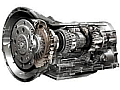
I have an E40D mated to the 460EFI with a temp gauge on the test port. It has the deeper E40D pan with the 4x4 longer filter neck , etc. On freeway runs at 60mph it may be about 190 degrees, and after exiting freeway and stop and go it could be around 200 to 210. This was the other day at 60 degrees outside. This concerns me if I will drive in 90 degree temps in the summer. It is in a class A RV Ford F-53 chassis. The GVWR is 17000 and I am at about 16,400.
Does this temp really sound right? I think it has a factory auxiliary cooler...(see pic) Has the PN which is sized about 7x11".
There is another one below it mounted on the frame, forward of the radiator, same thing, don't know if it is an oil cooler or trans cooler unless I crawled under there and followed the lines, sized about 4x12".
Also not sure what thermostat is rated at either.
Just wondering if anybody would know what this setup is intended to do and what I can do to lower temps. What would towing really do those temps?
See attached pics.
Any insight would be appreciated as I am looking to tow a #3400 car and this worries me:
I wouldn't be concerned with those temps,but cooler would be better IMO,all the time. Most of the heat is from the converter when the clutch is unlocked. I wired up a switch on mine to keep the TC locked when needed,and I could keep the temps much lower when working it hard. Just don't forget the switch is on - TC locked - and try to stop! LOL!
350 degrees Fahrenheit will start to blue the converter and destroy the trans
260 is when I start worrying
Put an expensive Hughs finned aluminum pan on your E4OD
Have fun with it
I have a 95 5.8L Kenne-Bell supercharger, over built E4OD. 2WD, 4.10. I installed a larger cooler about 15 years ago along with the factory additional cooler [A total of 3]. My max temperature when towing my 5th wheel is no more than 200F and that is on a hot summer day going up a pass full throttle in 1st gear. Other than that, I typically see 160-180F. My temperature sensor is located at the pressure port on the drivers side of the transmission. Without towing, floats around 140F-160F.
Last camping trip, I had an issue with the transmission fluid rising to the 200F area while traveling at 60mph level, 60F outside. When I pulled over to get gas, I did used my infrared temperature reader, I found the transmission pan was about 160F and the area where the sensor is was around 200F. I found out that that my tuning skills are terrible because I had the converter locking up at 60mph. Not certain what I was thinking. Once I fixed tuned that right, the return trip never got above 180F.
That said, I worry too much so I elected to remove the factory additional cooler and installed a 6.0 cooler. I still have three but with much more surface area. While doing this, I changed out all the 5/16th hard lines to 3/8th. I still have things apart because the next step is to seal up the passages so all the air must pass through all the coolers up front [Radiator, condenser, & two coolers]. I also have the bumper with the additional holes [typically installed on the diesels and last couple year trucks]. I will make ducting behind the bumper to force the air through the coolers too.
The fluid routing is radiator, 6.0 cooler, then aftermarket cooler. The reasoning is that the coldest air will be cooling the coldest fluid. Not certain that is smart, but it also fits easier too.
Not certain what the results will be, but I am hoping that it gets no more than 180F at the worst case scenario.
No, the mounting is not finished. I had to get it out of the shop because there are a lot of clients cars to get done this week.
You can run up to 220°F all day long with no issues. You can go up to 250°F for up to a half hour at a time without causing problems.
I do not recommend spending money on expensive pans. I do not believe they cool the trans at all. Have you ever measured the air temperature around the pan while the vehicle is working? I have, I used to be an automatic transmission cooling engineer at Ford. The air around the pan is hotter than 250°F. How will that cool the ATF?
I haven't measured ambient around it. In a class A chassis it's just a heat box under there. Plus the headers under there. Maybe header wrap so heat from them isn't running up and getting trapped under there? Or perhaps just heat shielding above the headers to block some of that getting to the transmission and its lines?
The point Mark is trying to make [correct me if I am wrong] is that there are a lot of products that look good on paper and the average consumer takes the bait.
Testing proves if it works or not and testing is something that people do not have the time for, too lazy, or do not have the money to buy the tools needed to do the tests. Not that the factory has an endless supply of money, they probably have lots of proof that when they skimp on testing, the comebacks/recall start.
The pans with the tubes in them look like they would work, but air is not a good conductor of heat. How much air flow is going through the tubes? The length of the tube does not seem long enough to do much heat transfer. The more tubes you put in, the more restrictive the air flow would be. What is the happy median? Would liquid be better to remove the heat? How much of a pain would that be to figure out? Having more tubes means less fluid. If you have to go to that extreme, do you have a real problem you are trying to cover up?
My simple test of checking the temperature of the transmission fluid with my infrared temp gun, confirmed to me that the gauge was reading the right temperature. While driving, I was wondering if the gauge was reading right. I do know for a fact, there was a 40F drop in temperature from the pan to the sensor location. I was pretty surprised at the difference. I do have a larger 2WD aluminum pan and once I get my transmission shifting to how I like it, I will most likely be putting a 4WD pan and synthetic fluid. Then I will be done with all my nonsense.
I haven't measured ambient around it. In a class A chassis it's just a heat box under there. Plus the headers under there. Maybe header wrap so heat from them isn't running up and getting trapped under there? Or perhaps just heat shielding above the headers to block some of that getting to the transmission and its lines?
While you're doing that, also do something about all of the hot air coming off of the radiator. That's a huge contributor to the heat around the transmission.
Even better than trying to make the pan into a cooler, is have good transmission cooling. Start with using the cooler inside the radiator first, then from there the ATF should go to a cooler from a 2003-2007 6.0L F-Series truck. Then back to the transmission. That will keep the trans in an acceptable range without paying for a useless aftermarket pan.
I have an E40D mated to the 460EFI with a temp gauge on the test port. It has the deeper E40D pan with the 4x4 longer filter neck , etc. On freeway runs at 60mph it may be about 190 degrees, and after exiting freeway and stop and go it could be around 200 to 210. This was the other day at 60 degrees outside. This concerns me if I will drive in 90 degree temps in the summer. It is in a class A RV Ford F-53 chassis. The GVWR is 17000 and I am at about 16,400.
Does this temp really sound right? I think it has a factory auxiliary cooler...(see pic) Has the PN which is sized about 7x11".
There is another one below it mounted on the frame, forward of the radiator, same thing, don't know if it is an oil cooler or trans cooler unless I crawled under there and followed the lines, sized about 4x12".
Also not sure what thermostat is rated at either.
Just wondering if anybody would know what this setup is intended to do and what I can do to lower temps. What would towing really do those temps?
See attached pics.
Any insight would be appreciated as I am looking to tow a #3400 car and this worries me:
What side of the chasiss do the oil lines run to the top vs bottom? trans lines typically enter the passenger side of a radiator, typically. Oil usually on the driver side.
And if your trans cooler is the top one, the superduty cooler will be an improvement. and hes saying to use it instead of that one there.
But my recommendations actually follow someone elser above, with 3/8 lines instead of 5/16. And wrap your exhaust/ heat shield what you can. What kind of fan clutch is on your 460?
I just installed the larger cooler from the 6.0 to my 95. Just buttoned up the last fittings yesterday.
During this installation, I used copper/nickel 3/8th inch brake line and the 4R100 bypass pipe that some people do not like. I installed the bypass pipe because the fittings will accept the fittings for the 3/8th lines. I could not find 3/8th fittings without spending way too much money and knowing how the bypass pipe works, I thought it was a good idea.
I also replaced my radiator during this ordeal because next year it will be 30 years old and I really don't need to have a reason to replace it on the side of the road. The other reason is that the cooler fittings on the radiator were for 5/16th lines. I found that I could not remove those fittings without possibly damaging the radiator.
I had the optional factory cooler and that takes 5/16th fittings. I also have an aftermarket cooler that take 3/8th fittings. The 6.0 cooler takes 1/2 fittings. So the only adapters I had to get was to figure out how to get a 3/8 metal line to a 1/2 inch hose. With the stock stuff, you need to figure out how to get a 5/16th line to a 1/2 hose.
To mount the cooler, I moved the A/C condenser and move it to the other side of the core support. I was able to do this without disconnecting the A/C lines. I had to trim the core support at the bottom edges and modify the brackets on the condenser to get it to fit. I also installed foam to force all the air to go through the condenser. The new radiator mounted the same. No spacing was needed to clear the new mounting position of the condenser. I installed foam on the radiator so no air could bypass that either.
With the A/C condenser moved further back, this allowed the 6.0 cooler to be installed where the condenser was. I used Mercedes air cleaner rubber mounts and nutserts to mount the cooler to the core support. Why German mounts? Because 40 years working with Mercedes. I know what they got that will work with my butchery. I had to trim the metal brackets of the 6.0 cooler since they interfered with the air cleaner duct. Once the 6.0 cooler was installed, then I mounted the aftermarket cooler in front of that.
There is a metal brace that I did remove that mounts from the hood latch to the lower core support. I am still debating if I want to make one since the factory did not just install that for no reason.
Once all the items were installed, it's just a matter of running metal lines [you need a good tubing bender] and come up with a routing that works for you, the mounting position of the coolers, and the future times you need to work around them. I attached the lines to the body and engine and have rubber hoses between the two. You got to know the engine vibrates and the body does not. If you do not takes measures for this, I suspect something might leak in the future.
I wrapped things up with a light coat of flat black paint. Allows the items blend in behind the grill.
The fluid flow goes to the radiator cooler first, then the 6.0 cooler, and then the aftermarket cooler. Not certain if this is the best routing, but I think it will work for me. I have not towed with it so I can't say if there will be any improvement. I can't imagine it will be worst.
I also installed the front bumper used on the diesels and the last couple years. I have not, but will make some ducting to force all the air from the new openings to go to the coolers.
The aftermarket one comes first and the larger 6.0 cooler next. There is foam between the condenser and the cooler to keep all the air from bypassing the fins.
so Mark, can you walk me through which way the fittings should face on this 6.0 cooler replacement?
Als o if my factory lines are threaded ends similar to what brake line has, how do those hook up to the barbs in the 6.0 cooler?
See this post:
Originally Posted by 1Butcher
I just installed the larger cooler from the 6.0 to my 95. Just buttoned up the last fittings yesterday..
.
.
The fluid flow goes to the radiator cooler first, then the 6.0 cooler, and then the aftermarket cooler. Not certain if this is the best routing, but I think it will work for me. I have not towed with it so I can't say if there will be any improvement. I can't imagine it will be worst.
It could be worse. Three coolers might have enough restriction to open the bypass. If this happens you have no cooling. Just something to watch for.
This Hennessey Takes the Expedition Tremor's Off-Roading Capability to the Next Level
Slideshow: The VelociRaptor Expedition gains a lift, upgraded suspension, Brembo brakes, and trail-ready equipment while retaining the stock 440-horsepower EcoBoost V6.
Rezvani's Latest Post-Apocalyptic Monster Is a Ford F-150 Raptor Underneath
Slideshow: Called the Fortress, the 850-horsepower pickup combines Raptor underpinnings with military-inspired features, survival equipment, and a starting price of $285,000.