When you click on links to various merchants on this site and make a purchase, this can result in this site earning a commission. Affiliate programs and affiliations include, but are not limited to, the eBay Partner Network.
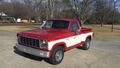
Hi guys. I have a 76 Hiboy with a 429 in it. I have had problems with it getting hot when idling for periods of time or stop and go traffic. I have a Champion aluminum radiator and this past winter bought a set of electric fans for it from Champion. They recommended I get a larger alternator for it to help cool at an idle. So I bought a 100 amp one wire that has a voltage regulator enclosed .So I removed my voltage regulator and all the wiring with it and I think that's where my problem started. I have absolutely no power at all now. Not even a dome light. Do you know should I reinstall the regulator wiring or maybe just a ground wire from it. Any suggestions would be appreciated.
Firs I would not have gone with a 1 wire as they sense power at the ALT and not the battery and some have ended up with dead battery because of it.
A 3G ALT would have been the way to go. Bet you did not have a shroud on your truck as it should not of gotten hot with the factory fan & good radiator.
Truck power comes off the solenoid on the inner fender.
There should be a small wire or 2 from the trucks harness on the large stud with the cable from the battery.
It could be you got them on the wrong stud or you did not hook it back up as it is under something?
Or you cut that wire and now have to add it back. I want to say it is a yellow wire but could be wrong?
Maybe post up a picture of the solenoid so we can see what you got going on.
Dave ----
Thanks for the reply, Dave. Yes I have read on this forum many times about a 3G alternator. Asked around locally and many said I don't even need a 100 amp. I should of stuck with the knowledge on this forum. I did have a shroud on my radiator but never was happy with the way it fit on that Champion radiator. There was quite a gap on the sides and don't know if that reduced the air flow thought the radiator. Got a lot going on today but I will look for an extra wire. I didn't cut any wires so I have that going for me. If I i find that wire that would go on the battery cable side of the solenoid?
Yes. Power for the vehicle comes from the battery side of the starter relay/solenoid.
So if you disconnected a yellow, or a large black (might have a red stripe) that’s probably your culprit.
If you did any of this work for the new alternator with your battery connected, you may have fried the fusible link at the end of the power wire.
as mentioned, a picture or three might be helpful as well.
Also, are you sure it’s a “one wire” alternator? Not just an internally regulated one?
They are two separate entities, and not all internally regulated alternators are one wire versions.
If you’re not sure, do you have a part number or link to the part you bought?
So when I did this swap I had the same issue as many others have, where I lost all power. Like 1ton referred to I believe it’s the large yellow wire if I remember right. What I did is leave the existing wiring and connect the existing alternator power wire to the single terminal on the one wire. Then I unplugged the voltage regulator and I use one of the key on power sources from that for my electric choke
Thanks again for all the good advice. You guys were on it. i went into my shop and found a yellow wire and black wire (might of had a red stripe many years ago). Both were close to the solenoid. put the yellow one on and nothing. Then put the black one on as well and bingo.
I bought a one wire 100 amp alternator internally regulated from Jegs. Part # 555-10165. One ton pointed out should have gone with a 3G. Called Jegs yesterday and they would take the one I bought on a return. Could buy a powermaster one wire 120 amp for about $160.00 more than the 100 amp I bought. I would have no problem with that knowing my battery is getting charged. Jegs does not stock Powermaster and they ship direct from Powermaster so they were going to check Monday if they have any in stock.
I have one more wire to hook up for my electric fans. This one has to come from a power souce that is on only with the key. I never checked yet but could a guy get that from the starter side of the solenoid? Thanks again for all your help.
That was actually FuzzFace with the recommendation for the standard internally regulated 3G alternator. But I am completely on board with it.
One wires work, but three wires work better I think.
No, you don’t want to take switched power from the starter relay. There’s nothing there that you would want to mess with.
And only the actual brown wire has power, not the terminal. And any power on the wire itself can sometimes go down to 6 V.
The best source is usually the old unused green with red stripe wire from the old regulator. but for a 3G you will need that wire. were they true one alternator though, it’s not used for anything. It’s so can be used for anything you want.
But you said the Powermaster you’re looking for is also a wire? Remember, “one wire “and “internally regulated“ are two separate entities.
That was actually FuzzFace with the recommendation for the standard internally regulated 3G alternator. But I am completely on board with it.
One wires work, but three wires work better I think.
No, you don’t want to take switched power from the starter relay. There’s nothing there that you would want to mess with.
And only the actual brown wire has power, not the terminal. And any power on the wire itself can sometimes go down to 6 V.
The best source is usually the old unused green with red stripe wire from the old regulator. but for a 3G you will need that wire. were they true one alternator though, it’s not used for anything. It’s so can be used for anything you want.
But you said the Powermaster you’re looking for is also a wire? Remember, “one wire “and “internally regulated“ are two separate entities.
When people say one wire they pretty much always are referring to an alternator with an internal regulator. That's how they operate on "one wire"....
This seems to get more confusing than it should. When they call it a one wire I was under the assumption it is one wire from the solenoid to the alternator and has an internal regulator rather than the traditional 3 wires on the alternator and has an external regulator.
I guess I need to do a lot more research on the alternator I bought and the 3G I'm thinking of buying. All I want is an alternator that will charge the battery at an idle while the electric fans are running.. If i sit in traffic when it's hot and have to run the engine at 1500 RPM's to run the radiator fan to keep it from overheating or have an electric fan and have to run it at 1500 RPM;S to keep the battery charged what good is it?
This seems to get more confusing than it should. When they call it a one wire I was under the assumption it is one wire from the solenoid to the alternator and has an internal regulator rather than the traditional 3 wires on the alternator and has an external regulator.
That is the case, it has a regulator built in. He's making it unnecessarily confusing. I don't know of any common alternator setups with external regulators and more than one wire, especially nothing modern. Everything modern has a regulator built in.
When people say one wire they pretty much always are referring to an alternator with an internal regulator. That's how they operate on "one wire"....
What you’re saying about people calling them that is true. Which is why I asked for clarification. Because what so many say, is absolutely incorrect.
That fact is what’s making everything confusing. That there are different types of internally regulated alternators.
Yes, pretty much every modern alternator is internally regulated. However, that does not make them all one wire alternators.
Said another way, while every 1-wire alternator is internally regulated, not all internally regulated alternators are 1-wire alternators.
One does not equal the other.
That seems to be the confusion. That, and probably the fact that the earliest internally regulated alternators in most people’s experience happened to be GM alternators that were also 1-wire alternators.
From there, many seem to assume that one equals the other.
The difference is in the regulator.
Self exciting (1-wire), versus non-self exciting.
The Ford 2G, 3G, 4G, and even 6G alternators are all internally regulated. And they are all multi wire alternators.
For a 3G, for example, there are four wires that need to be connected for it to work. Three to the chassis wiring and one to itself. Since we don’t usually count the wire connections to itself, then it’s probably best called a three wire alternator.
You have the main charge cable, the green with red ignition/indicators/exciter wire, the yellow with white battery sensor wire, and the white with black stator wire.
Leaving any one of those four disconnected will render the alternator non-functioning.
A 1-wire alternator has only the main battery charge wire connected to the chassis wiring. All other functions are handled by the regulator with no external connections.
Hence the term 1-wire.
The one wire alternators are considered Self exciting. The regulator senses the voltage of the battery through the main charge wire. Making the other connections unnecessary.
A Ford 3G alternator has a separate wire outside of the regulator to sense battery voltage, an exciter wire from the ignition switch that tells it to turn on and work, and the stator wire has some mysterious function I’m not familiar with.
The 4G is used on Ford Explorer eliminates that external connection. But otherwise uses the same connector and as a 3G.
I often try to make something more clear by using dozens of extra words that are probably not necessary. By doing so I’m likely just making it more confusing!
I’m just trying to get across the point that, just because they are internally regulated, doesn’t automatically make them a 1-wire.
Oh, and I left out the key functional difference between the two.
A multiwire internally regulated alternator will start charging as soon as the drive belt starts spinning it. A self exciting alternator needs to be revved up for it to self start.
That usually means about 1300 to 1600 engine RPM before it will start to charge. After that, it will charge down to idle.
But a standard internally regulated alternator does not need to rev up to start because the ignition switch has already told it that It’s OK to start putting out current as soon as it starts rotating.
Thank you 1 Ton. I'm finally getting it thanks to your explanation. I appreciate all your time and effort to set me straight on this. I don't mind spending money on something but I get upset when it isn't what I thought it would be. I owe all the guys on this forum a big thank you. I restored this truck and learned a lot just reading this forum. I of course didn't do all the work. I do what I can but body work or overhauling an engine or trans is not me..
My Grandson and his girlfriend asked me a month ago if they could have prom pictures taken with my truck this coming weekend. Guess I better get going!!!!
This Hennessey Takes the Expedition Tremor's Off-Roading Capability to the Next Level
Slideshow: The VelociRaptor Expedition gains a lift, upgraded suspension, Brembo brakes, and trail-ready equipment while retaining the stock 440-horsepower EcoBoost V6.
Rezvani's Latest Post-Apocalyptic Monster Is a Ford F-150 Raptor Underneath
Slideshow: Called the Fortress, the 850-horsepower pickup combines Raptor underpinnings with military-inspired features, survival equipment, and a starting price of $285,000.