When you click on links to various merchants on this site and make a purchase, this can result in this site earning a commission. Affiliate programs and affiliations include, but are not limited to, the eBay Partner Network.
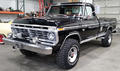
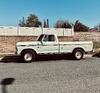
Hello everyone, I had hijacked a previous thread with my starting issues but I figured I start a new one since I haven’t found one that fits my situation exactly. I have a 74 F250 with a 78 Lincoln Mark V 460 and DS2 (I believe). It was running like a champ until it wasn’t. Shut off on me last week and I can’t get it to start since. At first I thought it was a fuel/carburetor problem (edelbrock 1406) but I realized I wasn’t get spark to my spark plugs. Since then I’ve bought a new battery, ignition control module, cap/rotor, spark plugs/wires and ignition coil. Still no spark. I’m about ready to roll it off a cliff. I did some troubleshooting and noticed I wasn’t getting a spark out of the ignition coil wire (disconnected it from the cap and used both a spark tester and spark plug to test for spark). I tested the new ignition coil and the resistance is within specs. I’m getting 12 volts to the ignition coil connector while disconnected but only 4 volts while connected to the ignition coil. When I crank the engine it goes even lower than that. Could that be the issue? And how could I fix it? New ignition coil connector? Is it something else entirely? What am I missing here? Your help is much appreciated!
I just bought a distributor pickup but won’t be delivered until Monday. Im hoping it’s not terribly difficult to change out. I did verify that the rotor was spinning as I was cranking the engine.
When I changed out the ICM I did noticed that the connector with the white and red wire only had the red wire. It doesn’t seem that the white wire (I believe that’s the resistor wire?) was ever there this entire time it was running. I’ve had this truck for about 2 years and it’s the first issue I’ve had so far. I peeled back some of the electrical tape and didn’t see the white wire anywhere to say that it frayed off all of a sudden.
And you may have learned a very modern lesson. Throwing parts at a problem *****-nilly like, not only does not always work, but now more than ever it almost always throws a brand new bad/non-working part into the mix!
So your perhaps previously good ICM, coil, cap & rotor, plug wires and whatever else you bought, might now be replaced with non-working parts.
You MUST TEST!
Maybe a wire broke somewhere and you're not getting power where you should and when you should.
Maybe your ignition switch has failed and you're not getting power where you should be and when you should be.
Maybe the stator is bad, maybe it's not. But that's why there is a simple test.
Maybe the coil was bad, maybe it wasn't. But it's got a relatively simple test as well. Along with an old school test using just extra wire and not even an ohm-meter.
Why did you replace the battery? Did the old one die after all the cranking? Or were you thinking that the battery could cause this trouble you're having? It doesn't, but that's another subject.
The good news at least, is that batteries are one of the least likely to be bad right off the shelf. It does happen unfortunately, but it usually shows itself quickly. If the battery can get the starter to crank the engine at a normal speed, then the battery is good.
Good luck. But don't throw away any of the old parts!!!!
Thanks everyone. I changed out the pickup coil in the distributor and it still didn’t start. I changed the battery out because it died cranking and it was 4 years old. But you guys are right, “new” parts from my local auto parts store (autozone, O’Reillys, Napa) maybe come off the shelf faulty. So to recap, truck was running great. Sat for a week, then it wouldnt start. Can’t get a spark to save my life. Again, here’s a list of the things I’ve thrown money at so far:
new battery
new ignition coil
new spark plugs and wires
new distributor pickup coil (rotor inside does spin while cranking
new ignition control module
as I’ve mention before, the red and white wire connector only has the red wire. But it seems like that’s how it’s been for 2 plus years since I’ve owned it. How would the module work without that wire to begin with is my question. Is it not needed? It’s my understanding that the white wire is the resistance wire? Would not enough resistance cause it to not spark?
Here's how to test things. I find following this testing procedure works really well at identifying the faulty part or parts.
so when I checked the voltage to the ignition coil connector I get 12 volts. As soon as I connect it to the ignition coil it drops down to 4 volts. Should I have at least 10 volts there counting for the ignition coil resistance?
It’s been days and still nothing. I performed some tests and came up with a possible bad resistor wire. So 2 things. It starts out of my ignition switch as a red wire with green tracer but finishes off as a thicker pink wire with “do not cut splice”. Is that normal? I’m trying to figure out where the splice occurred. It’s off a quick disconnect with other wires that don’t appear on any wiring diagram I have. Thoughts? Far right is resistance wire. WTH is the rest of it?
What dlburch said. And the Brown wire that meets up with the resistor wire at the back of the plug is the one from the "I" terminal on the starter relay. It's the wire that guarantees a full 12v to the coil during the START process. Also happens to do double duty for either when the ignition switch fails to provide power to the Red w/green wire during START, or when you turn the key too far to the right and the contacts lose power during START.
This latter is the fault of the switch design, but it usually not noticed if you do not stay in the habit of turning the key as far as it will physically go. Just turn it to the point that the starter cranks, and don't keep turning.
That aside, your wires look like they've seen better days. Only testing to see where the power stops will tell the tale, but if you are seeing power exit the ignition switch and not arrive at the ignition, then you are likely correct that your resistor wire is suspect. BUT, in your case the failure could be right there at the connector.
Have you pulled the two halves apart yet? With the discoloration and apparent swelling from excessive heat, I would suspect some corrosion on the contacts, or maybe just a failure at the junctions inside the rubber molding of the connector itself.
The simple solution at this point, if you determine the failure point is the connector, would be to replace the connector. Don't worry about it being a factory original type, or replacing the entire resistor wire until you determine that it has failed further up the line. Just splice in a new connector for the 3+1 wires. I like Weatherpacks, but you can use anything you want.
With my '71, I ended up using a terminal strip of the kind you used to see at Radio Shack. Just a plain black block with four or five (or however many you need) screw-down contact plates. I cut the original connector halves away and crimped ring-terminals and fork-terminals (if that's what they're called?) and used the terminal strip as the visible connection point for all wires.
Worked great for many years that way.
As far as replacing the entire resistor wire, the factory units are available, but do not fit every year even though they are listed that way.
The problem is that Ford was very inconsistent on where/when/how they used that resistor wire. Some were pink right out of the ignition switch, some (like yours and mine) were Red w/green initially, then pink the rest of the way to the firewall. In my case, I think mine returned to Red w/green just inside the engine compartment grommet. And even though the replacement wires come with outer heat sleeving and a push-on bullet type connector, I've only seen a handful of Fords that came from the factory with a separate, replaceable wire. Most were one single wire from the ignition switch all the way to the connector in your picture. In those cases, you would have to cut and splice the wire somewhere in two places.
Even if it turns out you need to do all that, I would still start with the easy stuff and just replace that connector in your picture. Cut off the bad looking ends of the wires, and replace with some other type of easily sourced connection point. Whether it's a Weatherpack like I prefer, or a simple terminal strip like I've used successfully in the past, to just splicing the wires together permanently, I think you should do that first.
Splicing together would be a choice of last resort, because it means removing the engine is a little more fiddly.
What dlburch said. And the Brown wire that meets up with the resistor wire at the back of the plug is the one from the "I" terminal on the starter relay. It's the wire that guarantees a full 12v to the coil during the START process. Also happens to do double duty for either when the ignition switch fails to provide power to the Red w/green wire during START, or when you turn the key too far to the right and the contacts lose power during START.
This latter is the fault of the switch design, but it usually not noticed if you do not stay in the habit of turning the key as far as it will physically go. Just turn it to the point that the starter cranks, and don't keep turning.
That aside, your wires look like they've seen better days. Only testing to see where the power stops will tell the tale, but if you are seeing power exit the ignition switch and not arrive at the ignition, then you are likely correct that your resistor wire is suspect. BUT, in your case the failure could be right there at the connector.
Have you pulled the two halves apart yet? With the discoloration and apparent swelling from excessive heat, I would suspect some corrosion on the contacts, or maybe just a failure at the junctions inside the rubber molding of the connector itself.
The simple solution at this point, if you determine the failure point is the connector, would be to replace the connector. Don't worry about it being a factory original type, or replacing the entire resistor wire until you determine that it has failed further up the line. Just splice in a new connector for the 3+1 wires. I like Weatherpacks, but you can use anything you want.
With my '71, I ended up using a terminal strip of the kind you used to see at Radio Shack. Just a plain black block with four or five (or however many you need) screw-down contact plates. I cut the original connector halves away and crimped ring-terminals and fork-terminals (if that's what they're called?) and used the terminal strip as the visible connection point for all wires.
Worked great for many years that way.
As far as replacing the entire resistor wire, the factory units are available, but do not fit every year even though they are listed that way.
The problem is that Ford was very inconsistent on where/when/how they used that resistor wire. Some were pink right out of the ignition switch, some (like yours and mine) were Red w/green initially, then pink the rest of the way to the firewall. In my case, I think mine returned to Red w/green just inside the engine compartment grommet. And even though the replacement wires come with outer heat sleeving and a push-on bullet type connector, I've only seen a handful of Fords that came from the factory with a separate, replaceable wire. Most were one single wire from the ignition switch all the way to the connector in your picture. In those cases, you would have to cut and splice the wire somewhere in two places.
Even if it turns out you need to do all that, I would still start with the easy stuff and just replace that connector in your picture. Cut off the bad looking ends of the wires, and replace with some other type of easily sourced connection point. Whether it's a Weatherpack like I prefer, or a simple terminal strip like I've used successfully in the past, to just splicing the wires together permanently, I think you should do that first.
Splicing together would be a choice of last resort, because it means removing the engine is a little more fiddly.
Paul
thank you Paul. I appreciate the thorough explanation and advice. I have another question. Does the armature under the distributor cap need to be perfectly aligned with the magnetic pickup or is that only for static timing? I’ve noticed mine is off to the left. Thanks again!
Also you really don't want that fuel filter and having it lay on the intake manifold there, just say'n.
Thank you, I’ll relocate it. So what’s suppose to be there?? For the first arrow, I didn’t recall seeing another hole there for that second ear. And the second arrow is a screw that snapped off lol. Apparently i don’t know my own strength with a screwdriver. And that was me attempting to take it OFF when it snapped.
This Hennessey Takes the Expedition Tremor's Off-Roading Capability to the Next Level
Slideshow: The VelociRaptor Expedition gains a lift, upgraded suspension, Brembo brakes, and trail-ready equipment while retaining the stock 440-horsepower EcoBoost V6.
Rezvani's Latest Post-Apocalyptic Monster Is a Ford F-150 Raptor Underneath
Slideshow: Called the Fortress, the 850-horsepower pickup combines Raptor underpinnings with military-inspired features, survival equipment, and a starting price of $285,000.